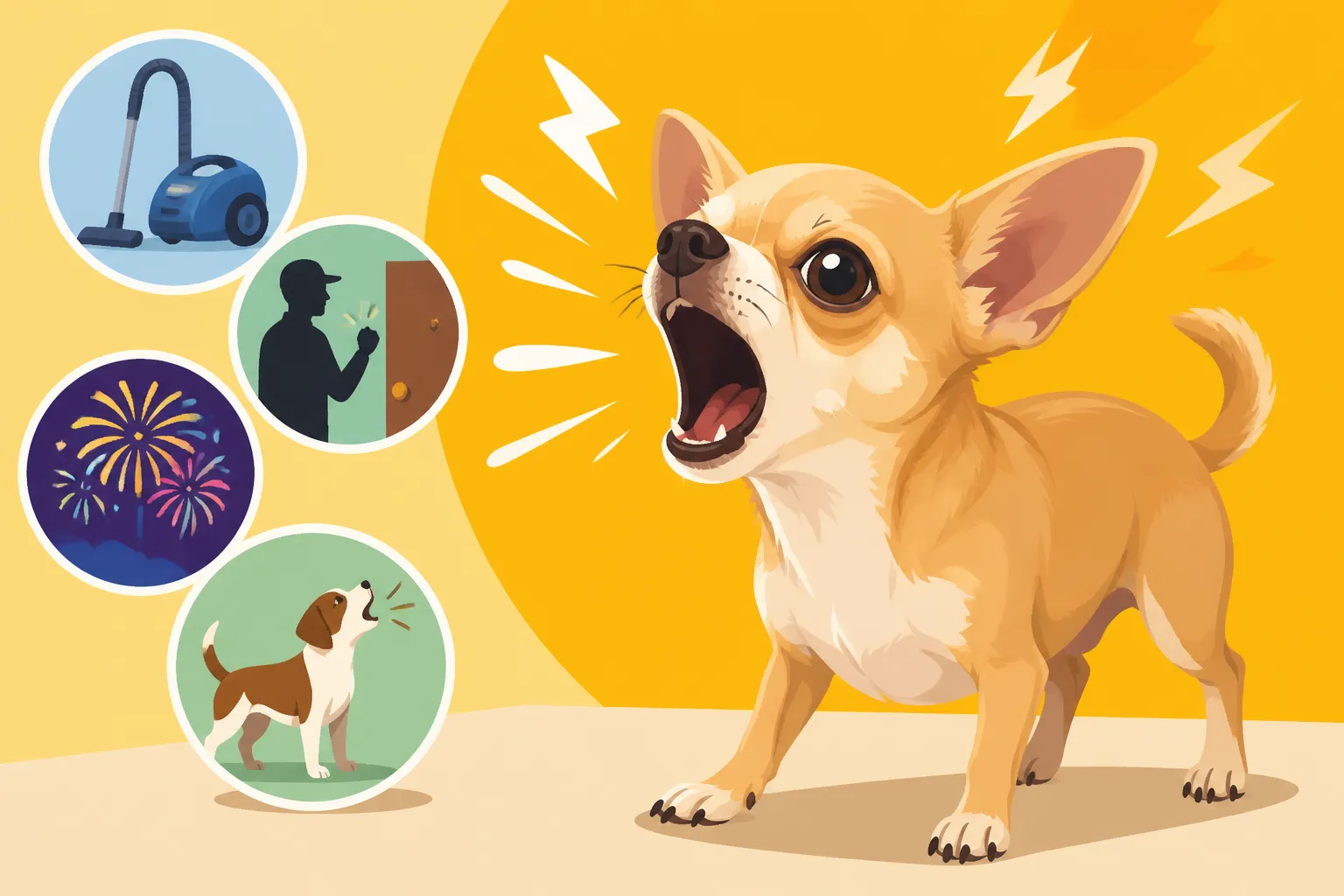
Chihuahua Barking and What Sets a Six Pound Dog Off
It's incredibly frustrating when your tiny Chihuahua, who you adore, seems to have an alarm system built into their vocal cords that never quite turns off. From the moment a leaf blows past the window to the dreaded doorbell chime, it can feel like your little companion is determined to announce every single event, big or small, at the top of their lungs. This comprehensive guide will walk you through the many reasons why Chihuahuas bark, often with such intensity, and provide practical, empathetic strategies to help you and your beloved tiny terror find a little more peace and quiet in your home.
Why Chihuahuas Bark: Understanding Their Worldview
To truly get a handle on Chihuahua barking, we first need to step into their tiny paws and understand their perspective. These dogs are not just miniature versions of larger breeds; they have a unique set of instincts and vulnerabilities that often drive their vocalizations. It’s not simply "bad behavior" but often a deeply ingrained response to their environment and perceived threats.
The "Guard Dog" Instinct in a Tiny Body
Despite their small stature, Chihuahuas often possess the heart of a lion, or perhaps more accurately, the unwavering spirit of a vigilant guard dog. They are incredibly alert and keenly aware of everything happening around them, both inside and outside the home. This isn't just a quirky trait; it's a fundamental aspect of their temperament, often described as terrier-like. They see it as their job to protect their people and their territory, and their primary tool for this is their voice.
Imagine being just six pounds in a world full of giants – humans, bigger dogs, even the mail carrier. Every new sound, every shadow passing by the window, can feel like a potential threat. They can't physically intimidate, so they use the only weapon they have: their surprisingly loud and persistent bark. This intense alertness often means they pick up on stimuli that bigger, more laid-back dogs might ignore, making them excellent, albeit sometimes overzealous, watchdogs. It's a fundamental part of The Chihuahua Alertness the Standard Calls Terrier-Like.
Fear as a Primary Driver of Vocalization
A significant portion of Chihuahua barking stems directly from fear. Because they are so small and inherently vulnerable, many situations that wouldn't faze a larger dog can be genuinely terrifying for a Chihuahua. A loud truck passing by, a stranger approaching, or even another dog can trigger an intense fear response, and for a Chihuahua, that often manifests as barking. They're trying to make themselves seem bigger, scarier, and to ward off the perceived threat.
Think about a small child who screams when they're scared – it's a primal reaction. For a Chihuahua, barking is their version of that scream. They aren't trying to be annoying; they're genuinely feeling unsafe and are communicating that in the most effective way they know how. This fear can be compounded if they haven't been adequately socialized or if past negative experiences have taught them that the world can be a scary place. Understanding that many barks are cries for help, or at least expressions of discomfort, changes how we approach their training. You might notice your dog's A Chihuahua That Trembles Around Strangers followed by a burst of frantic barking.
Nature vs. Nurture: When Instinct Becomes Learned Behavior
While instinct certainly plays a role, a Chihuahua's barking habits are also heavily shaped by their environment and how their human companions respond to their vocalizations. Owners often inadvertently reinforce barking without realizing it. For example, if your Chihuahua barks at the doorbell and you rush to pick them up and comfort them, they learn that barking gets them attention and reassurance. Similarly, if they bark for a toy and you give it to them, they've just successfully trained you.
This is where the line between natural instinct and learned behavior blurs. A Chihuahua might instinctively alarm bark at a new sound, but if that bark consistently leads to something positive (attention, a treat, getting what they want), it quickly becomes a learned, deliberate behavior. This means that while we can't eliminate their natural alertness, we absolutely can change their learned responses through consistent training and management. Ignoring unwanted barking and rewarding quiet can make a huge difference in shifting this dynamic.
Decoding the Different Kinds of Chihuahua Barks
Not all barks are created equal, and understanding the nuances of your Chihuahua's vocalizations can provide invaluable clues about what's setting them off. Each type of bark often has distinct triggers and requires a slightly different approach to management. Tuning into these differences is the first step toward effective communication and training.
Alarm Barking: The Doorbell, the Mailman, the Squirrel
This is perhaps the most common type of barking in Chihuahuas, and it’s often what most owners find the most challenging. Alarm barking is precisely what it sounds like: your Chihuahua is alerting you to something they perceive as new, unusual, or potentially threatening. This could be the sound of the doorbell, a knock at the door, the mail carrier delivering letters, or even a squirrel scampering across the lawn. For a Chihuahua, these events are significant and demand immediate attention.
Their small size often means they feel particularly vulnerable, making them extra diligent as your personal early warning system. They hear the mail truck before you do, they sense the delivery person approaching, and they feel compelled to let everyone know. The bark is typically sharp, repetitive, and often escalates in intensity until the perceived threat (or person) moves away. This type of barking is a prime example of Why a Chihuahua Barks at Everything Outside and why it's so challenging to stop without specific intervention.
Territorial Barking: "This Is My Space!"
Territorial barking is closely related to alarm barking but has a distinct focus on defending a specific area, whether it's the home, a particular room, or even their favorite spot on the sofa. Your Chihuahua might bark fiercely at other dogs walking by your fence, at someone peering into your window, or even at a new piece of furniture that feels like an intrusion. They are marking their boundaries with their voice, asserting their ownership.
This kind of barking often comes with stiff body language, sometimes a raised hackle, and a defiant stance. They are communicating a clear message: "This is my territory, and you are not welcome." While it's natural for dogs to be territorial to some extent, an excessive amount of this behavior can indicate insecurity or a lack of clear boundaries. A Chihuahua guarding its favorite human or their bed, barking at anyone who approaches, is a classic example of Chihuahua Resource Guarding and Snapping.
Attention-Seeking Barking: "Look At Me!"
Oh, the attention bark! This is the bark designed specifically to get your reaction, and Chihuahuas are absolute masters at it. If your Chihuahua barks at you, then looks directly at you, then barks again, they're likely trying to tell you something: "I want food! I want to play! Pick me up! Pet me!" This type of barking is often learned because it has been successful in the past. Every time you respond to this bark, you reinforce the behavior.
This bark can vary in tone and intensity, from a persistent whine-bark to a sharp, demanding yelp. It's often accompanied by other attention-seeking behaviors like pawing, nudging, or even bringing you a toy. The key to addressing this type of barking lies in understanding that any reaction from you – even a negative one like scolding – can be seen as a reward. Your Chihuahua simply wants your focus, and barking is a highly effective way to get it. This is very different from Chihuahua Alert Barking Against Anxious Barking which has a different emotional driver.
Frustration and Excitement Barking
Chihuahuas can also bark out of sheer frustration or overwhelming excitement. Frustration barking might occur when they can see something they want but can't reach, like a toy under the sofa, or when they're confined and want to be free. It's often a high-pitched, insistent bark, sometimes accompanied by whining. Imagine the frustration of being a tiny dog, unable to jump onto the couch to join you for cuddles!
Excitement barking, on the other hand, is usually heard during highly stimulating situations: when you pick up the leash for a walk, when a favorite family member returns home, or during a particularly enthusiastic play session. This bark is often joyful, but it can still be overwhelming and hard to turn off. The challenge here is to channel that excitement into more appropriate expressions, rather than letting it devolve into an uncontrollable vocal outburst. This is often where a strong "settle" cue can be immensely helpful.
Common Environmental Triggers and How They Escalate
Many Chihuahua owners find themselves in a constant battle against environmental triggers. Because these dogs are so attuned to their surroundings, even the most innocuous daily events can set off a cascade of barking. Understanding these common triggers and how they contribute to escalating vocalizations is crucial for managing the problem effectively.
The Window Watcher: External Stimuli Overload
One of the biggest culprits behind persistent barking in Chihuahuas is unimpeded access to a window or glass door with a view of the outside world. For a highly alert breed, this is like having a constant, overwhelming stream of stimuli. Every passerby, every squirrel, every dog on a walk, and every car driving by becomes a reason to bark. Your Chihuahua feels compelled to announce each and every one, becoming the ultimate neighborhood watch member.
This constant vigilance can quickly lead to overstimulation and anxiety. What starts as an alert bark can spiral into frantic, stress-induced vocalization, making it incredibly difficult for your dog to relax even when there's nothing actually happening. They're always on edge, waiting for the next "threat" to appear. It's often a habit that develops because it feels rewarding for them – the "threat" (person, dog, squirrel) eventually moves away, reinforcing their belief that their barking successfully scared it off. Simple solutions like Window Film and Blocking a Chihuahua's View can make a world of difference here.
The Doorway Defender: Intrusions and Arrivals
The front door is a common battleground for Chihuahua barking. The sound of a doorbell, a knock, or even footsteps approaching can trigger an immediate, often intense, barking frenzy. For your Chihuahua, this isn't just a friendly visitor; it's a potential intruder on their territory. This can be particularly pronounced in Chihuahuas who bond strongly with their owners, feeling an acute need to protect them from perceived threats.
The problem often escalates because the arrival of guests is a highly charged event. Your own excitement or anxiety can transfer to your dog, making them even more keyed up. Plus, if the barking results in the guest retreating (even just to pause outside), or if you pick up your dog to calm them, the behavior is reinforced. Your Chihuahua learns that barking successfully communicates a warning and garners your attention during a stressful event. Why a Chihuahua Barks at Delivery Drivers is a perfect example of this behavior.
Noise Sensitivity: Amplified Sounds in a Small Home
Chihuahuas, with their large, erect ears, can be incredibly sensitive to sounds. What might be a minor background noise to us, like a distant siren, construction outside, or even a television commercial, can be startling or even frightening to them. Because of their size, their world often feels louder and more overwhelming, and their immediate response to startling sounds is often to bark.
This noise sensitivity can be exacerbated in urban environments or apartments where sounds from neighbors, traffic, or shared hallways are constant. A Chihuahua might bark at the sound of a vacuum cleaner, a loud car exhaust, or even the subtle creak of an old house. If these sounds consistently trigger a fear response, the barking can become a deeply ingrained stress reaction. Creating a calm environment and potentially using white noise or calming music can help soften these external sounds, making your home feel less like an auditory assault zone.
Underlying Health and Emotional Factors Contributing to Barking
Sometimes, barking isn't just about training or environmental triggers; it can be a symptom of an underlying health issue or a deeper emotional struggle. It's always important to consider these possibilities, especially if your Chihuahua's barking habits suddenly change or intensify without an obvious cause. A trip to the vet should be your first step if you suspect any discomfort or illness.
Pain, Discomfort, and Sudden Barking Changes
A sudden increase in barking, particularly if it's accompanied by whining, yelping, or other signs of distress, can be a clear indicator that your Chihuahua is in pain or discomfort. Because they can't tell us in words that something hurts, vocalization is their primary way of communicating physical distress. This could be due to a myriad of issues, from dental pain to joint problems.
Consider if your Chihuahua is showing any other signs of discomfort: limping, reluctance to move, sensitivity to touch, changes in eating habits, or difficulty getting comfortable. For instance, a Chihuahua with Chihuahua Dental Disease in a Crowded Small Jaw might bark or whine when eating, or avoid certain foods. Similarly, a dog with a Chihuahua Kneecap That Never Goes Back might yelp or bark when attempting to jump or if the knee is touched. Any sudden, unexplained change in barking patterns warrants a thorough veterinary check-up to rule out medical causes before assuming it's a purely behavioral issue.
Anxiety and Stress: Beyond Just Being "Nervous"
While many Chihuahuas can be a bit nervous by nature, chronic or severe anxiety is a serious emotional state that can manifest as excessive barking. This isn't just being a "scaredy-cat"; it's a persistent feeling of unease, apprehension, or fear. Anxiety can be triggered by specific events (like fireworks or car rides) or can be a more generalized state. A common form of anxiety that leads to barking is Chihuahua Separation Anxiety and Time Alone, where dogs bark incessantly when left by themselves.
Stress can also lead to increased vocalization. Changes in routine, a new pet in the home, moving to a new house, or even tension within the household can elevate a Chihuahua's stress levels, prompting them to bark more. An anxious bark might sound frantic, high-pitched, and often continues even after the perceived trigger is gone. It’s a cry for help, indicating that your dog is struggling to cope with their emotional state. In these cases, training alone might not be enough, and your vet might suggest other forms of support.
Age-Related Cognitive Decline and Disorientation
As Chihuahuas age, particularly into their senior years, some can experience cognitive dysfunction, often referred to as "doggy dementia." One of the common symptoms of this condition is increased vocalization, especially at night or seemingly without cause. An older Chihuahua might bark because they are disoriented, confused, or distressed by changes in their environment or their own physical capabilities.
Imagine waking up in your own home but feeling utterly lost and unsure of where you are or what's happening. This is what many senior dogs with cognitive decline experience. They might bark at walls, pace aimlessly, or simply cry out due to their confusion. This is not behavioral defiance but a neurological issue that requires compassion and veterinary intervention. Understanding Cognitive Decline in a Fifteen Year Old Chihuahua can help you recognize these subtle shifts and provide appropriate care and comfort for your aging companion.
Effective Training Strategies for Managing Alarm Barking
Once you understand why your Chihuahua is barking, you can start to implement targeted training strategies. When it comes to alarm barking, the goal isn't necessarily to stop them from ever alerting you, but rather to teach them to do so appropriately, and then to settle down quickly on command. It’s about managing their reactions and teaching them impulse control.
Desensitization and Counter-Conditioning: Changing the Emotional Response
These are two powerful training techniques that work hand-in-hand to address alarm barking. Desensitization involves gradually exposing your Chihuahua to the barking trigger at a very low intensity, so low that they don't react. Counter-conditioning means changing their emotional response to that trigger from negative (fear, alarm) to positive (calmness, anticipation of a treat).
For example, if the doorbell sets them off, start by playing a recording of the doorbell sound at a very low volume, barely audible. The moment your Chihuahua hears it without barking, immediately reward them with a high-value treat. Repeat this many times, gradually increasing the volume over days or weeks. The goal is for them to associate the doorbell with yummy treats and calmness, rather than alarm. You can apply this to other triggers, like sounds of people outside or even seeing a squirrel at a distance, making these events a positive experience instead of a negative one.
Creating a "Quiet Zone": Reducing Exposure to Triggers
Sometimes, the best training tool is prevention. Creating a "quiet zone" or limiting your Chihuahua's access to known triggers can significantly reduce alarm barking. This might mean closing blinds or curtains on windows where they bark at passersby, or installing decorative window film (easily found on Amazon) to obscure their view while still allowing light.
For door-related barking, you can use baby gates to keep your Chihuahua away from the immediate entryway when guests are expected or when the mail is due. You can also create a cozy, sound-dampened crate or bed in a quieter part of the house where they can retreat. If your Chihuahua is consistently barking at Chihuahua Barking at the Window and the Door, physically removing the visual trigger is often the quickest first step to breaking the habit. Once they are calmer in a less stimulating environment, you can gradually reintroduce triggers in a controlled manner as part of your desensitization training.
Teaching a Reliable "Quiet" Command
A "quiet" or "enough" command is incredibly valuable for managing barking. This teaches your Chihuahua to stop barking on cue, giving you control over their vocalizations. To teach this, you first need your dog to bark naturally. You can do this by having a helper knock on the door or by deliberately creating a minor trigger.
Once your Chihuahua starts barking, let them bark for a few seconds, then clearly say "Quiet!" or "Enough!" Immediately, distract them with a high-value treat or a favorite toy to interrupt the barking. The moment they are silent, even for a second, praise them enthusiastically and give them the treat. Repeat this process, gradually increasing the duration of silence required before the reward. Consistency is key here. Over time, they will associate the "Quiet" command with stopping their barking and receiving a reward. You're giving them A Stop Cue That Works on a Barking Chihuahua.
Addressing Attention-Seeking and Demand Barking Effectively
Attention-seeking and demand barking can be particularly challenging because it often involves breaking habits that we, the owners, have inadvertently reinforced. The key to success here is consistency, patience, and a willingness to change our own reactions to our Chihuahua's vocal demands.
The Power of Ignoring: When Silence is Golden
This is often the hardest, but most crucial, step in addressing attention-seeking barking. When your Chihuahua barks at you for attention, food, or playtime, the most effective response is to completely ignore them. This means no eye contact, no speaking to them, no touching them, and no giving in to their demands. Turn your back, walk away, or even leave the room if necessary.
The moment they stop barking, even for a brief second, is when you can then calmly give them what they want (if appropriate) or engage with them. This teaches them that barking doesn't work, but silence does. Be prepared for an "extinction burst" – an initial period where the barking might get worse before it gets better, as your Chihuahua tries even harder to get a reaction. Stick with it, and they will eventually learn that barking is unproductive. This strategy is vital for training your Chihuahua to understand that barking for attention will not get them anywhere.
Rewarding Calmness: Proactive Praise for Quiet Moments
Instead of waiting for your Chihuahua to bark and then ignoring them, proactively reward them for being quiet and calm. This is about catching them doing something right and reinforcing it. If your Chihuahua is lying quietly in their bed, give them a gentle pet and a small treat. If they are calmly watching you without demanding attention, praise them.
The more you reward quiet, calm behavior, the more likely they are to offer it. This shifts the focus from punishing unwanted barking to reinforcing desired states. Create opportunities for them to be quiet – perhaps by giving them a long-lasting chew toy in their bed or a puzzle toy to work on while you're busy. This helps to build a foundation of peaceful behavior rather than just reacting to problem barking.
Redirecting Energy: Offering Appropriate Outlets for Vocalization
Sometimes, barking is a symptom of pent-up energy, boredom, or a need for mental stimulation. Chihuahuas, despite their size, are intelligent dogs that benefit greatly from structured playtime and mental challenges. If your Chihuahua is barking out of frustration or boredom, redirecting that energy into appropriate outlets can work wonders.
Instead of barking for attention, teach them to bring you a toy for a game of fetch (indoors is perfect for small dogs). Invest in puzzle toys that dispense treats, which engage their minds and keep them busy. Enroll in a basic obedience class – even tiny Chihuahuas thrive on learning new commands and tricks. Providing these alternative behaviors gives your Chihuahua a constructive way to express themselves and meet their needs, reducing the likelihood of barking for lack of anything better to do. Online platforms like BAXTER & Bella offer fantastic puppy and dog training programs that emphasize positive reinforcement and teach owners how to redirect unwanted behaviors effectively, even for small breeds.
Tools and Resources to Support Your Barking Chihuahua
Beyond direct training, there are various tools and resources that can help manage and reduce excessive barking in Chihuahuas. These aids can create a more calming environment, block out triggers, or provide alternative forms of stimulation, making your training efforts more successful.
Physical Barriers and Sound Management Solutions
Controlling your Chihuahua's environment is often the first and most effective step. Physical barriers are simple but powerful. As mentioned, opaque window film or simply keeping curtains and blinds closed can block the visual stimuli that lead to incessant window barking. If your Chihuahua barks at every sound in the hallway or outside the front door, consider using a baby gate to keep them a few feet away from the door itself, limiting their immediate access and reducing the intensity of the trigger.
For sound management, white noise machines or even a fan can help muffle outside noises that might trigger alarm barking. Playing classical music or specific dog-calming soundtracks can also create a more serene auditory environment, especially for Chihuahuas sensitive to loud or sudden sounds. These tools, many readily available on Amazon, don't just reduce barking; they help create a calmer, less stressful home for your sensitive little companion.
Harnessing Technology: Calming Aids and Smart Devices
Technology offers several promising avenues for managing barking. There are various calming diffusers on the market that release dog-appeasing pheromones, which can help reduce anxiety and promote a sense of calm. While not a magic bullet, many owners report positive results, especially when used in conjunction with training.
Another interesting option, particularly for managing barking when you're not home (e.g., A Chihuahua That Barks When You Leave), are smart cameras with two-way audio. Devices like these allow you to monitor your Chihuahua, and some even let you speak to them or dispense treats remotely. This can be helpful for giving a timely "quiet" command or rewarding calm behavior even when you're away, helping to reduce separation-related vocalizations. There are also apps that play calming sounds or music specifically designed for dogs.
Online Training Programs and Resources
For those who prefer a structured approach but can't commit to in-person classes, online training programs offer a wealth of knowledge and support. Platforms like BAXTER & Bella provide comprehensive, step-by-step guides, video tutorials, and even personalized coaching to help you address specific behavioral challenges, including barking. These programs often emphasize positive reinforcement, teaching you how to build a strong relationship with your Chihuahua while effectively modifying unwanted behaviors.
These resources can be particularly beneficial for Chihuahua owners, as they often address the unique challenges of training a small breed, such as appropriate treat size, safe handling, and understanding their specific body language. Many online communities also allow you to connect with other Chihuahua owners, sharing experiences and tips, which can be incredibly validating and helpful.
When to Call in the Professionals: Seeking Expert Guidance
While many barking issues can be managed with consistent home training, there are times when a professional's expertise becomes invaluable. Recognizing these moments is not a sign of failure but a responsible step toward ensuring your Chihuahua's well-being and your own peace of mind.
Recognizing Red Flags: When Barking Signals Deeper Issues
There are several red flags that suggest your Chihuahua's barking might be indicative of a deeper problem that warrants professional intervention. If the barking is constant, even after significant training efforts, or if it seems disproportionate to the trigger, it might be more than just a bad habit. Aggressive barking, where your Chihuahua snaps, lunges, or attempts to bite, is a serious concern that should always be addressed by a professional. A Chihuahua That Bites During Nail Trims or A Chihuahua Snapping Because Its Knee Hurts are examples of barking and aggression linked to fear or pain, which require careful handling.
Other signs include self-harm related to barking (e.g., excessive licking leading to hot spots), extreme fear or panic, or if the barking is accompanied by other concerning behaviors like house soiling, destructive chewing, or lethargy. If your Chihuahua's barking is severely impacting their quality of life or your relationship with them, it's definitely time to seek outside help.
The Role of a Certified Professional Dog Trainer
A certified professional dog trainer can be a game-changer for persistent barking problems. Unlike generalized advice, a good trainer will assess your specific Chihuahua, your home environment, and your daily routines to identify the root causes of the barking. They can then develop a customized training plan that is tailored to your dog's unique personality and your family's lifestyle.
A professional trainer will teach you how to effectively implement techniques like desensitization, counter-conditioning, and how to properly use positive reinforcement. They can also provide hands-on guidance, showing you exactly how to execute commands and manage situations. When choosing a trainer, look for certifications (like from the CCPDT or KPA), positive reviews, and a philosophy that aligns with positive, force-free methods, especially important for a sensitive breed like the Chihuahua. Don't be afraid to ask Questions Worth Asking a Chihuahua Breeder or Vetting a Trainer Before You Book a Chihuahua.
Veterinary Behavioral Consultations and Medical Interventions
If your Chihuahua's barking is severe, sudden, or accompanied by other signs of anxiety or fear, a veterinary behavioral consultation might be the most appropriate next step. A vet specializing in behavior can rule out any underlying medical conditions that could be contributing to the barking (as discussed in Section 4). They can also provide a deeper understanding of canine psychology and offer a range of solutions that might include behavioral modification, environmental management, and, in some cases, medication.
Medication for anxiety or fear is not a standalone solution, but it can be a valuable tool when used in conjunction with a comprehensive behavioral modification plan. It can help take the edge off your Chihuahua's anxiety, making them more receptive to learning and less reactive to triggers. This approach treats barking not just as a nuisance but as a symptom of an underlying emotional or physical state that deserves thoughtful and compassionate intervention.
Table of Common Chihuahua Barking Triggers and Solutions
To help you quickly identify and address your Chihuahua's specific barking challenges, here’s a quick overview of common triggers and recommended strategies.
| Barking Type | Common Triggers | Chihuahua's Motivation | Initial Home Management Strategies | When to Seek Professional Help |
|---|---|---|---|---|
| Alarm Barking | Doorbell, knocking, mail carrier, outdoor sights | Alerting/Warning | Desensitize to sounds, block window views, "Quiet" command | Persistent despite efforts, extreme reactivity |
| Territorial Barking | Strangers near property, other dogs outside | Defending space/family | Create physical barriers, manage door greetings, reinforce calm | Aggression towards visitors, constant outdoor barking |
| Attention-Seeking | Owner busy, ignoring dog, wants food/play | Demanding interaction | Ignore the bark, reward quiet, teach "settle" or "go to bed" | Escalates into destructive behavior, impacts daily routine |
| Frustration Barking | Restricted access to desired items, boredom | Expressing unmet needs | Provide puzzle toys, scheduled playtime, offer appropriate chew items | Self-harm, extreme confinement distress, constant whining/barking |
| Anxiety/Fear Barking | Loud noises, separation, unfamiliar people/places | Stress, panic, seeking comfort | Create safe space, calming aids, desensitization to specific fears | Severe panic attacks, destructive behavior, refusal to eat/sleep |
| Pain/Discomfort Barking | Sudden yelping, reluctance to move, sensitivity | Physical distress | Immediate vet check-up to rule out medical issues | Any sudden change in barking, new limping, or other pain signs |
| Cognitive Decline Barking | Disorientation, confusion, pacing | Neurological changes | Maintain consistent routine, nightlights, vet consultation | Worsening confusion, pacing, or sundowning symptoms |
This article is for general informational purposes only and does not constitute professional advice. Laws, prices and regulations vary by location and change over time. Consult a qualified professional for guidance on your specific situation.