Why a Chihuahua Barks at Everything Outside
Oh, the constant outdoor symphony of barks! If you're living with a Chihuahua who seems to have appointed themselves the neighborhood watch captain, barking at every leaf, every squirrel, every distant car door, and especially every person or dog passing by, you know how utterly frustrating and exhausting it can be. It's not just annoying for you; it can lead to stress for your little one and tension with neighbors. This guide is here to dive deep into why your Chihuahua becomes a furry, barking siren at the world outside your window and, more importantly, what you can realistically do about it to bring some peace back to your home.
The Root of the Racket: Why Chihuahuas Bark So Much at Outdoor Stimuli
It’s easy to feel like your tiny Chihuahua is just being deliberately difficult or overly dramatic when they erupt into a barking frenzy. But understanding the deeper reasons behind this behavior is the first step toward managing it. It’s rarely about malice and almost always about instinct, fear, or learned patterns.
Innate Alertness and Small Dog Instincts
Chihuahuas, despite their diminutive size, carry a surprisingly potent personality and a strong set of instincts. Historically, small dogs were often valued for their role as alarm systems. They might not have been able to physically defend a home against a large intruder, but they were certainly capable of alerting their human companions to any perceived threat. This ingrained "alertness" is still very much alive in the breed today. They are wired to be vigilant.
Think about it from their perspective: the world is a giant, bustling place, and they are incredibly tiny. Everything outside—a delivery truck rumbling by, a child laughing, another dog strolling past with its owner—can seem immense and potentially threatening. Their sharp senses pick up on nuances that we often miss. They hear footsteps approaching long before we do, they see shadows shift, and they feel vibrations through the floor. When they perceive something unusual or potentially threatening, their natural response is often to sound the alarm. For many Chihuahuas, barking is their primary defense mechanism, a way to make themselves seem bigger, scarier, and to try to ward off whatever is causing them unease. This isn't "small dog syndrome" in the dismissive way people sometimes use the term; it's a genuine, often fear-driven, response to their environment. Many of the traits we see are actually part of The Chihuahua Alertness the Standard Calls Terrier-Like.
The Impact of Environment and Early Experiences
While genetics play a role in their alert nature, the environment your Chihuahua grows up in and the experiences they have (or don't have) can significantly shape their barking habits. A Chihuahua raised in a quiet, isolated home with minimal exposure to the outside world might find everyday street noises utterly terrifying when they first encounter them. Conversely, a Chihuahua living in a busy apartment building, constantly bombarded by sounds, might become overstimulated and bark at everything simply because their nervous system is always on high alert.
Early socialization is critical. A puppy that isn't gradually introduced to a wide variety of sights, sounds, people, and other dogs during its crucial developmental window (roughly 3-16 weeks) is much more likely to develop fear-based reactions to novel stimuli. If they weren't taught that the mail carrier is just part of the daily routine and not a monster, they might forever view them with suspicion and bark accordingly. Furthermore, owners often inadvertently reinforce barking. When your Chihuahua barks at the window and you rush over to see what's happening, you might be teaching them that barking gets your attention. If they bark and the "threat" (like the delivery person) eventually leaves, they might connect their barking to the "success" of driving the threat away, making them more likely to bark next time. This can quickly escalate, turning an occasional alert bark into a persistent, hard-to-break habit.
Pinpointing the Problem: Common Triggers for Outdoor Barking
Understanding why your Chihuahua barks is one thing, but figuring out what specifically triggers their outbursts is key to addressing the behavior. It’s often a complex tapestry of visual and auditory cues that can set them off.
Sights and Sounds Beyond the Window
The world outside your window is a vibrant, ever-changing movie for your Chihuahua, and many of the "actors" in this outdoor drama can become major triggers.
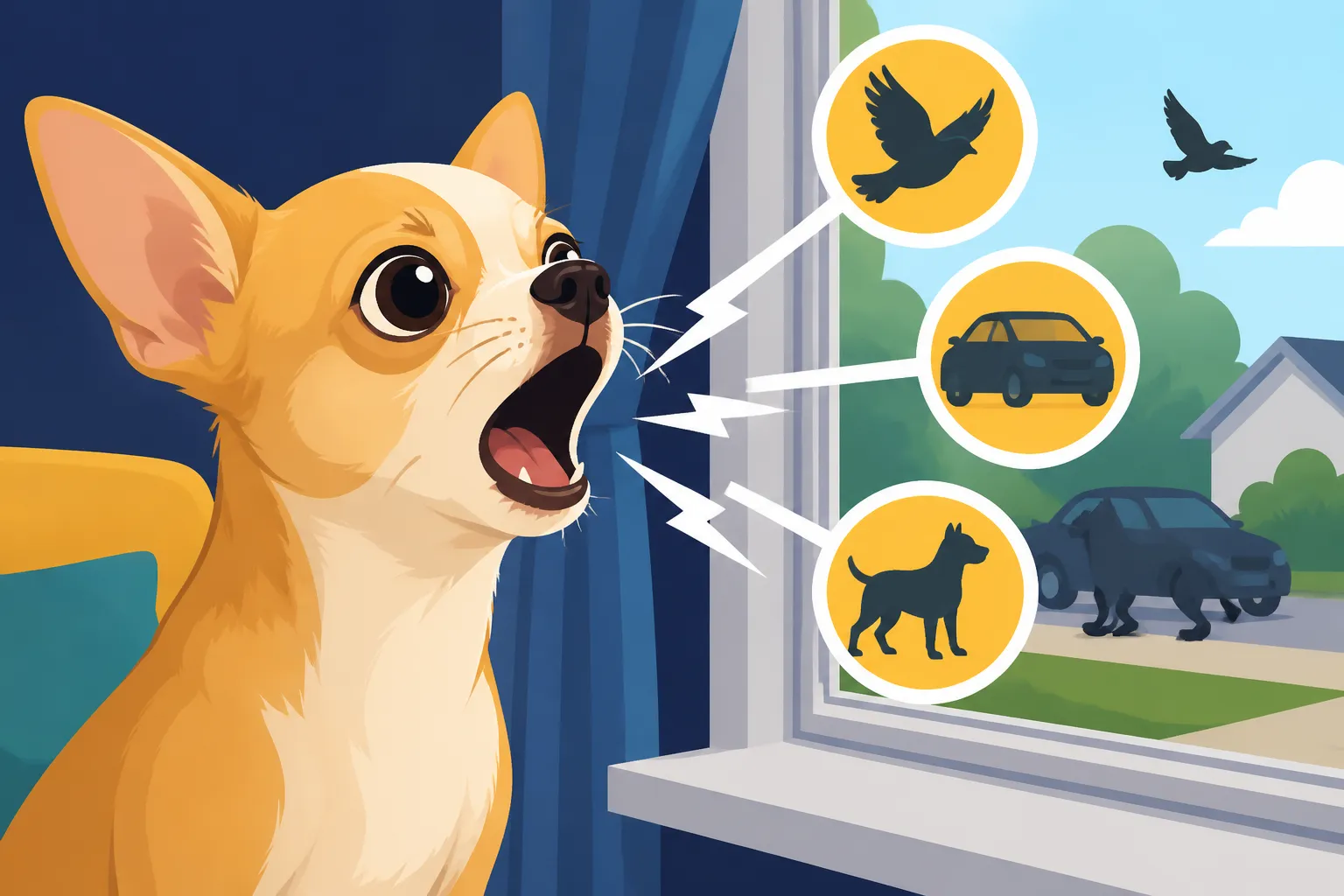
- Delivery Personnel and Mail Carriers: This is a classic one. The distinctive sound of a truck pulling up, the uniform, the approaching footsteps – it’s a whole sensory experience that often ends with a knock or doorbell ring, signaling an "intrusion." Your Chihuahua might perceive them as a direct threat to their territory or even to you. The consistent, predictable nature of these visits can make them potent triggers, especially since the person always leaves, seemingly "driven off" by the barking.
- Other Dogs and People: Whether it's a leisurely stroller with their dog, a jogger, or kids playing on bikes, any human or canine passing by can be a trigger. Some Chihuahuas bark out of pure territoriality, asserting their space. Others bark out of fear, especially if they haven't had positive experiences with strangers or larger dogs. A tiny dog seeing a huge German Shepherd walk by can feel genuinely threatened, even through a window. This can manifest as Fear-Based Reactivity in a Chihuahua, where their barking is a desperate plea for distance.
- Wildlife: Squirrels chasing each other up a tree, birds landing on the feeder, or even a leaf skittering across the lawn can be enough to send some Chihuahuas into a barking frenzy. Their prey drive, even if tiny, can be stimulated, or they might simply be reacting to unexpected movement in "their" yard.
- Unfamiliar Sounds: Beyond direct visual triggers, many Chihuahuas are incredibly sensitive to sounds. A distant siren, a car alarm, construction noise, or even the subtle hum of a neighbor's air conditioning unit can contribute to a heightened state of alertness that culminates in barking at even minor visual stimuli. It's like their "stress cup" fills up with sounds, and then the slightest visual cue makes it overflow.
Territorial and Fear-Based Barking
It's crucial to distinguish between territorial barking and fear-based barking, although they can often overlap. The underlying motivation can guide your approach to training and management.
- Territorial Barking: This is your Chihuahua saying, "This is my house, my yard, and you're too close!" It's often directed at things that approach or pass by what they perceive as their domain. The barking tends to be loud, assertive, and might involve pushing their body towards the window or door. They're trying to expand their presence and deter intruders. They might seem confident in their barking, sometimes even escalating their intensity if the trigger doesn't move away quickly enough. You might notice this more if they only bark when the "threat" is close to your property line, not just generally in the distance.
- Fear-Based Barking: This type of barking stems from anxiety and insecurity. Your Chihuahua isn't trying to scare something away so much as they're trying to make themselves feel safer by creating noise and distance. They might display other signs of fear, such as trembling, a tucked tail, whale eye (showing the whites of their eyes), or trying to retreat while still barking. This barking can often sound more frantic, high-pitched, or distressed. If the trigger doesn't leave, they might even escalate to snapping or lunging if they feel trapped. For these dogs, the barking is often a "keep away" signal because they are genuinely uncomfortable or scared, not necessarily trying to be dominant. Understanding Chihuahua Body Language Before a Snap can be vital here.
Practical Solutions: How to Reduce Constant Outdoor Barking
The good news is that outdoor barking, while challenging, is a behavior that can be managed and often significantly reduced with consistent effort and the right strategies. It requires a multi-pronged approach combining environmental management and targeted training.
Environmental Management and Prevention
Sometimes, the simplest solution is to reduce your Chihuahua's exposure to their triggers in the first place. If they can't see or hear the things that set them off, they can't bark at them!
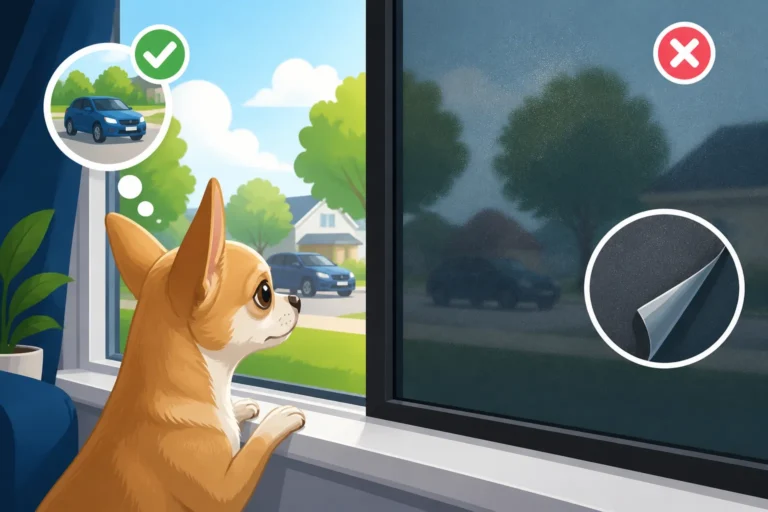
- Blocking Views: This is often the most effective immediate step. Consider applying Window Film and Blocking a Chihuahua's View to lower panes of windows that offer a prime viewing spot for passing triggers. Opaque or frosted film allows light in but obscures the view. Blinds or curtains, kept closed during peak trigger times, can also work wonders. Even placing furniture in front of the window can help block their line of sight. The goal isn't to make them live in a cave, but to limit their opportunity to practice the unwanted barking behavior.
- Sound Masking: For Chihuahuas sensitive to outdoor sounds, adding white noise can be incredibly helpful. A fan, a radio, or a dedicated white noise machine (easily found on Amazon) can help mask the sounds of traffic, distant conversations, or neighborhood dogs. This lowers the overall "sensory load" on your Chihuahua, making them less likely to react to every little noise.
- Strategic Playpens or Crates: If there are specific times of day when barking is at its worst (e.g., mail delivery time), consider confining your Chihuahua to a quieter area of the house or a playpen away from the windows during those periods. Make this a positive experience by providing a high-value chew or a puzzle toy to keep them happily occupied. This isn't punishment; it's proactive management.
Targeted Training Techniques
Management is great for preventing barking, but training helps change your Chihuahua's emotional response to triggers. This is where you teach them new, more appropriate ways to react.
- Desensitization and Counter-Conditioning: This involves gradually exposing your Chihuahua to triggers at a low intensity while simultaneously creating a positive association. Start by having a helper walk past your window or by playing recordings of trigger sounds (like doorbells or delivery trucks) at a very low volume. The moment your Chihuahua notices the trigger (but before they start barking), immediately reward them with a super-tasty treat. The goal is for them to associate the trigger with good things (treats!) rather than anxiety or territoriality. This is often called the "Look at That!" game: they look at the trigger, you say "Yes!" and give a treat. Eventually, they'll look at the trigger and then look at you, expecting a treat, instead of barking.
- Teaching a "Quiet" Cue: This is essential for A Stop Cue That Works on a Barking Chihuahua. First, teach your Chihuahua to bark on cue (e.g., by knocking on a door and saying "Speak!"). Reward them when they bark. Then, once they're barking, hold a treat in front of their nose. The instant they stop barking to sniff the treat, say "Quiet" and give the treat. Repeat this many times. Once they understand "Quiet," you can start using it when they bark inappropriately. Be patient, as it takes time and consistency.
- Reinforcing Calm Behavior: Don't just focus on stopping the barking; actively reward your Chihuahua when they are not barking in the presence of mild triggers. If a squirrel runs by and they simply watch quietly, praise them and give a treat. This reinforces that calm observation is a desirable behavior.
- Professional Guidance: For complex or deeply ingrained barking issues, working with a certified professional dog trainer is invaluable. They can assess your Chihuahua's specific triggers and motivations and provide tailored training plans. Online resources, like the comprehensive programs offered by BAXTER & Bella, can also provide structured guidance, video tutorials, and even live support to help you implement these training techniques effectively. They often break down complex behaviors into manageable steps, perfect for tiny Chihuahuas. Many of their modules are perfect for Marker Training a Chihuahua From Eight Weeks.
Consistency and Patience Are Key
It’s easy to get discouraged when you don't see immediate results, especially with a behavior as ingrained as barking. However, consistency from everyone in the household is paramount. If one family member is diligent with training and management, but another occasionally reinforces the barking (even accidentally), progress will be slow or non-existent.
Imagine you're trying to teach your Chihuahua not to jump on the sofa. If sometimes you allow it and sometimes you don't, how is your Chihuahua supposed to understand the rule? The same applies to barking. Establish clear rules and ensure everyone adheres to them. This might mean always closing the blinds during certain hours, always redirecting them with a toy when a trigger appears, or always rewarding them for quiet observation. Remember, you're trying to change a deeply rooted habit and potentially an emotional response, which takes time, understanding, and a whole lot of patience. It’s a marathon, not a sprint, and celebrating small victories along the way can help keep everyone motivated.
| Bark Type | Primary Motivation | Common Characteristics | Training/Management Approach |
|---|---|---|---|
| Alert Barking | Warning, drawing attention | Short, sharp, repeated barks; often stops when owner acknowledges. | Acknowledge, thank them, then redirect; teach "Quiet" cue. |
| Territorial Barking | Guarding perceived territory | Loud, assertive, deep barks; often directed at things approaching the home. | Block views, desensitize to triggers, reinforce calm presence. |
| Fear-Based Barking | Anxiety, desire for distance | Frantic, high-pitched, sometimes whimpering; accompanied by body language of fear (trembling, tucked tail). | Reduce exposure, counter-condition positive associations, build confidence Building a Chihuahua's Confidence Outdoors. |
| Attention-Seeking Barking | Desiring owner interaction | Persistent, demanding barks; stops when owner gives attention. | Ignore barking, reward quiet behavior; ensure needs are met. |
When to Call in the Pros: Seeking Expert Help for Persistent Barking
While many outdoor barking issues can be managed with the strategies above, there are times when you might feel like you're hitting a wall, or the problem seems to be escalating beyond your control. Knowing when to seek professional help is a sign of responsible pet ownership, not failure.
Recognizing When It's More Than Just Annoyance
Barking is a normal dog behavior, but excessive or aggressive barking can indicate underlying issues that require expert intervention.
- Escalation to Aggression: If your Chihuahua's barking consistently escalates to lunging, snapping, or attempts to bite, even when behind a barrier like a window, it's a serious red flag. This indicates that their fear or territoriality has crossed a threshold into genuine aggression. Waiting to address this can make it harder to resolve and potentially dangerous.
- Signs of Extreme Anxiety: Persistent barking that seems frantic, combined with other signs of severe anxiety like trembling, pacing, destructive behavior when you're gone (The Noise a Panicking Chihuahua Makes), or inappropriate urination/defecation, suggests that the barking is just one symptom of a larger anxiety disorder. These issues often require a more holistic approach, potentially including medication in conjunction with behavior modification. This is where a conversation with your vet about Whether Anxiety Medication Helps a Chihuahua might be appropriate.
- Impact on Quality of Life: If your Chihuahua's barking prevents them from enjoying walks, causes them significant stress during daily routines, or severely impacts your household's peace and quiet to the point of causing strain, it’s time for expert help. Your Chihuahua deserves to live a less stressed life, and you deserve a more peaceful home.
Finding the Right Professional
When you decide to bring in an expert, it’s important to find someone qualified who uses positive, force-free training methods, especially for a sensitive breed like a Chihuahua.
- Certified Professional Dog Trainers (CPDT-KA): These trainers have passed an independent certification exam and are skilled in working with common behavioral issues. They can observe your Chihuahua in their environment, pinpoint specific triggers, and develop a personalized training plan. They often offer one-on-one sessions or specialized classes. When choosing a trainer, make sure you're Vetting a Trainer Before You Book a Chihuahua, looking for someone who understands toy breed nuances and uses modern, humane methods.
- Veterinary Behaviorists (DACVB): For more severe cases, especially those involving aggression, generalized anxiety, or where medication might be considered, a board-certified veterinary behaviorist is the highest level of expertise. They are veterinarians with advanced training in animal behavior and can diagnose and treat behavioral disorders from both a medical and training perspective. They can prescribe medication if necessary and work in tandem with your regular vet.
- Online Resources with Support: While an in-person trainer is ideal for complex cases, structured online platforms like BAXTER & Bella can be a fantastic resource for learning the fundamentals of positive reinforcement and addressing common issues. Many offer live Q&A sessions, community forums, and direct access to trainers, which can be a valuable bridge before or in conjunction with in-person help. This allows you to learn at your own pace and apply consistent strategies.
Addressing excessive outdoor barking in your Chihuahua is a journey, not a destination. It requires patience, consistency, and a deep understanding of your little dog's unique perspective. But with the right strategies and, if needed, professional guidance, you can help your Chihuahua feel more secure and less compelled to alert the world to every passing shadow, leading to a much calmer, happier home for everyone.
Disclaimer
This article is for general informational purposes only and does not constitute professional advice. Laws, prices and regulations vary by location and change over time. Consult a qualified professional for guidance on your specific situation.