House Training a Chihuahua With a Tiny Bladder
One of the biggest frustrations for new Chihuahua owners is the seemingly endless struggle with house training. You've heard they have tiny bladders, and believe me, it's true – but it doesn't mean your adorable little companion is destined to pee indoors forever. This comprehensive guide will walk you through proven strategies, empathetic understanding, and practical tips to successfully house train your Chihuahua, even with their famously small bladders.
Understanding the Chihuahua Bladder
It's easy to get discouraged when your tiny Chihuahua seems to need to pee every twenty minutes. Many owners feel like they're constantly cleaning up accidents, leading to frustration and sometimes even mistakenly believing their dog is "stubborn" or "untrainable." The reality is, a Chihuahua's physiology is simply different from that of a larger breed, and understanding these differences is the first step toward successful house training.
The Science Behind a Small Bladder
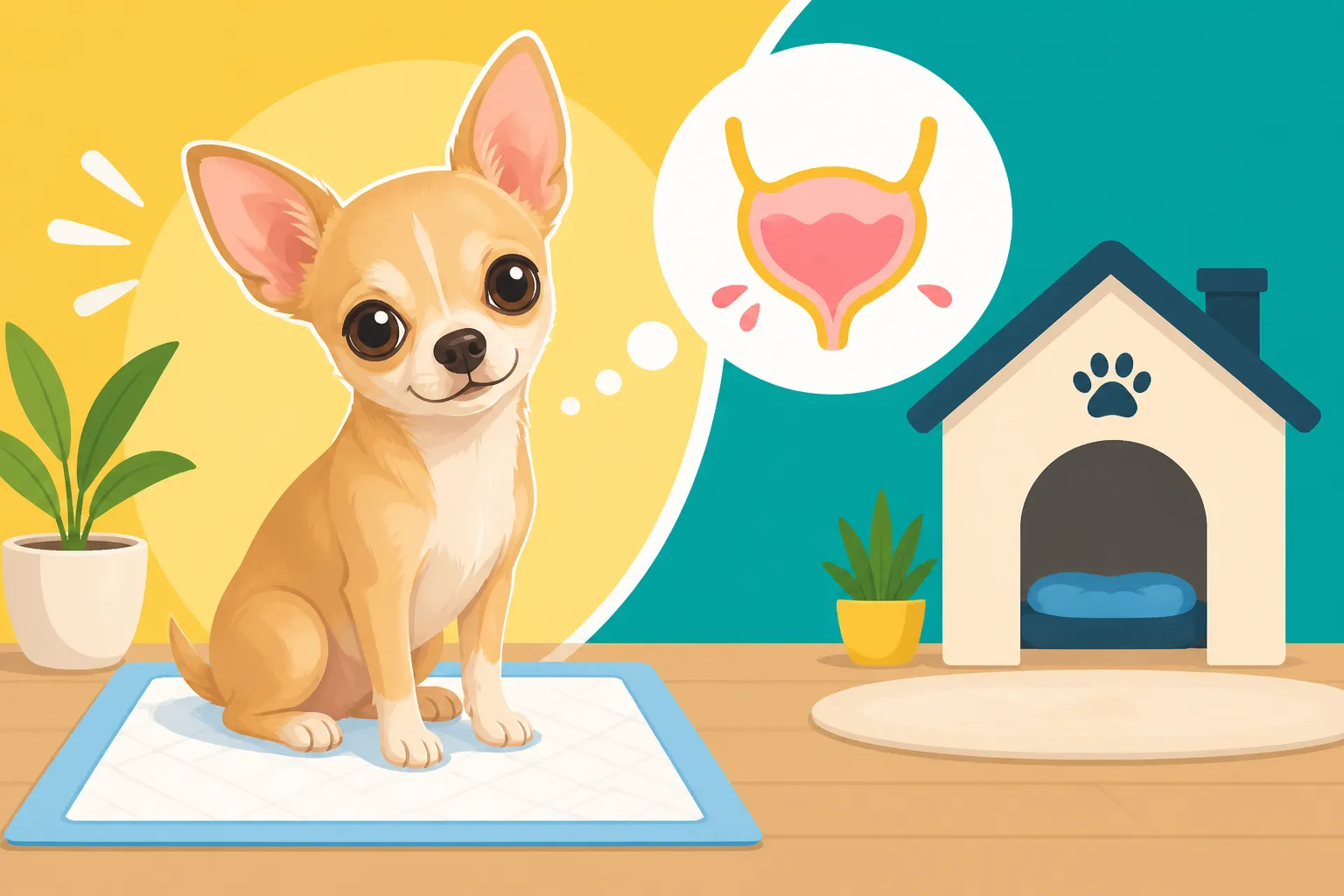
Let's get down to basics. A Chihuahua, even a robust six-pound one, has a bladder that is proportionately much smaller than that of a Labrador or even a Beagle. Think about it: an adult human can comfortably hold about 500ml (two cups) of liquid, while a newborn baby might only hold 50ml. The concept is similar for dogs, scaled to their body weight. A Chihuahua's bladder might hold only a few ounces of urine before it feels full, especially when they are puppies. This isn't a behavior problem; it's pure anatomy. Their small stature means smaller organs, including the bladder.
Beyond just volume, there's also the muscle development. Younger puppies, regardless of breed, have less developed bladder control muscles. For a Chihuahua puppy, this means they have even less capacity and less ability to "hold it" than a larger breed puppy of the same age. Their signals for needing to go might also be very subtle at first because they can go from "I'm fine" to "I HAVE to go NOW" in a blink.
How Bladder Size Impacts Potty Breaks
Given their small bladder capacity, Chihuahuas simply cannot hold their urine for as long as larger dogs. This is a critical point that many owners, especially those new to toy breeds, underestimate. A general rule of thumb for puppies is that they can hold their bladder for approximately one hour per month of age, plus one. So, a two-month-old puppy might only manage three hours, while a six-pound adult Chihuahua might comfortably hold it for 4-6 hours, sometimes a bit longer if they are deeply asleep or very calm. However, excitement, stress, or even a sudden drop in temperature can drastically shorten this window.
Imagine having a full bladder and needing to go, but the bathroom is a marathon away. That's how it can feel for a Chihuahua if their potty spot isn't quickly accessible. This physiological limitation means that you, the owner, must be far more proactive and frequent with potty breaks than you might be with a bigger dog. It's not about them being difficult; it's about setting them up for success within their natural limits.
Common Misconceptions About Chihuahua Bladder Control
One of the most damaging misconceptions is that Chihuahuas are inherently harder to house train. This often stems from owners attributing human motives to their dog's accidents. "He knows better, he just did it out of spite!" is a common refrain. In reality, dogs don't have spite. If a Chihuahua has an accident, it's almost always due to one of three reasons: they physically couldn't hold it, they weren't properly taught where to go, or there's an underlying medical issue. It's rarely a deliberate act of defiance.
Another myth is that carrying a Chihuahua everywhere makes them unable to walk to their potty spot. While excessive carrying can hinder socialization and confidence building, it doesn't physically impair their ability to walk to pee. The problem arises when carrying prevents them from signaling or being taken to the appropriate spot when they need to go, making accidents more likely. It also doesn't teach them the crucial habit of walking to their designated spot. Chihuahua Handling and Why Carrying Backfires is a really helpful read on this topic.
Setting Up for House Training Success
Successful house training is less about scolding and more about creating an environment where your Chihuahua can't help but succeed. This means thoughtful planning, the right tools, and unwavering consistency. It's about proactive prevention, not reactive punishment.
Creating a Dedicated Potty Zone
Every Chihuahua needs a clear, consistent place where they are expected to relieve themselves. This might be a specific patch of grass in your yard, a designated potty pad area indoors, or both. Consistency is key here. If you expect them to go in different spots every day, how will they ever learn the "right" place? Make this spot easily accessible, especially for a tiny puppy who can't hold it for long. For outdoor potty training, consider a spot close to a door that's easy for you to get them to quickly.
Ensure the potty area is clean and inviting. Dogs prefer to eliminate in clean spaces, so regularly scooping poop and cleaning up urine (especially from potty pads) is crucial. If your Chihuahua is trained to go outdoors, make sure that spot is free of harsh chemicals or anything that might deter them. For indoor solutions, a well-maintained artificial grass patch or a fresh potty pad can make a huge difference.
Essential Gear for House Training
You don't need a ton of fancy gadgets, but a few key items will make your house training journey much smoother.
- A well-fitting harness and leash: For outdoor potty breaks, a comfortable harness is crucial for a Chihuahua's delicate neck and trachea. Forget neck collars for potty training trips; a sudden tug can injure their windpipe. Look for brands that offer XS or XXS sizes that fit snugly without restricting movement. Harness Fitting on a Chihuahua Chest has more on this.
- High-value treats: These are absolutely non-negotiable for positive reinforcement. Think tiny, soft, super-tasty treats your Chihuahua only gets when they successfully potty in the right spot. Cheese, boiled chicken, or small training treats from brands like Zuke's or Wellness are often big hits.
- Enzyme cleaner: Accidents will happen. A good enzymatic cleaner is essential for truly eliminating urine odors, which can otherwise attract your Chihuahua back to the same spot for future accidents. Generic cleaners might remove the smell for you, but a dog's sensitive nose will still detect it.
- Crate or playpen: A crate, appropriately sized for your Chihuahua (they should be able to stand up, turn around, and lie down comfortably, but not have so much extra space that they can potty in one corner and sleep in another), can be an invaluable house training tool. Dogs naturally try not to soil their sleeping area. A playpen offers a larger, safe space for times when you can't actively supervise. You can find many suitable options for small dogs on Amazon.
- Potty pads or an indoor potty solution (optional): If outdoor access is difficult due to weather, apartment living, or your Chihuahua's preference, indoor solutions can be a lifesaver. These range from traditional absorbent pads to reusable artificial grass patches.
Here's a quick comparison of common potty training gear:
| Item | Purpose | Pros | Cons |
|---|---|---|---|
| Harness & Leash | Safe outdoor excursions | Prevents tracheal injury, good control | Requires proper fit, not for indoor use |
| High-Value Treats | Positive reinforcement | Motivates quick learning, strengthens bond | Can lead to weight gain if not portioned carefully |
| Enzyme Cleaner | Eliminates accident odors | Prevents repeat accidents in the same spot | Must be used thoroughly, can be pricey |
| Crate | Management and den training | Leverages natural den instinct, useful for travel | Must be introduced positively, not for long-term confinement |
| Playpen | Safe space for unsupervised time | More room than a crate, easy to clean | Takes up more space, not a substitute for outdoor breaks |
| Potty Pads / Indoor | Alternative to outdoor pottying | Convenient for bad weather or apartment living | Can confuse training if not phased out, not as hygienic |
The Importance of a Consistent Schedule
Chihuahuas thrive on routine. A predictable schedule helps them understand when and where they're expected to go. This means consistent feeding times, consistent potty breaks, and consistent sleep times. If your schedule is all over the place, your Chihuahua will struggle to learn.
A sample schedule might look like this:
- First thing in the morning: Potty break immediately upon waking.
- After every meal/drink: Within 5-15 minutes, out for a potty break.
- After waking from naps: Straight out for a potty break.
- After playtime/excitement: Potty break.
- Before bedtime: Last potty break of the night.
- Every 1-3 hours in between: Proactive potty breaks, especially for puppies or young adults.
Sticking to this like glue, especially in the first few weeks, will create strong habits. Your Chihuahua's small size actually makes this more important, not less. They simply don't have the buffer of a large bladder if you miss a scheduled break.
The Core Principles of Chihuahua Potty Training
Now that you've got the setup covered, let's talk about the actual training methods. For a Chihuahua, the gentlest and most effective approaches center around positive reinforcement, frequent opportunities, and diligent supervision.
Positive Reinforcement: The Only Way to Go
When your Chihuahua successfully pees or poops in the designated spot, it's like they've won the lottery. This is where those high-value treats come in. The instant their paws are off the ground, or even while they're still in the act, offer enthusiastic praise ("Good potty!"), then immediately follow with a tiny, delicious treat. The timing is crucial: the reward must be given within 3 seconds of the desired behavior for your Chihuahua to connect the two.
Avoid punishment for accidents. Yelling, scolding, or rubbing their nose in it does absolutely nothing to teach them where to go. Instead, it teaches them to fear you and to hide their accidents, which makes house training much harder. If you find an accident, simply clean it up with enzyme cleaner and resolve to be more vigilant with supervision and scheduled potty breaks next time. Positive reinforcement builds trust and makes the learning process enjoyable for both of you. Many successful trainers, like those at BAXTER & Bella, advocate for this gentle approach.
Frequent Potty Breaks: More Than You Think
This point really can't be emphasized enough for Chihuahuas. Because their bladders are so small, "frequent" means very frequent. For a young puppy, this could mean every hour on the hour, even if they just went. As they get a bit older, you might stretch it to every 2-3 hours. Remember, it's better to take them out too often than not often enough. If you're consistently taking them out and they don't go, you might be able to extend the time slightly, but always err on the side of caution.
Think of it as filling a small cup. Once it's full, it overflows. You want to empty that cup before it's completely full and bursting. Even if they only squat for a tiny trickle, praise and treat them. Every successful outdoor potty is a brick in the foundation of good habits. Don't assume that just because they went five minutes ago, they won't need to go again after a burst of zoomies or a big drink of water. This is particularly true for Chihuahua Hypoglycemia in the First Twelve Weeks, as frequent trips also mean more engagement and less stress on their systems.
Supervision and Management: Preventing Accidents
The golden rule of house training: if you can't actively watch your Chihuahua, they should be in their crate or a contained playpen. This prevents them from having unsupervised accidents and practicing the "wrong" behavior. Active supervision means keeping an eye on them, ideally within arm's reach, so you can spot pre-potty signals immediately.
What to look for:
- Sniffing the ground intensely: Circling and sniffing are classic pre-potty behaviors.
- Restlessness or pacing: They might seem agitated.
- Suddenly leaving the room: If they disappear around a corner, follow them!
- Whining or pawing at the door: Some Chihuahuas are excellent at signaling, others are very subtle.
- Squatting or lifting a leg: This is the obvious one, but often by this point, they've already started.
When you see any of these signs, don't scold them. Instead, calmly but quickly scoop them up (if safe and they don't mind), say "Outside time!" or your chosen potty cue, and rush them to their designated spot. If they finish outside, huge praise and treats! If they've already had an accident indoors, just clean it up without fanfare.
Tackling Common House Training Challenges
Even with the best intentions, house training a Chihuahua can present unique hurdles. Don't lose heart; these challenges are common and almost always surmountable with patience and the right approach.
Dealing with Indoor Marking
Marking is a particularly common issue with Chihuahuas, especially intact males, but females can do it too. It's often a territorial behavior, a way to say, "I was here!" rather than simply relieving a full bladder. Marking often happens on vertical surfaces like furniture legs, walls, or even your favorite throw pillow. It’s distinct from a full-bladder accident because it’s usually a small amount, sprayed with intent.
The first step for marking is often medical: rule out a urinary tract infection with your vet, as UTIs can cause increased urination and marking behavior. If medically clear, consider neutering or spaying if your Chihuahua isn't already, as this often reduces hormonal marking. For established marking, strict supervision and management are paramount. Use belly bands for male Chihuahuas when indoors and unsupervised, which catches any attempted marking. Clean existing marks thoroughly with enzymatic cleaner. Identify triggers—does it happen after guests leave? Around new items? By consistently interrupting the behavior and redirecting to an appropriate potty spot, you can retrain their habits. A Chihuahua Marking on Furniture goes into more detail.
When Your Chihuahua Hates the Rain or Cold
This is a big one for Chihuahuas! Their small size, thin coats, and lack of body fat make them incredibly susceptible to cold and wet weather. Asking a shivering Chihuahua to go out in a downpour is often a losing battle. They'll hold it, then dart inside and pee on your rug. This isn't defiance; it's self-preservation. Why a Chihuahua Shivers Indoors is a good read on their thermoregulation challenges.
To overcome this, equip your Chihuahua with appropriate weather gear. A warm, waterproof coat is essential for winter walks. Many companies offer tiny sizes perfect for Chihuahuas. Consider doggy boots to protect their sensitive paws from cold, salt, or hot pavement. If they still resist, create a sheltered outdoor potty spot, perhaps under an awning or a patio umbrella. For extreme weather, an indoor potty solution might be the best temporary (or permanent) answer. Take them out frequently, even in bad weather, and make the experience as quick and positive as possible with praise and treats.
Regressions and How to Handle Them
Just when you think you've got it all figured out, your perfectly house-trained Chihuahua might suddenly start having accidents again. This "regression" can be incredibly frustrating. First, rule out medical causes. Any sudden change in potty habits warrants a vet visit to check for UTIs, bladder stones, or other health issues. Chihuahua Bladder Stones and Diet could be a factor.
If medically clear, consider recent changes: a new schedule, new furniture, guests, a new pet, or even a change in food can all cause stress that leads to accidents. Sometimes, it's just a reminder that house training isn't a linear path. Go back to basics: increase supervision, go out more frequently, and lavish praise for successful outdoor potties. Avoid scolding. Sometimes, a "fear phase" in adolescence can cause anxiety and lead to accidents, so be extra patient and reassuring.
Advanced Strategies and Troubleshooting
Sometimes the standard approach needs a little extra finesse, especially with a breed as unique as the Chihuahua. These strategies can help solidify training or address more persistent issues.
Using Indoor Potty Solutions
For many Chihuahua owners, indoor potty solutions are a game-changer. These are not a sign of failure but a practical adaptation to a small dog's needs, especially if you live in an apartment, work long hours, or face extreme weather.
- Potty Pads: Disposable potty pads are widely available, often found on Amazon. They are absorbent and come in various sizes. The key is to be consistent: place them in the same spot, clean them regularly, and reward successful use. If you initially use pads, decide if you want them to be a long-term solution or a bridge to outdoor training. If the latter, gradually move the pad closer to the door, then outside.
- Artificial Grass Patches: These offer a more natural feel for your Chihuahua and can be a good option if they prefer grass. Brands like Fresh Patch or even generic versions with a tray system can work well. They need regular cleaning to prevent odor.
- Litter Boxes for Dogs: Yes, some Chihuahuas can be litter-box trained! This involves a low-sided litter box with specific dog litter (usually paper pellets or artificial grass). It can be a very clean and convenient indoor option, especially for single Chihuahuas or those living in smaller spaces. Litter Box Training a Chihuahua is a detailed guide on this.
The main challenge with indoor solutions is ensuring your Chihuahua doesn't confuse them with other household surfaces. Always place them distinctly, away from eating or sleeping areas, and reinforce their use heavily.
Recognizing Potty Cues and Body Language
While we discussed general potty signals earlier, truly understanding your individual Chihuahua's subtle cues is an advanced skill that comes with observation. Some Chihuahuas will give a hard stare, others a tiny whine, some will just quietly drift towards the door.
- The "Silent Retreat": Many Chihuahuas, especially if they've been inadvertently punished for accidents, will try to slip away to a less noticeable spot to relieve themselves. Learn to spot when they suddenly leave the room, stop playing, or seem unusually focused on a hidden corner.
- The "Suddenly Alert" Look: Sometimes, they'll just pause, look up at you with wide eyes, and then start sniffing. That sudden stillness and focus can be a precursor to needing to go.
- Circling and Sniffing: This is a classic. They're trying to find the "perfect" spot. If you see this indoors, it's an emergency dash to the potty area.
The more you observe your Chihuahua, the better you'll become at anticipating their needs. Keep a mental checklist: When was the last time they ate, drank, played, or napped? These events are almost always followed by a need to potty.
When to Seek Professional Help
If you've diligently followed all the advice, ruled out medical issues, and your Chihuahua is still having consistent accidents or marking aggressively, it might be time to bring in a professional. This isn't a sign of failure but a smart investment in your dog's well-being and your peace of mind.
- Certified Professional Dog Trainer (CPDT-KA): A trainer specializing in positive reinforcement and small breeds can offer personalized guidance. They can observe your Chihuahua's behavior in your home environment, identify subtle triggers, and help you refine your techniques. Finding a Trainer Who Takes a Chihuahua Seriously is a must-read.
- Veterinary Behaviorist (Dip ACVB): If the issues seem rooted in anxiety, fear, or other complex behavioral problems that don't respond to standard training, a veterinary behaviorist is the highest level of expertise. They are vets first, so they can prescribe medication if needed in conjunction with a behavior modification plan.
- Breed-Specific Rescue Groups: Often, Chihuahua rescue organizations have a wealth of experience with common breed-specific challenges. They might offer advice, resources, or even direct training support.
Remember, every dog is an individual. What works perfectly for one Chihuahua might need tweaking for another. A professional can help you navigate these nuances.
Long-Term Habits for a House-Trained Chihuahua
House training isn't a one-and-done deal; it's a commitment to maintaining good habits throughout your Chihuahua's long life. Because they live so long, often into their teens, consistency over years is what really makes the difference. Chihuahua Lifespan and Why the Breed Reaches Sixteen highlights just how many years you'll be partners.
Maintaining Consistency Throughout Their Life
Even a fully house-trained adult Chihuahua benefits from a consistent routine. Don't assume that once they're trained, you can relax all rules. Continue with regular potty breaks, especially after waking, eating, and playing. If you suddenly change their schedule dramatically, expect potential regressions.
As your Chihuahua ages, their bladder control might naturally weaken, or they might develop age-related health issues like kidney disease or Mitral Valve Disease in an Older Chihuahua which can increase thirst and urination. Be extra vigilant with older Chihuahuas. If you notice an increase in accidents in a senior dog, it's always worth a vet check-up to rule out underlying health problems. Making their potty spot easily accessible, perhaps with a ramp if stairs become difficult, can also help them maintain their good habits into their golden years. Senior Chihuahua Care Past the Age of Twelve emphasizes this.
Adapting to Travel and New Environments
Life happens, and sometimes you need to travel with your Chihuahua or take them to new places. These situations can throw off even the most reliably house-trained dog. The key is preparation and returning to basic house training principles.
- Travel Prep: Before a road trip, plan frequent stops for potty breaks. Bring familiar items like their bed or a favorite toy to help them feel secure in a new place. If staying in a hotel, ensure you know where the designated pet relief areas are.
- New Home/Environment: When visiting friends or family, treat your Chihuahua like a puppy again. Supervise constantly, take them out frequently, and use your potty cue. Don't assume they understand that your aunt's beige carpet is off-limits just because your carpet at home is fine. Keep them on a leash indoors if needed to prevent unsupervised wandering and accidents.
- Portable Potty Solutions: For long car trips or hotel stays, a travel-friendly indoor potty solution (like a portable grass patch or a few potty pads) can provide a safe and familiar place for them to go, reducing stress for both of you.
The Role of Diet and Hydration
What goes in definitely impacts what comes out. Your Chihuahua's diet plays a subtle but important role in house training.
- Consistent Feeding Schedule: Feeding your Chihuahua at consistent times will lead to more predictable potty times. Avoid free-feeding, where food is always available, as this makes potty predictability nearly impossible. Why a Chihuahua Should Never Graze All Day is a solid point here.
- High-Quality Food: A good quality, easily digestible food means fewer, firmer poops and a more regulated digestive system. Cheap foods with lots of fillers can lead to more frequent and unpredictable bowel movements.
- Water Access: Always provide fresh water, but be mindful of when they drink. Restricting water is cruel and unhealthy. Instead, adjust your potty schedule around their water intake. For instance, if your Chihuahua tends to drink a lot right before bed, take them out for an extra potty break 15-20 minutes later.
Remember, house training a Chihuahua requires patience, consistency, and a deep understanding of their unique needs. It might take longer than with a larger breed, but the reward of a fully house-trained, happy companion is absolutely worth every effort.
Disclaimer
This article is for general informational purposes only and does not constitute professional advice. Laws, prices and regulations vary by location and change over time. Consult a qualified professional for guidance on your specific situation.