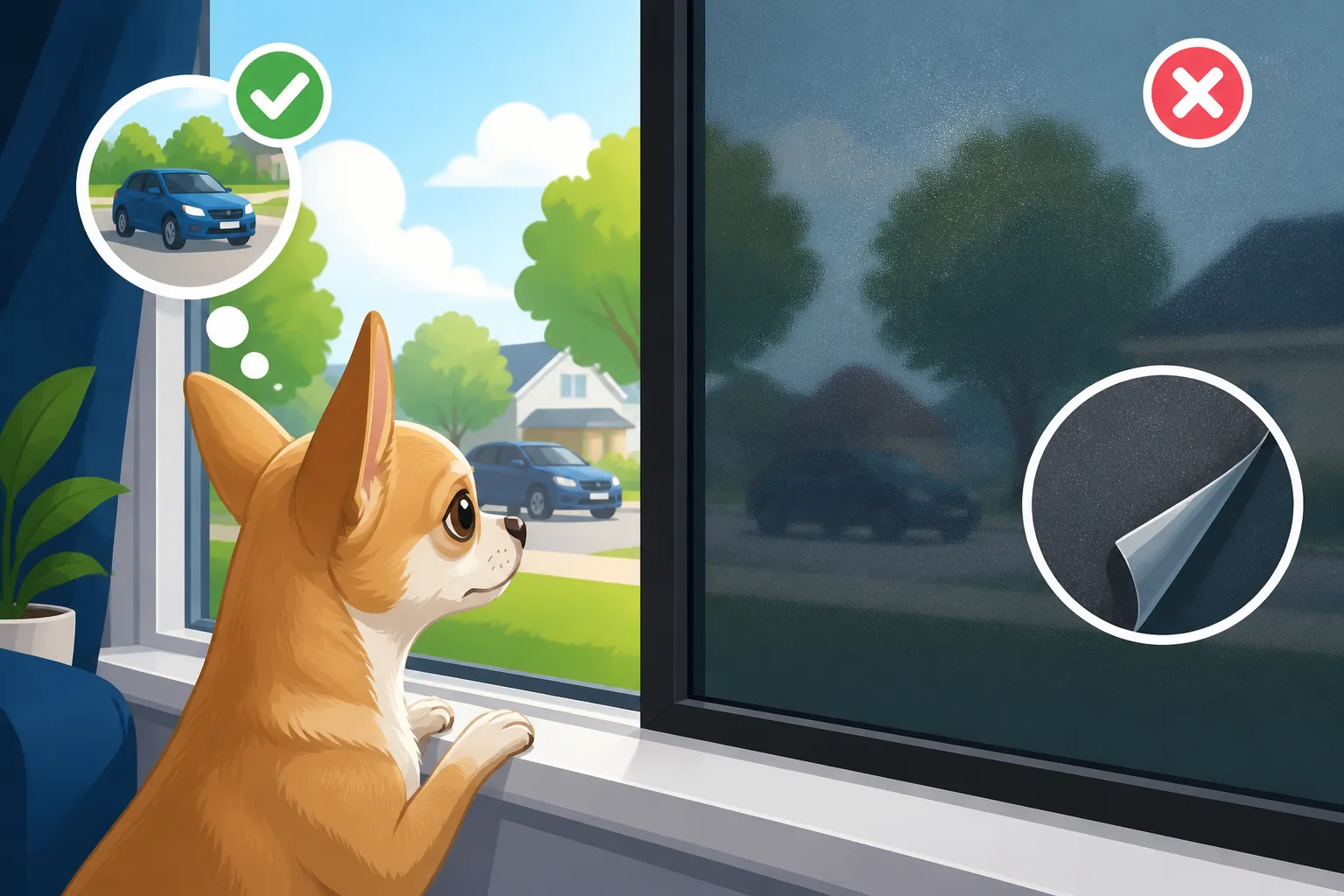
Window Film and Blocking a Chihuahua’s View
Few things are more grating than the constant, high-pitched alarm of a Chihuahua barking incessantly at everything that moves outside your window. It’s frustrating for you, stressful for your tiny companion, and can be a real nuisance for neighbors. If you’ve tried everything from shouting to coaxing with little success, it might be time to address the root cause of the problem: what your Chihuahua can see. This guide will walk you through how window film can be a game-changer for reducing window reactivity and bringing a much-needed sense of calm back into your home.
Understanding Why Your Chihuahua Barks at the Window
Before we dive into solutions, it’s really helpful to understand why your sweet little Chihuahua turns into a barking maniac at the sight of a leaf blowing by, a squirrel, or even just a shadow. It’s rarely about being "naughty" and almost always stems from some very instinctual, often misunderstood, drives.
The Root Causes of Window Reactivity in Chihuahuas
Chihuahuas, despite their diminutive size, are often packed with a surprising amount of personality, and a healthy dose of protective instinct. When they bark at the window, it's typically for one of a few key reasons:
- Territoriality: This is a big one. Your Chihuahua views your home as their territory, and anything moving outside that perimeter can be perceived as an intruder. That delivery person, the dog walking by, or even a child playing across the street becomes a perceived threat to their domain. They are sounding the alarm, doing their "job" to warn you and scare off the perceived danger. It's a deeply ingrained behavior for many dogs, and Chihuahuas, with their brave-little-dog attitude, often take this role very seriously.
- Fear and Anxiety: Sometimes, barking isn't about aggression or guarding, but about fear. The world outside can be a big, overwhelming place, and a small Chihuahua might feel vulnerable. A sudden movement, a loud noise, or an unfamiliar sight can trigger an alarm response. This is especially true for Chihuahuas who haven't been adequately socialized or had positive experiences with the outside world from a young age. Their barking is a way of saying, "Stay away! I'm scared!" or "Help! Something's out there!" This fear can easily escalate into full-blown Chihuahua Fear Reactivity, the Breed's Real Problem.
- Boredom and Lack of Stimulation: Believe it or not, sometimes a Chihuahua barks at the window simply because there's nothing else to do. If they're not getting enough mental or physical exercise, that window can become their personal reality TV show. Every passing car, person, or animal provides a momentary distraction, and barking becomes a self-reinforcing activity. It gives them something to focus on, even if it's not a particularly productive outlet for their energy.
- Attention-Seeking: While not always the primary driver, some Chihuahuas quickly learn that barking gets a reaction from their humans. You might try to soothe them, tell them "no," or even pick them up – all of which, from their perspective, means "I barked, and I got attention!" This reinforces the behavior, making it more likely to happen again.
How a Chihuahua's Size Exacerbates the Problem
It's easy to dismiss a tiny Chihuahua's barking as less serious than, say, a German Shepherd's, but their size actually plays a significant role in why they bark so much and why it can be so hard to manage.
- Feeling Vulnerable: Imagine being only a few pounds, with every human, dog, and even a large bird seeming like a giant. Chihuahuas often feel incredibly vulnerable in a world not built for their scale. This feeling of being small can lead to an overcompensation, where they feel the need to be extra vocal and assertive to make up for their lack of physical presence. They might feel like they have to "act big" to protect themselves and their family. This is sometimes mistaken for "small dog syndrome," but it's often a learned behavior or a reaction to feeling unprotected.
- Everything is a Close-Up: Because they are so low to the ground, what a Chihuahua sees outside the window can be an intensely close-up and distorted view of feet, wheels, and lower bodies. This can make otherwise benign objects seem more imposing or sudden. A person walking by might just be a blur of legs and motion, which can be disorienting and frightening.
- Overcompensating with Noise: Since they can't physically intimidate, Chihuahuas often rely on their voice. They can produce an incredibly loud and persistent bark for their size, and they use it effectively to try and deter perceived threats. This is why Why a Frightened Chihuahua Gets Loud First is often observed; it's their first line of defense.
- Difficulty in Sensory Processing: A constant stream of visual information, especially for a small dog whose senses are already on high alert, can be overwhelming. They might struggle to process all the stimuli, leading to heightened stress and a persistent alarm response.
Understanding these underlying reasons helps us approach the solution with empathy and a clearer strategy. It's not just about stopping the barking; it's about making your Chihuahua feel safer and less overwhelmed.
Exploring Window Film as a Solution for Barking Chihuahuas
So, you've established that your Chihuahua's window-barking stems from territoriality, fear, or overstimulation. The good news is, there’s a simple, often overlooked, solution that can address many of these issues: window film. It acts as a visual barrier, effectively removing the triggers that set your Chihuahua off, while still allowing natural light into your home.
Different Types of Window Film and Their Benefits
Window film isn't a one-size-fits-all product. There are various types, each with its own characteristics, that can be beneficial depending on your specific needs and aesthetic preferences. Most of these can be easily found and purchased through retailers like Amazon.
- Frosted Window Film: This is perhaps the most common and effective type for reducing barking. Frosted film has a matte, opaque finish that blurs the view, making it impossible for your Chihuahua to see clear shapes or movements outside.
- Benefits: Excellent privacy, diffuses harsh sunlight, still allows plenty of natural light, relatively inexpensive, and easy to apply (often self-adhesive). It turns your window into a soft, glowing panel, eliminating specific triggers like the mail carrier or the neighbor's cat.
- Decorative Window Film: These films come in a wide range of patterns, from stained-glass effects to intricate designs, or even films that mimic etched glass. They offer a more aesthetic approach while still providing a visual barrier.
- Benefits: Adds a touch of style to your home, provides privacy, and still allows light. The patterns can be quite distracting for a dog, breaking up the view enough to prevent clear identification of triggers.
- Reflective or One-Way Mirror Film: This type of film creates a mirrored effect on one side (usually the exterior), making it difficult to see in during the day while allowing you to see out.
- Benefits: Offers excellent daytime privacy, can reduce glare and heat, and stops your dog from seeing out while allowing you to maintain your view. Keep in mind that at night, when it's darker outside than inside, the effect reverses, and people can see in.
- Privacy Window Film (Non-frosted, textured): These often have a subtle texture or pattern that obscures vision without being completely opaque like frosted film. They might have vertical or horizontal lines, or a pebbled effect.
- Benefits: Good balance between privacy and light transmission, adds a subtle design element, and still blurs the outside world enough to be effective.
Here's a quick comparison of popular window film types for barking Chihuahuas:
| Film Type | Visual Obstruction (Chihuahua's View) | Light Transmission | Privacy Level (Day) | Aesthetic Appeal | Best For |
|---|---|---|---|---|---|
| Frosted | High (Blurs all detail) | High | High | Simple, modern | Maximum bark reduction, minimalist look |
| Decorative | Medium-High (Pattern dependent) | Medium-High | Medium-High | Varied, artistic | Bark reduction with added home decor |
| Reflective | High (Mirrored exterior) | Medium | Very High | Sleek, contemporary | Daytime bark reduction, maintaining human view |
| Textured | Medium (Obscures, not fully opaque) | High | Medium-High | Subtle, understated | Good bark reduction, less heavy feel |
How Window Film Helps Reduce Barking
The mechanism behind window film's effectiveness is quite straightforward: it eliminates the visual triggers that cause your Chihuahua to bark.
- Blocking External Stimuli: This is the primary benefit. When your Chihuahua can't clearly see the squirrel darting across the lawn, the neighbor walking their Labrador, or the kids playing street hockey, their brain doesn't register it as a threat or something to react to. The constant stream of "things to bark at" is dramatically reduced. This can lead to a significant decrease in alert barking, which then reduces stress for your dog.
- Creating a Calmer Environment: Imagine being on high alert all day, every day, constantly scanning for potential threats. That's how many Chihuahuas feel when they have an unrestricted view of the outside world. By blocking that view, you're essentially turning down the volume on their external sensory input. This allows them to relax more, spend less time stressed and vigilant, and more time being a calm, happy house dog.
- Reduces Stress and Anxiety: For Chihuahuas whose barking is rooted in fear, obscuring the view can be a huge relief. They no longer have to constantly confront things that make them feel anxious. This reduction in baseline stress can have a positive ripple effect on their overall behavior and well-being. A calmer dog is a happier dog, less prone to other stress-related behaviors.
- Breaks the Habit Cycle: Barking at the window can become a deeply ingrained habit. Every time your Chihuahua barks and the "threat" (like the mailman) eventually goes away, it reinforces in their mind that their barking worked. Window film helps break this cycle by removing the initial trigger, preventing the barking from starting in the first place. Over time, the habit can diminish as the reinforcement is removed.
It's a non-aversive, humane way to manage a common and challenging behavior. Instead of punishing the barking, you're proactively managing the environment to prevent it.
Choosing and Installing the Right Window Film for Your Home
Once you're sold on the idea of window film, the next step is figuring out which type is best for your specific situation and then getting it installed correctly. It's a DIY project that most people can tackle with a bit of patience.
Assessing Your Chihuahua's Specific Needs
Not all windows are created equal when it comes to Chihuahua barking. Before you start ordering film from Amazon, take a moment to observe your dog and your home.
- Identify Problem Windows: Which windows are the main culprits? Is it the large picture window in the living room, the sliding glass door to the backyard, or a low-to-the-ground window in the spare bedroom? Focus your efforts on the windows where your Chihuahua spends the most time watching and reacting. Sometimes, it's not every window, but just one or two strategic spots.
- Determine the "Barking Height": Your Chihuahua isn't looking out from your eye level. They're seeing the world from a much lower perspective. Get down on their level. What can they actually see? You might only need to apply film to the lower portion of the window, up to about 2-3 feet from the sill, to effectively block their view without obscuring yours entirely. This is a great compromise if you still enjoy looking out.
- Consider Light and Aesthetics: How much natural light do you want in that room? If it's a room that already gets a lot of light, a frosted or patterned film that diffuses light might be perfect. If it's a naturally darker room, you might want to consider a film that still allows maximum light transmission while obscuring the view. Also, think about your home's interior design. Does a frosted film fit the aesthetic, or would a decorative pattern be more appealing?
- Temporary vs. Permanent: Most window films are removable, making them suitable for renters or for those who want to test the waters. However, some are designed for more permanent application. Double-check the product description before purchasing.
A Step-by-Step Guide to Installation
Installing window film is generally a straightforward process. You won't need many specialized tools, but a clean work area and a steady hand help a lot.
-
Gather Your Supplies:
- Window film (measure your windows carefully and add a few inches for trimming)
- Measuring tape
- Sharp utility knife or box cutter with extra blades
- Squeegee or credit card (for smoothing)
- Spray bottle filled with water and a few drops of dish soap
- Paper towels or a clean microfiber cloth
- Ruler or straight edge
- Pencil or marker (for marking film)
-
Clean the Window Thoroughly: This is crucial! Any dust, dirt, or grime left on the glass will create bubbles or imperfections under the film. Spray the window with your soapy water solution and use your squeegee to scrape off any residue. Wipe it sparkling clean with a paper towel or microfiber cloth. Repeat until the glass is spotless.
-
Measure and Cut the Film: Measure the exact height and width of your window pane. Then, unroll your window film and carefully mark these dimensions, adding about 1-2 inches to each side. It's better to cut it a bit too large and trim later than too small. Use your ruler and utility knife to cut the film as straight as possible.
-
Spray the Window (Again!): Liberally spray the entire clean window pane with your soapy water solution. Don't be shy; the more wet it is, the easier it will be to position the film and remove bubbles.
-
Peel and Apply: This is the trickiest part, especially for larger windows. Most window films have a clear backing liner. Carefully peel off a small section of this liner from one corner of the film. As you peel, spray the adhesive side of the film with your soapy water solution. This prevents it from sticking to itself and allows for easier maneuvering. Align the exposed adhesive edge of the film with the top edge of your window pane. Slowly and steadily peel the rest of the backing liner, continuously spraying the adhesive side, and gently lay the film onto the wet glass.
-
Position and Smooth: Once the film is on the glass, you can slide it around slightly to get it perfectly aligned, thanks to the soapy water. Once you're happy with the position, spray the outside surface of the film with your soapy water. This provides lubrication for your squeegee. Starting from the center and working your way out to the edges, use your squeegee to firmly push out all the water and air bubbles. Overlap your strokes, and be thorough. You'll see the water squish out from under the film.
-
Trim the Edges: Using your utility knife and a straight edge (like your ruler), carefully trim any excess film from the edges, creating a clean, flush line with the window frame. Take your time with this step to avoid jagged edges. You might need to change your blade if it starts to drag.
-
Final Squeegee and Wipe: Give the entire film one last squeegee pass, paying extra attention to the edges. Wipe away any remaining water with a clean cloth. Your film is now installed! Give it a day or two to fully cure, and you'll notice how it immediately changes your Chihuahua's window-gazing habits.
With your windows now providing visual peace, you'll be amazed at how quickly your Chihuahua adjusts.
Combining Window Film with Other Training Techniques
Window film is an excellent management tool, but it's rarely a standalone solution. For lasting change, especially if your Chihuahua's barking is rooted in deep-seated fear or anxiety, combining environmental management with positive reinforcement training is key. This holistic approach will not only stop the barking but also help Build a Chihuahua's Confidence Outdoors and indoors.
Reinforcing Calm Behavior
When you manage the environment with window film, you're taking away the opportunity for your Chihuahua to practice the unwanted behavior. Now, it's your job to teach them what to do instead.
- Positive Reinforcement for Quiet: Catch your Chihuahua being calm near the window (or where the window used to be a trigger). When they're lying down, looking away from the window, or just relaxing, quietly reward them with a small, high-value treat. The goal is to make "being quiet" more rewarding than barking. Start with very short periods of calm and gradually increase the duration. You can use a clicker or a verbal marker like "yes!" to pinpoint the exact moment of calm you're rewarding.
- Counter-Conditioning: This involves changing your Chihuahua's emotional response to something that once caused them stress. If your Chihuahua used to bark at the sight of people walking by, you can (if you have an area that isn't fully filmed) expose them to a very low-level trigger – perhaps someone walking much further away, or even a video of a person walking – and immediately follow it with delicious treats. The idea is: trigger = delicious treats. Over time, the association shifts from "person = scary, bark" to "person = yummy food, calm." This is a slower process, but incredibly effective for deep-seated fear. If you're looking for structured guidance on this, online training platforms like BAXTER & Bella offer comprehensive modules that cover counter-conditioning and desensitization.
- Teaching a "Quiet" Command: While window film reduces the need for this, teaching a "quiet" cue can be useful for situations where a visual trigger still occurs (e.g., when the front door opens, or you are outside). Start by waiting for your Chihuahua to bark a few times, then hold a highly desirable treat near their nose. The moment they stop barking to sniff the treat, say "Quiet!" and reward them. Repeat this many times. Eventually, you can introduce the "Quiet!" command before they even bark, rewarding them for not barking. This works hand-in-hand with Giving a Chihuahua an Alternative to Barking.
Management and Environmental Enrichment
Even with window film, it's important to provide a rich and engaging environment for your Chihuahua to prevent boredom, which can lead to other unwanted behaviors, including destructive chewing or excessive barking elsewhere.
- Internal Barriers: If your Chihuahua is still prone to trying to peer around the edges of the window film, or if you have windows you can't film, consider using internal barriers. Baby gates or exercise pens can be placed strategically to block access to problem windows, especially when you're not there to supervise. This is particularly helpful if your Chihuahua is also prone to Chihuahua Marking on Furniture near windows.
- Provide Alternative Views and Naps Spots: Give your Chihuahua a comfortable, cozy spot away from the windows where they can feel secure and relax. This could be a Heated Beds and Whether They Are Safe in a quiet corner, a soft bed in a crate (perhaps after some successful Chihuahua Crate Training), or a blanket-lined den. The idea is to redirect their focus from external threats to internal comfort.
- Mental Stimulation: Since they can no longer be entertained by the "outside TV," you need to provide alternative forms of mental stimulation.
- Puzzle Toys: Toys that dispense treats when manipulated are fantastic. Brands like KONG, West Paw, and various snuffle mats can keep a Chihuahua engaged for surprisingly long periods. Look for Puzzle Toys Sized for a Chihuahua that are appropriate for their small mouths and cognitive level.
- Interactive Play: Engage them in short, fun play sessions throughout the day. Fetch with a soft toy, hide-and-seek, or even teaching simple tricks. Indoor Games for a Chihuahua can burn energy and provide mental exercise.
- Chews: Safe, long-lasting chews can satisfy their natural urge to chew and keep them occupied. Always choose chews appropriate for their size and chewing style.
- Structured Training Sessions: Enroll in an online training program like BAXTER & Bella, which provides a wealth of resources and guidance on puppy and dog training. Their comprehensive curriculum can help you teach your Chihuahua polite manners, basic obedience, and build their confidence, giving them a more positive outlet for their energy than barking at the window. Consistency is key here.
- Regular Exercise: Even small Chihuahuas need regular physical exercise. Short, consistent walks (on a harness, of course, to protect their delicate trachea) can help burn off excess energy and provide mental enrichment through new smells and sights (in controlled environments). Remember, a tired Chihuahua is often a quiet Chihuahua.
By implementing window film alongside these training and management strategies, you're not just quieting your Chihuahua's barking; you're actively working to reduce their stress, build their confidence, and foster a more harmonious home environment for everyone. It's a testament to how small changes can make a huge difference in the life of your tiny companion.
Disclaimer
This article is for general informational purposes only and does not constitute professional advice. Laws, prices and regulations vary by location and change over time. Consult a qualified professional for guidance on your specific situation.