Chihuahuas Around Toddlers and Rough Hands
For many of us, our Chihuahuas are like our children, cherished and protected. But what happens when actual tiny humans, with their unpredictable movements and boundless energy, enter the picture? The combination of a fragile, sensitive Chihuahua and an inquisitive, sometimes clumsy toddler can feel like navigating a minefield, leaving owners feeling constantly on edge about potential nips or accidental injuries. This guide is here to walk you through the nuances of this delicate dynamic, helping you understand why Chihuahuas react the way they do to rough hands and offering practical strategies to foster a safe, respectful environment for everyone in your home.
The Unique Vulnerabilities of Chihuahuas Around Toddlers
Let's be real, Chihuahuas are tiny. Their small size is a huge part of their charm, but it also makes them incredibly vulnerable, especially to the sometimes unwitting actions of young children. It’s not just about their delicate bones; it’s about their whole existence as a small creature in a world built for giants. This inherent vulnerability shapes their reactions and requires us, as their guardians, to be hyper-aware.
Physical Fragility and the Risk of Injury
Imagine being the size of a coffee cup in a house full of people who tower over you. That's essentially a Chihuahua's daily experience. Their bones are fine, their skulls can have an open soft spot called a The Chihuahua Molera and What a Soft Spot Means, and a simple fall from a sofa or an accidental tumble from a child’s arms can lead to serious injury. A toddler, still developing fine motor skills and spatial awareness, often doesn't understand the concept of gentle touch or the fragility of a small dog. Their excited hugs can be crushing, their curious pokes can be painful, and their attempts to "play" can easily escalate into a dangerous situation. We've all seen a toddler's enthusiastic pat turn into a thud, or a loving squeeze become too tight. It’s not malice, it’s just their stage of development, but for a Chihuahua, it’s a real threat.
Innate Alertness and Reactive Tendencies
Chihuahuas are known for their alert nature; they're often described as having a "terrier-like" spirit by the breed standard. This means they're very tuned into their environment, quick to notice changes, and often quick to react. While this can make them excellent little watchdogs, it also means they can be easily startled or overwhelmed by sudden movements, loud noises, or unfamiliar interactions – all hallmarks of toddler behavior. A child's sudden run, a shriek of excitement, or an unexpected grab can trigger a fear response in a Chihuahua. This isn't "aggression" in the traditional sense, but rather a desperate attempt at self-preservation. Chihuahua Fear Reactivity, the Breed's Real Problem is a common concern, and when fear is amplified by physical vulnerability, a snap can be a Chihuahua's only perceived defense. They're not being "mean," they're saying "I'm scared and I need space!"
Past Experiences Shaping Current Reactions
Just like people, Chihuahuas carry their past experiences with them. A Chihuahua who has previously had a negative encounter with a child, or even a clumsy adult, might develop a lasting aversion or fear. If they've been accidentally stepped on, dropped, or handled roughly in their puppyhood, they will learn to anticipate danger from similar interactions. This learned fear can manifest as growling, retreating, or even snapping as a preemptive measure. Even if your current toddler is perfectly gentle, a Chihuahua's past can dictate their initial reaction, making it crucial to understand their history and approach new introductions with extreme caution and patience. This is especially true for adopted Chihuahuas, whose early lives might be unknown.
Understanding Toddler Development and Common Missteps
Dealing with the Chihuahua side of the equation is one thing, but understanding the toddler's perspective is equally vital. Toddlers are mini-scientists, constantly exploring the world through touch, sound, and movement. Their actions are driven by curiosity and a developing understanding of cause and effect, not by a desire to harm. Recognizing these developmental stages can help parents anticipate potential problems and intervene proactively.
The Developmental Stage of a Toddler
Toddlers, typically between one and three years old, are undergoing massive cognitive and physical development. They are learning to walk, run, and explore independently. Their gross motor skills are improving rapidly, but fine motor control is still rudimentary. This means they might grab with their whole hand rather than gently touch with fingertips. They also lack a full understanding of empathy or the consequences of their actions. To a toddler, a Chihuahua might look like a living, moving toy – something to poke, pull, or pick up. They don't grasp that pulling an ear hurts, or that dropping the dog could cause a broken leg. Their understanding of "gentle" is often still abstract and requires constant, patient reinforcement.
Common Toddler Behaviors That Stress Chihuahuas
There are several behaviors common to toddlers that can be particularly stressful or dangerous for a small dog like a Chihuahua. These are not signs of a "bad" child, but simply typical developmental actions that need careful management.
- Sudden Movements and Loud Noises: Toddlers are prone to quick, erratic movements and sudden bursts of sound – shrieks, cries, loud laughter, or banging toys. These can be incredibly startling for a Chihuahua, triggering their natural fight-or-flight response.
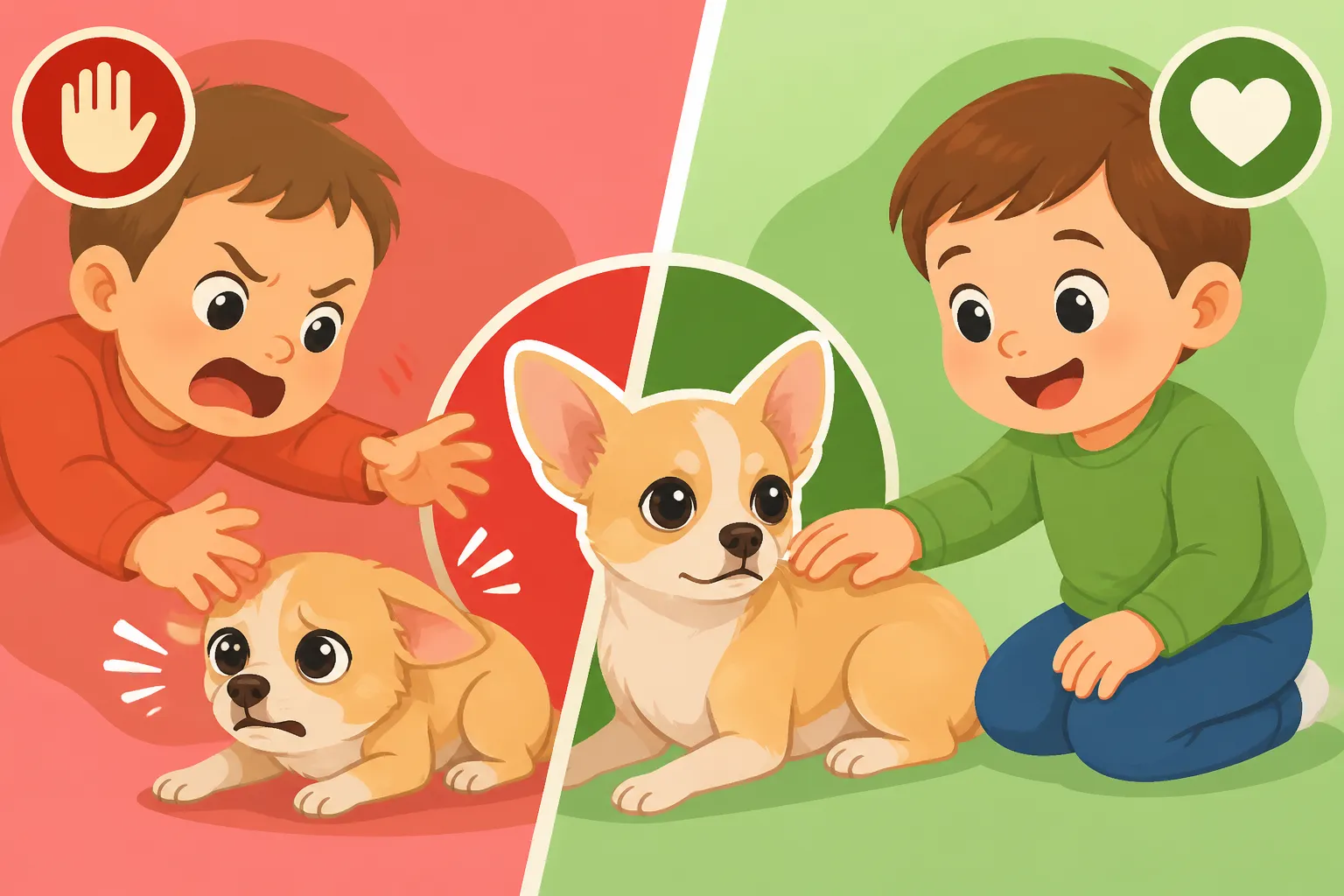
- Grabbing and Pulling: Little hands are learning to grasp, and anything within reach is fair game. A Chihuahua's tail, ears, or even fur can become targets for a curious toddler's grip. This is painful and can quickly lead to a defensive snap.
- Attempting to Pick Up or Carry: The urge to pick up and cuddle a small dog is strong, even for adults, but for a toddler, it's often done incorrectly and with unstable balance. A fall can be catastrophic for a Chihuahua. Showing a Child How to Hold a Chihuahua is a crucial lesson, but often one that toddlers aren't ready for until they are much older and more coordinated.
- Invading Personal Space: Toddlers often don't understand personal boundaries. They might crawl into a dog's bed, stand over them while they're eating, or follow them relentlessly. This lack of personal space can make a Chihuahua feel trapped and increase their stress levels significantly.
- Treating the Dog Like a Toy: Whether it's trying to dress them, ride them, or push them in a stroller, toddlers sometimes view pets as toys. This not only disrespects the dog's autonomy but can also lead to physical discomfort and anxiety for the Chihuahua.
Proactive Strategies for Safe Coexistence
Creating a harmonious home for both your Chihuahua and your toddler isn't about hoping for the best; it's about intentional, proactive management and consistent training. This multi-faceted approach addresses the needs of both child and dog, aiming to prevent problems before they start.
Constant, Active Supervision
This is the golden rule, and it cannot be stressed enough: never leave a Chihuahua and a toddler unsupervised, even for a second. This might sound extreme, but the risks are simply too high for both parties. Active supervision means being fully engaged, not just in the same room. You need to be close enough to intervene immediately if you see a questionable interaction. This isn't about being a helicopter parent, but about being a responsible pet owner and parent. If you can't actively supervise, separate them.
- Setting Up Safe Spaces: Designate safe zones where your Chihuahua can retreat without being bothered. This could be a crate, a dog bed elevated on a stand, or a separate room. Use baby gates, readily available on platforms like Amazon, to create physical barriers between spaces. This allows your Chihuahua to relax, knowing they have an escape route and a place where they won't be accosted. Similarly, consider a playpen for your toddler, also easily found on Amazon, to give them a safe, contained area while your Chihuahua roams freely elsewhere.
- Leash Management: During initial introductions or when active supervision is challenging but separation isn't feasible (e.g., you're trying to make dinner), a leash can be a temporary management tool. Keep your Chihuahua on a leash, held by an adult, allowing for immediate redirection or removal if a toddler approaches inappropriately. This is a short-term solution, not a permanent one, but it can buy you precious seconds.
Educating Your Child: Gentle Hands and Respectful Interaction
While toddlers have developmental limitations, it's never too early to start teaching them how to interact respectfully with animals. This requires patience, repetition, and a consistent message from all adults in the household.
- "Gentle Hands" Training: Teach your child the concept of "gentle hands" by demonstrating on yourself, a stuffed animal, or even on your Chihuahua when the dog is calm and willing. Guide their hand to lightly stroke the dog's back, saying "gentle hands" repeatedly. Reward them profusely with praise when they do it correctly. Make sure to choose moments when your Chihuahua is relaxed and receptive.
- Rules for Interaction: Establish clear, simple rules that even a toddler can understand:
- "We don't chase the dog."
- "We don't pull ears or tails."
- "We let the dog come to us." (This ties into Letting a Chihuahua Choose to Approach.)
- "We don't bother the dog when it's in its bed or eating."
- "We don't pick up the dog."
- Supervised "Petting Sessions": Orchestrate short, positive, and heavily supervised interactions. Sit on the floor with your Chihuahua next to you, and your child a short distance away. Invite your child to "pet gentle" for a few seconds, then praise both dog and child. Keep these sessions brief and end them before either party gets overwhelmed. If your Chihuahua shows any sign of discomfort, end the session immediately and provide them a safe retreat.
Training Your Chihuahua: Desensitization and Positive Reinforcement
Your Chihuahua also needs guidance on how to behave around children. This isn't about forcing them to "like" toddlers, but about helping them tolerate and feel safe in their presence.
- Positive Associations: Create positive associations with your toddler's presence. When your toddler is calm and quiet (perhaps playing in their designated area), give your Chihuahua a high-value treat or engage them in a favorite quiet game. This helps your Chihuahua associate the child with good things.
- Desensitization: Gradually expose your Chihuahua to toddler-related sights and sounds from a distance. For example, have your toddler play in another room while your Chihuahua is on a leash with you, receiving treats. Slowly decrease the distance over time, ensuring your Chihuahua remains calm and comfortable.
- Obedience Training: Basic obedience commands like "sit," "stay," "come," and "go to your bed" are invaluable for managing a Chihuahua around children. These commands allow you to direct your dog away from potential conflicts or to a safe space. Many online training programs, like those offered by BAXTER & Bella, include family dog components that can be incredibly helpful for teaching these foundational behaviors in a positive, reward-based way. A well-trained Chihuahua is a more confident Chihuahua, and a confident dog is less likely to react out of fear.
Decoding Your Chihuahua's Signals: When They're Uncomfortable
Our Chihuahuas communicate constantly, even if they don't use words. Learning to read their body language is perhaps the most critical skill for preventing negative interactions with toddlers. They will almost always give warning signs before resorting to a growl or a snap. Ignoring these subtle signals puts everyone at risk.
Subtle Signs of Stress and Discomfort
Before a full-blown growl or snap, Chihuahuas will display a range of more subtle stress signals. These are their ways of saying, "I'm not happy," or "I need space."
- Lip Licking or Yawning (when not tired or hungry): These are appeasement behaviors, often indicating stress or a desire to de-escalate a perceived threat.
- Turning Head or Body Away: If your Chihuahua physically tries to move their head or body away from the child, they are clearly indicating they want distance.
- "Whale Eye": This is when you can see the whites of their eyes, often accompanied by a stiff body posture. It's a clear sign of anxiety. Reading a Chihuahua's Whale Eye is a vital skill.
- Freezing or Becoming Still: A Chihuahua that suddenly freezes and becomes very still, sometimes with a tense body, is often feeling immense pressure and is contemplating its next move. This is a critical moment where intervention is needed. A Chihuahua That Freezes Before It Bites highlights the danger.
- Low Tail Carriage or Tail Tucked: While Chihuahuas can carry their tails in many ways, a tail tucked tightly between the legs is a universal sign of fear or anxiety.
- Panting (when not hot or exercising): Excessive panting can be a sign of stress or anxiety.
- Trembling: Chihuahuas famously tremble for many reasons (cold, excitement), but if it occurs in conjunction with a toddler's approach, it's likely a sign of fear.
Escalating Warnings: Growling and Snapping
If the subtle signs are missed or ignored, a Chihuahua's warnings will escalate. These are not malicious acts but increasingly desperate attempts to create distance and ensure safety.
- Growling: A growl is a clear, unmistakable warning. It means, "Stop what you're doing, or I will defend myself." Many owners are tempted to scold a growling dog, but this is a mistake. Scolding a growl teaches the dog that warning signals are unacceptable, meaning they might skip the growl next time and go straight to a bite. Instead, respect the growl, remove the child (or dog), and re-evaluate the situation. What a Chihuahua Growl Is Actually Telling You explains this further.
- Snapping (Air-Snapping or Contact Snap): A snap can be an air-snap (a warning bite that doesn't make contact) or a contact snap (a quick bite that makes contact but doesn't necessarily break skin). Both are serious warnings. They indicate the Chihuahua feels their life or safety is in immediate danger. A Chihuahua That Snaps Because Its Knee Hurts reminds us that pain can also be a significant trigger for snapping, so always consider underlying health issues. If a snap occurs, immediate and thorough intervention is required to prevent more serious bites. This is where professional help from a certified behaviorist becomes crucial.
Acting on the Signals: Intervention and Prevention
The moment you see any of these signals, whether subtle or overt, you must act immediately.
- Create Distance: Gently but firmly remove the child from the dog's space, or guide the dog to their safe zone.
- Assess the Situation: What triggered the reaction? Was it a sound, a touch, proximity? Understanding the trigger helps you prevent it next time.
- Reinforce Rules: Remind your child (and yourself!) of the rules for respectful interaction.
- Seek Professional Help: If growling or snapping becomes a recurring issue, or if you feel overwhelmed, consult a certified professional dog trainer or a veterinary behaviorist. They can provide tailored guidance and help you implement a safe management plan. It's an investment in the safety and harmony of your home.
Managing Accidental Rough Handling and Unexpected Encounters
Even with the best intentions and diligent supervision, accidents can happen. A child might trip and fall onto your Chihuahua, or an unexpected visitor might not understand your family's dog rules. Knowing how to react in these moments is crucial for mitigating harm and reinforcing safety.
Immediate Response to Incidents
When an accidental rough handling incident occurs, your immediate response can shape the outcome for both your child and your Chihuahua.
- Prioritize Safety First: If a snap or bite occurs, your first priority is to separate the child and dog safely. Ensure the child is okay and tend to any injuries. Then, move your Chihuahua to their designated safe space to decompress.
- Avoid Punishment: It's instinctual to react with anger when your child is hurt or your dog reacts poorly. However, punishing your Chihuahua after a fear-based incident will only increase their fear and anxiety around children, making future interactions more dangerous. Your Chihuahua acted out of fear, not spite. Instead, focus on understanding the trigger and preventing future occurrences.
- Check Your Chihuahua for Injury: A fall or rough handling can easily injure a small Chihuahua. Gently check them for limping, tenderness, or unusual behavior. If anything seems off, a vet visit is warranted. A Chihuahua That Cries Out and Then Walks On can be a sign of a hidden injury, like a slipping kneecap.
Reinforcing Boundaries with Visitors and Family
Your immediate family might be on board with the rules, but what about grandparents, friends, or even older siblings who don't spend as much time with your Chihuahua and toddler? It's your responsibility to educate them.
- Communicate Clear Rules: Before guests arrive, explain your strict rules about dog-child interactions. Emphasize that the Chihuahua's safety is paramount and that children should never be left unsupervised with the dog.
- Demonstrate Proper Interaction: Show visitors how your child should interact gently with your Chihuahua, and model respectful behavior yourself.
- Utilize Physical Barriers: If you have guests over, especially those with young children who might not respect your rules, use baby gates or a crate to ensure your Chihuahua has a protected space. This is not being rude; it's being responsible. It's often easier to manage the environment than to constantly manage people's behavior.
Long-Term Strategies for a Peaceful Household
Building a truly peaceful home environment for Chihuahuas and toddlers takes ongoing commitment, but it's entirely achievable.
- Consistent Training for All: Keep up with your child's education on gentle hands and respectful behavior. Similarly, continue reinforcing your Chihuahua's positive associations and obedience commands. Consistency is key for both species.
- Empathy and Understanding: Remember that both your Chihuahua and your toddler are learning and growing. Approach their interactions with empathy, understanding their limitations and needs.
- Professional Guidance: Don't hesitate to seek help from a certified professional dog trainer or a veterinary behaviorist if you encounter persistent challenges. They can offer invaluable insights and practical solutions tailored to your specific situation. They can help you address underlying Chihuahua Fear Reactivity, the Breed's Real Problem or other behavioral concerns.
- Celebrate Small Victories: Acknowledge and celebrate every positive interaction – a moment of calm proximity, a gentle stroke from your child, or your Chihuahua choosing to relax near your toddler. These small victories build confidence and reinforce the idea that a harmonious home is possible.
Here's a quick look at common stress signals versus signs of a relaxed Chihuahua:
| Chihuahua Body Language | Sign of Stress/Discomfort | Sign of Relaxation/Comfort |
|---|---|---|
| Eyes | "Whale eye" (whites visible), wide, staring | Soft, almond-shaped, blinking, relaxed gaze |
| Mouth | Lip licking (no food present), tight lips, closed mouth | Soft, open mouth (sometimes panting), relaxed tongue, slight smile |
| Ears | Pinned back against head, stiffly forward, twitching | Relaxed, natural carriage (upright or folded, depending on breed) |
| Tail | Tucked low between legs, stiff, rapid wagging | Relaxed wag, held in natural position (over back or low but loose) |
| Body Posture | Crouched, frozen, stiff, hunched, leaning away | Loose, fluid movements, relaxed muscles, lying down, stretching |
| Behavior | Yawning (no tiredness), trembling, avoidance, growling, snapping | Soliciting attention, playing, resting comfortably, eating |
| Vocalization | Growling, panicked yips, excessive barking | Soft grunts, content sighs, playful barks |
By recognizing these signals, you can proactively intervene and ensure your tiny companion feels safe and loved, even with the spirited presence of a toddler in the home.
Disclaimer
This article is for general informational purposes only and does not constitute professional advice. Laws, prices and regulations vary by location and change over time. Consult a qualified professional for guidance on your specific situation.