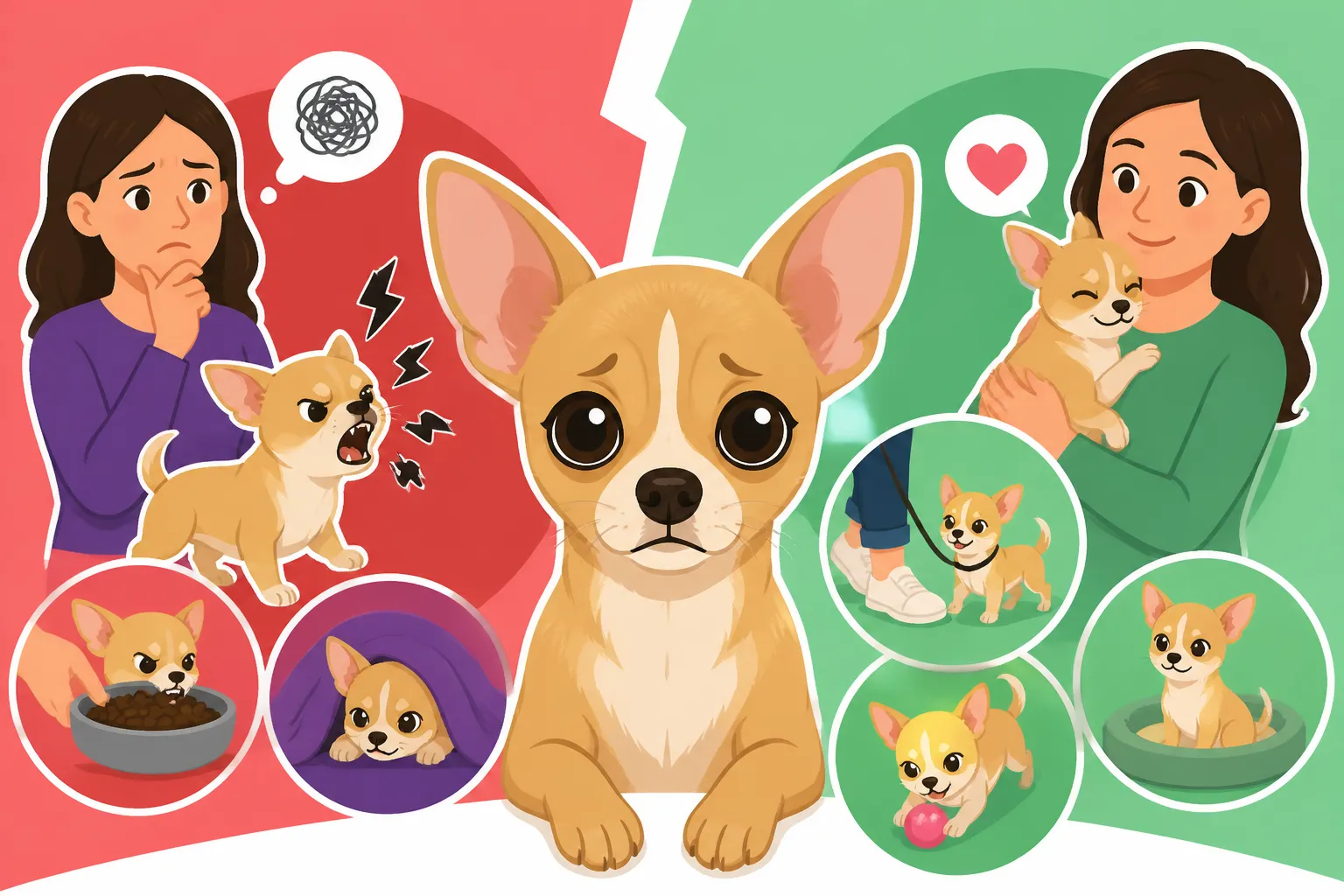
The First Year Mistakes Chihuahua Owners Make
Bringing home a new Chihuahua puppy or even an adult rescue is an incredibly exciting time, full of dreams of cuddles and tiny adventures. But let's be honest, the first year can also be a rollercoaster, and it's easy to fall into some common pitfalls that, while well-intentioned, can lead to bigger behavior or health challenges down the road. This guide is all about shining a light on those frequently made mistakes by new Chihuahua owners and offering practical, empathetic advice to help you build a solid foundation for a happy, well-adjusted tiny companion right from the start.
Underestimating Their Training Needs
It's a mistake I see time and time again: new Chihuahua owners, absolutely smitten with their adorable, tiny bundles of joy, completely underestimate the need for robust training. Because they're so small, it's easy to assume they don't need the same kind of discipline or structure as, say, a German Shepherd. But here's the truth: a Chihuahua is still a dog, and without proper guidance, they can develop behavioral issues that are just as frustrating, if not more so, than those of a larger breed.
Thinking Small Dogs Don't Need Real Training
Many people look at a Chihuahua and see a perpetual puppy, a little accessory that can be carried everywhere and indulged in every whim. The thought of formal obedience classes might even seem silly for a dog that fits in your handbag. But this mindset is a huge disservice to your Chihuahua. They are intelligent, capable learners who thrive on structure and knowing what's expected of them. Without it, they often become insecure, anxious, and prone to acting out.
Imagine a scenario where your tiny Chihuahua, "Peanut," constantly barks at every guest, nips at ankles when startled, and guards your lap with growls. You might shrug it off as "just a Chihuahua being a Chihuahua," but really, these are signs of an untrained dog who hasn't learned appropriate boundaries or social skills. They need to learn commands like "sit," "stay," "come," and "leave it" just as much as any other dog. In fact, a good online training program, like the one offered by BAXTER & Bella, can be incredibly helpful for new owners, breaking down the steps in an easy-to-understand way that applies to all breeds, even the smallest ones. They just need consistency and positive reinforcement, often in Three Minute Training Sessions With a Chihuahua to match their attention span.
Excusing Undesirable Behaviors
One of the most common first-year mistakes is inadvertently creating what's often called "Small Dog Syndrome." This isn't a genetic condition; it's a collection of behaviors that arise when owners treat their small dogs differently from large ones, often excusing growling, snapping, or incessant barking because the dog is "just little." We might find a tiny bark cute at first, or allow them to growl at guests because, well, who's really intimidated by a two-pound dog?
The problem is, these behaviors are signals of insecurity, fear, or a lack of understanding boundaries. A Chihuahua that is allowed to growl at guests or snap when picked up unpredictably is a stressed Chihuahua. It's not fair to them to live in a state of constant anxiety where they feel they have to defend themselves. Over time, these excused behaviors can escalate, making your Chihuahua a challenging, rather than charming, companion. This is why it's crucial to address issues like Letting a Chihuahua Growl at Guests early on, understanding that these are behavioral concerns, not just "breed quirks."
Neglecting Leash Training and Socialization
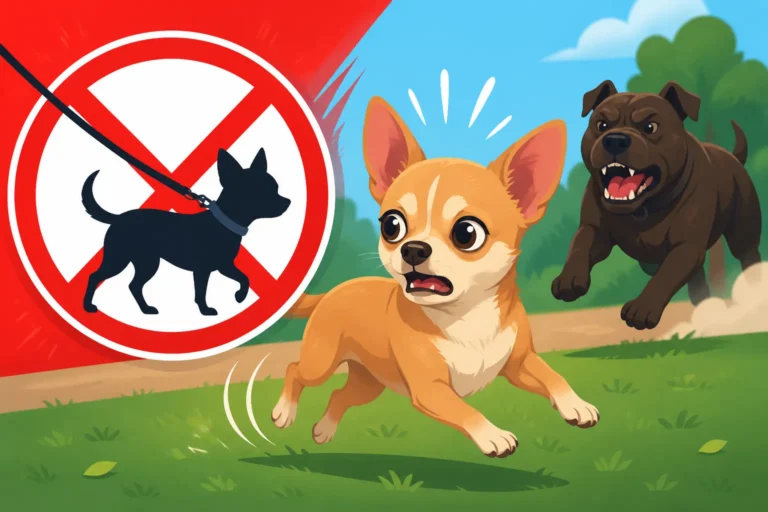
Many Chihuahuas spend a good portion of their lives being carried, either for convenience or because owners fear for their safety on the ground. While carrying can be necessary in certain situations, making it the primary mode of transport during walks or social outings robs your Chihuahua of vital experiences. They miss out on exploring the world through their nose, feeling different textures under their paws, and learning appropriate leash manners.
Moreover, if they're always in your arms, they're not learning how to interact politely with other dogs or people from the ground up. This can lead to increased fear-based reactivity. They might bark frantically from your shoulder because they feel vulnerable and trapped, unable to assess a situation properly. Proper Chihuahua Leash Training on a Harness is fundamental, using a well-fitting harness that protects their delicate neck. Early and consistent Socialization That Does Not Flood a Chihuahua is key, allowing them to experience the world safely and calmly at their own pace.
Improper Socialization and Handling
Bringing a tiny, adorable Chihuahua home can make you want to shower them with constant affection and pick them up whenever you feel like it. While love is wonderful, improper handling and a lack of thoughtful socialization during that critical first year can inadvertently create a fearful or reactive dog. Chihuahuas are small and delicate, and their experiences shape their worldview immensely.
Carrying Your Chihuahua Everywhere
This is probably one of the most common, well-intentioned mistakes new Chihuahua owners make. You want to protect them from big feet, rowdy kids, or larger dogs, so you scoop them up and carry them through stores, parks, and even around the house. The thought is, "They're safe here in my arms." However, this practice often backfires on their confidence and socialization.
When your Chihuahua is constantly carried, they miss out on crucial opportunities to learn about the world on their own terms. They don't learn how to navigate different surfaces, encounter new smells, or confidently greet people and other dogs from the ground. Instead, they might become overly reliant on you for safety, developing intense separation anxiety or becoming fearful and defensive when they are on the ground. A Chihuahua perched in your arms might feel like a vulnerable target, leading to anxious barking or snapping at anything that comes too close. While a good carrier can be helpful for travel or crowded places, the goal should be for your Chihuahua to be a confident walker, learning to navigate the world on their own four paws. For more on this, consider reading What a Chihuahua Loses by Never Touching the Ground.
Rushing Socialization or Exposure
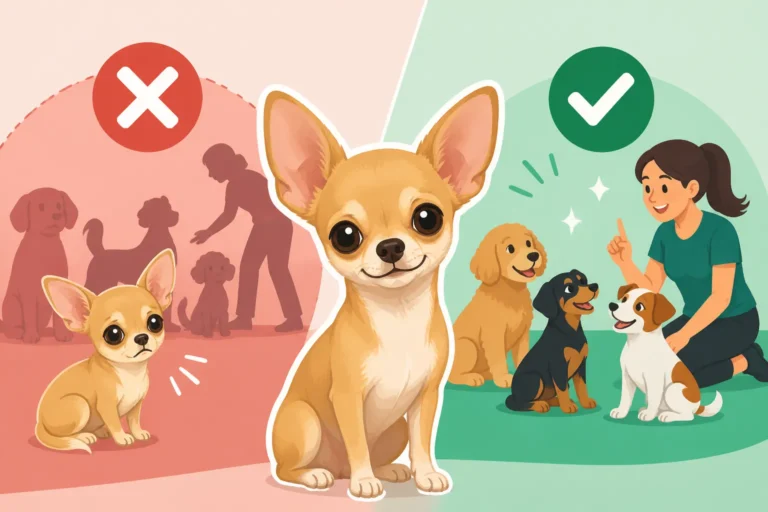
The socialization window for puppies is incredibly important, typically between 3 and 16 weeks of age. During this time, positive exposure to a wide variety of sights, sounds, smells, people, and other vaccinated, calm dogs helps build a resilient and confident adult dog. The mistake many Chihuahua owners make is either completely neglecting this period out of fear, or conversely, rushing it and overwhelming their tiny puppy.
Over-socialization, like throwing a tiny puppy into a chaotic dog park, can be just as damaging as under-socialization. A negative experience with a larger, boisterous dog can leave a lasting impression of fear and distrust. Instead, focus on controlled, positive exposures. For example, introduce your Chihuahua to calm, gentle adult dogs of various sizes one-on-one. Let them observe new environments from a safe distance, rewarding their calm curiosity. Think about using a puppy stroller or carrying them in a front-facing sling to safely expose them to new sights and sounds without direct, potentially overwhelming interaction. An online training program can also guide you through appropriate The Chihuahua Socialization Window and Its Deadline activities.
Improper Physical Handling
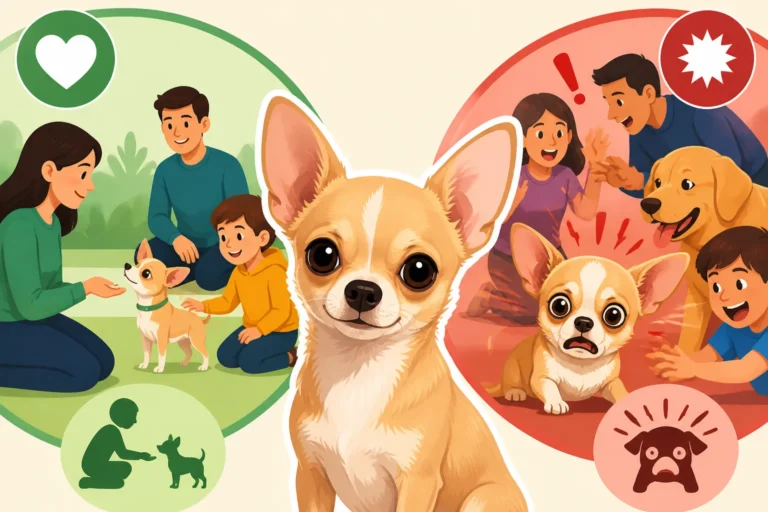
Chihuahuas are small and surprisingly delicate. Their bones are tiny, their neck is vulnerable, and they can easily be injured by rough handling or accidental drops. New owners, particularly those not used to toy breeds, might not realize how gently these dogs need to be handled. Children in the home also need explicit instruction on how to interact respectfully with a Chihuahua.
Mistakes include picking them up without warning, squeezing too tightly, or allowing them to jump off high furniture repeatedly. Always approach your Chihuahua calmly, give them a moment to acknowledge you, and support their entire body when lifting them, especially under their chest and hindquarters. Teach them a "lift" cue so they learn to expect and even participate in being picked up. Encouraging jumping off sofas and beds might seem harmless, but over time, it can contribute to joint issues like patellar luxation, a common problem in the breed. Instead, provide ramps or steps for easy access. Teaching them to consent to handling, even for simple things like nail trims or ear cleaning, builds trust and reduces stress.
Neglecting Physical Needs Specific to a Chihuahua
While all dogs need good care, Chihuahuas have some very particular physical needs due to their tiny size and breed-specific predispositions. Overlooking these in the first year can lead to significant health problems down the line. It's not just about keeping them fed and walked; it's about understanding the nuances of their small bodies.
Inconsistent Potty Training Efforts
Ah, potty training! It’s a challenge for any puppy, but with a Chihuahua, it feels like the stakes are even higher due to their notoriously tiny bladders. Many new owners get frustrated by frequent accidents and assume their Chihuahua is "stubborn" or "hard to train." This leads to inconsistent efforts, which only prolongs the problem.
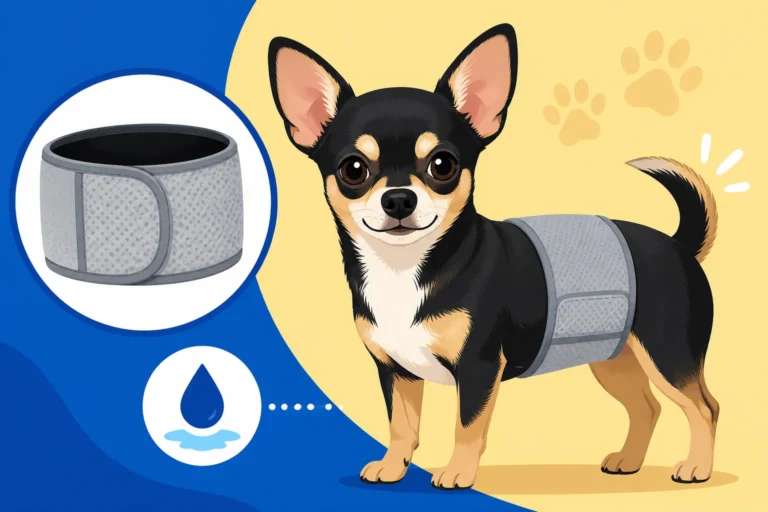
The reality is that a Chihuahua puppy can only hold their bladder for a very short time – sometimes as little as an hour or two for the youngest ones. Expecting them to hold it for an entire workday is simply unrealistic and unfair. Common mistakes include not taking them out often enough, especially after waking, eating, or playing, and not cleaning accidents thoroughly enough, which can encourage repeat offenses. How Many Weeks Chihuahua Potty Training Takes often depends entirely on the consistency of the owner. Investing in high-quality enzymatic cleaners (easily found on Amazon) and establishing a strict, frequent potty schedule are crucial. For some, indoor potty options like pee pads or grass boxes might be a helpful bridge, especially in cold weather or for apartment dwellers. You can also explore Puppy Pads Against Outdoor Only for a Chihuahua as a long-term solution if outdoor conditions are frequently harsh.
Overlooking Dental Care from Day One
Chihuahuas are famous for their dental problems, and this isn't just an "old dog" issue; it starts in puppyhood. Their tiny mouths often struggle with overcrowding, which leads to food and plaque easily getting trapped. Many owners make the mistake of ignoring dental hygiene in the first year, thinking it's something to worry about later. By the time you notice bad breath, significant dental disease has often already set in.
Starting a daily tooth brushing routine as early as possible is the single most effective thing you can do to prevent costly and painful dental issues. Even if your puppy loses their baby teeth (and sometimes they need help extracting retained baby teeth), those adult teeth will start to accumulate plaque immediately. It might feel awkward at first, but with patience and positive reinforcement, most Chihuahuas can learn to tolerate, or even enjoy, a quick brush. If daily brushing isn't feasible, a veterinary dental cleaning will eventually become a yearly necessity, but regular home care significantly reduces the severity. For more in-depth advice, check out Brushing a Chihuahua's Teeth Every Single Day.
Mismanaging Exercise and Activity
It’s easy to look at a Chihuahua and think "lapdog," assuming they don't need much exercise beyond a short stroll around the block. While they certainly love to cuddle, Chihuahuas are surprisingly energetic and curious, and they absolutely need regular, appropriate exercise to stay physically and mentally healthy. A common mistake is either not providing enough activity or, conversely, letting them engage in activities that are too strenuous or risky for their tiny bodies.
A Chihuahua needs at least 20-30 minutes of intentional activity daily. This could be a couple of short walks, indoor fetch, or engaging with puzzle toys. Lack of exercise can lead to boredom, destructive behaviors, or weight gain, which puts undue stress on their delicate joints. However, you also need to be mindful of their physical limits. Long hikes on uneven terrain, jumping off high furniture, or playing rough with much larger dogs can lead to injuries like luxating patellas. The goal is balanced activity that is safe and stimulating for their size. Ramps for sofas and beds, and controlled play sessions, are excellent ways to manage their activity safely.
| Common First-Year Mistakes | Potential Long-Term Impact | Better Approach |
|---|---|---|
| Neglecting Training | Fear-based reactivity, aggression, anxiety, "Small Dog Syndrome" | Consistent, positive reinforcement training from day one, Training a Chihuahua Exactly Like a Big Dog |
| Constant Carrying | Lack of confidence, fearfulness on ground, poor socialization | Promote walking, controlled ground interaction, use carrier only when necessary |
| Inconsistent Potty Training | Prolonged accidents, marking behavior | Strict, frequent potty schedule, thorough cleaning, consider indoor solutions |
| Ignoring Dental Hygiene | Severe dental disease, pain, tooth loss, systemic infection | Daily tooth brushing, professional cleanings as needed, early vet checks |
| Unmanaged Exercise | Obesity, joint issues, destructive behavior, boredom | Balanced daily activity, safe play, ramps/steps for furniture, monitor interactions |
Mismanaging Diet and Preventing Hypoglycemia
Feeding a Chihuahua might seem straightforward – just pour some kibble, right? But their tiny size means their metabolic needs are quite specific, and mistakes in their diet, especially during puppyhood, can have serious consequences like hypoglycemia (low blood sugar), which is a genuine emergency for these little ones.
Irregular Feeding Schedules for Puppies
Chihuahua puppies, especially those under six months, are highly susceptible to hypoglycemia because they have very little body fat to store glucose and a high metabolism. A common and dangerous mistake new owners make is not feeding their puppy on a strict, frequent schedule. They might think free-feeding is fine or simply forget to offer meals regularly.
For a young Chihuahua puppy, missing even one meal or going too long between feedings can trigger a hypoglycemic episode. This is not just a "sugar crash"; it can lead to weakness, disorientation, seizures, and even death if not promptly addressed. It is absolutely vital to understand Chihuahua Hypoglycemia and the Puppy Emergency and how to prevent it. Puppies often need to eat every 3-4 hours, sometimes more often for very tiny or young ones. Owners need to be diligent about Feeding a Chihuahua Puppy Every Few Hours and ensure they are consuming enough calories. Keep an emergency glucose source, like Karo syrup or a specialized glucose gel, on hand at all times, especially in the first few months.
Incorrect Calorie Portions for Adults
Once a Chihuahua matures, usually around 8-12 months, the risk of hypoglycemia significantly decreases, but their calorie needs remain unique. Another mistake owners make is overfeeding or underfeeding, often without accurately measuring food. Because Chihuahuas are so small, even a few extra kibbles can lead to significant weight gain, and conversely, not enough food can leave them hungry and lacking nutrients.
A six-pound Chihuahua might only need around 200-250 calories a day, depending on their activity level and metabolism. That's a tiny amount, and using a standard measuring cup can be incredibly inaccurate. Many owners fall into the trap of "eyeballing" portions or leaving food out all day. This can quickly lead to an overweight Chihuahua, which puts immense strain on their delicate joints (especially if they have conditions like patellar luxation) and contributes to other health issues like heart disease or diabetes. Investing in a small kitchen scale to accurately weigh your Chihuahua's food to the gram is highly recommended. This ensures they are getting exactly the right amount of food to maintain a healthy body condition. You can find excellent, inexpensive kitchen scales on Amazon. For more detail, read about How Many Calories a Six Pound Chihuahua Needs.
Over-Reliance on Treats and Table Scraps
It's hard to resist those big, expressive Chihuahua eyes begging for a treat or a little bite of your dinner. However, over-reliance on treats and feeding table scraps are huge first-year diet mistakes that can derail a Chihuahua's health. Not only can it lead to weight gain, but it can also introduce foods that are unhealthy or even toxic to dogs.
Many human foods, while safe for us, are dangerous for Chihuahuas, whose small bodies process things differently. Grapes, onions, garlic, chocolate, and xylitol (a sugar substitute found in many human foods) are all highly toxic and can cause severe illness or death, even in tiny amounts that would barely affect a larger dog. Even seemingly benign foods can cause stomach upset or pancreatitis. When using treats for training, choose small, low-calorie options and break them into tiny pieces. Always factor treats into your Chihuahua's daily calorie budget. If you're looking for guidance on healthy and appropriate treats, a good online resource like BAXTER & Bella can offer tailored advice for training purposes.
Disclaimer
This article is for general informational purposes only and does not constitute professional advice. Laws, prices and regulations vary by location and change over time. Consult a qualified professional for guidance on your specific situation.