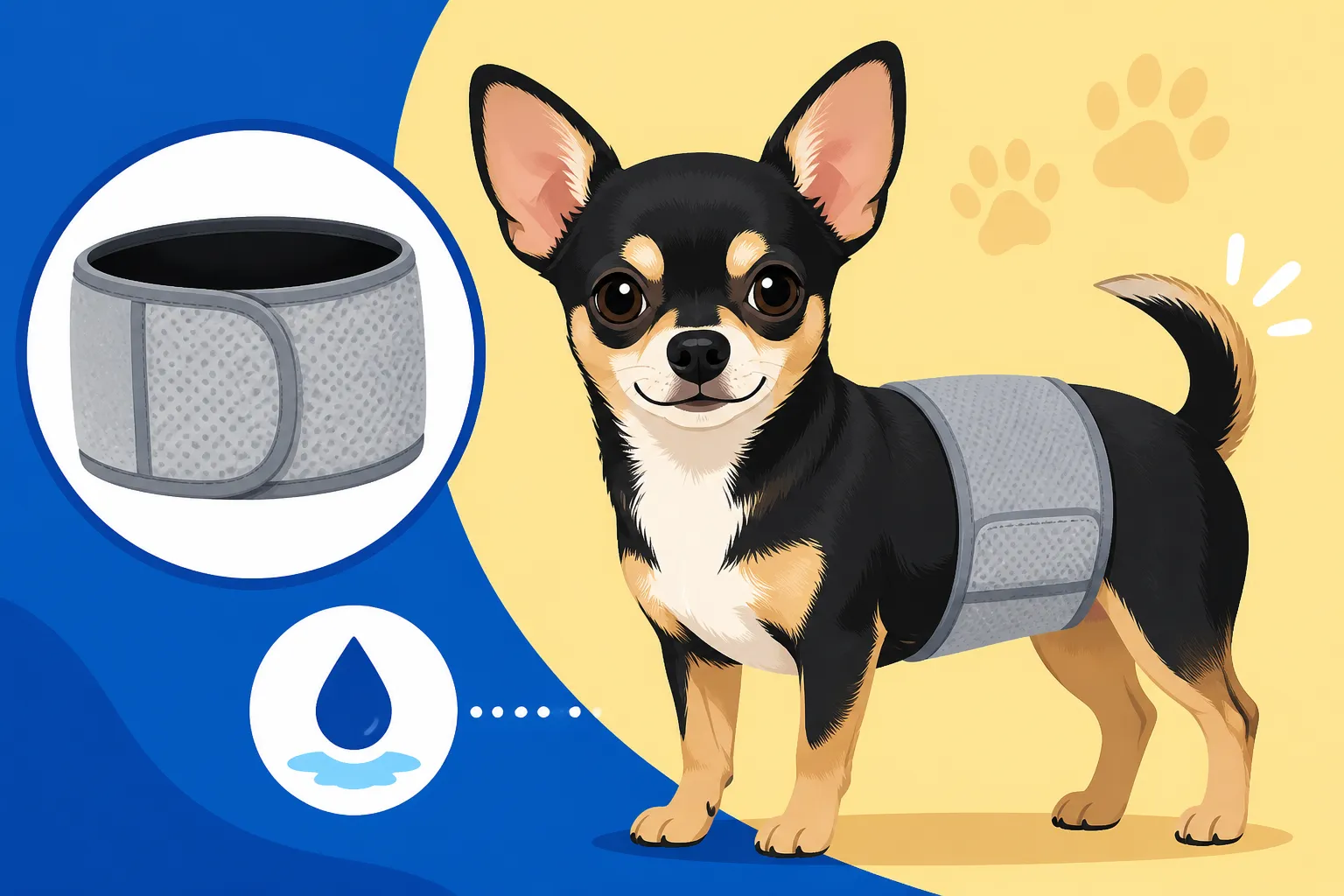
Belly Bands for a Marking Chihuahua
Finding that tell-tale wet spot on your furniture or a wall can be incredibly frustrating, especially when you thought your little Chihuahua was perfectly house-trained. It feels like a betrayal, or maybe just a hopeless battle against instinct. But if your male Chihuahua has started marking indoors, there’s a practical, humane tool that can really help manage the issue while you work on training: the belly band. This guide will walk you through what belly bands are, how to use them effectively, and combine them with other strategies to bring peace back to your home.
Understanding Why Your Chihuahua Marks Indoors
Before we dive into solutions, let's talk about why your Chihuahua might be marking. It’s rarely about spite or disobedience, even though it can certainly feel that way when you’re cleaning up for the third time in an hour. Understanding the motivation behind the behavior is the first step toward addressing it effectively.
The Instinct Behind Indoor Marking
Marking is a deeply ingrained canine behavior, primarily driven by instinctual communication. For intact male dogs especially, it's about broadcasting their presence and status to other dogs in the vicinity. It’s like leaving a tiny, scented business card. Even neutered males can retain this instinct, although typically to a lesser degree. They're not doing it to be "bad"; they're simply following an ancient urge to declare, "I was here!" Sometimes, it’s also a response to anxiety or insecurity in their environment.
Unlike a full bladder emptying accident, which often results in a larger puddle, marking usually involves a small amount of urine. It’s typically done on vertical surfaces – chair legs, walls, curtains – but can also happen on soft furnishings like rugs or dog beds. This difference is key to distinguishing it from a housetraining lapse or a medical issue that causes incontinence. If you're seeing small, targeted squirts rather than large pools, you're likely dealing with marking behavior.
Common Triggers for Marking Behavior
Chihuahuas, despite their small size, have big personalities and often keen senses. This means they can be particularly sensitive to changes in their environment that might trigger marking. A new dog in the neighborhood, even if just walking by your window, can be enough to make your Chihuahua feel the need to reassert his territory indoors. Guests bringing new scents into the home, especially other animals or children, can also be a significant trigger.
Perhaps you’ve brought home a new piece of furniture, or moved things around, and suddenly that pristine spot becomes a target. Even something as subtle as a change in your own routine can cause a rise in anxiety, leading to marking. Multi-dog households, especially with another male, can be a constant battleground of scent marking, as each dog tries to establish dominance or simply keep track of who's who. Sometimes, when a Chihuahua starts marking aggressively, it's a sign they are feeling insecure or overwhelmed. For a deeper dive into this, you might find A Chihuahua That Lunges at Every Passing Dog helpful, as reactivity can often be linked to underlying anxiety that manifests in various ways, including marking.
The Difference Between Marking and Accidents
It’s crucial to differentiate between true marking and a genuine house-training accident. A "marking" event is typically a small amount of urine, often a quick squirt aimed at a vertical surface like the leg of a table, a wall, or a curtain. It's an act of communication, a territorial declaration. The dog usually stands, lifts a leg (though some Chihuahuas might just squat), and releases a small volume.
On the other hand, a typical house-training accident, or an incontinence issue, involves a larger volume of urine. This happens when the dog has a full bladder and simply needs to relieve himself, or can't hold it. These accidents tend to be larger puddles on horizontal surfaces like the floor or a rug. If you notice your Chihuahua completely emptying his bladder indoors, especially if he's normally reliably house-trained, it's a strong signal that there might be a medical issue at play, rather than just marking. We'll touch on medical considerations later, but always keep this distinction in mind when evaluating the problem.
What Exactly is a Chihuahua Belly Band?
So, you're dealing with marking. What's the solution? Enter the belly band! This simple yet ingenious device can be a game-changer for male Chihuahuas and their frustrated owners. It's not a magic bullet, but it's an incredibly effective management tool.
How a Belly Band Works for a Male Chihuahua
A belly band is essentially a strip of fabric designed to wrap around your male Chihuahua's waist, covering his private parts. It’s held in place with Velcro or snaps. The inside of the band typically has an absorbent pad, or you can insert a disposable sanitary pad for extra absorbency. The magic happens in two ways: first, it provides a physical barrier. If your Chihuahua attempts to mark, the urine is caught by the absorbent material, preventing it from soiling your furniture or floors.
Secondly, and perhaps more importantly for training, it acts as a reminder. That slightly damp feeling against their belly when they try to mark can be a deterrent. It teaches them that marking indoors isn't a rewarding experience. It's a bit like wearing a wet swimsuit – uncomfortable enough to make you think twice. This physical sensation, combined with consistent training, helps interrupt the marking cycle and gives you time to react and redirect your dog to an appropriate outdoor potty spot. Belly bands for a marking Chihuahua are a common topic among small dog owners, and for good reason—they genuinely help prevent damage while training progresses.
Choosing the Right Size and Material
Getting the right belly band is crucial for both comfort and effectiveness. A band that's too loose will slip off or allow urine to escape around the edges, defeating its purpose. One that's too tight will be uncomfortable, potentially restrict movement, and could even cause skin irritation. Most brands provide sizing charts based on waist circumference, so be sure to measure your Chihuahua carefully. Remember, Chihuahuas come in a range of sizes, so a generic "small dog" size might not be ideal. Look for bands specifically designed for toy breeds, or with adjustable closures.
When it comes to material, consider soft, breathable fabrics like cotton blends. Chihuahuas have delicate skin, and a rough or synthetic material could cause chafing. Some bands come with built-in absorbent layers, while others are designed to hold disposable pads. Brands like BAXTER & Bella offer quality training products, and you can often find a wide selection of belly bands on platforms like Amazon with various designs and absorbencies. Consider how easily they can be washed – you’ll be doing a lot of washing! Having several on hand is always a good idea so you always have a clean one ready to go.
Belly Bands vs. Diapers
You might wonder, "Why a belly band instead of a full diaper?" This is a great question, and the answer lies in the specific problem you’re trying to solve.
| Feature | Belly Band | Dog Diaper (Full Coverage) |
|---|---|---|
| Purpose | Prevents male marking, catches small pees | Catches full urination/defecation, incontinence |
| Coverage | Wraps around waist, covers male genitals | Covers rear end, includes tail hole |
| Gender Specific | Primarily for male dogs | For both male and female dogs |
| Comfort | Less restrictive, often preferred by males | Can be bulky, some dogs dislike full coverage |
| Use Case | Marking, light incontinence in males | Incontinence, females in heat, severe anxiety |
| Ease of Use | Easy to put on/take off | Can be more fiddly to fit correctly |
Belly bands are specifically designed for male dogs and their propensity to lift a leg and mark. They cover just the area needed to catch urine from the penis. They are generally less bulky and more comfortable for male dogs who only mark, allowing for more freedom of movement. Many male Chihuahuas tolerate a belly band much better than a full diaper.
Full dog diapers, on the other hand, provide complete coverage of the rear end, including a hole for the tail. They are designed to catch larger accidents, both urine and feces. You would use a full diaper for female dogs in heat, for dogs with severe urinary or fecal incontinence (perhaps due to age or medical conditions), or for puppies who are still struggling with full bladder control. If your male Chihuahua is having full-blown accidents, not just marking, or if he's older and experiencing Cognitive Decline in an Aging Chihuahua which can lead to incontinence, then a full diaper might be a more appropriate choice. However, for targeted marking behavior, the belly band is usually the preferred and more comfortable option.
Effectively Using a Belly Band for Marking
A belly band isn't just something you slap on and forget. To be truly effective, it requires a thoughtful approach, consistency, and integration into your overall management and training strategy.
Introducing the Belly Band to Your Chihuahua
The first time you try to put a belly band on your Chihuahua, he might act like you're trying to put him in a straightjacket! Small dogs can be sensitive, and anything new around their sensitive belly area can be alarming. The key is positive association and a gradual approach. Start by letting him sniff the clean band. Offer a tiny, high-value treat (remember, Chihuahuas run on small calorie budgets, so break treats into pea-sized pieces) and gentle praise.
Next, try to put it on briefly, even for just a minute or two, while distracting him with play or another treat. If he tolerates it, shower him with praise and remove it. Gradually increase the time he wears it, always associating it with positive experiences like mealtime, walks, or cuddle sessions. Never use the belly band as punishment. The goal is for him to view it as a normal, non-threatening part of his routine. If you rush it, you might create an aversion that makes the whole process harder. Many Chihuahuas adjust quickly, especially if they associate it with positive attention.
Regular Checks and Hygiene
This is a really important point: a belly band is not a "set it and forget it" solution. You must check it regularly. If your Chihuahua marks while wearing the band, the urine will be trapped against his skin. This can quickly lead to painful skin irritation, rashes, or even urinary tract infections if the band remains wet for too long. For your Chihuahua's delicate skin, you need to be diligent.
Aim to check the band every 1-2 hours, or more frequently if you know he's prone to marking or has been stimulated (e.g., after guests leave, after another dog passes by). When you remove a soiled band, gently wipe his belly area clean and dry before putting on a fresh one. Have multiple belly bands on hand so you always have a clean, dry one ready. Washing them regularly in mild, pet-safe detergent and air-drying them is recommended to maintain their integrity and hygiene. Skipping this step can turn a helpful tool into a source of discomfort and potential health problems for your little one.
Combining Belly Bands with Training
Here’s the absolute truth: a belly band is a management tool, not a training solution on its own. It prevents damage, but it doesn't teach your Chihuahua not to mark. For that, you need consistent training and behavioral modification. Think of the belly band as buying you time and peace of mind while you actively work on the root cause.
Your training strategy should focus on reinforcing appropriate potty habits and addressing any underlying anxiety. Take your Chihuahua outside frequently, especially after waking up, playing, and eating. When he potties outside, celebrate like it's the best thing ever – enthusiastic praise, a special treat, and lots of pets. Make going outside a highly rewarding experience. If you catch him attempting to mark indoors (even with the band on), interrupt him with a calm "no" or a clap, then immediately take him outside to his designated potty spot. If he finishes there, reward him lavishly.
Supervision is also key. When he's not wearing the band (which he shouldn't be for extended periods or unsupervised), keep him in a confined, easy-to-clean area like a crate or a playpen. This limits opportunities for him to mark. For more tips on confinement, you can check out Chihuahua Crate Training. Always clean up any accidents (even those caught by the band) with an enzymatic cleaner to eliminate urine odors that might entice him to mark the same spot again. For more on this, read Cleaning Chihuahua Accidents So They Do Not Repeat. Consistency, patience, and positive reinforcement are your best friends here.
When Belly Bands Aren't Enough (And What Else to Consider)
While belly bands are incredibly helpful, they aren't a standalone miracle cure for every marking issue. Sometimes, the problem goes deeper than simple territorial instinct or behavioral habit. It's vital to consider other factors that might be contributing to your Chihuahua's marking.
Addressing Underlying Medical Issues
Whenever a dog, especially one previously house-trained, suddenly starts marking or having accidents, the very first step should always be a visit to your veterinarian. What looks like a behavioral issue can often be a symptom of an underlying medical problem. Urinary tract infections (UTIs) are a common culprit; the discomfort and increased urge to urinate can lead to marking or accidents. Kidney problems, bladder stones, or even diabetes can also affect bladder control and lead to inappropriate urination. Even issues like Chihuahua Arthritis in the Teenage Years can make it painful for an older Chihuahua to get outside quickly enough, leading to "accidents" that might appear to be marking.
Your vet will likely perform a urinalysis to check for infection, and possibly blood tests to assess kidney function or other systemic issues. Describing the specific type of urination (small squirts vs. large puddles) and any other symptoms (increased thirst, straining, lethargy) will help your vet diagnose the problem accurately. Never assume it's "just bad behavior" until a medical cause has been ruled out.
Behavioral Modification Strategies
Once medical issues are ruled out, it's time to double down on behavioral modification, often with the guidance of a professional trainer or behaviorist specializing in positive reinforcement. As mentioned, the belly band is a management tool, but the training is what ultimately changes the behavior.
Start by identifying and reducing triggers. If your Chihuahua marks when guests arrive, have them ignore him until he’s calm, or put him in a quiet space with a favorite chew toy until he's settled. If outdoor dogs trigger him, consider window film to block his view or use a white noise machine to mask outdoor sounds. You can find many brands of window film and sound machines on Amazon. For Chihuahuas that are anxious, reducing stress overall is paramount. This might involve a consistent routine, plenty of appropriate exercise, and mental stimulation. Desensitization and counter-conditioning can also be powerful tools. For example, if he marks around new objects, slowly introduce them while giving treats and praise, making positive associations. For more insights on behavioral adjustments, you might want to read The First Year Mistakes Chihuahua Owners Make, as many marking issues stem from early training gaps.
Sometimes, behavioral issues can be quite complex, especially if fear or anxiety is deeply rooted. In these cases, consulting a certified professional dog trainer or a veterinary behaviorist can provide tailored strategies and support. They can help you understand subtle body language, pinpoint exact triggers, and develop a comprehensive plan that includes management, training, and sometimes, even medication to help manage anxiety.
Environmental Management and Cleaning
Effective environmental management goes hand-in-hand with training. As long as your Chihuahua can smell his own urine, or the urine of another dog, he will be drawn back to that spot to remark. This is why thorough cleaning is so critical. Regular household cleaners simply won't cut it, as they don't break down the enzymes in urine that dogs can detect.
You need a high-quality enzymatic cleaner. Brands like Nature's Miracle or Rocco & Roxie Supply Co. (available on Amazon) are excellent choices. Liberally apply the cleaner to any soiled areas, let it soak as directed, and then blot it up. You might need to repeat this process several times for older stains. Ensure you clean not just the visible spot, but also a wider area, as urine can spread. A Chihuahua Marking the Same Corner details how persistent these scent markers can be.
Beyond cleaning, consider physically blocking access to previously marked spots while you're training. Furniture covers, upside-down laundry baskets, or even just keeping doors closed can help. If your Chihuahua tends to mark near specific objects, try moving them temporarily. Consistently taking your Chihuahua outside to the same potty spot can also reinforce that this is the only appropriate place to relieve himself. This combined approach of using a belly band, consistent training, and meticulous cleaning offers the best chance for success in overcoming indoor marking.
Disclaimer
This article is for general informational purposes only and does not constitute professional advice. Laws, prices and regulations vary by location and change over time. Consult a qualified professional for guidance on your specific situation.