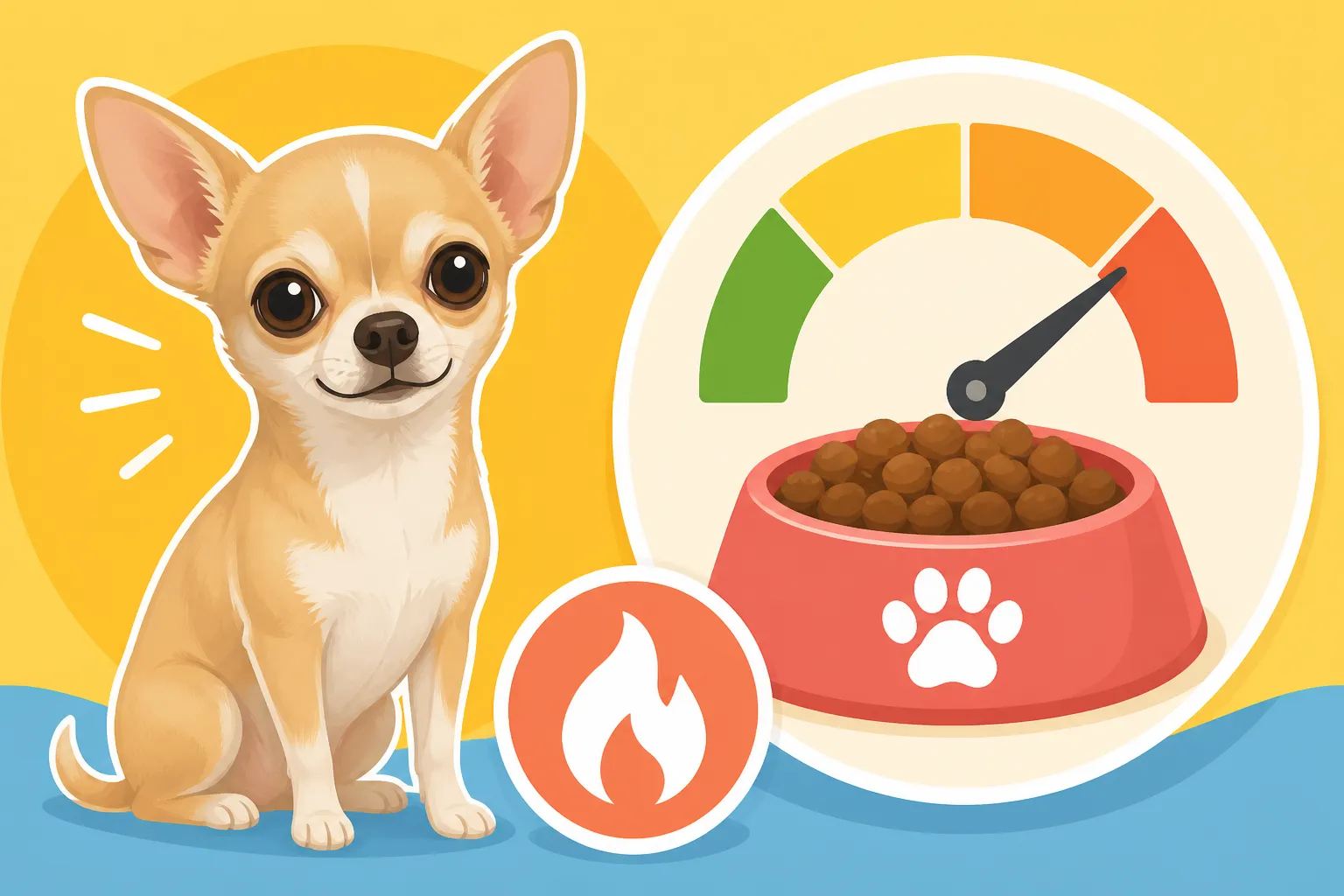
How Many Calories a Six Pound Chihuahua Needs
It can be incredibly challenging to figure out exactly how much to feed a tiny dog like a Chihuahua. Many owners feel lost, wondering if they're giving too much or too little, especially when a few extra kibbles can make a huge difference to such a small body. This guide will help you understand the specific caloric needs of a six-pound Chihuahua, how to calculate them, and practical tips for ensuring your little companion gets just the right amount to stay healthy and happy.
Understanding Your Chihuahua's Tiny Calorie Needs
When you look at your adorable six-pound Chihuahua, it's easy to forget that despite their diminutive size, they are still full-fledged dogs with unique physiological requirements. You can't just scale down the feeding advice for a Labrador; Chihuahuas operate on a completely different metabolic playing field. The sheer precision required for their diet often catches new owners off guard, leading to frustrations when trying to maintain a healthy weight.
Why Six Pounds Changes Everything
Imagine the difference between adding an extra tablespoon of sugar to a gallon of tea versus adding it to a single cup. That's essentially the scale we're talking about with a Chihuahua's caloric intake. For a dog that weighs just six pounds, every single calorie truly counts. A slight overestimation in food portions can quickly lead to weight gain, while underfeeding can be dangerous, especially for a breed prone to Chihuahua Hypoglycemia and the Puppy Emergency. Their small stature means their joints and internal organs are highly susceptible to the negative impacts of carrying even a fraction of a pound too much. This isn't just about aesthetics; it's about their long-term health and mobility.
Owners often feel a sense of guilt, believing their tiny dog must be constantly hungry, and may fall into the trap of over-treating or adding extras to their bowl. This kind of thinking, while well-intentioned, can swiftly pack on pounds. When we talk about What One Extra Pound Does to a Chihuahua, it's not an exaggeration to say it's like a person gaining 15-20 pounds relative to their frame. Their little bones and tiny hearts are simply not built for excess weight. Every meal, every treat, needs to be considered as a critical part of their total daily intake.
The Metabolism of a Small Dog
Chihuahuas, like many toy breeds, have a higher metabolic rate compared to larger dogs. This means they burn calories more quickly relative to their body size. Their small bodies have a larger surface area to volume ratio, which means they lose body heat faster and need more energy to stay warm – part of why you often see them shivering, even indoors. This high metabolism is why they need to eat more frequently as puppies to prevent blood sugar drops, and why even adult Chihuahuas benefit from a consistent feeding schedule rather than free-feeding.
Because of this accelerated metabolism, their bodies are constantly working, and they require a steady supply of energy. However, this doesn't mean they need more food in absolute terms, but rather a more dense caloric intake per gram of food and consistent meal timing. It’s a delicate balance. Their tiny stomachs can only hold so much at once, making quality and nutrient density paramount. You're trying to fuel a tiny engine that runs hot, without overloading its small fuel tank. Understanding this fundamental difference is the first step in properly nourishing your Chihuahua and avoiding issues like Why a Chihuahua Runs Out of Blood Sugar So Fast.
Calculating the Right Calories for a Six-Pound Chihuahua
Okay, so we know Chihuahuas are tiny powerhouses. But how do we translate that into actual food in their bowl? This is where a little math and a lot of observation come into play. It’s not as simple as scooping a generic amount; precision is your best friend when it comes to their diet. Many owners get overwhelmed by the numbers, but once you break it down, it's quite manageable.
The Basic Formula: RER and MER
Veterinarians and pet nutritionists often use a formula to determine a dog's caloric needs, starting with something called the Resting Energy Requirement (RER). This is the energy your Chihuahua needs just to exist – to breathe, pump blood, digest food, and maintain body temperature, without any activity.
A common calculation for RER is: (Body Weight in kg)^0.75 x 70.
For a six-pound Chihuahua, that's roughly 2.72 kg.
So, (2.72 kg)^0.75 x 70 ≈ 160 calories per day (RER).
Now, that's just for resting. Your Chihuahua isn't a statue! The actual number your dog needs is called the Maintenance Energy Requirement (MER), which takes their activity level, age, and reproductive status into account. You'll multiply their RER by a factor. For most adult, spayed or neutered Chihuahuas with a normal activity level, this factor is often around 1.6.
So, 160 (RER) x 1.6 (MER factor) ≈ 256 calories per day.
This gives us a starting point. It’s vital to remember this is an estimate. Your dog is an individual! Some Chihuahuas are couch potatoes, while others are little rockets. A good vet will take all these factors into account when giving you precise guidance, and often you’ll find that Daily Calories for a Three to Seven Pound Chihuahua will fall within a narrow, precise range.
| Activity Level / Life Stage | MER Factor (Approximate) | Daily Calories (for 6lb Chihuahua) |
|---|---|---|
| Spayed/Neutered Adult | 1.6 | ~256 |
| Intact Adult | 1.8 | ~288 |
| Senior (less active) | 1.4 | ~224 |
| Weight Loss | 1.0 – 1.2 | ~160 – 192 |
| Active/Working | 2.0 | ~320 |
| Puppy (growing) | 2.0 – 3.0 | ~320 – 480 |
Note: These are estimates based on a 6lb Chihuahua with an RER of approximately 160 calories. Always consult your vet for precise figures.
Adjusting for Activity Level and Age
The MER factor is where you really personalize the diet. Is your Chihuahua a spirited explorer who goes for two long walks a day and plays fetch indoors? They'll likely need a higher MER factor, perhaps closer to 2.0, meaning closer to 320 calories per day. If they spend most of their time napping on your lap, a factor of 1.4-1.6 might be more appropriate. A senior Chihuahua, especially one with Chihuahua Arthritis in the Teenage Years or Cognitive Decline in a Fifteen Year Old Chihuahua who moves less, might need even fewer calories.
Puppies, conversely, are growing rapidly and have immense energy needs. Their MER factor can be as high as 2.5 to 3.0, sometimes meaning they need close to 50 calories per pound of body weight. This is why Feeding a Chihuahua Puppy Every Few Hours is crucial to prevent dangerous blood sugar drops. On the other hand, a Chihuahua trying to lose weight might have their caloric intake reduced significantly, often to their RER or slightly above, to safely shed those extra ounces. This is not something to guess at; your vet is your best resource for this fine-tuning. For more specific guidance on their caloric intake, you can look up articles on Calories Per Pound for an Adult Chihuahua.
It’s an ongoing adjustment. What works for your Chihuahua at two years old might not work at eight or twelve. Regular vet check-ups are essential not just for vaccinations, but for weight monitoring. Your vet can assess your Chihuahua's body condition score – which helps determine if they're too thin, just right, or overweight – and help you fine-tune their caloric intake accordingly. This collaborative approach ensures your tiny dog's nutritional needs evolve as they do.
Practical Tips for Feeding Your Six-Pound Chihuahua
Okay, we’ve covered the "why" and the "how much" in theory. Now, let’s get down to the practical aspects of actually feeding your six-pound Chihuahua. This is where many owners stumble, not because they don't care, but because they underestimate the precision required for such a small dog.
Portion Control and Accurate Measurement
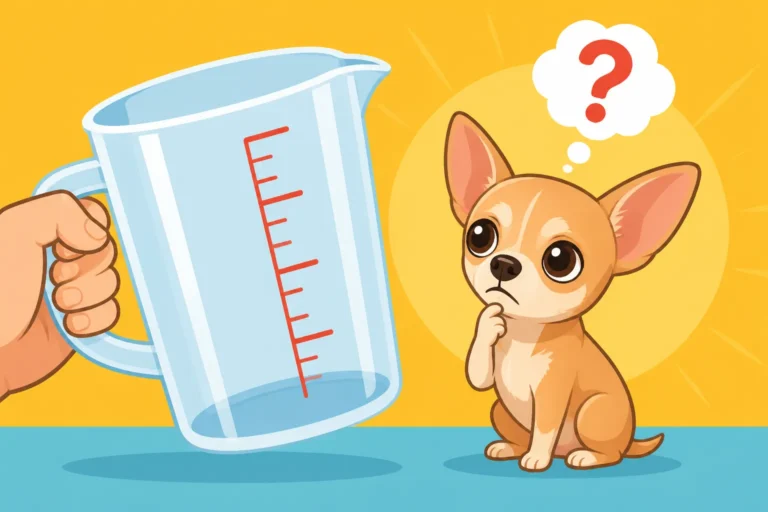
This is arguably the most critical part of feeding a Chihuahua. Forget the measuring cups that come with kibble bags – they are notoriously inaccurate and a mere few extra kibbles can mean a significant caloric increase for a tiny dog. For a Chihuahua, a kitchen scale is your best friend. Weighing their food in grams is the most precise way to ensure they are getting exactly the calories you've calculated. Seriously, invest in one; you can find reliable and affordable options on Amazon or at most kitchen stores. This method makes a huge difference, especially when you consider Why a Measuring Cup Is Useless for a Chihuahua.
Let's say your six-pound Chihuahua needs 250 calories a day. If your chosen kibble has 350 calories per cup, you'll need just under 3/4 of a cup. But how accurate is that 3/4 cup measure, really? If that kibble weighs, say, 100 grams per cup, then you need roughly 71 grams of food. Weighing out that 71 grams every day ensures consistency. Without this precision, it’s far too easy to accidentally overfeed or underfeed, slowly but surely impacting their health. Many pet food companies, like those available through Chewy, often provide caloric content per gram or ounce on their packaging, making this calculation much easier for diligent owners.
Beyond the main meals, don't forget treats! Those tiny bites add up fast. Break down larger treats into minuscule pieces. If your Chihuahua loves a certain training treat, check its caloric content and factor it into their daily total. For instance, if you're doing a training session and giving out 10 tiny treats, make sure those calories come out of their dinner portion. It sounds tedious, but for a dog with such a small frame, it's essential for maintaining a healthy weight.
Choosing the Right Food and Meal Frequency
Choosing a high-quality dog food specifically formulated for small breeds is important. These foods often come with smaller kibble sizes, which are easier for a Chihuahua's tiny mouth and jaw to manage. They are also typically more calorie-dense and nutrient-rich, ensuring your dog gets all the necessary vitamins and minerals without having to eat a large volume of food. Brands like Ollie, known for fresh, portioned meals, can be excellent for Chihuahuas because they often provide customized meal plans based on your dog's specific weight, age, and activity level, removing much of the guesswork from portioning.
For adult Chihuahuas, two meals a day is generally sufficient, but some owners prefer to split the daily ration into three smaller meals to keep their metabolism steady and prevent long stretches without food, which can be particularly helpful in avoiding Chihuahua Hypoglycemia in the First Twelve Weeks for younger dogs. Three Small Meals a Day for a Chihuahua can also help stabilize blood sugar and energy levels throughout the day. It's often recommended to feed them once in the morning and once in the evening, with perhaps a very small snack before bed, especially if your dog is prone to low blood sugar. Avoid free-feeding entirely; leaving food out all day can lead to overeating and make it impossible to track their actual intake. As mentioned in Why Free Feeding a Chihuahua Ends in Obesity, it's a habit that often leads to weight issues.
The Danger of Overfeeding and Underfeeding
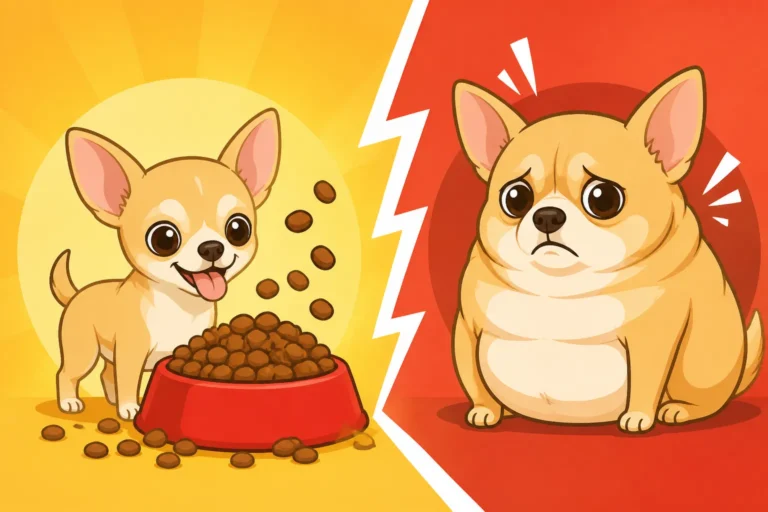
The consequences of improper feeding for a Chihuahua are more immediate and severe than for larger breeds. Overfeeding, even by a tiny amount, can quickly lead to obesity. An overweight Chihuahua is at a higher risk for a whole host of health problems, including Chihuahua Heart Disease as the Breed Ages, Chihuahua Arthritis in the Teenage Years, Patellar Luxation, the Chihuahua's Commonest Joint Problem, and even issues with their delicate windpipe like Collapsing Trachea and the Chihuahua Honking Cough. What a Half Pound Means on a Chihuahua is a clear indicator of how quickly even small weight gains can become problematic. Imagine the strain on tiny joints carrying extra weight; it's significant.
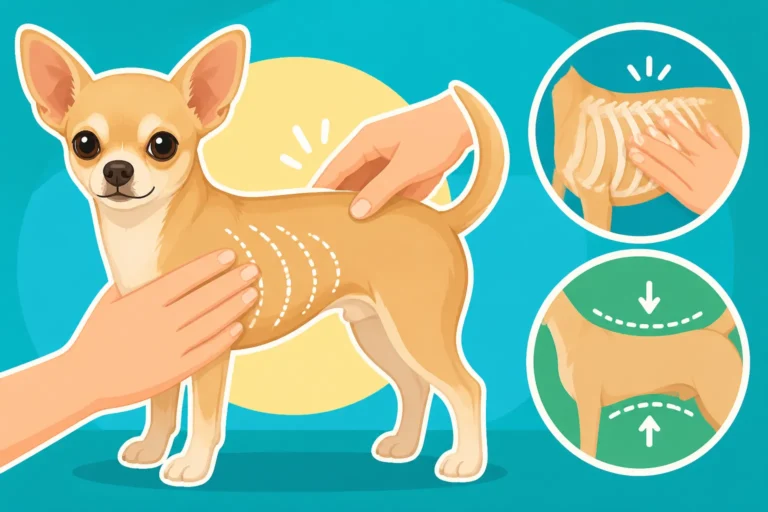
Conversely, underfeeding a Chihuahua can be just as dangerous. Due to their high metabolism and low body fat reserves, they can become hypoglycemic (low blood sugar) very quickly if they don't get enough calories, especially young puppies. This can lead to weakness, disorientation, seizures, and can even be fatal. Ensuring consistent, appropriate meals, particularly Feeding a Chihuahua Before Bed to Hold Blood Sugar, can help mitigate this risk. If you notice your Chihuahua is starting to lose weight unexpectedly, appears lethargic, or is showing signs of illness, it’s time for an immediate vet visit. Regularly checking Feeling a Chihuahua's Ribs and Waist can give you a quick, informal assessment of their body condition between vet visits. The key is finding that perfect balance and sticking to it religiously.
Disclaimer
This article is for general informational purposes only and does not constitute professional advice. Laws, prices and regulations vary by location and change over time. Consult a qualified professional for guidance on your specific situation.