Chihuahua Leash Training on a Harness
It’s a common frustration for Chihuahua owners: you want to take your tiny companion out for a walk, but the thought of them pulling, choking, or slipping out of a collar fills you with dread. Or perhaps your little one just refuses to budge, turning every outing into a wrestling match. This comprehensive guide is here to walk you through everything you need to know about successfully leash training your Chihuahua using a harness, ensuring their safety and making walks an enjoyable experience for both of you.
The Absolute Necessity of a Harness for Your Chihuahua
When it comes to walking a Chihuahua, a collar is simply not the safest option. Many owners, understandably, reach for a small collar because it seems natural, but for a breed as delicate as the Chihuahua, it poses significant risks. Their tiny necks and fragile windpipes are not built to withstand the pressure of a leash pulling against a collar, even if it's gentle pressure.
Protecting Your Chihuahua's Delicate Trachea
One of the biggest concerns for Chihuahuas is tracheal collapse, a condition where the rings of cartilage that support the windpipe weaken and flatten. Even a slight tug on a collar can exacerbate this issue or, worse, initiate it. Imagine trying to breathe through a flattened straw; that’s what a dog with tracheal collapse experiences. A harness distributes any pulling pressure across the chest and shoulders, completely bypassing the throat area. This is why you'll often hear veterinarians and experienced Chihuahua enthusiasts strongly recommend harnesses over collars for walks. It’s not just about comfort; it's about preventing a potentially serious, lifelong respiratory problem. You can learn more about Why a Harness Matters for a Chihuahua Windpipe.
Beyond tracheal issues, Chihuahuas are also prone to other neck and back problems. A sudden jolt or pull on a collar could lead to strains, sprains, or even more severe spinal injuries in such a small dog. Their miniature stature means that any impact on their neck is disproportionately forceful compared to a larger breed. Using a harness is a simple, proactive measure that helps protect your Chihuahua from these types of injuries, allowing them to explore the world safely without putting undue stress on their fragile anatomy.
Escaping a Collar: A Real Danger for Tiny Dogs
Chihuahuas are notoriously agile and, if spooked, can often slip out of a traditional collar with surprising ease. A sudden loud noise, an unfamiliar dog, or even a leaf blowing past can trigger a "flight" response, and if they manage to back out of their collar, they could bolt into traffic, get lost, or encounter other dangers. This isn't about them being "naughty"; it's a primal instinct, and their small size makes them particularly vulnerable.
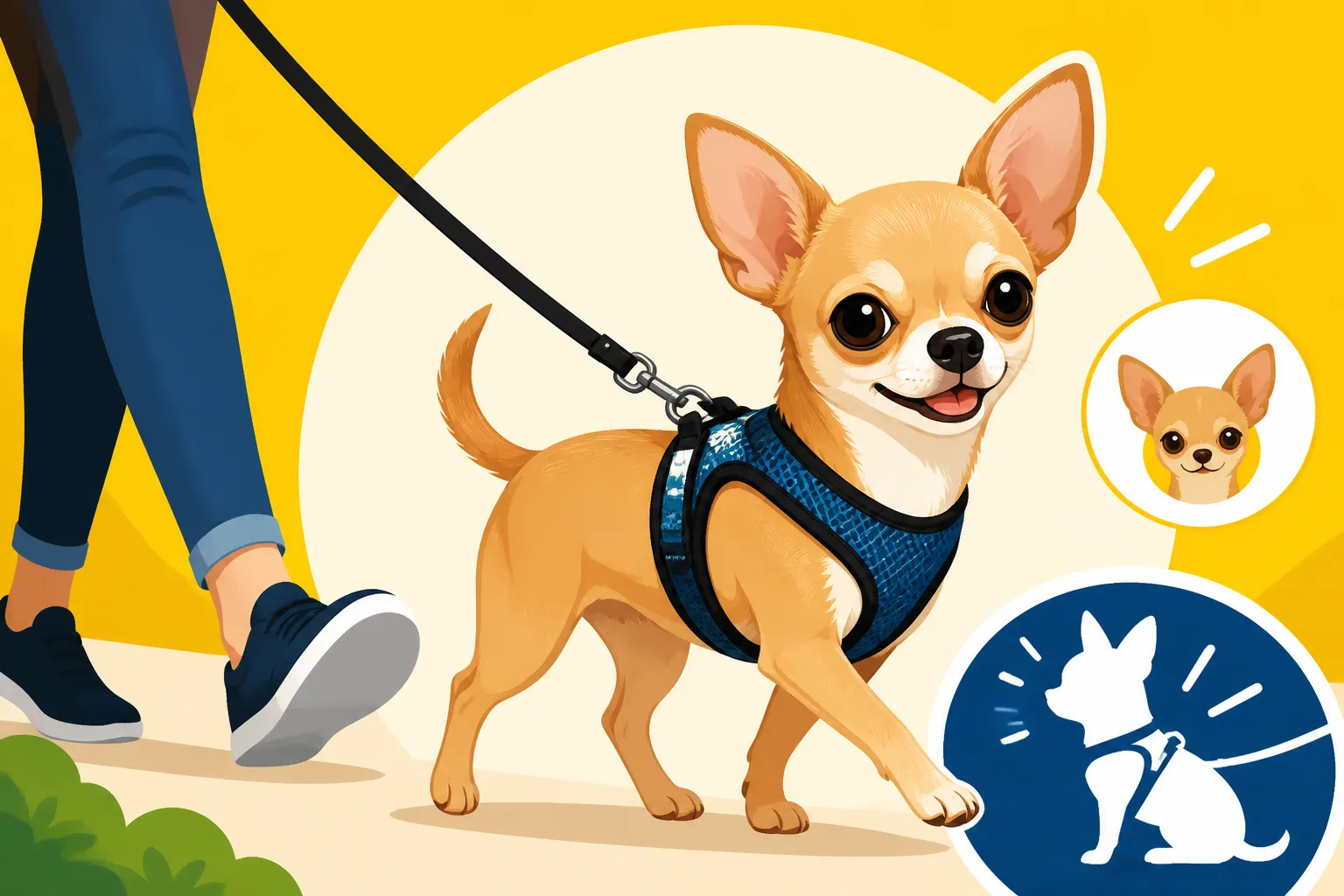
A well-fitted harness, especially one with a secure design, makes it much harder for your Chihuahua to escape. The straps go around the chest and often behind the front legs, creating a much more secure fit that they can't simply wriggle out of. This added security offers immense peace of mind, especially when you're walking in busy areas or places with potential distractions. Think of it as a safety net that allows both you and your Chihuahua to enjoy your outdoor adventures without the constant worry of an unexpected dash for freedom. It’s an essential part of keeping your tiny friend safe, especially considering how many dangers lurk just off the pavement.
Selecting the Perfect Harness: Fit and Type Matter
Choosing the right harness for your Chihuahua can feel a bit overwhelming with so many options available. However, a proper fit is absolutely crucial, not just for comfort but for safety and effective training. A harness that’s too loose will allow your Chihuahua to escape, while one that’s too tight can chafe, restrict movement, or even impede breathing if it’s poorly designed around the throat.
Understanding Different Harness Types for Chihuahuas
There are generally a few main types of harnesses, each with its own benefits and drawbacks for a Chihuahua.
- Vest Harnesses: These are often made of soft fabric that wraps around the dog's chest and back, securing with Velcro or buckles. Many Chihuahua owners love them because they distribute pressure broadly and tend to be very comfortable, especially for dogs that are prone to shivering. They come in adorable designs and can double as a light sweater in cooler weather. The downside can be that some vest harnesses aren't as adjustable, so finding a perfect fit can be tricky, and they might retain heat in warmer climates.
- H-Harnesses (or Roman Harnesses): These harnesses typically have straps that form an "H" shape on the dog's back, with a loop around the neck and another around the girth. They are highly adjustable, making it easier to get a snug, customized fit. Look for ones with multiple adjustment points – usually at the neck and around the ribs – to ensure it doesn't slip. These are great for preventing escapes and for ensuring no pressure is placed on the trachea. Brands like Puppia often offer popular H-style harnesses that many Chihuahua owners find effective.
- Step-In Harnesses: As the name suggests, your Chihuahua "steps into" these harnesses with their front legs, and then the harness buckles over their back. They are quick to put on and take off, which is a bonus if your Chihuahua isn't a fan of having things go over their head. However, ensuring a secure fit can sometimes be more challenging, as they rely heavily on the correct spacing between the leg holes to prevent chafing or escape.
It’s always a good idea to consider your Chihuahua's specific body shape and personality when choosing. Some Chihuahuas have very deep chests and narrow waists, while others are more compact. Experimenting with different styles might be necessary to find the perfect match.
Measuring for a Perfect and Secure Fit
The most critical step in harness selection is accurate measurement. Don’t just guess based on your Chihuahua’s weight or a general size chart; take out a soft measuring tape and get precise numbers. You’ll typically need two measurements:
- Chest Girth: This is the most important measurement. Measure around the widest part of your Chihuahua's chest, just behind their front legs. Make sure the tape is snug but not tight – you should be able to fit two fingers comfortably underneath it.
- Neck Circumference (for some harness types): For H-harnesses or vest harnesses that go over the head, you’ll also need to measure around the base of their neck where a collar would sit.
Once you have these measurements, compare them to the harness manufacturer's size chart. Many brands will have slightly different sizing, so never assume a "small" in one brand is the same as a "small" in another. When the harness arrives, try it on your Chihuahua. The harness should fit snugly enough that your dog can't easily slip out, but loose enough that it doesn't rub or restrict movement. A good rule of thumb is the "two-finger" test: you should be able to slide two fingers comfortably between the harness and your Chihuahua's body at any point. Pay close attention to the armpit area, as this is a common spot for chafing if the harness is too tight or ill-fitting. For more detailed guidance, check out Harness Fitting on a Chihuahua Chest.
Here's a quick comparison of popular harness types:
| Harness Type | Pros for Chihuahuas | Cons for Chihuahuas | Best For |
|---|---|---|---|
| Vest Harness | Comfortable, broad pressure distribution, warm | Less adjustable, can be hot in summer, hard to fit | Shy, cold-sensitive, or very small Chihuahuas |
| H-Harness | Highly adjustable, secure, no neck pressure | Some Chihuahuas dislike going over head | Active Chihuahuas, escape artists, long-term use |
| Step-In Harness | Easy to put on/take off | Can be less secure, may chafe armpits if ill-fitting | Chihuahuas who dislike overhead items |
Brands like Kurgo, Gooby, and Ruffwear (for their smallest sizes) are often recommended by Chihuahua owners for their durability and thoughtful design. You can often find a wide array of options and read reviews from other small dog owners on platforms like Amazon. Don't be afraid to try a couple of different styles or sizes to ensure you get the absolute best fit for your unique little companion.
Making Friends with the Harness and Leash
Introducing a harness and leash to your Chihuahua, especially if they’re an adult or a sensitive puppy, requires patience and a positive approach. You want them to associate these items with good things, not stress or discomfort. Rushing this stage can lead to a dog who hides when the harness comes out, making walks a battle from the start.
Positive Association with the Harness
The key here is to make the harness seem like the best thing ever. Start by simply showing your Chihuahua the harness, letting them sniff it. Don't try to put it on yet. Every time they interact with it positively – sniffing, looking at it calmly – offer a tiny, high-value treat. Repeat this several times a day for a few days. You might even place the harness near their food bowl during meal times, so they associate its presence with something they love.
Next, gently place the harness near your Chihuahua, then on their back for just a second, immediately followed by a treat and praise. Don’t fasten it. The goal is to build up tolerance. Gradually increase the time the harness is on their back, still unfastened, always ending with a treat. Once they’re comfortable with it resting on them, try fastening it for a few seconds, treat, and then immediately take it off. This short, positive exposure helps prevent any negative feelings from developing. If you notice any signs of discomfort, like tucking their tail, stiffening, or trying to shake it off, you’ve gone too far too fast. Go back a step and try again with even shorter durations and more treats. Remember, it’s about their comfort and building trust.
Introducing the Leash and Indoor Practice
Once your Chihuahua is happily wearing the harness for a few minutes at a time, it's time to introduce the leash. For a tiny dog, choose a lightweight leash that isn’t too bulky or heavy, as a heavy leash can be uncomfortable and intimidating. A thin, four-to-six-foot nylon or leather leash works well. You can find many suitable options on Amazon. Just like with the harness, let your Chihuahua sniff the leash, and offer a treat. Then, attach the leash to the harness while your Chihuahua is wearing it indoors. Let them drag it around for a few minutes under close supervision. This allows them to get used to the feel and weight of the leash without the added pressure of you holding it.
Once they're comfortable dragging it, pick up the end of the leash. Don't try to walk them yet. Just hold it loosely while they wander around the house. If they seem comfortable, start taking very short "walks" indoors. Walk a few steps, call their name, and if they follow, reward them with a treat and praise. This teaches them that a loose leash means good things. Practice walking in different rooms, navigating furniture. Keep these sessions brief and positive. If your Chihuahua freezes or pulls, don't yank the leash. Instead, stand still until they relax, or use a treat to lure them forward. The key is to teach them that the leash is a gentle communication tool, not a restraint, and that walking nicely leads to rewards. Platforms like BAXTER & Bella offer excellent step-by-step guidance for these early training stages, emphasizing positive reinforcement.
Mastering the Walk: First Steps and Beyond
After your Chihuahua is comfortable wearing the harness and walking around the house with a loose leash, it's time to take their training outdoors. The world outside can be a big, stimulating, and sometimes overwhelming place for a tiny Chihuahua, so taking it slow and making it a positive experience is paramount.
Short, Positive Outdoor Explorations
For your Chihuahua's very first outdoor walks, choose a quiet, low-distraction area. A fenced backyard, a quiet cul-de-sac, or a park during off-peak hours can be ideal. The goal isn't distance; it's exposure and positive reinforcement. Keep these initial outings very short – think five to ten minutes. The moment you step outside, keep that high-value treat pouch handy. Reward your Chihuahua frequently for simply walking beside you on a loose leash, sniffing calmly, or ignoring minor distractions.
If your Chihuahua freezes, tries to bolt, or gets overwhelmed, don't pull or scold. Instead, get down to their level, offer a treat to redirect their attention, or simply wait patiently until they decide to move. You can use gentle encouragement and a happy voice. Remember, everything is new and potentially scary for them. Consistency in positive reinforcement will build their confidence. Focus on making every outdoor experience a good one, even if it means only walking a few yards. These early walks set the foundation for a lifetime of enjoyable adventures. You'll find great strategies for Getting a Chihuahua Used to Walking on Leash in other resources.
Encouraging Loose Leash Walking
Loose leash walking is the holy grail of pleasant strolls. For a Chihuahua, a loose leash means freedom of movement and no uncomfortable pressure. To teach this, employ the "stop-start" method. When your Chihuahua starts to pull ahead, immediately stop walking. Don't move forward again until the leash goes slack. The moment they ease up, even for a second, praise them and take a step forward. If they pull again, stop again. This teaches them that pulling gets them nowhere, but a loose leash keeps the walk going.
You can also use treats to lure them into the correct position. Hold a treat near your thigh on the side you want them to walk, and reward them when they stay there. Keep the leash loose. As they get better, gradually phase out the constant luring, rewarding them intermittently for good behavior. Remember, patience is key. Chihuahuas have tiny legs, so their pace might be quicker or slower than yours. Adjust your speed to match theirs. Celebrate small victories – a few steps on a loose leash is a huge success for a little dog learning the ropes. For effective and brief practice, consider applying techniques discussed in Three Minute Training Sessions With a Chihuahua.
Navigating Common Leash Training Hurdles
Even with the best intentions, you might run into a few bumps on the road during leash training. Chihuahuas, despite their small size, have big personalities and can present unique challenges. Addressing these issues with understanding and consistency is crucial for long-term success.
Dealing with Pulling and Freezing
It might seem counterintuitive for such a small dog to pull, but many Chihuahuas do! They have a surprising amount of strength and determination. If your Chihuahua is pulling, it's often because they're excited to explore or they're trying to get to something interesting. The "stop-start" method mentioned earlier is your best friend here. Every time they pull, become a tree. Only move when the leash slackens. Consistency is key; every family member who walks the dog needs to adhere to this rule.
On the flip side, some Chihuahuas freeze like little statues. This often stems from fear or feeling overwhelmed by the environment. If your Chihuahua freezes, first, assess the situation. Is there something specific scaring them? If so, try to gently move them away from the trigger if possible. Don't drag them. Instead, crouch down, offer a high-value treat right to their nose, and use an encouraging, happy voice to lure them forward. Sometimes, it helps to walk a tiny circle around them to break their focus, then continue. If they're particularly fearful, it might be a sign you need to practice in even quieter, less stimulating environments, gradually building up their confidence. Remember, a Chihuahua That Cries Out and Then Walks On might be experiencing discomfort, so always rule out physical issues with a vet if freezing is persistent.
Managing Fear Reactivity and Barking
Chihuahuas are renowned for their alertness and can sometimes be quite vocal or reactive, especially towards strangers or bigger dogs. This isn't usually aggression; it's often rooted in fear. They might bark, lunge, or tremble, trying to make the scary thing go away. This behavior can be incredibly frustrating and embarrassing, but it's important to approach it with empathy. Your tiny dog feels vulnerable, and their "bark" is their only defense. Chihuahua Fear Reactivity, the Breed's Real Problem is a common concern among owners.
To manage this, counter-conditioning and desensitization are powerful tools. Identify your Chihuahua's triggers (e.g., specific types of dogs, people wearing hats, strollers). When you see a trigger approaching, before your Chihuahua reacts, immediately start showering them with their absolute favorite treats. The goal is to change their emotional response from "scary thing!" to "yay, treats appear when that thing is around!" Keep a safe distance from the trigger so your Chihuahua isn't pushed over their threshold into a full-blown reaction. Gradually, over many sessions, you can decrease the distance. For example, if your Chihuahua barks at every dog, start by rewarding them for simply seeing a dog from a far distance without reacting. You can even find very specific treats, easily broken into tiny pieces, perfect for these rapid reward situations on Amazon. Consistency is vital, and sometimes, seeking guidance from a certified professional dog trainer who specializes in small dog behavior can be incredibly helpful. You might find some trainers through platforms like BAXTER & Bella, which often provide resources for dealing with reactivity. This is also why Chihuahua Recall When a Bigger Dog Approaches is such an important skill, as it allows you to create distance and ensure safety.
Dealing with Distractions
The outdoor world is a sensory overload for a small dog like a Chihuahua. Squirrels, birds, smells, other dogs, children playing – all can be massive distractions. When your Chihuahua becomes fixated on a distraction, your voice might disappear into the background. This is where high-value treats and consistency really shine.
Start practicing in areas with minimal distractions. As your Chihuahua improves, gradually introduce more stimulating environments. The key is to get their attention before they become fully fixated. If you see a squirrel before your Chihuahua does, say their name in a happy tone, get their eye contact, and immediately reward with a treat. If they do get fixated, try to lure them away with a treat or a favorite squeaky toy. If they're too engrossed, walk them a few steps in the opposite direction, then try to get their attention and reward. The more you reward them for choosing to pay attention to you despite distractions, the stronger that behavior becomes. Remember, they are a small dog in a big world, and their curiosity is natural. Making you more interesting than the environment takes practice and patience. For specific scenarios like Walking a Chihuahua Past a Barking Dog, practice a "look at me" cue and reward heavily before they react.
Maintaining Momentum: Consistency and Continued Learning
Leash training isn't a "one-and-done" activity; it's an ongoing process, especially for a Chihuahua who will experience the world differently throughout their long life. Consistency, continued positive reinforcement, and a willingness to adapt are key to a happy walking companion.
The Importance of Routine and Consistency
Chihuahuas thrive on routine, and consistent training reinforces good habits. Try to walk your Chihuahua at similar times each day, if possible. This helps them anticipate walks and understand what's expected of them. More importantly, everyone who handles the leash must follow the same rules. If one person allows pulling and another doesn't, your Chihuahua will get mixed signals and progress will be slow or non-existent.
Make sure your commands and expectations are clear and consistent. Use the same words for "heel," "let's go," or "wait." Reward consistently for loose leash walking and calm behavior. Even after your Chihuahua is a seasoned pro, don't stop rewarding occasionally. A surprise treat for a perfectly executed loose-leash walk reinforces the behavior and keeps them engaged. Think of it as investing in your relationship and their good habits. Routine isn't boring; it's comforting and builds confidence, especially for a small dog who relies on predictability in their environment. This is part of a broader approach to Socialization That Does Not Flood a Chihuahua, ensuring that consistent positive experiences build confidence.
Advanced Leash Skills and Ongoing Socialization
Once your Chihuahua is confidently walking on a loose leash in various environments, you can start working on more advanced skills. This might include:
- Heel: Teaching them to walk precisely by your side, even with distractions.
- Automatic Sit: When you stop walking, they automatically sit without a command.
- Emergency Stop: A cue that tells them to stop instantly, no matter what.
- Advanced Leash Manners: Walking politely past other dogs, children, or loud noises without reacting.
Continued socialization is also vital. Even well-socialized Chihuahuas can become a little rusty if they don't have regular, positive exposure to new sights, sounds, and experiences. Take them to new parks, walk in different neighborhoods, or visit pet-friendly stores (carrying them if necessary to avoid overwhelming them). Keep these exposures positive and never force an interaction they're uncomfortable with. A little bit of controlled exposure goes a long way in keeping them adaptable and confident. Consider puppy classes, even if your Chihuahua is older, where small dogs can socialize with peers, as discussed in Puppy Classes That Group Chihuahuas With Toys.
Remember, a Chihuahua's exercise needs might not be as demanding as a larger dog's, but mental stimulation and enjoyable outings are crucial for their well-being. Regular walks provide both. And as they age, their needs might shift; a senior Chihuahua may need shorter, slower walks, but the harness will remain the safest tool. Keep an eye on their health, too, as conditions like Weight Loss as Chihuahua Trachea Treatment can influence their walking ability.
Disclaimer
This article is for general informational purposes only and does not constitute professional advice. Laws, prices and regulations vary by location and change over time. Consult a qualified professional for guidance on your specific situation.