Chihuahua Food and Toy Guarding
It's incredibly frustrating and even a little scary when your adorable, pint-sized Chihuahua suddenly transforms into a growling, snapping guard dog over a favorite toy or their dinner bowl. You just want to snuggle them, but they're making it clear that this item is theirs, and their size doesn't stop them from trying to enforce that boundary. This guide is all about helping you understand why your Chihuahua guards resources and giving you practical, empathetic strategies to manage and reduce this behavior, restoring peace and trust in your home.
Understanding Resource Guarding in Chihuahuas
When a Chihuahua acts possessive over their food, toys, or even a spot on the sofa, it can feel like a betrayal of trust. But what we often label as "bad" or "aggressive" behavior is, for a dog, a deeply ingrained instinct known as resource guarding. It's their way of communicating, "This is mine, and I need to keep it safe." Understanding this distinction is the first step toward effectively addressing the behavior.
What Exactly is Resource Guarding?
Resource guarding is when a dog exhibits behaviors that prevent others from taking or approaching a valued item. These items, or "resources," can be anything from a special chew bone to their everyday kibble, a favorite blanket, or even a preferred person. The behaviors can range from subtle signals like freezing over the item or a hard stare, to more overt actions such as growling, snarling, snapping, or even biting. It’s an evolutionary survival mechanism; in the wild, being able to protect your food or safe den meant the difference between thriving and perishing. Your Chihuahua, despite their pampered life, still carries these ancient instincts. They’re not being malicious; they’re feeling vulnerable and trying to protect what they perceive as vital for their well-being.
Why Chihuahuas are Prone to Guarding
You might wonder why such a small dog would feel the need to guard so fiercely. The truth is, their size actually plays a significant role in their propensity for guarding. A Chihuahua exists in a world where everything else is often bigger and potentially threatening. Imagine being the smallest creature in almost every interaction; it's easy to feel vulnerable. This inherent physical disparity can amplify their guarding instincts. They may feel they need to be extra vigilant and assertive to protect their perceived limited resources from larger dogs, other pets, or even humans they don't fully trust. Past experiences, especially if they've had to compete for food or attention in a previous home or were taken from their litter too early, can also heighten this sensitivity. It's a survival strategy honed by feeling small and potentially overlooked or easily dominated. This is why it's so important that Why Small Dog Rules Should Match Big Dog Rules – they need consistent boundaries and training just like any other dog.
Recognizing the Early Warning Signs
Resource guarding doesn't usually escalate to a full-blown bite out of nowhere. There's almost always a ladder of communication that the dog attempts to use before resorting to more severe measures. Learning to read these early warning signs is crucial for intervention and preventing escalation. These signs can be very subtle, especially in a Chihuahua who might have learned that overt growling gets them in trouble. Look for a stiffening of their body, a direct, hard stare at you or the approaching individual, quickly eating or trying to hide the item, or a "whale eye" where you can see the whites of their eyes as they watch you. They might place their body over the item, freeze, or give a very low, quiet growl. If you ignore these early warnings, the behavior will likely escalate to louder growling, snarling, or snapping. Understanding Chihuahua Body Language Before a Snap is vital here, as is recognizing What a Chihuahua Growl Is Actually Telling You. It's a plea for distance, not a challenge.
The table below outlines some common signs of resource guarding, from subtle to more overt:
| Behavior Stage | Description | Example Chihuahua Action | What It Communicates |
|---|---|---|---|
| Subtle | Body stiffens, head lowers, direct stare, whale eye (whites of eyes visible), turning back to shield item, hurried eating. | Your Chihuahua freezes over their chew, stares at you intently, and then quickly tries to finish it as you approach. | "I'm uncomfortable. Please don't come closer to my item." |
| Moderate | Low growl, lip curl, air snap (snapping without making contact), showing teeth, body crouched over item, a quick lunge forward. | As you reach for their toy, your Chihuahua emits a deep rumble from their throat and slightly lifts a lip, then quickly drops their head back to the toy. | "I'm serious. Back off, or I'll defend my item." |
| Severe | Full snarl, sustained growling, snapping with contact (nipping or biting), full lunge, actively chasing away. | You try to take a stolen sock, and your Chihuahua lunges, making contact with your hand, followed by aggressive barking while holding the sock. | "I've warned you. This is mine, and I will protect it with force." |
Common Triggers for Chihuahua Guarding Behavior
Chihuahuas, despite their small stature, can develop strong protective instincts over resources they value. Identifying what triggers their guarding behavior is key to managing it effectively. It's rarely about being "mean" and almost always about feeling insecure or threatened regarding something they perceive as high-value.
Food Bowl Aggression
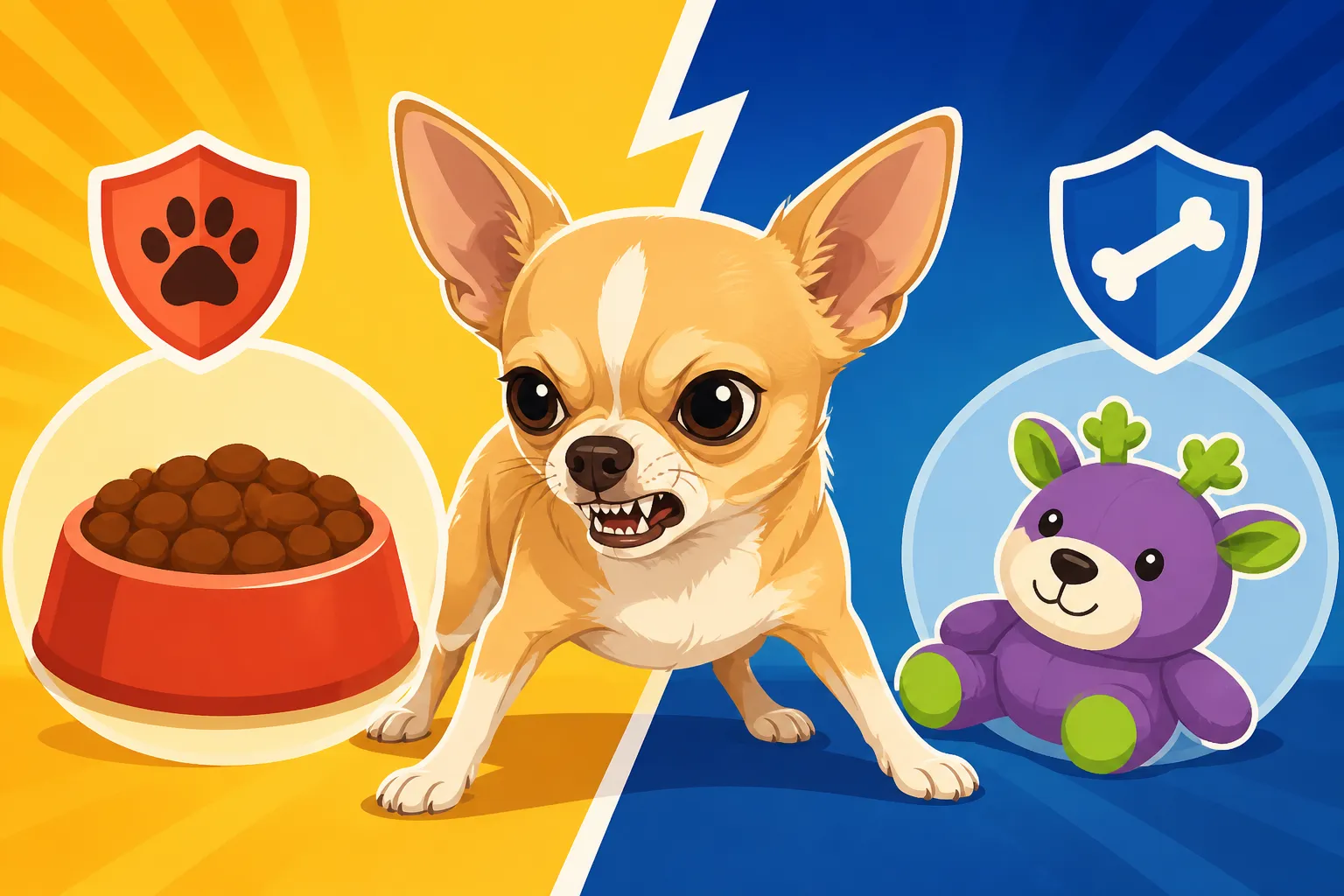
This is one of the most common forms of resource guarding. For many dogs, food is the ultimate high-value resource, a fundamental necessity for survival. A Chihuahua may exhibit food bowl aggression if they've ever experienced food scarcity, had to compete with other animals for meals, or simply feel vulnerable during meal times. This isn't just about expensive cuts of meat; it can be triggered by their regular kibble. You might see them gulping their food down at lightning speed when you approach, or freezing and giving a low growl if you get too close. This behavior can be particularly prevalent in households with multiple pets, where the Chihuahua feels the need to protect their portion from perceived rivals, even if those rivals are much larger. Over time, if not addressed, this can escalate from simply eating faster to a full-blown defensive display around the food bowl.
Guarding Toys and Chews
Beyond food, toys and chews can also become prized possessions that a Chihuahua feels compelled to guard. A favorite squeaky toy, a durable chew bone, or even a discarded sock can become the focal point of their possessiveness. This type of guarding often stems from a similar place of insecurity or a perceived lack of resources. If toys are scarce, or if they've had toys taken away from them unexpectedly in the past, they might learn that they need to guard their items to keep them. We've often found that a Chihuahua will become particularly attached to certain chews, especially those that last a while, like a bully stick or a dental chew. When they get into that zone with a chew, they can be very sensitive to approaches. They might tuck the item under their body or dart away with it when someone comes near, escalating to growling or snapping if pressed. Knowing Taking a Chew From a Chihuahua Safely is essential for preventing incidents.
People or "Lap" Guarding
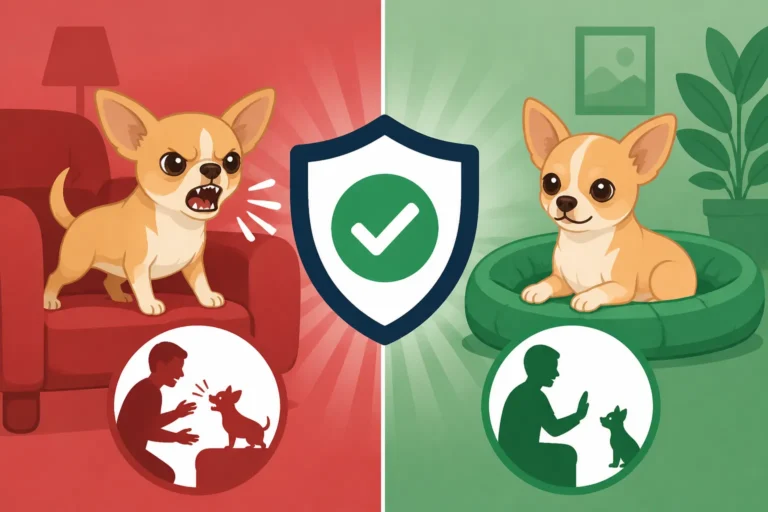
This form of resource guarding, sometimes called "person guarding" or "lap guarding," is particularly heartbreaking because it involves their beloved human. Your Chihuahua might decide that you are their most valuable resource, and they will guard you from anyone approaching, be it a family member, another pet, or a guest. This behavior often manifests when the Chihuahua is on a person's lap, snuggled beside them on the sofa, or sleeping in their bed. When another person or pet approaches, the Chihuahua might growl, bark, or even nip at the perceived intruder. This can be exacerbated by owners who inadvertently reinforce the behavior by comforting the dog when they growl, or by pushing away the "intruder" to avoid conflict. While it can feel endearing that your Chihuahua loves you that much, it's a dangerous behavior that limits your social interactions and can put others at risk. It also points to an underlying insecurity rather than true affection, and you want to address it for your Chihuahua's long-term well-being and everyone's safety. A Chihuahua That Guards a Lap is a common problem that can be managed.
Practical Strategies to Manage Food Guarding
Dealing with food guarding requires a delicate touch and a systematic approach to change your Chihuahua's emotional response to having you near their food. The goal isn't to punish them for guarding, but to teach them that your presence near their food bowl is a positive, not a threat.
Building Positive Associations with Food
The core of managing food guarding lies in counter-conditioning and desensitization. You want your Chihuahua to associate your approach with good things happening, not with losing their meal. Start by standing a safe distance from their bowl while they eat – a distance where they show no signs of guarding. As they eat, toss a very high-value treat (something they absolutely adore, like tiny bits of cooked chicken or cheese) near the bowl, but not directly into it at first. Then, walk away. Repeat this several times. The idea is to make them think, "Oh, when my human comes near, delicious things appear!" Over many, many sessions, gradually decrease the distance you stand from the bowl before tossing the treat. Eventually, you should be able to approach, toss a treat, and walk away without any guarding behavior. Treats Small Enough for Chihuahua Training are perfect for this, as you don't want to overfeed or cause digestive upset with large amounts of high-value items. Always remember to make every interaction positive and non-confrontational.
Feeding in a Safe, Low-Stress Environment
One of the simplest and most effective ways to reduce food guarding is to eliminate the perceived threat. Feed your Chihuahua in a quiet, secluded space where they feel secure and won't be interrupted by other pets or people. This could be a separate room, their crate, or behind a baby gate. This reduces the need for them to guard in the first place, as there's no one to guard from. If you have multiple dogs, always feed them separately to prevent competition. For instance, you might feed one Chihuahua in their crate, another in the kitchen with a baby gate, and the third in a laundry room. This ensures each dog feels their resources are safe and reduces overall household tension. You can find durable baby gates easily on Amazon that can section off a quiet dining area for your small dog. Once they are consistently comfortable and relaxed eating in this designated space, you can slowly begin to introduce the positive association exercises mentioned above, first from a distance and then gradually closer.
Managing High-Value Chews and Treats
High-value chews, like long-lasting dental sticks or bones, are often the biggest triggers for guarding because they take time to consume and are deeply satisfying. Never try to forcibly take a chew or treat from a guarding Chihuahua, as this will only confirm their fear that you are trying to steal it and escalate the behavior. Instead, employ the "trade-up" method. Offer an even higher-value treat in exchange for the item they are guarding. For example, if they have a chew, offer a small piece of hot dog. When they drop the chew to take the hot dog, quickly pick up the chew. After they've eaten the hot dog, you can either return the chew or put it away, depending on the situation. This teaches them that giving up an item results in something better, building trust and a positive association with your hands approaching their prized possessions. Always supervise your Chihuahua with high-value chews, especially if guarding is an issue. If they are showing strong guarding signals, it's often best to remove the chew entirely after they've finished enjoying it for a set time, or when they are distracted by something else, using the trade-up method.
Addressing Toy Guarding and Possession Aggression
Toy guarding is another common manifestation of resource guarding, and it can be particularly vexing because toys are meant for play and interaction. The approach here, similar to food guarding, is about teaching your Chihuahua that your presence with their toys leads to fun and rewards, not loss.
Teaching "Drop It" and "Leave It"
Two essential commands for managing toy guarding are "drop it" and "leave it." These commands teach your Chihuahua to voluntarily release an item or ignore one altogether. Start practicing "drop it" with a low-value toy and high-value treats. Hold a treat near their nose. When they open their mouth to sniff or take the treat, say "drop it!" as the toy falls, then reward them with the treat. Repeat this many times, gradually removing the treat as a lure and just using the verbal cue. For "leave it," place a treat on the floor or in your hand and cover it. When your Chihuahua looks away from the treat, mark the behavior (with a verbal marker like "yes" or a clicker) and reward them with a different treat from your other hand. Slowly increase the duration they have to "leave it" before getting their reward. Once mastered, these commands become invaluable tools for safely managing toys and preventing guarding situations. Online training platforms, like BAXTER & Bella, often have excellent step-by-step videos and tutorials for teaching these foundational commands effectively, which can be a huge help for Chihuahua owners.
Rotating Toys and Providing Abundance
Scarcity can fuel guarding behavior. If your Chihuahua feels like there are only a few toys available, or that certain toys are constantly being taken away, they are more likely to guard the ones they have. To combat this, ensure a good variety of toys is available. Instead of having all toys out all the time, try rotating them. Keep a selection of toys out for a few days, then put those away and bring out a different set. This keeps toys novel and interesting, reducing their perceived value as a scarce resource. It also prevents your Chihuahua from becoming overly fixated on one specific toy. If you have multiple Chihuahuas or other pets, ensure there are more than enough toys for everyone, ideally a mix of different types and textures. This abundance helps reduce competition and the feeling that they must guard their toys because there might not be another one. You can find large, affordable bundles of small dog toys on Amazon, making it easy to build up a diverse collection for rotation.
Safe Play and Interaction Protocols
Establishing clear protocols around play and interaction with toys is crucial. Always initiate play with toys, and end it on your terms, before your Chihuahua gets overly excited or possessive. Avoid reaching directly for a toy in your Chihuahua's mouth, especially if they have a history of guarding. Instead, use the "drop it" command you've been practicing, or offer a trade. During play, observe your Chihuahua's body language closely. If you see any signs of stiffening, freezing, or a hard stare, end the game calmly. Put the toy away, or trade it for a treat and then put it away. This teaches them that guarding behavior ends the fun, while polite play continues it. This also ties into the general concept of Chihuahua Handling and Consent – respecting their boundaries and teaching them that interactions are predictable and rewarding. Never punish your Chihuahua for growling; a growl is communication. Punishing it teaches them to skip the warning and go straight to a bite. Why Harsh Handling Damages a Chihuahua Fast is particularly true for small, sensitive dogs.
Dealing with "Lap" or Person Guarding
This form of guarding can be incredibly challenging because it involves the intimate bond you share with your Chihuahua. It's not about being aggressive towards you, but about guarding you from others. The key is to teach your Chihuahua that visitors or other pets approaching you are actually a good thing, leading to rewards for them, not a reason to feel threatened.
Establishing Boundaries and Predictability
When your Chihuahua guards your lap or your presence, it often stems from a lack of clear boundaries and a feeling that they need to control the situation to feel safe. Establishing predictability helps immensely. Decide when and where your Chihuahua is allowed on your lap or to share your space. For instance, designate specific "cuddle times" or specific pieces of furniture where they are allowed to be close. When others approach, calmly remove your Chihuahua from your lap before they have a chance to guard. Place them gently in their bed or crate with a high-value chew. This teaches them that your lap isn't an exclusive resource to be defended, and that being off your lap can also be rewarding. You might even consider having a rule that your Chihuahua is not allowed on furniture when guests are present, or only after the guests have settled. Consistency is key here; everyone in the household needs to adhere to the same rules.
Desensitization to Approaching Figures
The goal is to change your Chihuahua's emotional response to people or other pets approaching you. This is a slow and gradual process. Start with a trusted person (or another pet) at a distance where your Chihuahua doesn't show any guarding behavior. While the person slowly approaches (or moves), have them toss high-value treats to your Chihuahua. The approaching person should not interact with you initially, but solely focus on rewarding the Chihuahua for calm behavior. As your Chihuahua remains calm, the person can gradually reduce the distance over many, many sessions. The same applies to other pets; have them approach calmly while you reward your Chihuahua for remaining relaxed. The moment your Chihuahua shows any sign of guarding, the approaching figure stops, increases distance, and you reset. This process teaches your Chihuahua that approaching figures bring treats and good things, not a threat to their access to you. This is a type of counter-conditioning that takes time and patience.
Seeking Professional Guidance for Complex Cases
While the strategies outlined above can be very effective, resource guarding, especially person guarding, can be complex and potentially dangerous. If your Chihuahua's guarding behavior is severe (meaning they're growling, snapping, or biting consistently), if you're not seeing improvement with positive reinforcement methods, or if you feel overwhelmed and unsure how to proceed, it's absolutely crucial to seek professional help. Look for a certified professional dog trainer or a veterinary behaviorist who specializes in positive reinforcement and fear-free methods. They can assess your specific situation, help identify underlying causes (like anxiety or pain), and develop a tailored behavior modification plan. A qualified professional can offer hands-on guidance and ensure you're using techniques safely and effectively. Vetting a Trainer Before You Book a Chihuahua is a critical step to ensure you find someone knowledgeable and ethical. Remember, addressing resource guarding is a journey of patience and consistency, but with the right approach, you can help your Chihuahua feel more secure and less compelled to guard their prized possessions.
Disclaimer
This article is for general informational purposes only and does not constitute professional advice. Laws, prices and regulations vary by location and change over time. Consult a qualified professional for guidance on your specific situation.