Getting a Chihuahua Used to Walking on Leash
It can feel like you're fighting a losing battle when you try to get your tiny Chihuahua to walk politely on a leash. Many owners find their little dogs either freeze, pull like a tiny sled dog, or become a trembling mess at the sight of the big wide world. This guide is here to walk you through how to transform those stressful outings into enjoyable strolls, building confidence and good habits one tiny step at a time.
Why Leash Training Can Feel Like an Uphill Battle with a Chihuahua
Let's be honest, Chihuahuas are small. Really, really small. And it's easy to fall into the trap of treating them differently than you would a larger dog. We often carry them, thinking we're protecting them from the world, but in doing so, we sometimes inadvertently rob them of the chance to learn how to navigate it themselves. The world is huge from a Chihuahua's perspective, full of towering legs, loud noises, and endless, terrifying smells.
The Chihuahua's Natural Inclination to Be Carried
It’s completely understandable why we want to scoop up our Chihuahuas. They fit so perfectly in our arms or in a cozy carrier. It feels protective, right? Especially when you're navigating a crowded street or a park with larger, boisterous dogs. But this habit, as loving as it is, can unintentionally hinder their development when it comes to leash walking. When a Chihuahua is consistently carried, they don't get the opportunity to truly experience the ground beneath their paws, to learn about different textures, sounds, and smells from a dog's-eye view. They become accustomed to being in a safe bubble, and when that bubble is removed, the transition to walking on their own two feet can be overwhelming. They haven't built the neural pathways to process the world as a ground-level explorer. This often leads to reluctance, fear, and a general aversion to being put down on a leash. It's a tough cycle to break once it's ingrained, but it's absolutely not impossible. Many Chihuahuas thrive once they realize walking is actually a wonderful adventure. Chihuahua Handling and Why Carrying Backfires goes into more detail about how this affects them.
Early Experiences and Negative Associations
Think about a brand new Chihuahua puppy. Everything is new and exciting, but also potentially scary. If their first few experiences with a leash and collar (or harness) are negative – perhaps the collar is uncomfortable, the leash is yanked, or they're immediately thrown into a chaotic environment – they're going to form a strong negative association. This is especially true for such a sensitive breed. A simple slip leash can feel like a choke chain on their delicate necks, and an ill-fitting harness can pinch or chafe. If the first outdoor walks involve loud trucks, intimidating strangers, or big dogs bounding up to them, it's a recipe for a fearful response. They learn that the leash means stress, and going outside means danger. Our goal, then, is to completely flip that script, making every step a positive, rewarding experience. This requires patience, empathy, and a commitment to ensuring their comfort and safety above all else.
Fear and Overwhelm in a Big World
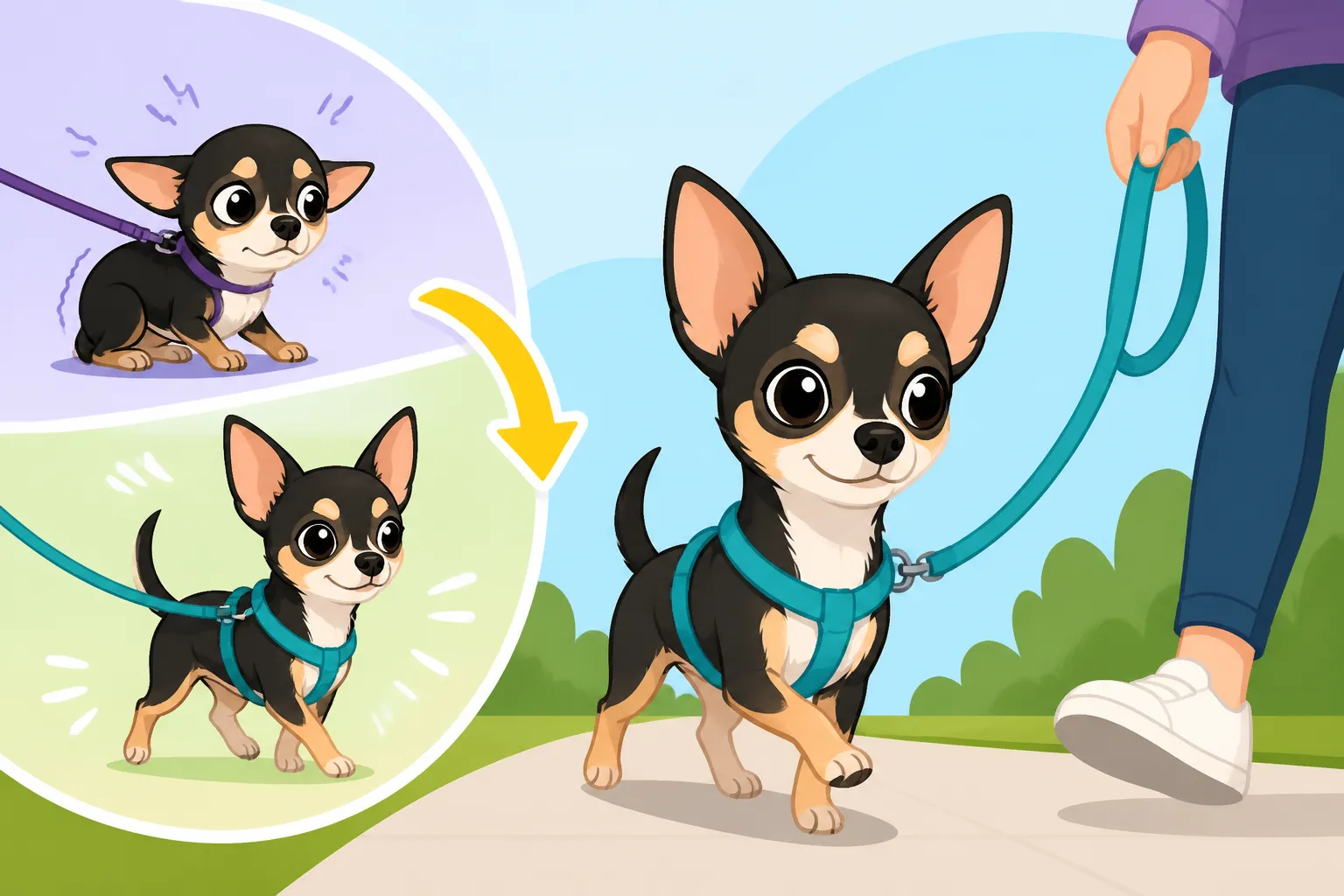
Imagine being two feet tall and walking through a city street. That's essentially what a Chihuahua experiences. Every car is a monster, every human a giant, every big dog a potential threat. Their natural instinct when faced with something frightening is to flee, bark, or freeze. On a leash, they can't flee, which often escalates to frantic barking, lunging, or simply shutting down. This isn't defiance; it's pure, unadulterated fear. Their tiny bodies are flooded with stress hormones, making learning incredibly difficult. Loud noises, strange smells, and the sheer unpredictability of the outside world can be utterly overwhelming. It’s crucial to understand that their reactions are not them being "stubborn" or "difficult," but rather a genuine response to feeling vulnerable and unsafe. Recognizing this helps us approach their training with the kindness and understanding they deserve.
Choosing the Right Gear for Your Tiny Walker
Having the right equipment is absolutely paramount when it comes to leash training a Chihuahua. You wouldn't use a heavy-duty climbing rope to walk a kitten, and similarly, standard dog gear often isn't suitable for these petite pups. Investing in the correct harness and leash can make all the difference in your Chihuahua's comfort, safety, and willingness to walk.
Why a Harness is Non-Negotiable for Chihuahuas
When it comes to Chihuahuas, a collar attached to a leash is generally a no-go for walks. Their necks are incredibly fragile, and they are prone to conditions like collapsing trachea. Even a slight tug on a collar can cause damage to their delicate windpipe, leading to a honking cough or even respiratory distress. A harness, on the other hand, distributes any pressure across their chest and shoulders, safeguarding their neck and throat. This is a non-negotiable safety measure for any Chihuahua, whether they're a puller or not. Why a Harness Matters for a Chihuahua Windpipe explains the anatomical reasons in detail. Look for harnesses that have a broad chest strap, rather than thin, string-like straps that can dig in. Materials should be soft but durable, and ideally, breathable to prevent overheating. Brands like Ruffwear or Kurgo offer excellent options for smaller dogs that prioritize both comfort and security.
Leash Length and Material Matters
Just like the harness, the leash needs to be appropriate for your Chihuahua's size and your training goals. A standard six-foot leash is generally ideal. It provides enough slack for your Chihuahua to explore a little and sniff around, which is incredibly important for their mental stimulation, without giving them so much length that they can get tangled or stray too far. Avoid retractable leashes, especially during the training phase. They teach dogs to pull to get more length, offer little control in an emergency, and can snap back, causing injury to both you and your dog. Material-wise, a lightweight nylon or soft leather leash is best. It should be comfortable for you to hold and not too heavy for your Chihuahua to drag along. You want something durable but not bulky.
Finding the Perfect Fit (and Where to Look)
The fit of your Chihuahua's harness is perhaps the most critical aspect. A harness that is too loose can allow your Chihuahua to slip out – a terrifying prospect for such a tiny dog – while one that is too tight will chafe, restrict movement, and cause discomfort, leading to a refusal to walk. You should be able to comfortably fit two fingers under all straps of the harness. Pay close attention to the chest and girth measurements. It's often helpful to measure your Chihuahua precisely before shopping, especially when buying online from retailers like Amazon. Don't just guess their size based on weight, as body shapes vary. Many harnesses, such as those from BAXTER & Bella, are designed with adjustable straps to ensure a snug, escape-proof fit. It might take trying a few different styles to find the absolute perfect one for your dog's unique body shape. Harness Fitting on a Chihuahua Chest offers more guidance on how to ensure the best fit.
Here's a quick comparison of harness types:
| Harness Type | Pros | Cons | Ideal For |
|---|---|---|---|
| H-Harness | Widely available, good adjustability, affordable | Can rub sensitive armpits if not fitted correctly | Everyday walks, Chihuahuas who don't pull excessively |
| Step-In Harness | Easy to put on/take off, minimal head-touching | Can be easier for escape artists if not secure | Chihuahuas who dislike overhead harnesses |
| Vest Harness | Very comfortable, secure, often warmer | Can be bulkier, harder to clean, might be warm in summer | Chihuahuas needing extra warmth/security, fearful dogs |
| Front-Clip Harness | Discourages pulling by redirecting momentum | Can sometimes tangle legs if not well-designed | Chihuahuas who are strong pullers (even small ones!) |
Step-by-Step Guide to Positive Leash Training
Patience is your best friend when training a Chihuahua to walk on a leash. Remember, their world is big and sometimes scary. The goal is to build positive associations, making every step a choice they make willingly, not something they're forced into. This process should be broken down into tiny, manageable steps, always ending on a high note.
Starting Indoors: Building Positive Associations
Before you even think about stepping outside, get your Chihuahua comfortable with their new gear indoors. This means letting them wear their harness for short periods, supervised, while they're doing something enjoyable, like eating or playing.
- Introduce the Harness Gently: Don't just strap it on. Let them sniff it, reward them. Put it on for a minute, reward, then take it off. Gradually increase the time they wear it. Never force it. If they look uncomfortable, take it off and try again later. The goal is for them to associate the harness with good things – treats, praise, playtime.
- Attach the Leash: Once they're happy in the harness, attach the lightweight leash. Let them drag it around for a few minutes indoors, still supervised. Again, lots of praise and treats. The leash should be light enough that it doesn't feel like a heavy burden.
- Practice Short Walks: Pick up the leash and simply walk a few steps around your living room. When your Chihuahua follows, or even just moves forward with you, reward immediately with a tiny, high-value treat. Think soft, pea-sized bits of cooked chicken or cheese – Treats Small Enough for Chihuahua Training are crucial here. If they stop or freeze, don't drag them. Coax them with a treat, or gently pick them up, move them a foot forward, and try again, rewarding for any forward movement. Keep sessions super short, just a few minutes at a time, and always end before they get bored or frustrated.
Moving Outdoors: Short, Successful Outings
Once your Chihuahua is confidently walking on a leash indoors, it's time to introduce the wonders (and potential scares) of the outside world. This transition needs to be gradual and carefully managed to maintain those positive associations.
- Choose a Quiet Location: Don't start on a busy street. Your backyard, a very quiet cul-de-sac, or an empty park early in the morning are ideal. The fewer distractions and potential stressors, the better.
- Keep it Short and Sweet: Your first outdoor "walks" might only be a minute or two long, just enough for them to take a few steps, sniff something interesting, and get a treat. The goal is success, not distance. End the walk while they're still enjoying themselves.
- Focus on Exploration and Sniffing: Let your Chihuahua lead a little, within reason. Sniffing is incredibly enriching for dogs and helps them process their environment. Think of it as their newspaper. Reward them for investigating things calmly.
- Counter-Condition Scary Things: If a loud car or a barking dog spooks them, immediately offer a super high-value treat. You want them to start associating these potentially scary things with something wonderful. "Oh, a loud truck! That means chicken!" This is called counter-conditioning and it's a powerful tool for building confidence. Building a Chihuahua's Confidence Outdoors can offer more tips.
Troubleshooting Common Leash Walking Challenges
Even with the best intentions, you might run into some common issues. Don't get discouraged! These are normal, and there are ways to work through them.
- The Chihuahua Freeze: Your dog suddenly stops, hunkers down, and refuses to move. This is usually fear. Don't pull. Get down to their level, offer a treat to coax them forward, or gently pick them up, move them a short distance, and place them back down, immediately rewarding any forward movement. Sometimes, finding a path with softer grass or fewer strange objects can help.
- The Pulling Wonder: Yes, even tiny Chihuahuas can pull surprisingly hard. If your Chihuahua is consistently pulling, practice "stop and go." The moment they pull, stop walking. Only resume when the leash slackens, even for a second. This teaches them that pulling gets them nowhere, but a loose leash means forward motion. A front-clip harness can also be very helpful here, as it redirects their momentum towards you when they pull.
- The Barking and Lunging: This is often fear-based reactivity. Keep a good distance from triggers (other dogs, strangers, etc.). When you see a trigger, before your Chihuahua reacts, start a rapid-fire treat delivery. Treat, treat, treat, until the trigger passes. The goal is to change their emotional response from fear/aggression to "oh, look, a treat opportunity!" It takes time and consistency. Chihuahua Fear Reactivity, the Breed's Real Problem discusses this in more depth.
Maintaining Consistency and Progress Over Time
Leash training isn't a one-and-done thing; it's an ongoing journey of reinforcement and adaptation. As your Chihuahua grows older and becomes more confident, you'll find new ways to make walks enjoyable for both of you.
Making Walks a Routine, Not a Chore
Consistency is key. Try to establish a regular walking schedule. Two to three short walks a day can be much more beneficial than one long, overwhelming walk. This routine provides predictability for your Chihuahua, helping them feel more secure. Even on days with bad weather, a short indoor game or a quick potty break outside with high rewards can keep the routine going. Think of walks as an essential part of their day, not just a way to relieve themselves. They offer mental stimulation, exercise, and a chance to bond with you. The more positive experiences your Chihuahua has on a leash, the more eager they will be for their next adventure. For ideas on short, effective training, consider methods mentioned in Three Minute Training Sessions With a Chihuahua.
Continuing Education and Socialization
Even after your Chihuahua is confidently walking on a leash, don't stop the learning! Continue to expose them to new, positive experiences at their own pace.
- Meet-and-Greets: Carefully arranged playdates with calm, small dogs can be wonderful for their confidence. Avoid dog parks, which can be overwhelming and dangerous for such tiny dogs. Chihuahua Play With Dogs Its Own Size offers guidance here.
- New Places, Same Rules: Once they are comfortable in familiar areas, gradually introduce new, slightly more stimulating environments. Always start with short visits and bring high-value treats.
- Keep it Positive: Always use positive reinforcement. Reward good behavior, ignore minor infractions (like a momentary sniff of something inappropriate), and never punish fear or reluctance. The bond of trust is paramount for Chihuahuas. Consider looking into online programs like those offered by BAXTER & Bella, which provide structured training guides and support for building good habits in puppies and adult dogs alike, often including sections on leash manners.
When to Seek Professional Help
Sometimes, despite our best efforts, a Chihuahua's leash issues can persist or escalate. This is not a failure on your part, but rather a sign that you might need a little extra guidance.
- Persistent Fear/Aggression: If your Chihuahua is showing extreme fear (constant trembling, freezing, trying to hide) or aggression (consistent barking, lunging, snapping at people or dogs) on walks, it's time for a professional.
- Unmanageable Pulling: Even small dogs can make walks unpleasant if they pull constantly. A professional trainer can help diagnose the root cause and implement effective strategies.
- Lack of Progress: If you've been consistent with positive methods for several weeks or months and aren't seeing any improvement, a certified professional dog trainer can assess your specific situation and provide tailored advice.
When looking for a trainer, always choose someone who uses positive, force-free methods. Avoid trainers who advocate for harsh corrections, choke chains, prong collars, or intimidation tactics, as these can be incredibly damaging to a sensitive Chihuahua and worsen fear-based behaviors. Ask about their experience with small breeds and their approach to fear and reactivity. Vetting a Trainer Before You Book a Chihuahua provides excellent questions to ask potential trainers.
Ultimately, getting your Chihuahua used to walking on a leash is about building their confidence and strengthening your bond. It's a journey, and there will be good days and challenging days. But with patience, the right tools, and a whole lot of love, you'll soon be enjoying those strolls together.
Disclaimer
This article is for general informational purposes only and does not constitute professional advice. Laws, prices and regulations vary by location and change over time. Consult a qualified professional for guidance on your specific situation.