Chihuahua House Training in Cold Weather
It’s a tale as old as time for Chihuahua parents: you bundle up, grab the leash, and head for the door, only for your tiny companion to plant their feet firmly, shiver dramatically, or dart back under the sofa. House training a Chihuahua in cold weather can feel like an impossible mission when their little bodies simply aren't built for chilly temperatures, leading to frustrating accidents indoors. This guide is here to offer empathetic, practical strategies to help your pint-sized pup brave the elements or successfully use indoor alternatives when the weather truly isn't cooperating.
Why Cold Weather is Such a Big Deal for Chihuahuas
When you're trying to house train your Chihuahua, it's easy to get frustrated when they refuse to go outside, especially when it's cold. But for these tiny dogs, cold isn't just uncomfortable; it can be genuinely painful and even dangerous. Their physiology makes them uniquely vulnerable to low temperatures, which means their reluctance to step out isn't stubbornness, but a strong instinct for self-prespreservation.
The Chihuahua's Minimalist Body Design
Chihuahuas are incredibly small, often weighing just a few pounds. This diminutive size means they have a very high surface area to volume ratio compared to larger dogs. Think of it this way: a tiny cube loses heat much faster than a giant cube, and your Chihuahua is like that tiny cube. They simply don't have much body mass to generate and retain heat. This is why you often see them shivering even indoors if the temperature drops a little for you.
Beyond their size, Chihuahuas also have very little body fat, especially those lean, athletic ones. Fat acts as an insulating layer, helping to keep warmth in. Without much of it, their core body temperature can drop rapidly when exposed to cold air. This isn't a design flaw; it's just how they've evolved, likely in warmer climates. For many Chihuahuas, a brisk autumn day feels like a deep winter freeze to us. Understanding this fundamental difference is the first step in approaching cold-weather house training with patience and empathy.
Hypothermia Risks for a Toy Breed
It’s not just about discomfort; actual health risks come into play when Chihuahuas are exposed to cold for too long. Hypothermia, a dangerously low body temperature, is a very real concern. When their bodies get too cold, their vital organs can start to shut down. This isn't just about snow; even a chilly, damp breeze can be enough to cause their temperature to plummet, especially if they are standing still trying to decide where to go potty.
Puppies and senior Chihuahuas are particularly susceptible. Young pups haven't fully developed their internal temperature regulation systems, and older dogs might have underlying health conditions that make them less able to cope with cold stress. If your Chihuahua starts shivering uncontrollably, becomes lethargic, or their gums feel cold to the touch, it's a serious emergency. Always prioritize their safety over strict adherence to an outdoor potty schedule when the temperatures are truly frigid. This is also why understanding Chihuahua Hypoglycemia and the Puppy Emergency is crucial, as cold can exacerbate low blood sugar issues in vulnerable pups.
Equipping Your Chihuahua for Cold Weather Potty Breaks
Since going outside is often a non-negotiable part of house training, especially for maintaining a consistent routine, you'll need to make sure your Chihuahua is properly equipped to handle the chill. This isn't just about looking cute in a sweater; it's about providing genuine protection that allows them to do their business without becoming dangerously cold. Investing in the right gear can make all the difference between a successful outdoor potty break and a quick dash back inside.
The Importance of Warm Clothing
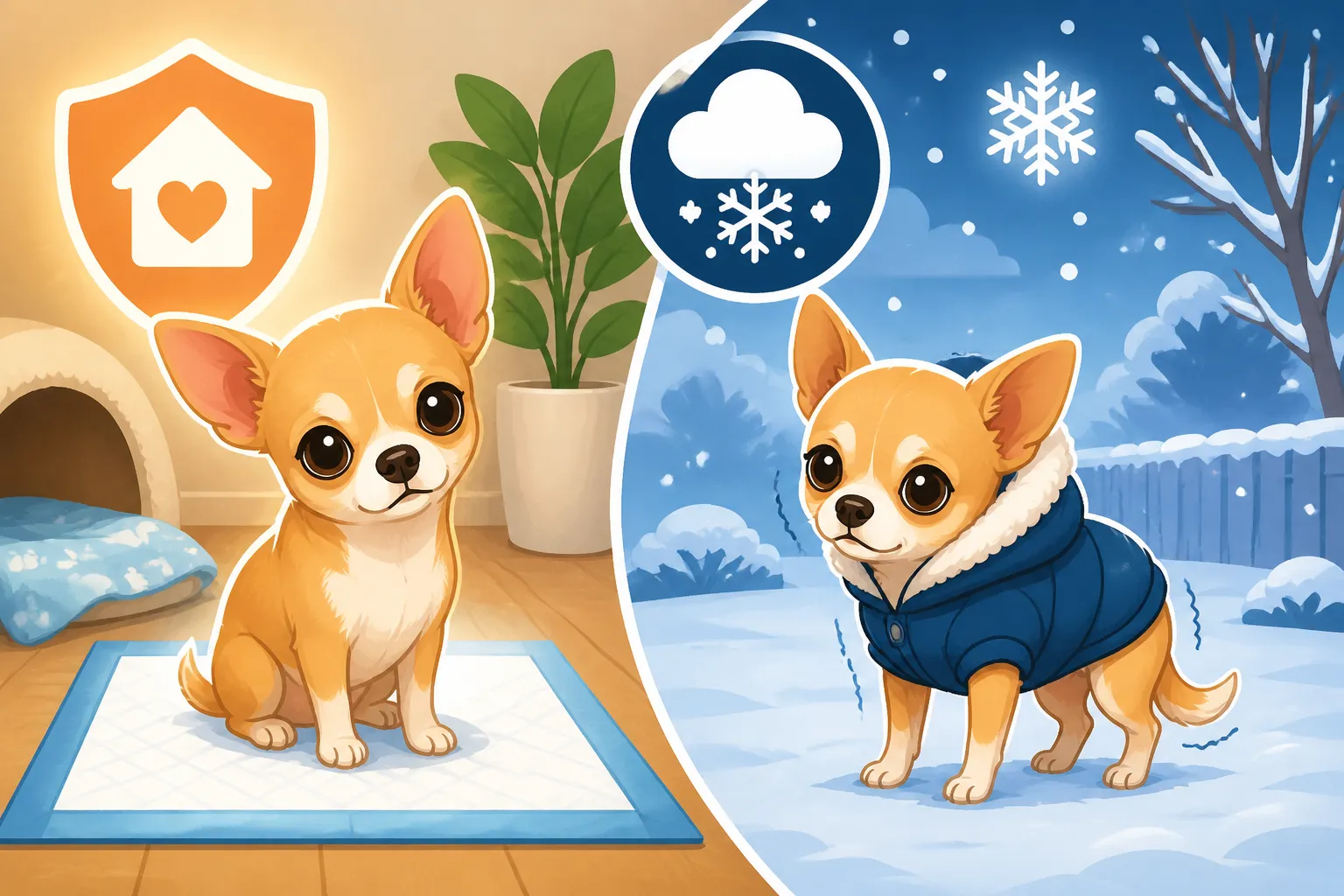
A good quality sweater or coat is not a luxury for a Chihuahua in cold weather; it's a necessity. Their thin coats offer very little insulation, so an extra layer of fabric helps trap their body heat. When choosing clothing, look for items that cover their torso, from their neck down to their tail. For really cold days, a coat that extends over their belly can provide even more warmth, as their underside is often exposed and vulnerable to the cold ground.
Consider materials like fleece or wool blends, which are excellent for insulation. Make sure the fit is snug but not restrictive, allowing them to move freely to squat and eliminate. Many owners find success with options available on platforms like Amazon, where you can find a wide variety of sizes and styles. Don't forget about wet weather either; a waterproof or water-resistant coat will be essential if you live in an area with rain or snow, preventing their tiny bodies from getting damp and even colder. Proper clothing means they can focus on the task at hand rather than just trying to get away from the cold.
Paw Protection and Ground Hazards
It's not just their bodies that feel the cold; their tiny paws are also extremely sensitive to icy pavements, snow, and even cold, wet grass. Imagine walking barefoot on ice – that's what your Chihuahua might be experiencing. Dog boots can offer crucial protection, not only from the cold but also from harsh chemicals like de-icing salts, which can burn their paw pads and are toxic if ingested when they lick their feet.
Getting a Chihuahua used to boots takes patience. Start with short periods indoors, rewarding them heavily. Look for boots that are easy to put on and stay on, with good traction. If boots are a non-starter, consider paw balms or waxes that create a protective barrier against cold and irritants. However, these won't offer much insulation from extreme cold or wetness. Always check the ground temperature yourself; if it's too cold for your bare hand, it's too cold for your Chihuahua's paws. You can find many effective paw protectors and balms on Amazon to try out.
Short Leash and Quick Missions
When it's cold, those potty breaks need to be quick and efficient. This isn't the time for a leisurely stroll around the block. Keep your Chihuahua on a short leash and head directly to their designated potty spot. The goal is to get them out, let them do their business, and get them back inside as quickly as possible. This minimizes their exposure to the cold and reduces the chance of them holding it in because they're too uncomfortable.
Using a harness instead of a collar is also highly recommended, especially with the urgency of cold-weather potty trips. A harness distributes pressure across their chest and shoulders, preventing any strain on their delicate neck and windpipe, which can be particularly sensitive in Chihuahuas prone to Collapsing Trachea and the Chihuahua Honking Cough. Be prepared with high-value treats to reward them immediately after they go. This positive reinforcement reinforces that going potty outside, even in the cold, leads to good things and a quick return to warmth. The faster and more positive the experience, the more willing they'll be to repeat it.
Creative Outdoor Potty Solutions for Cold Climates
Sometimes, simply bundling up isn't enough, or the weather conditions are so extreme that even a brief outdoor trip feels cruel. This is where getting a bit creative with your outdoor setup can make a huge difference. The aim is to create a more inviting and protected space for your Chihuahua to do their business, reducing their reluctance to step outside when the elements are harsh.
Sheltered Potty Areas
Think about where your Chihuahua usually goes potty in your yard or on your walks. Can you make that spot more protected from wind, rain, or snow? A small, designated area under an awning, on a covered porch, or even next to a sheltered side of the house can provide a surprising amount of relief. The less direct wind and precipitation they experience, the more likely they are to relax and do their business.
Some dedicated owners even go so far as to create a small, temporary shelter or run in their yard. This could be as simple as a tarp strung up to block wind and snow, or a small dog house with an open front. The key is to reduce the sensory assault of the cold weather. Lay down some straw or a non-slip mat if the ground gets icy to make it more comfortable for their paws. Consistency is still paramount, so always take them to this designated spot, reinforcing it as their outdoor bathroom.
Snow Paths and Clearings
If you live in an area that gets significant snowfall, navigating deep snow can be a major deterrent for a tiny Chihuahua. They can sink, get completely covered, and become disoriented or overly chilled very quickly. Before you take them out, clear a path to their potty spot. A shovel can quickly create a narrow, cleared lane where they can walk without struggling through deep powder.
You might even consider clearing a small "potty patch" of grass or pavement where they can easily stand and eliminate without getting their entire body submerged in snow. This cleared area not only makes it physically easier for them but also mentally less intimidating. The sight of a clear, familiar patch can signal "potty time" more effectively than a vast, white expanse. Remember, for a Chihuahua, a few inches of snow can feel like wading through waist-deep drifts, so anything you can do to ease their passage will be greatly appreciated. Getting a Chihuahua Outside on Snowy Days can be a real struggle, so these little efforts go a long way.
Indoor Potty Training Alternatives
There will inevitably be days when outdoor potty breaks are simply not feasible or safe, whether due to blizzards, freezing rain, or extreme temperatures. Having a reliable indoor alternative is not a failure of house training; it's a responsible, empathetic strategy for a toy breed. This flexibility ensures your Chihuahua can relieve themselves comfortably and safely, preventing accidents and maintaining a clean home environment.
Puppy Pads and Indoor Grass Patches
Puppy pads are a classic indoor potty solution, and for good reason. They're absorbent, disposable, and can be placed in a convenient location. The key is consistent placement and positive reinforcement. Choose a spot that's easily accessible but also somewhat private, away from their food and sleeping areas. Reward them immediately with praise and a small, high-value treat every single time they use the pad correctly. This helps them associate the pad with positive outcomes.
For a more natural feel, indoor grass patches or litter boxes designed for dogs can be excellent alternatives. These often use real or artificial turf, providing a texture that might feel more familiar than a flat pad. Some even come with trays that drain liquid into a reservoir, making cleanup simpler. Brands like BAXTER & Bella, while known for training programs, often discuss the importance of flexible potty solutions for small breeds in their resources. The biggest challenge with indoor solutions is ensuring your Chihuahua doesn't see your entire home as a giant potty pad, so confinement to a designated area during non-supervised times can be helpful.
| Potty Solution | Pros | Cons | Ideal For |
|---|---|---|---|
| Outdoor Potty with Gear | Maintains outdoor routine, natural, good exercise | Requires owner to brave weather, Chihuahua discomfort if not properly dressed, safety risks in extreme cold | Regular house training, moderate cold, short trips |
| Sheltered Outdoor Spot | Reduces direct exposure, still an "outdoor" feel | Requires a suitable outdoor space, may involve setup, not for extreme cold | Moderate to significant cold, windy conditions |
| Cleared Snow Path/Patch | Makes outdoor access easier in snow, encourages routine | Requires manual clearing, only addresses snow, not extreme cold/wind | Snowy climates, Chihuahuas who tolerate cold well with gear |
| Puppy Pads | Convenient, always available, safe from elements | Can encourage indoor accidents, generates waste, less natural | Extreme cold, small apartments, puppies, senior dogs |
| Indoor Grass Patches | More natural feel than pads, reusable, aesthetically pleasing | Can be pricier, requires regular cleaning, may still encourage indoor habits | Extreme cold, apartment living, Chihuahuas preferring grass texture |
Creating a Designated Indoor Potty Zone
Simply putting a pad on the floor might not be enough. You need to create a clear, unambiguous "potty zone" to help your Chihuahua understand where it's okay to relieve themselves indoors. This often involves using an exercise pen or a baby gate to cordon off a small area. Within this zone, place their puppy pads or grass patch, along with their bed and water bowl, making it a safe, clean space.
During times when you can't actively supervise them, such as when you're at work or sleeping, confine them to this zone. This prevents accidents in other parts of the house and encourages them to use the designated spot. As they become more reliable, you can gradually expand their access to other areas of the home, always making sure the potty zone remains easily accessible. Remember, even with an indoor option, routine is key. Take them to their indoor potty zone at regular intervals, just as you would for outdoor breaks, to build consistency and reinforce good habits. This approach is invaluable, especially for How Long a Chihuahua Can Hold Its Bladder which is often shorter than you'd think.
Training Tips for Cold-Weather Housebreaking Success
Beyond gear and alternative potty spots, targeted training strategies are crucial for navigating cold-weather house training. Your Chihuahua needs clear communication and positive reinforcement to understand what's expected of them, regardless of the temperature outside. Remember, patience and consistency are your best friends here.
Reinforcing the "Go Potty" Cue
If you don't already have one, establish a consistent "go potty" or "do your business" cue. Use this phrase every single time you take your Chihuahua to their designated potty spot, whether it's outside or on an indoor pad. Say the cue as they are sniffing around and just before they start to eliminate. When they successfully go, immediately follow with enthusiastic praise and a high-value treat.
This verbal cue becomes incredibly powerful because it tells your Chihuahua exactly what you want them to do in that specific location. In cold weather, it helps speed up the process. They'll learn to associate the phrase with the action, making them more likely to relieve themselves quickly upon hearing it. This reduces the time they have to spend shivering in the cold, making the experience more efficient and positive for both of you. Consistent use of this cue is vital for effective Chihuahua House Training in Cold Weather.
Short, Frequent, and Scheduled Potty Breaks
Chihuahuas have tiny bladders, and this is even more true for puppies. Expecting them to hold it for long periods, especially when they're cold, is unrealistic and sets them up for failure. Instead, commit to short, frequent, and scheduled potty breaks. For puppies, this might mean every hour or two, after waking up, after playing, and after eating or drinking. For adults, it might be every 3-4 hours, with more frequent trips on cold days.
Even if your Chihuahua just went, take them out again after a period of activity or sleep. The more opportunities they have to go in the correct spot, the more success they will have, and the faster they will learn. In cold weather, these frequent trips should be quick "in and out" missions. The goal is to catch them before they have an accident, making success easy and reinforcing the routine. Don't punish accidents; simply clean them up thoroughly with an enzymatic cleaner and redouble your efforts on consistent scheduling.
Managing Expectations and Preventing Accidents
It's easy to get frustrated when accidents happen, but managing your expectations is key. House training, especially with a small breed in challenging weather, takes time and consistency. There will be setbacks. Instead of viewing accidents as failures, see them as opportunities to adjust your strategy. Were they out long enough? Were they warm enough? Was the designated spot appealing?
Prevention is always better than correction. Supervise your Chihuahua closely when they're inside and not in their designated potty zone. If you see them sniffing, circling, or heading towards a suspicious corner, immediately interrupt them with a cheerful "Let's go potty!" and whisk them to their appropriate spot. Crate training can also be an invaluable tool. Chihuahuas are generally clean animals and won't want to soil their sleeping space. A properly sized crate can help them learn to hold their bladder for short periods, especially overnight, making outdoor trips more productive when they finally do go out. For many owners, understanding Puppy Pads Against Outdoor Only for a Chihuahua is a nuanced decision that depends on their living situation and their individual dog's needs.
Addressing Common Cold-Weather House Training Problems
Even with the best preparation and training, you might run into specific challenges when house training your Chihuahua in the cold. These aren't necessarily signs of a difficult dog, but rather common reactions from a tiny creature trying to stay warm and safe. Addressing these issues with understanding and practical solutions will help both of you succeed.
The Refusal to Go Outside
Perhaps the most common frustration is when your Chihuahua simply refuses to budge once the door opens. They might stand still, shiver, pick up their paws, or even try to bolt back inside. This isn't defiance; it's a clear signal that they are uncomfortably cold or even scared of the elements. Your first step should always be to assess their warmth: Is their coat warm enough? Are their paws protected?
If the gear is good, then it's about making the outdoor experience as positive as possible. Carry them directly to their potty spot so they spend less time navigating the cold. Give your "go potty" cue immediately. If they still won't go, try waiting just a minute or two, offering gentle encouragement, and then if nothing happens, bring them back inside for a short period (5-10 minutes) in their crate or confined area, and then try again. This prevents them from simply holding it until they get inside and having an accident. You might need to repeat this "out-in-out" cycle several times. For more insights on persistent challenges, Why a Chihuahua Regresses on House Training often sheds light on underlying causes.
"Sneaky" Indoor Accidents
Sometimes, despite your best efforts, you find puddles or piles in unexpected places indoors. These "sneaky" accidents often happen because your Chihuahua was too uncomfortable to go outside or felt rushed, and then waited until they were warm and safe inside to relieve themselves. This behavior is usually driven by discomfort, not spite.
To combat this, increase your supervision. Keep your Chihuahua on a leash tethered to you when they're not in their designated potty zone, especially after an outdoor trip where they didn't go. This "umbilical cord" method allows you to catch them in the act of sniffing or circling before an accident occurs, so you can calmly scoop them up and take them to their proper spot. Also, re-evaluate your cleaning routine for past accidents. If an area still smells faintly of urine, your Chihuahua will be drawn back to it. Use an enzymatic cleaner specifically designed to break down urine odors, like those widely available on Amazon, to eliminate the scent entirely and deter repeat accidents.
Post-Potty Zoomies and Shivers
You might notice your Chihuahua exhibiting "zoomies" (sudden bursts of energetic running) or continued shivering after coming back inside from a cold-weather potty break. The zoomies are often a release of pent-up energy, excitement, and relief at being warm again. It's a joyful expression, and while it might look a little frantic, it's generally harmless.
The continued shivering, however, warrants attention. If it lasts for more than a few minutes after they've been back in a warm environment, it could indicate that they got too cold. Ensure their clothing is adequate for the conditions, and that their outdoor time was kept to an absolute minimum. Immediately wrap them in a warm blanket or hold them close to your body to help raise their core temperature. Providing a warm, cozy bed for them to burrow into immediately after coming inside can also help them re-regulate their temperature. Understanding Why a Chihuahua Shivers Indoors can help differentiate between cold and other causes of trembling.
Long-Term Consistency Beyond Winter
While winter and cold weather present unique house-training challenges for Chihuahuas, the principles of consistency, patience, and positive reinforcement remain vital year-round. Thinking about house training as an ongoing dialogue with your dog, rather than a one-time event, will lead to greater success and a stronger bond.
Maintaining a Routine in All Seasons
Once the cold weather passes and warmer temperatures arrive, it's tempting to relax your routine. However, maintaining consistency with your Chihuahua's potty schedule is crucial for long-term success. Continue to take them out at regular intervals, praise them enthusiastically for going in the right spot, and use your established "go potty" cue. This reinforces their good habits and prevents regression.
If you've been relying heavily on indoor potty pads during the winter, gradually transition them back to outdoor-only potty breaks if that's your preference. You can do this by slowly moving the pad closer to the door, then outside the door, and eventually phasing it out entirely. This gradual approach helps them adapt without confusion. Always be mindful that Chihuahuas still have small bladders, so even in warmer weather, frequent trips are usually better than expecting them to hold it for extended periods.
Adapting to Changing Conditions
Life with a Chihuahua means always being ready to adapt. Whether it's unusually hot weather in summer, a sudden thunderstorm, or even a short-term illness, circumstances can arise that disrupt your usual potty routine. Being flexible and understanding that your tiny companion might need extra help or an alternative solution is key to preventing accidents and frustration.
For instance, in extreme summer heat, you might need to adjust potty times to cooler parts of the day or seek out shaded areas to protect their sensitive paws from hot pavement. A sudden downpour might necessitate a quick indoor pad break instead of a soaking outdoor trip. The goal is always to meet your Chihuahua's needs with kindness and forethought. Having tools like Ramps and Steps for a Chihuahua Sofa can also protect their small joints during all seasons, showing overall thoughtful care. By consistently providing appropriate potty solutions and understanding their unique needs, you'll ensure your Chihuahua remains a happy, well-adjusted member of your family, accident-free for years to come.
Disclaimer
This article is for general informational purposes only and does not constitute professional advice. Laws, prices and regulations vary by location and change over time. Consult a qualified professional for guidance on your specific situation.