Why a Chihuahua Should Be Asked Before Lifted
It's so easy to just reach down and scoop up our tiny Chihuahuas, isn't it? They're so small and portable, and sometimes we just want to protect them or give them a cuddle. But this seemingly innocent, automatic gesture, repeated countless times a day, can actually have a profound and often negative impact on your Chihuahua's confidence, trust in you, and overall behavior. This guide will delve into why asking for your Chihuahua's "permission" before lifting them is a game-changer for their well-being, how to recognize their subtle cues, and how to build a stronger, more respectful relationship with your pint-sized pal.
The Importance of Canine Consent Before Lifting
You might think it sounds silly to "ask" a dog for permission, especially one as small as a Chihuahua. After all, they're dogs, right? But just like people, dogs communicate their comfort levels, and when we constantly override those signals, even with good intentions, we teach them that their boundaries don't matter. For a Chihuahua, a breed often prone to anxiety and reactivity due to their small size in a big world, this constant overriding can be particularly damaging.
Understanding Canine Communication and Autonomy
Dogs are masters of subtle communication. They use their entire body to tell us how they're feeling, from the flick of an ear to the tension in their tail. When you swoop in and pick up your Chihuahua without any warning or invitation, you're essentially saying, "I don't care what you're doing, or how you feel, I'm going to do this to you anyway." Imagine if someone constantly picked you up without warning; you'd likely feel startled, perhaps a little trapped, and definitely lose trust in that person over time. It's no different for our Chihuahuas.
For such a small creature, a sudden lift can feel like being snatched by a predator. They lose their footing, their control, and are suspended in the air. This can be genuinely terrifying. Allowing your Chihuahua a moment to acknowledge your approach and offer a consent cue gives them a sense of autonomy. It empowers them to participate in the interaction, rather than simply being subjected to it. This seemingly small act of respect can drastically reduce stress and increase their confidence. It’s a core principle of positive reinforcement training that applies to Training a Chihuahua Exactly Like a Big Dog.
The Link Between Unexpected Lifts and Fear
Think about it from your Chihuahua's perspective. They're navigating a world full of giant legs, loud noises, and unpredictable movements. Their natural instinct is to be alert and to protect themselves. If one of the biggest "giants" in their life – you – consistently surprises them with a sudden lift, it teaches them that they need to be on high alert even around you. This can lead to a state of chronic low-level stress.
Over time, this constant feeling of being startled can manifest as various fear-based behaviors. They might start flinching when you reach for them, or even growling and snapping as a desperate attempt to create space and warn you off before you grab them. This is often misinterpreted as aggression, when in reality, it's a clear signal that they are uncomfortable and trying to communicate their boundaries. A dog that is constantly picked up without warning might also develop Fear-Based Reactivity in a Chihuahua, becoming more anxious and vocal around strangers or other dogs because they anticipate unpredictable handling.
How to "Ask" Your Chihuahua for Consent
So, how exactly do you "ask" a dog for permission? It's not about speaking English to them, but about understanding and respecting their body language. It's a dance of communication that builds trust and a stronger bond.
Reading Their Signals: What to Look For
Before you even think about lifting your Chihuahua, take a moment to observe them. Their body will tell you everything you need to know.
| Consent Cues (Approaching, Relaxed) | Refusal Cues (Stiff, Avoidant) |
|---|---|
| Soft eyes, blinking | Wide eyes, "whale eye" (showing whites) |
| Loose body, tail wagging gently or neutral | Stiff body, tucked tail |
| Head turn towards you, sniffing hand | Head turn away, leaning away |
| Approaching you, leaning into your touch | Moving away, trying to hide |
| Relaxed mouth, maybe a small lick | Tightly closed mouth, lip lick |
| Leaning into your hand when you pet them | Pulling back, flinching |
If you see refusal cues, do not proceed with the lift. Instead, acknowledge their boundaries and try again later, or re-evaluate why they might be uncomfortable. Perhaps they're tired, focused on something else, or feeling a bit overwhelmed. We often overlook these subtle signs, leading to behaviors like A Chihuahua That Flinches When You Lift It.
Approaching With Respect and Offering a Choice
The first step in "asking" is to approach your Chihuahua calmly and intentionally. Avoid sudden movements or towering over them. Instead:
- Lower Yourself: Get down to their level, or at least squat down. This makes you less intimidating and easier for them to approach.
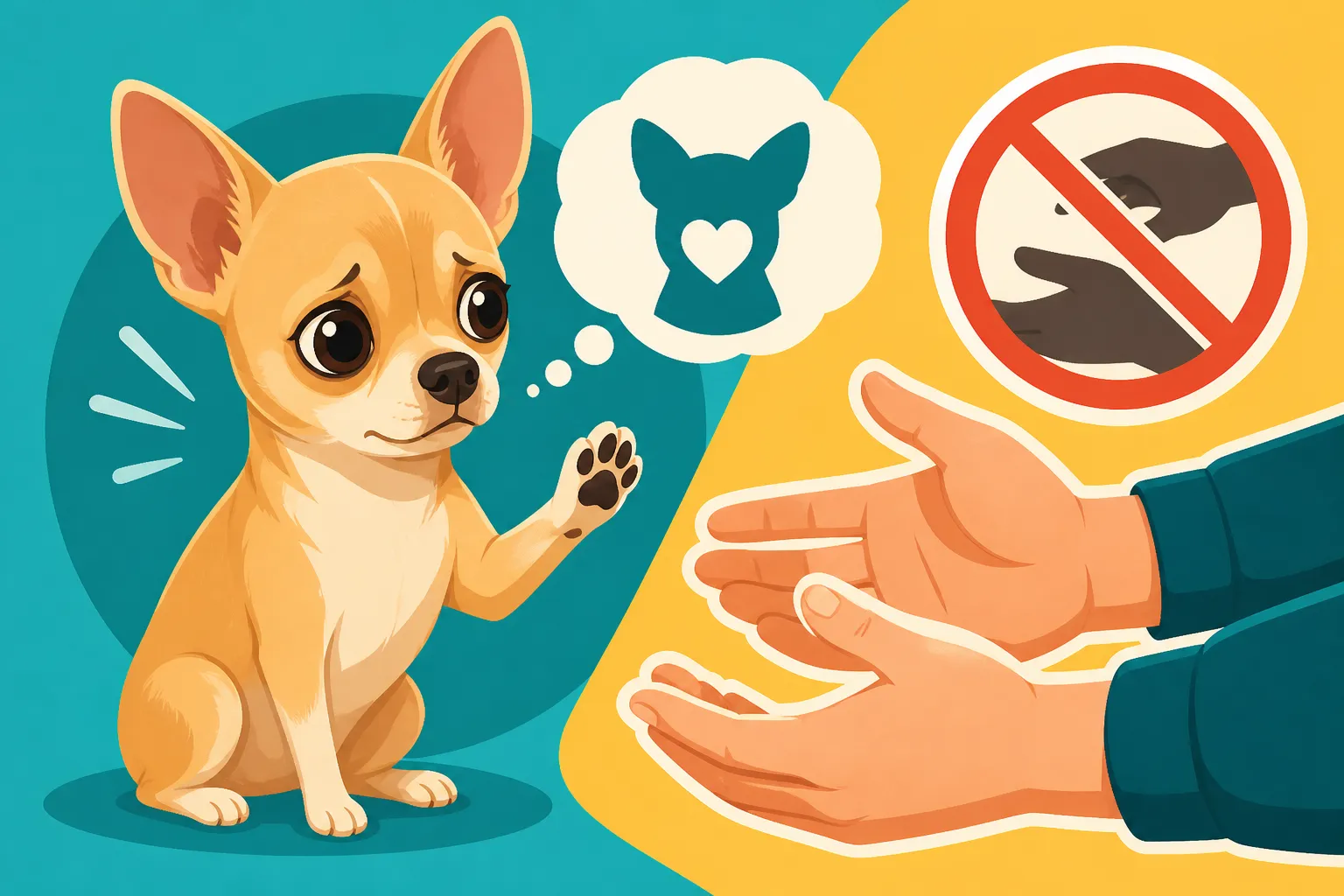
- Offer a Hand (Palm Down): Extend your hand slowly, palm down, towards their shoulder or chest area, not over their head. Let them sniff it.
- Use a Verbal Cue: You can use a consistent, gentle verbal cue like "Up?" or "Wanna come up?" in a soft, inviting tone. This helps them associate the sound with the action.
- Wait for an Invitation: The key is to wait for them to choose to engage. Do they lean into your hand? Do they wag their tail and look at you expectantly? Do they take a step towards you? These are all green lights. If they back away, turn their head, or show any signs of discomfort, respect that. You can try to entice them with a small, high-value treat, or just let them be. Remember, building trust is a gradual process. This concept is fundamental to Chihuahua Handling and Consent.
Gentle Lifting Techniques Once They Agree
Once your Chihuahua gives you the green light, proceed with a smooth, gentle lift. Remember their delicate structure.
- Support Their Weight: Always support their chest and hindquarters. Never pick them up by their front legs, scruff, or under their armpits.
- Cradle Them: Use both hands to form a cradle, one hand under their chest, supporting their front legs, and the other under their hind end, supporting their belly and back legs.
- Bring Them Close: Lift them close to your body, making them feel secure. This reduces the feeling of being dangled or vulnerable.
- Keep it Calm: Maintain a calm demeanor throughout the lift. Your energy can transfer to them.
Using a specific verbal cue, like "Up!" right before the lift, and then pairing it with a treat once they are safely in your arms, can help create a positive association. This is classic positive reinforcement at its best. If you're looking for structured guidance on this, programs like those from BAXTER & Bella can offer fantastic insights into building these foundational behaviors with positive methods. You can find many useful training aids, like soft, comfortable harnesses or tiny training treats, on platforms like Amazon that are perfect for Chihuahuas.
The Behavioral Impacts of Neglecting Consent
Consistently picking up your Chihuahua without asking might seem harmless, but it can pave the way for a whole host of behavioral issues that often leave owners feeling frustrated and confused. These behaviors are usually a cry for help, a dog trying to communicate their discomfort in the only way they know how.
Increased Anxiety and Fear Reactivity
When a Chihuahua learns that they have no control over when they are touched or moved, their world becomes a lot scarier. They can develop generalized anxiety, feeling unsafe even in their own home. This anxiety might manifest as:
- Excessive Trembling: While Chihuahuas shiver for many reasons, constant anxiety is a significant one.
- Hiding: They might start seeking refuge under furniture or blankets whenever someone approaches.
- House Training Regression: Stress can wreak havoc on house training, leading to accidents even in fully trained dogs.
- Fear Reactivity: As mentioned, a dog that feels constantly vulnerable is more likely to react defensively to anything new or perceived as a threat. This is a common root cause of Chihuahua Fear Reactivity, the Breed's Real Problem. They might lunge and bark at strangers or other dogs on walks, not out of aggression, but out of fear and a lack of confidence in their ability to handle the situation.
This constant state of low-level stress can seriously impact their quality of life and your relationship. Instead of a confident companion, you end up with a perpetually worried dog.
Resource Guarding and Snapping
A Chihuahua that feels continually vulnerable, especially to being picked up, might start to develop resource guarding behaviors. This isn't just about food or toys; a Chihuahua might begin to guard their space, their bed, a particular blanket, or even you. If they're on your lap and you try to move them or lift them, they might growl or snap because they see your approach as a threat to their perceived "safe" resource.
This can escalate quickly. If a dog's subtle warnings (like turning away or a stiff body) are ignored, they learn that they need to escalate to a growl, and if that's ignored, a snap or a bite. Owners often wonder, "Why does my Chihuahua snap at me when I try to move them?" The answer often lies in a history of their subtle cues being overlooked. They might be anticipating being lifted against their will, and are trying to prevent it. Understanding Chihuahua Body Language Before a Snap is crucial to de-escalate these situations. Sometimes, pain can also be a factor; a Chihuahua with a sore joint, like a Chihuahua Knee That Never Goes Back, might snap if touched in a way that causes discomfort.
Undermining Training Progress
Every time you override your Chihuahua's boundaries by picking them up without consent, you undermine any other training you're trying to do. Training, at its core, relies on trust and clear communication. If your dog learns that your signals are inconsistent or that their own communication doesn't matter, why should they bother listening to you for a "stay" or a "come"?
For example, if you're trying to teach your Chihuahua Recall When a Bigger Dog Approaches but consistently grab them without warning when they're playing, they'll learn that coming to you means losing their autonomy. They might start avoiding you, especially when they're engaged in something they enjoy, because they anticipate being snatched up. A strong, trusting relationship, built on mutual respect and clear communication, is the foundation for all successful training.
When It's Okay (and Not Okay) to Just Lift
Of course, life isn't always about perfect consent. There are times when picking up your Chihuahua quickly is necessary for their safety, and other times when we can work to make being picked up a positive, welcome experience.
Emergency Situations: When Safety Overrides Consent
Let's be realistic: there are absolutely times when you need to pick up your Chihuahua immediately, without time for polite requests. These are emergency situations where their safety is paramount.
- Approaching Danger: If a loose dog is rushing towards them, a car is driving too fast, or they're about to step on something dangerous (like broken glass or hot pavement), pick them up. No hesitation.
- Sudden Medical Need: If they're choking, collapsing, or in immediate distress, you need to get them to safety or to the vet.
- Unsafe Environment: If you're in a crowded public space and a large person is about to step on them, or you're navigating a chaotic street corner, picking them up is the responsible thing to do.
In these instances, your quick action is a form of protection. The goal is to minimize distress, keep them safe, and return to respectful interaction as soon as the danger has passed. These are the exceptions, not the rule, for everyday interactions. While these moments can be startling, a Chihuahua with a strong foundation of trust will recover much faster.
Building a Positive Association with Being Picked Up
Even if you need to lift your Chihuahua often, you can work to make it a positive experience rather than a dreaded one. The goal is for them to want to be picked up, or at least accept it without fear.
- Pair with Treats: Every time you successfully lift them with consent, give them a high-value treat as soon as they are in your arms. This creates a positive association: "Being picked up means yummy things!"
- Short and Sweet: Don't hold them for too long, especially if they are new to this process. Lift, treat, set down, praise. Gradually increase the duration as they become more comfortable.
- Safe Place, Safe Arms: Always make sure they are comfortable and secure in your arms. If they are wriggling or seem uncomfortable, adjust your hold.
- Practice in Calm Environments: Start practicing this consent-based lifting in quiet, familiar environments where they feel safe. Avoid trying it for the first time in a busy park.
This positive reinforcement can even help alleviate some of the behavioral issues associated with a history of being scooped up. For example, if your Chihuahua is prone to A Chihuahua That Guards a Lap, teaching them that voluntary movement off the lap is rewarded, and voluntary lifts are rewarded, can help diffuse the tension.
Teaching a Chihuahua to Step Into Your Hands
One of the best proactive approaches you can take is to actually train your Chihuahua to willingly "step up" into your hands. This puts them in control and makes the process a collaborative effort.
- Start on the Floor: Get down on their level.
- Lure with a Treat: Hold a treat in one hand and offer your other hand as a "step" or platform. Lure them to place their front paws onto your offered hand.
- Reward: As soon as they put their paws on your hand, immediately give them the treat and praise.
- Add a Verbal Cue: Once they consistently offer their paws, add a verbal cue like "Up-up!" or "Step up!"
- Gradually Lift: Once they are comfortable stepping onto your hand, very slightly lift your hand a tiny bit, still rewarding. Slowly increase the height and duration of the lift, always supporting their hindquarters with your other hand. The goal is for them to place their front paws on one hand, and then you scoop their rear with the other, lifting them smoothly.
- Practice Consistently: Like any training, consistency is key. Short, frequent sessions will yield the best results.
This technique not only makes lifting easier but also reinforces their trust in you and their understanding of your communication. It's a wonderful way to empower your small dog and shows them that you respect their boundaries, which is crucial for building a strong, happy relationship with your tiny companion.
Disclaimer
This article is for general informational purposes only and does not constitute professional advice. Laws, prices and regulations vary by location and change over time. Consult a qualified professional for guidance on your specific situation.