Introducing a Chihuahua to a Labrador Safely
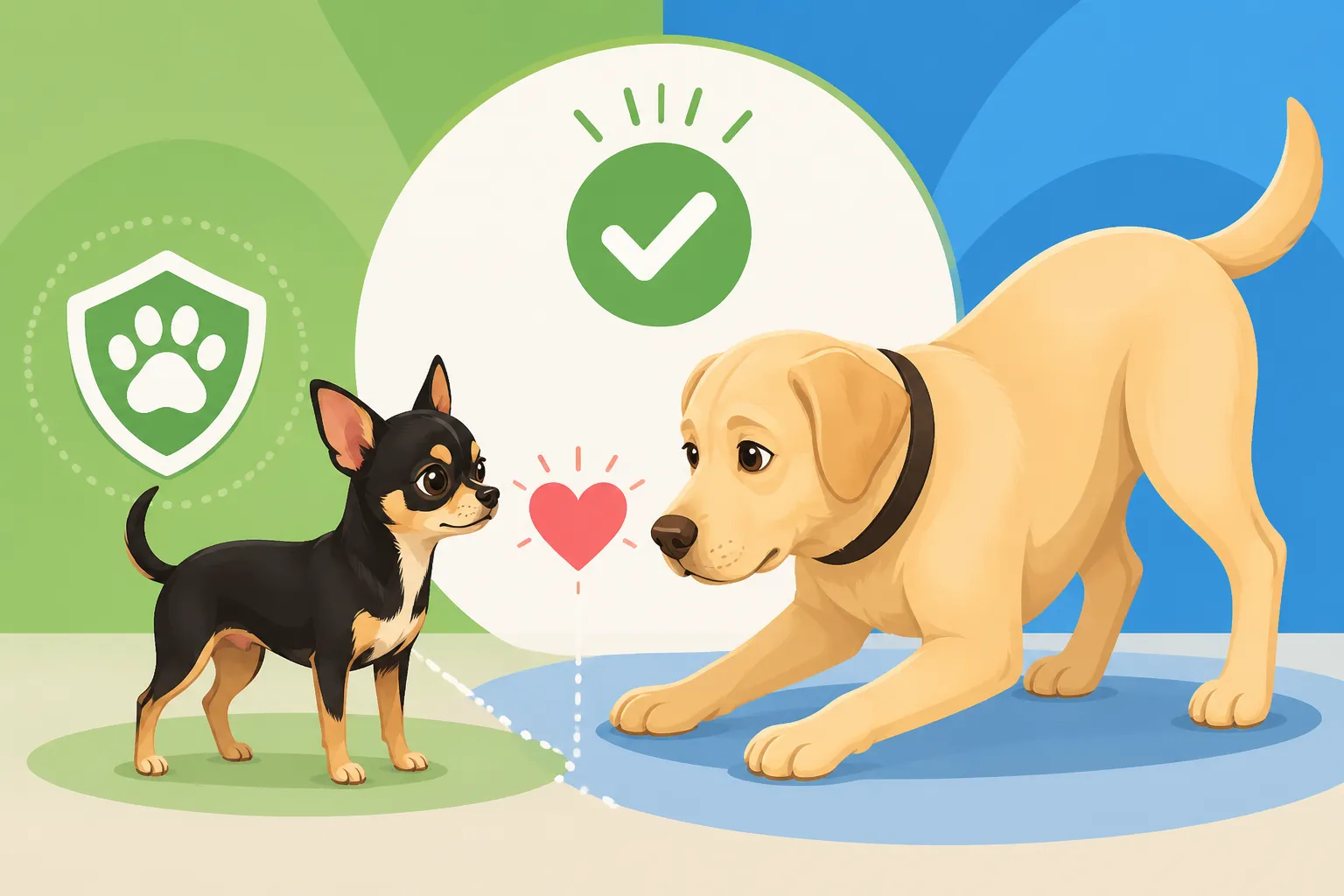
It’s a scenario that can fill any dog owner with anxiety: you’re bringing home a tiny, delicate Chihuahua, and already have a large, playful Labrador. The size difference alone can feel overwhelming, raising fears about accidental injury, intimidation, or simply a clash of temperaments. This guide is here to reassure you and provide a detailed, step-by-step approach to safely and successfully introduce your Chihuahua to your Labrador, setting both dogs up for a peaceful coexistence.
Understanding the Size Disparity and Breed Instincts
Before you even think about putting two dogs of such vastly different sizes in the same room, it's crucial to understand the inherent challenges and natural instincts at play. This isn't just about big versus small; it's about how each breed perceives the world and reacts to new situations, especially with a massive size disparity.
Why the Size Gap is More Than Visual
The difference between a six-pound Chihuahua and an eighty-pound Labrador is not just a matter of aesthetics; it dictates their entire experience of the world. A Labrador, even a gentle one, moves with a certain force and exuberance that can be genuinely terrifying to a Chihuahua. A playful paw swat from a Lab could easily injure a Chihuahua's delicate bones, and a rough nudge might send it tumbling. The ground shakes differently for a Chihuahua when a Lab runs by, and the sheer volume of a happy Lab bark can be deafening to sensitive Chihuahua ears. This physical vulnerability means that any introduction must prioritize the Chihuahua's safety above all else. It's not about the Lab being "mean," but about its sheer size and power being an inadvertent threat.
Furthermore, consider the physical structure of a Chihuahua. They are prone to certain orthopedic issues like Patellar Luxation, the Chihuahua's Commonest Joint Problem and their small windpipes can be vulnerable, a condition known as Collapsing Trachea and the Chihuahua Honking Cough. A playful, untrained jump from a larger dog could exacerbate these issues or even cause severe injury. This means your management strategy needs to be not just about preventing aggression, but about preventing any kind of physical mishap.
Chihuahua Fear and Labrador Playfulness
Chihuahuas, despite their often sassy personalities, can be prone to fear-based behaviors due to their vulnerability. They often experience Fear-Based Reactivity in a Chihuahua, where their initial response to perceived threats (like a towering Labrador) might be to bark, lunge, or even snap to create distance. This isn't aggression for aggression's sake; it's a defensive mechanism born out of feeling small and exposed. A Labrador, on the other hand, is typically bred for companionship and retrieving, often displaying an eager, boisterous, and sometimes clumsy play style. They might interpret a Chihuahua's fearful barking as an invitation to play, or their attempts to sniff might be too intense for the tiny dog.
A Lab's natural inclination might be to solicit play with a typical "play bow" or a happy bark. For a Chihuahua, this could easily be misconstrued as an impending attack. Their natural instinct when confronted by something large and overwhelming is often flight, but if trapped, they will resort to fight. Understanding these fundamental behavioral differences is key to managing expectations and guiding their interactions appropriately. Without careful management, this disparity in communication styles can lead to misunderstandings and increased stress for both dogs.
Preparing Both Dogs for the Introduction
Successful introductions don't happen spontaneously; they require careful preparation and a structured approach. Think of it as laying the groundwork for a solid friendship, starting with individual confidence and clear boundaries.
Individual Training and Confidence Building
Before any face-to-face meeting, both your Chihuahua and your Labrador need a refresher course in basic obedience and confidence-building. For your Labrador, reinforce commands like "sit," "stay," "leave it," and a solid "come." This will be invaluable for managing their enthusiasm during initial interactions. Practice these commands in various environments and around distractions. For your Chihuahua, focus on building its confidence in new situations and around novel stimuli. The Commands Every Chihuahua Should Know are essential here. Teach them a strong recall, even if it's just from across the room, and work on comfort with handling and being gently picked up, but always with their consent.
For a smaller dog like a Chihuahua, confidence also comes from feeling secure. Ensure your Chihuahua is comfortable wearing a well-fitting harness, which is essential for safety and control without putting pressure on its delicate trachea. There are many options available on Amazon that are specifically designed for small breeds. If you notice either dog exhibiting excessive anxiety, fear, or reactivity during preparation, consider seeking guidance from a certified professional dog trainer. Online platforms like BAXTER & Bella offer structured courses and support that can be tailored to individual needs, helping you address any underlying behavioral concerns before the dogs meet. Building this foundation of trust and control will make the actual introduction much smoother and safer.
Creating Separate Safe Spaces
This is non-negotiable. Both dogs need their own sanctuary where they can retreat, rest, and feel completely secure, away from the other. For your Chihuahua, this might be a crate or a cozy den in a quiet room, perhaps elevated off the floor where the Labrador cannot easily reach it. Ensure it's big enough for them to stand, turn around, and lie down comfortably. Chihuahua Crate Size and Setup is a great resource for this. Fill it with soft blankets, a favorite toy, and a water bowl. For your Labrador, a separate crate or a designated bed in another part of the house works well.
Utilize baby gates, available from retailers like Amazon, to create visual and scent-based separation without immediate physical contact. This allows them to get used to each other's presence, hear each other, and smell each other without the pressure of direct interaction. Rotate their access to common areas and toys so they can explore spaces impregnated with the other's scent. This helps normalize the other dog's presence, reducing novelty and potential anxiety. This 'safe space' strategy is vital in preventing stress and ensuring that neither dog feels cornered or overwhelmed, giving them the option to disengage when they need to.
The Supervised First Meeting
Once you've done your prep work, it's time for the big day. Remember, patience is key, and the goal is positive, low-stress exposure, not immediate best friends status.
Neutral Territory and Leashed Control
Choose a truly neutral location for their first meeting – somewhere neither dog considers "their" territory. A quiet park, a friend's fenced yard, or even a large, empty room in your house that isn't their usual hangout spot can work. Both dogs should be on leashes, and you should have a helper. The Chihuahua should wear a secure harness, never just a collar, to protect its neck. Why a Chihuahua Should Never Be Leashed by the Neck explains the risks involved. Have both dogs on long leads, giving them some freedom to move without being able to lunge at each other.
Start by walking them parallel to each other at a distance where they are aware of the other but not reacting negatively. This is called "parallel walking." Gradually, decrease the distance as they show calm, relaxed body language. The goal is for them to become comfortable simply existing in the same space. Avoid any direct nose-to-nose greetings initially. Keep interactions brief and positive, ending on a good note before either dog shows signs of stress. Offer high-value treats to both dogs whenever they are calm in the other's presence, creating positive associations. If either dog shows signs of stress, increase the distance or end the session. Remember, you're not forcing interaction; you're facilitating calm co-existence.
Reading Body Language from Both Sides
This is perhaps the most critical part of the introduction. You need to become an expert in canine body language for both a large and a small dog.
Observe closely for signs of stress or comfort in your Chihuahua:
- Comfort: Loose body, relaxed ears, soft eyes, gentle tail wag, sniffing calmly.
- Stress/Fear: Stiff body, tail tucked, ears back, lip licking, yawning (out of context), whale eye (showing the whites of the eyes), trembling, growling, snapping, trying to hide. Reading a Chihuahua's Whale Eye is a good read.
For your Labrador, watch for:
- Comfort: Loose body, relaxed mouth (perhaps a soft, open pant), gentle tail wag (not stiff or high), soft eyes, sniffing.
- Over-excitement/Stress: Stiff body, intense stare, high and stiff tail wag, pawing, jumping, hard panting, whining excessively.
If you see any negative or overly excited signals, immediately increase the distance or redirect their attention. Always err on the side of caution. Short, positive interactions are far more valuable than one long, stressful one.
Here’s a quick reference table for common body language signals:
| Dog's Action/Posture | Interpretation (General) | Chihuahua's Likely Feeling | Labrador's Likely Feeling | Your Action |
|---|---|---|---|---|
| Direct Stare (prolonged) | Challenge or Intensity | Threatened, anxious | Intense interest, perhaps dominant | Break eye contact, redirect attention with a cue or treat |
| Lip Licking/Yawning | Stress, appeasement | Anxious, trying to calm self | Mild discomfort, processing | Create more space, lower arousal, take a break |
| Tail Tucked Low | Fear, insecurity | Terrified, wanting to hide | Unsure, possibly fearful | Remove Chihuahua from situation, offer comfort |
| Loose, Mid-Height Wag | Happy, relaxed | Comfortable, interested | Friendly, happy | Continue supervised interaction, praise calm behavior |
| Low Crouch | Submission, fear | Feeling small, might run or snap | Play bow (if paired with bouncy move) | Observe carefully; ensure Chihuahua isn't cornered |
| High, Stiff Tail Wag | Arousal, dominance | Alarm, potential threat | High energy, potentially overbearing | Be ready to intervene, separate if needed |
| Head Turn/Avoidance | Disengagement, appeasement | Unsure, trying to de-escalate | Respectful, comfortable | Good sign, allow space |
Always be prepared to physically separate them quickly if interactions escalate, using leashes or simply stepping between them. The key is to manage the environment so that only positive, brief interactions occur, building a foundation of trust.
Living Together: Establishing Harmony
Once you've had a few successful, calm introductions, you can start thinking about allowing them to coexist under more relaxed conditions, but "relaxed" never means unsupervised.
Ongoing Supervision and Management
For quite some time, perhaps weeks or even months, all interactions between your Chihuahua and Labrador should be fully supervised. This means you are actively watching them, ready to intervene at a moment's notice. Never leave them alone together, even for "just a minute" to grab something from another room. Accidents happen in a blink, especially with such a size difference. Continue to use baby gates and separate living areas when you cannot provide direct supervision.
When they are together, encourage calm activities like individual chew time in the same room (but separate areas), or soft play with appropriate toys. Avoid rough-housing, especially with the Labrador, as its natural play style could still unintentionally harm the Chihuahua. Provide your Chihuahua with elevated spaces – a dog bed on a table, a special perch – where it can feel safe and observe the Labrador without being in its direct path. This allows the Chihuahua to choose engagement on its own terms, which is crucial for building confidence. Consistently reward calm interactions with praise and small treats. You want them to associate each other's presence with good things happening. This continued, structured exposure will help them slowly build a comfortable routine together.
Teaching Respect and Boundaries
Both dogs need to learn boundaries around each other. Your Labrador needs to understand that the Chihuahua is not a chew toy or a plaything it can bowl over. Teach your Lab a strong "leave it" command specifically for the Chihuahua, and reinforce it consistently. This means redirecting its attention away from the Chihuahua if it gets too intense or fixated. For the Chihuahua, it needs to learn that it doesn't have to bark and lunge at the Labrador to feel safe. This often comes with increased confidence from consistent positive interactions.
Encourage polite interactions, such as ignoring each other calmly. Avoid forcing them to share resources like food bowls, water, or favorite toys, especially initially. Each dog should have its own set of these essentials to prevent any potential resource guarding issues. For specialized help with boundaries or behavioral nuances, remember that online training programs like BAXTER & Bella can offer tailored guidance and support, connecting you with trainers experienced in managing multi-dog households. Over time, as trust grows, you might find them sharing the sofa or even curling up near each other. But this organic connection should never be rushed or forced. The goal is mutual respect, not necessarily intense friendship. Introducing a Chihuahua to Bigger Dogs Safely is a good read for more general advice, and many of those principles apply here specifically. Remember, Training a Chihuahua Exactly Like a Big Dog means setting the same expectations for polite behavior, even if the methods are adapted for their size.
Disclaimer
This article is for general informational purposes only and does not constitute professional advice. Laws, prices and regulations vary by location and change over time. Consult a qualified professional for guidance on your specific situation.