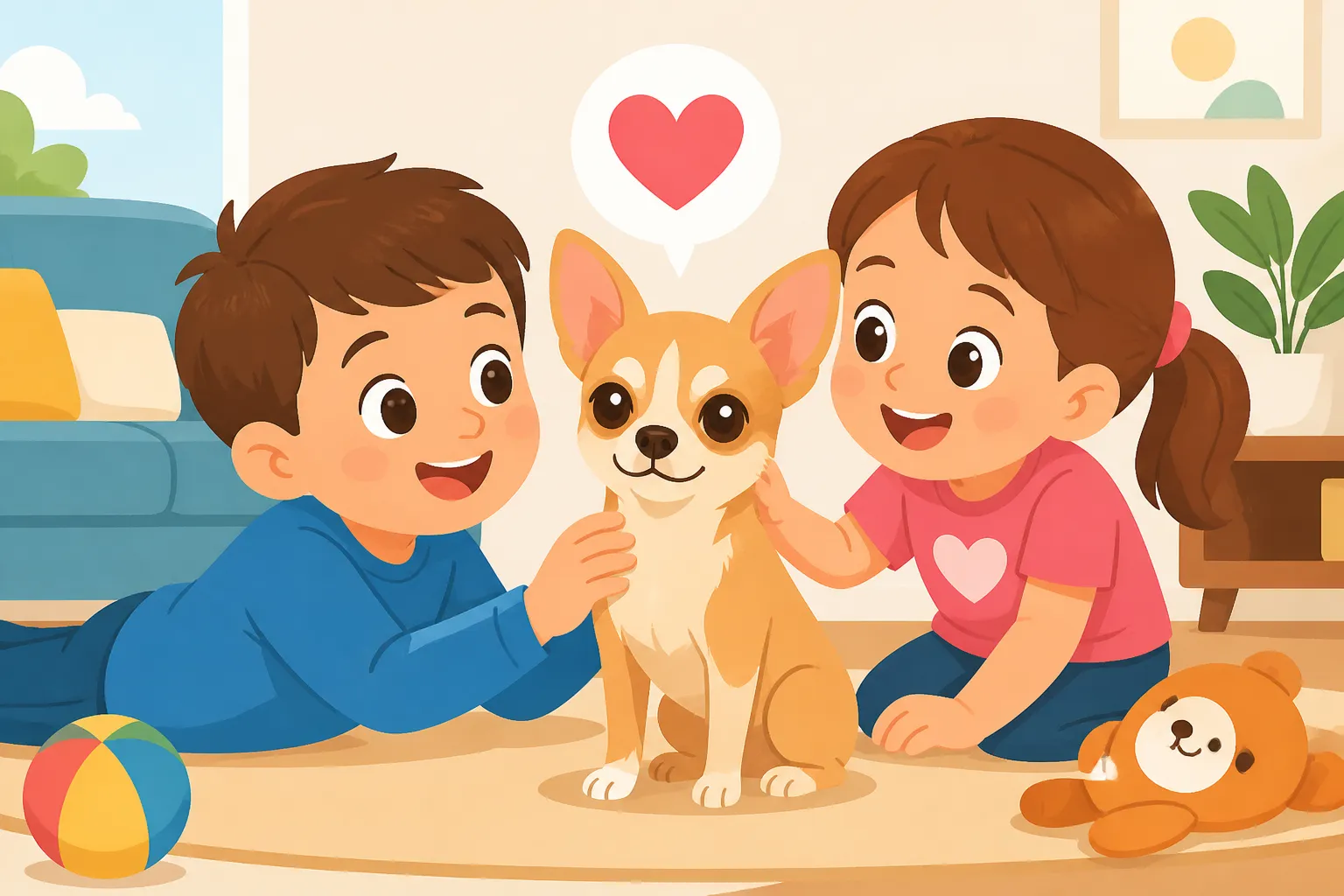
Chihuahuas in a House With Young Children
Bringing a tiny Chihuahua into a home bustling with young children can feel like trying to mix oil and water, or perhaps more accurately, a delicate teacup with a toddler's boundless energy. Many families grapple with the understandable worry of keeping both their beloved pint-sized companion and their curious, sometimes clumsy, little ones safe and happy. This guide is here to walk you through the real challenges and practical solutions for creating a harmonious household where your Chihuahua and your children can thrive together.
The Unique Challenges Chihuahuas Face with Young Children
Let's be honest, Chihuahuas are tiny, and children, especially toddlers, are not always known for their gentle touch or quiet demeanor. This inherent size difference creates a significant dynamic that needs careful management, often surprising new Chihuahua owners who might not have considered the full implications before. It’s not about blaming either the dog or the child, but understanding the natural instincts and vulnerabilities at play.
Physical Vulnerability of a Small Dog
The most immediate concern with Chihuahuas and young children is simply their physical fragility. A fall from a short height, an accidental stomp, or even being held incorrectly can lead to serious injury for a Chihuahua. Imagine a child, perhaps excitedly running through the living room, not realizing a small, dark-colored Chihuahua is right at their feet. The outcome can be heartbreakingly swift. These little dogs have delicate bones, and their small size means they can get underfoot far more easily than a larger breed.
Even seemingly innocent interactions can pose a risk. A child who means well might try to pick up the dog in a way that puts strain on its tiny spine or limbs. A Chihuahua puppy, with its still-developing skeletal system, is even more susceptible. This isn't just about pain; it can lead to fractures, dislocations like patellar luxation – a common issue for the breed, where the kneecap slips out of place – or even more severe internal injuries. Their small heads, particularly for apple-head types, mean even seemingly minor bumps could be dangerous, especially if they have an unfused molera. Chihuahua Lifespan and Why the Breed Reaches Sixteen talks about how these little ones can live so long, but protecting them from accidental harm is paramount.
Natural Fear Response and Loudness
Chihuahuas are known for their big personalities, which often come with a healthy dose of alert barking and sometimes, a tendency towards fear reactivity. When faced with the unpredictable movements, sudden loud noises, and high-pitched squeals that are part and parcel of young children, a Chihuahua's natural response can be to feel threatened. They can't always understand that a child's excited shriek is not a predatory growl, or that a flailing arm isn't an attack.
This fear can manifest in several ways. You might notice your Chihuahua retreating, shaking, or trying to hide under furniture. While this is a clear sign of discomfort, it can also escalate. A frightened Chihuahua might resort to warning barks, growls, or even a snap if they feel cornered or unable to escape a perceived threat. It's a self-preservation instinct, not aggression for aggression's sake. The issue is that the child, in turn, might be startled or even hurt, reinforcing the negative association for both. Understanding Chihuahua Fear Reactivity, the Breed's Real Problem is key here, as it highlights that these reactions often stem from anxiety rather than true aggression.
Resource Guarding and Personal Space
Many Chihuahuas form incredibly strong bonds with their primary caregivers and can be quite possessive of their favorite people, their cozy bed, or even their preferred spot on the sofa. When a child enters the picture, especially one who wants to climb onto the lap where the Chihuahua is resting or reach for a toy the dog is playing with, this can trigger resource guarding. It's an instinct that tells them to protect what they perceive as theirs, and with their small size, they often feel they need to be extra vocal or even defensive to assert their boundaries.
This isn't necessarily a unique trait to Chihuahuas, but it can be particularly pronounced in a dog that feels easily overwhelmed or outmatched by a larger, more boisterous human. You might see a Chihuahua growl if a child approaches them while they're eating, or if the child tries to grab a toy that the dog is particularly fond of. Sometimes, they even guard a specific person, bristling if a child comes too close when they're curled up on an adult's lap. This behavior can be confusing for children and dangerous if not addressed with consistent training and management. Chihuahua Resource Guarding and Snapping delves deeper into these specific behaviors and how they develop.
Preparing Your Chihuahua for Life with Kids (or Kids for Life with a Chihuahua)
The good news is that many of the challenges above can be mitigated with proactive planning and consistent effort. It's about setting everyone up for success, recognizing that a Chihuahua living peacefully with children isn't a fluke; it's the result of intentional training, thoughtful environmental management, and continuous supervision. It's never too late to start implementing these strategies, whether you're bringing a new puppy home or introducing a child to an established Chihuahua.
Early Socialization and Desensitization
If you're bringing a Chihuahua puppy into a home with children, or anticipating children in the future, early and positive socialization is absolutely critical. This isn't about throwing your tiny pup into a playground full of screaming kids; it's about controlled, positive exposure. Introduce the puppy to children gradually, ensuring all interactions are calm and rewarding. Let the puppy observe children from a distance, perhaps on a leash with you, while they play quietly. Offer high-value treats (think tiny bits of cooked chicken or a favorite soft chew from Chewy) every time a child is present and behaving calmly.
Desensitization also involves getting your Chihuahua used to the sounds and sights of children. Play recordings of children laughing, crying, and yelling at a low volume, gradually increasing it over time, always pairing it with something positive like mealtime or a favorite game. This helps your Chihuahua build positive associations and reduces their startle response. If your Chihuahua is already an adult and fearful, this process will take more time and patience, but the principle remains the same: create positive associations with children's presence, starting from a distance and only moving closer when the dog shows signs of comfort. Remember, Socialization That Does Not Flood a Chihuahua is the goal – slow and steady wins the race.
Training for Calmness and Boundaries
Beyond basic obedience, specific training is essential for a Chihuahua in a family with young children. Teach your Chihuahua a "place" command, where they go to a designated safe spot (like a dog bed or crate) on cue. This gives them a predictable retreat when things get too overwhelming. Reward them lavishly for staying on their place while children are active nearby. Also, work on impulse control exercises, such as "leave it" and "wait," which can be invaluable when a child is holding a tempting toy or food.
Another crucial aspect is teaching your Chihuahua to walk nicely on a harness and leash, not only outdoors but also indoors, especially during initial introductions or when children are particularly boisterous. This gives you a gentle way to guide your dog away from situations they might find stressful without resorting to picking them up, which can sometimes make a fearful dog feel more vulnerable. Consistent positive reinforcement, using tiny, delicious treats, will make these training sessions enjoyable and effective. Focus on teaching calm behaviors around children, rewarding every moment of quiet observation or relaxed interaction.
Creating Safe Spaces for Both Dog and Child
A successful multi-species household relies heavily on intelligent environmental management. Both your Chihuahua and your children need designated safe zones where they can retreat and be undisturbed. For your Chihuahua, this might be a crate in a quiet room, an elevated dog bed (perhaps from Chewy's selection of orthopedic beds) out of a child's reach, or a playpen. Teach your children that when the Chihuahua is in its safe space, they are not to bother it. This is non-negotiable and helps build trust for your dog.
For children, a baby gate can create a barrier between them and the dog when direct supervision isn't possible, or when the dog needs a break. Consider setting up a "no-go" zone for children, perhaps a corner with the Chihuahua's food and water bowls, ensuring the dog can eat and drink without feeling vulnerable to curious little hands. This kind of careful planning minimizes accidental encounters and gives everyone the space they need to relax. Think of it as creating clear boundaries, much like Setting Furniture Rules for a Chihuahua helps define who owns which space in the house.
Teaching Children How to Interact Safely with a Chihuahua
Children are naturally curious, and a tiny dog like a Chihuahua can seem like a living, breathing doll to them. It’s our responsibility as adults to teach them how to interact respectfully and safely, understanding that a Chihuahua is a sentient being with feelings, not a toy. This education needs to be consistent, age-appropriate, and reinforced every single day.
Gentle Hands and Quiet Voices
The golden rule for children interacting with a Chihuahua is "gentle hands and quiet voices." Start teaching this concept from a very young age. Demonstrate exactly how to stroke the dog gently on the back or shoulder, avoiding sensitive areas like the head, tail, or paws, which can make a small dog feel vulnerable. Practice with a stuffed animal first, showing them what is too rough versus just right. Emphasize that loud yelling, sudden movements, or chasing the dog are never allowed, as these can easily frighten a Chihuahua and trigger a defensive reaction.
Turn interactions into a game of being calm and respectful. When a child approaches the Chihuahua calmly and speaks softly, reward both the child (with praise) and the dog (with a treat or a gentle pet from you). If a child gets too boisterous, immediately intervene by calmly separating them, explaining why their behavior is not appropriate for the dog, and then redirecting them to a quieter activity. Consistency here is key. You'll likely need to repeat these lessons countless times, but it builds a foundation of respect. This guidance directly relates to Chihuahuas Around Toddlers and Rough Hands.
Respecting the Dog's Space and Signals
Teach children to read basic dog body language, especially the subtle cues a Chihuahua gives when it's feeling uncomfortable. Even very young children can learn to recognize when a dog is trying to tell them "no." Explain that if the Chihuahua yawns, licks its lips, turns its head away, tucks its tail, or tries to move away, it means the dog needs space. These are polite requests for distance, and children must learn to honor them. A tucked tail, in particular, is a strong sign of anxiety. Reading a Chihuahua's Whale Eye or when it freezes can indicate an impending snap, so teaching children these signs can prevent incidents.
Role-playing with stuffed animals can be a great way to teach children to "ask permission" before petting or approaching the dog, and to respect "no" signals. Explain that if the Chihuahua walks away, it's not being mean, it just wants to be left alone, and that's okay. This fosters empathy and prevents children from inadvertently escalating a situation by pursuing a dog that feels trapped. Reinforce that if the dog goes to its crate or bed, it's having "quiet time," and no one is allowed to disturb it.
Supervised Interactions as a Golden Rule
This cannot be stressed enough: all interactions between Chihuahuas and young children must be 100% supervised by a responsible adult. This isn't just about preventing bites; it's about protecting your Chihuahua from accidental injury and teaching both parties how to coexist respectfully. Never leave a child unattended with a Chihuahua, even for a moment. Accidents can happen incredibly fast, and what seems like a harmless interaction can turn dangerous in seconds.
Supervision means being actively engaged and ready to intervene at any moment, not just being in the same room scrolling on your phone. Be prepared to step in if the child is too rough, if the dog shows signs of stress, or if the child tries to grab something from the dog. Think of yourself as a referee, ensuring fair play and safety for both sides. This constant vigilance is crucial, particularly during the early stages of their relationship. As much as we love our dogs, we must accept that Why a Chihuahua Is Risky Around Small Children without proper supervision.
Managing Potential Conflicts and Preventing Incidents
Even with the best intentions and training, conflicts can arise. The key is to recognize the early warning signs, understand what they mean, and have strategies in place to de-escalate or prevent incidents before they become serious. This ongoing management is a critical part of owning a Chihuahua in a family with young children.
Recognizing Warning Signs in Your Chihuahua
It’s crucial to become an expert at reading your Chihuahua’s body language. They communicate constantly, and often, their warning signals are subtle long before they resort to a snap. Look for these indicators:
- Lip Licking and Yawning: In a stressful context, these aren't signs of hunger or tiredness, but rather appeasement signals indicating discomfort.
- Turning Head or Body Away: The Chihuahua is trying to disengage and create distance.
- Freezing: Becoming stiff and still, often with a direct stare. This is a big one. A frozen dog is often considering its next move, and it's rarely a good one for interaction. A Chihuahua That Freezes Before It Bites is a critical warning.
- Whale Eye: You see the whites of their eyes, indicating tension and anxiety.
- Tucked Tail and Lowered Body: Clear signs of fear or submission.
- Growling: This is a final warning. Respect it immediately. Do not punish a growl, as it's the dog's way of saying "please stop." Punishing it teaches them to skip the warning and go straight to biting. What a Chihuahua Growl Is Actually Telling You is important to understand.
- Snapping (air or contact): This is a serious warning that boundaries have been crossed.
If you observe any of these signs, immediately and calmly create distance between your Chihuahua and the child. Your dog is telling you they're uncomfortable, and it's your job to advocate for them.
Addressing Resource Guarding Proactively
Resource guarding, if not managed, can quickly become a significant issue. Start by teaching a "trade" command. If your Chihuahua has a toy, offer a higher-value treat (like a piece of cheese) in exchange for the toy, then immediately give the toy back. This teaches them that hands approaching their things mean good things, not theft. Practice this regularly, making it a positive experience. Avoid directly taking things from your Chihuahua if you notice guarding behavior, as this can escalate their defensiveness.
When children are around, manage resources carefully. Ensure your Chihuahua eats its meals in a secure, quiet area where children cannot access them. Provide special high-value chews or toys only when the Chihuahua is safely in its crate or a separate room. You can also work on "scatter feeding," throwing kibble on the floor for the dog to forage, which can reduce guarding over a single bowl. Chihuahua Food and Toy Guarding explains these dynamics further. Remember, prevention is always easier than intervention.
When to Seek Professional Help
If you're struggling to manage your Chihuahua's behavior around children, or if you've witnessed growling or snapping, it's time to call in a professional. Do not try to solve these issues on your own, especially when children's safety is at stake. Look for a certified professional dog trainer or a veterinary behaviorist who uses positive reinforcement methods and has experience with small dog behavior and family dynamics. Avoid trainers who advocate for dominance theory, harsh corrections, or pain-based methods, as these can severely damage your Chihuahua's trust and escalate fear-based behaviors.
A good professional can assess the specific situation, help you implement a tailored training plan, and teach you how to read your dog's signals more accurately. They can also provide strategies for modifying both your Chihuahua's and your children's behavior to create a safer environment. Seeking help early can prevent minor issues from becoming major incidents and help build a lasting, positive relationship between your Chihuahua and your children. Finding a trainer who takes Finding a Trainer Who Takes a Chihuahua Seriously is a crucial step.
The Benefits of Chihuahuas and Children Living Together
While the challenges of raising Chihuahuas and children together are real and require diligent effort, the rewards can be truly wonderful. There's a special bond that can form between a child and their tiny canine companion, offering lessons in empathy, responsibility, and unconditional love that are invaluable.
Companionship and Emotional Support
For many children, a Chihuahua can become a steadfast friend and confidant. Their small size makes them incredibly approachable for kids, often leading to a unique level of intimacy and comfort. A Chihuahua might be the first creature a child learns to truly care for, offering a quiet presence during a tough day or an enthusiastic greeting that can brighten any mood. They can be wonderful listeners (or at least, very convincing actors!) and provide a sense of security and companionship.
Imagine a child feeling sad, and their little Chihuahua quietly sidling up to them, offering a gentle lick or resting its head on their lap. These moments build powerful emotional connections that can last a lifetime. Chihuahuas, despite their small stature, have huge hearts and a remarkable capacity for love and loyalty, making them exceptional companions capable of providing immense emotional support to children as they grow.
Teaching Responsibility and Empathy
Caring for a Chihuahua can be an incredible way to teach children about responsibility and empathy from a young age. Even small tasks, like helping to measure out the Chewy kibble (under supervision, of course, given their tiny calorie needs), refilling the water bowl, or gently brushing their coat, can instill a sense of duty and care. Children learn that their actions have direct consequences for a living being, fostering a deeper understanding of cause and effect.
Furthermore, learning to read a Chihuahua's body language and respecting its need for space or quiet time teaches invaluable lessons in empathy – understanding and respecting another's feelings, even if they can't speak. This sensitivity to the dog's needs can translate into greater empathy for other people and animals in their lives. The bond with a Chihuahua can teach children about patience, gentleness, and the profound joy of a loving, reciprocal relationship, making them more compassionate and responsible individuals in the long run.
Here's a quick reference for common Chihuahua warning signs and how a child should respond:
| Chihuahua Warning Sign | What It Looks Like | Child's Action (Taught by Adult) | Adult's Immediate Action |
|---|---|---|---|
| Lip Licking / Yawning | Rapid licking of nose, wide yawn (not tired) | Gently move away, give space | Calmly call dog to you, separate if necessary |
| Turning Head / Body Away | Dog actively avoids eye contact, shifts body | Do not approach, give space | Redirect child, ensure dog can retreat |
| Freezing / Stiffening | Dog becomes very still, might stare intently | Stop moving, ask adult for help | Immediately separate, remove dog or child |
| Whale Eye | Whites of eyes show, eyes wide and tense | Do not approach, give space | Immediately separate, provide dog a safe retreat |
| Tucked Tail / Lowered Body | Tail clamped tight, dog shrinks away | Do not approach, give space | Calmly lead dog to quiet zone, reassure |
| Growling | Low rumble from chest, sometimes lip curl | Stop immediately, step back | Separate instantly, assess situation, intervene |
| Snapping (air or contact) | Quick lunge, mouth open, may or may not make contact | Step back, alert adult | Secure dog, check child for injury, seek pro help |
Disclaimer
This article is for general informational purposes only and does not constitute professional advice. Laws, prices and regulations vary by location and change over time. Consult a qualified professional for guidance on your specific situation.