Why a Chihuahua Is Risky Around Small Children
It’s a heartbreaking situation many Chihuahua owners find themselves in: they adore their tiny companion, often seeing them as a beloved furry child, but then real children enter the picture or visit, and suddenly there’s a tension that feels impossible to navigate. The truth is, while Chihuahuas can be wonderful family dogs, their small size and often sensitive nature create unique challenges and risks when they're around small children who haven't yet learned how to interact gently and respectfully with animals. This guide will delve into why these risks exist and how to manage them, so both your tiny dog and your little ones can be safe.
The Chihuahua's Innate Defensive Nature
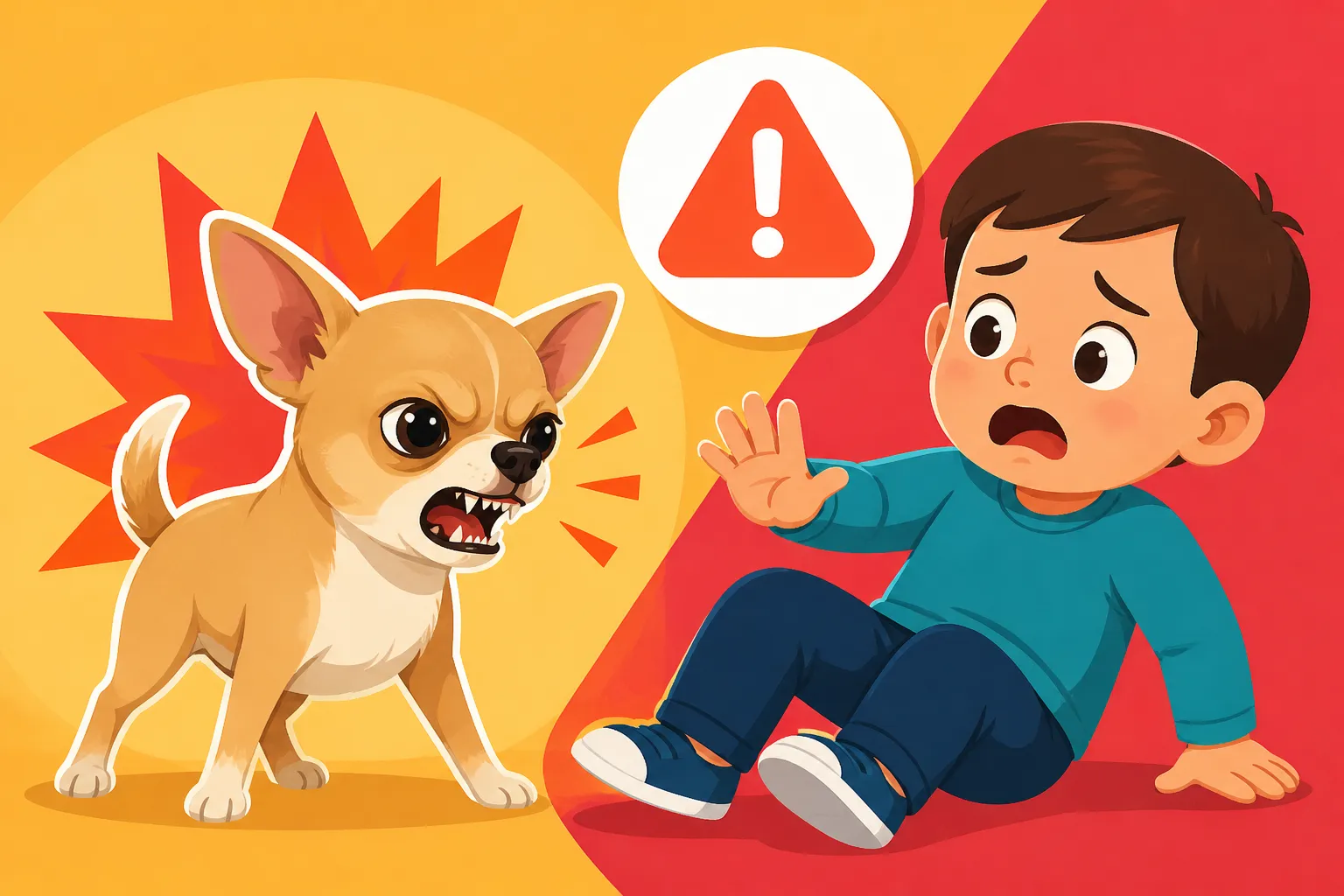
Let's be honest, our Chihuahuas are tiny. They live in a world designed for much larger beings, and that can be a source of constant anxiety for them. Imagine being just a few pounds, with every human towering over you, and every loud noise sounding like thunder. It's no wonder they often develop a strong defensive streak. This isn't aggression for aggression's sake; it's almost always rooted in fear. When a Chihuahua feels threatened, cornered, or overwhelmed, their instinct kicks in, and that often means snapping, growling, or barking as a desperate plea for space and safety. They can't exactly talk their way out of a scary situation, can they? This is why understanding Chihuahua Fear Reactivity, the Breed's Real Problem is so crucial for owners.
Feeling Threatened by Big, Unpredictable Movements
Think about a small child from a Chihuahua's perspective. They are fast, often clumsy, and their movements can seem completely erratic. A toddler might suddenly lunge for a toy, clap their hands loudly, or attempt to "hug" the dog with an intensity that feels overwhelming and even painful to a tiny Chihuahua. These sudden, unpredictable actions, especially when combined with a child's often high-pitched voice or excited squeals, can trigger a deep-seated fear response in a dog that already feels vulnerable. It's like a giant suddenly moving in for a squeeze without warning – terrifying! They simply don't understand that the child means no harm, only that a large, unpredictable creature is infringing on their personal space.
The Natural Instinct to Guard Themselves
Because of their diminutive size, Chihuahuas don't have the luxury of standing their ground or easily escaping a perceived threat. A larger dog might tolerate a bit of roughhousing from a child, or simply walk away, but a Chihuahua might feel trapped. Their options are limited: freeze, flee, or fight. When flight isn't an option (perhaps they're cornered under a table or held by an adult), they might resort to snapping or nipping. This is a survival mechanism, a desperate attempt to create distance and protect themselves. It's not about being "mean"; it's about self-preservation. They are essentially saying, "Please stop, you're scaring me!" and a bite is their last resort when those warnings aren't heeded. This is where understanding a Chihuahua that snaps before it runs can save everyone a lot of heartache.
Children's Lack of Understanding and Impulse Control
It's equally important to acknowledge that small children, through no fault of their own, are still developing their impulse control, empathy, and understanding of animal behavior. They don't intentionally try to hurt a dog, but their natural curiosity, playful energy, and lack of fine motor skills can easily lead to interactions that are frightening or painful for a small dog like a Chihuahua. This gap in understanding is where many of the risks arise, and it’s why adults must be the primary guardians of safety for both child and dog.
Accidental Rough Handling and Grabbing
A child's hands might seem small to us, but to a Chihuahua, they can feel like giant clamps. A toddler's attempt at a "pat" can turn into a slap, or an innocent grab for a fluffy tail can cause genuine pain. Their small, delicate bones and shallow eye sockets make them particularly susceptible to injury from accidental rough handling. Chihuahua Eye Injuries and Prominent Eyes are a real concern, for example. Think about a child trying to "carry" a Chihuahua like a doll, gripping them too tightly around the chest or abdomen. This can lead to dropped dogs, broken bones, or severe internal stress. Even picking them up incorrectly can cause pain or fear, which reinforces negative associations with children. We have to remember that Chihuahuas are living, breathing creatures, not toys to be played with. This is precisely why we discuss Chihuahuas Around Toddlers and Rough Hands with such gravity.
Invading Personal Space Without Realizing It
Children often don't understand the concept of personal space, especially when it comes to an animal. They might follow a Chihuahua into its bed, reach into its food bowl while it's eating, or try to take a toy away. For a small dog, this feels like a constant invasion of their safe zones. They might give subtle warning signs – a tense body, a quick lick of the lips, a yawn, or showing the whites of their eyes (often called Reading a Chihuahua's Whale Eye) – but children are rarely equipped to interpret these signals. When these gentle warnings are missed, the Chihuahua might escalate to a growl, a snap, or even a bite because their boundaries are being repeatedly ignored. It's a natural progression when a creature feels its boundaries are being disrespected, whether they're human or canine.
The "Small Dog Syndrome" Myth and Reality
You might have heard the term "small dog syndrome" used to describe Chihuahuas or other tiny breeds. The truth is, it's not a genetic condition; it's a behavioral pattern often created by humans. It's what happens when owners, out of a misguided sense of protection or simply thinking "they're too small to hurt anyone," allow their small dogs to get away with behaviors they would never tolerate in a larger breed. This creates a dog that believes it's in charge, or that aggressive displays are the only way to communicate, which can be incredibly dangerous when children are involved.
Excusing Behaviors That Would Never Be Tolerated in a Bigger Dog
Let's face it, a growling Chihuahua can sometimes be perceived as "cute" or "feisty," whereas a growling German Shepherd would instantly trigger alarm bells. This double standard is a massive problem. When a Chihuahua growls at a child for approaching its bed, and the owner simply picks the dog up or reprimands the child, the Chihuahua learns that growling is an effective way to get what it wants. It’s a classic example of The Behaviors Owners Excuse in a Chihuahua. This reinforces the unwanted behavior and teaches the dog that aggression works. Over time, these small "cute" growls can escalate into snaps and bites because the dog has never been taught appropriate boundaries or communication methods.
The Consequence of Inconsistent Training and Boundaries
Just because a dog is small doesn't mean it doesn't need training. In fact, consistent training and clear boundaries are even more important for Chihuahuas, precisely because of their potential vulnerability and defensive nature. If a Chihuahua isn't taught basic commands, doesn't have its personal space respected by everyone in the household, and isn't socialized properly, it can become anxious, reactive, and prone to lashing out. Ignoring these fundamental needs can lead to a dog that feels constantly overwhelmed and unsafe, making interactions with energetic children a recipe for disaster. This is why it’s so important to commit to Training a Chihuahua Exactly Like a Big Dog from day one.
Strategies for Creating a Safe Environment
So, what’s a loving Chihuahua owner to do when small children are part of the equation? The key is proactive management, consistent training, and teaching respect for all living beings. It’s about creating a structured, safe environment where both child and dog can thrive without fear.
Constant Supervision and Separate Spaces
The golden rule when combining Chihuahuas and small children is never, ever leave them unsupervised. This means even for a moment. An adult must always be actively engaged and ready to intervene. Beyond that, creating separate, safe spaces is paramount.
| Chihuahua Safety Zone | Child Safety Zone | Purpose |
|---|---|---|
| Crate or dog bed | Playpen or gated room | Provides a retreat where the dog can't be disturbed. |
| Elevated dog bed | High chair | Keeps the dog out of reach from curious hands. |
| Separate rooms | Separate rooms | Allows for quiet time and prevents accidental encounters. |
You can use baby gates or exercise pens to create these physical barriers, ensuring that when the dog needs a break, or when the child is particularly boisterous, they both have their own secure territory. Make sure your Chihuahua has a cozy bed or crate from a place like Chewy that they associate with safety and quiet, and teach both them and your children to respect that space. When your Chihuahua retreats to their bed, that means leave them alone.
Teaching Gentle Interaction and Dog Body Language
Education is power, especially when it comes to children and animals. Start teaching your children very early how to interact with dogs gently. This means:
- Petting "Nicely": Explain that pets should be soft strokes on the back or chest, never on the head or tail. Teach them to "pat" themselves first, then apply that same gentle touch.
- Respecting Space: Teach them that if the dog walks away, they must let them go. If the dog is sleeping or eating, they are off-limits.
- Reading Signals: As they get a little older, teach them about simple dog body language. "If the dog yawns or licks its lips, it needs space." "If the tail is tucked, it's scared." Understanding these cues can prevent misunderstandings.
- Asking Permission: Always teach children to ask an adult before approaching any dog, and to wait for the adult to assess if the dog is comfortable with interaction. This also extends to asking if a Chihuahua Should Be Asked Before Lifted.
Consistent Training and Socialization for Your Chihuahua
Your Chihuahua needs just as much training as a larger dog, if not more! This isn't about crushing their spirit; it's about building their confidence and giving them the tools to navigate the world safely.
- Positive Reinforcement: Use treats (small ones, easily found on Chewy's website) and praise to reward desired behaviors. This helps your dog feel good about interacting with the world.
- Basic Obedience: Commands like "sit," "stay," "down," and "come" are vital for control and safety. A solid "leave it" can prevent a child from being nipped if they drop a toy.
- Careful Socialization: Expose your Chihuahua to various sights, sounds, and people (including calm, older children) in a controlled, positive way. The goal is to build positive associations, not to overwhelm them. Socialization That Does Not Flood a Chihuahua is key. Think about enrolling in Puppy Classes That Group Chihuahuas With Toys if you have a young pup, to ensure they get appropriate exposure.
- Desensitization to Children's Noises: Play recordings of children laughing, crying, and yelling at a low volume and reward your Chihuahua for remaining calm. Gradually increase the volume over time.
By taking these steps, you’re not just protecting your children; you're also protecting your beloved Chihuahua from being put in a situation where they feel they have no choice but to defend themselves. It's a commitment to understanding and respect that ensures a happier, safer home for everyone, on two legs and four.
Disclaimer
This article is for general informational purposes only and does not constitute professional advice. Laws, prices and regulations vary by location and change over time. Consult a qualified professional for guidance on your specific situation.