Chihuahuas Living With a Labrador
Bringing a new dog into a home that already has a beloved canine companion can be a wonderfully enriching experience, but it also comes with its own unique set of challenges, especially when you're talking about breeds with vastly different sizes and temperaments like a Chihuahua and a Labrador. Many owners worry about potential accidents, miscommunications, or just plain incompatibility. This guide is here to walk you through how to successfully integrate these two wonderful, yet very different, breeds into a happy, safe, and harmonious household.
The Unique Dynamics of a Chihuahua and Labrador Household
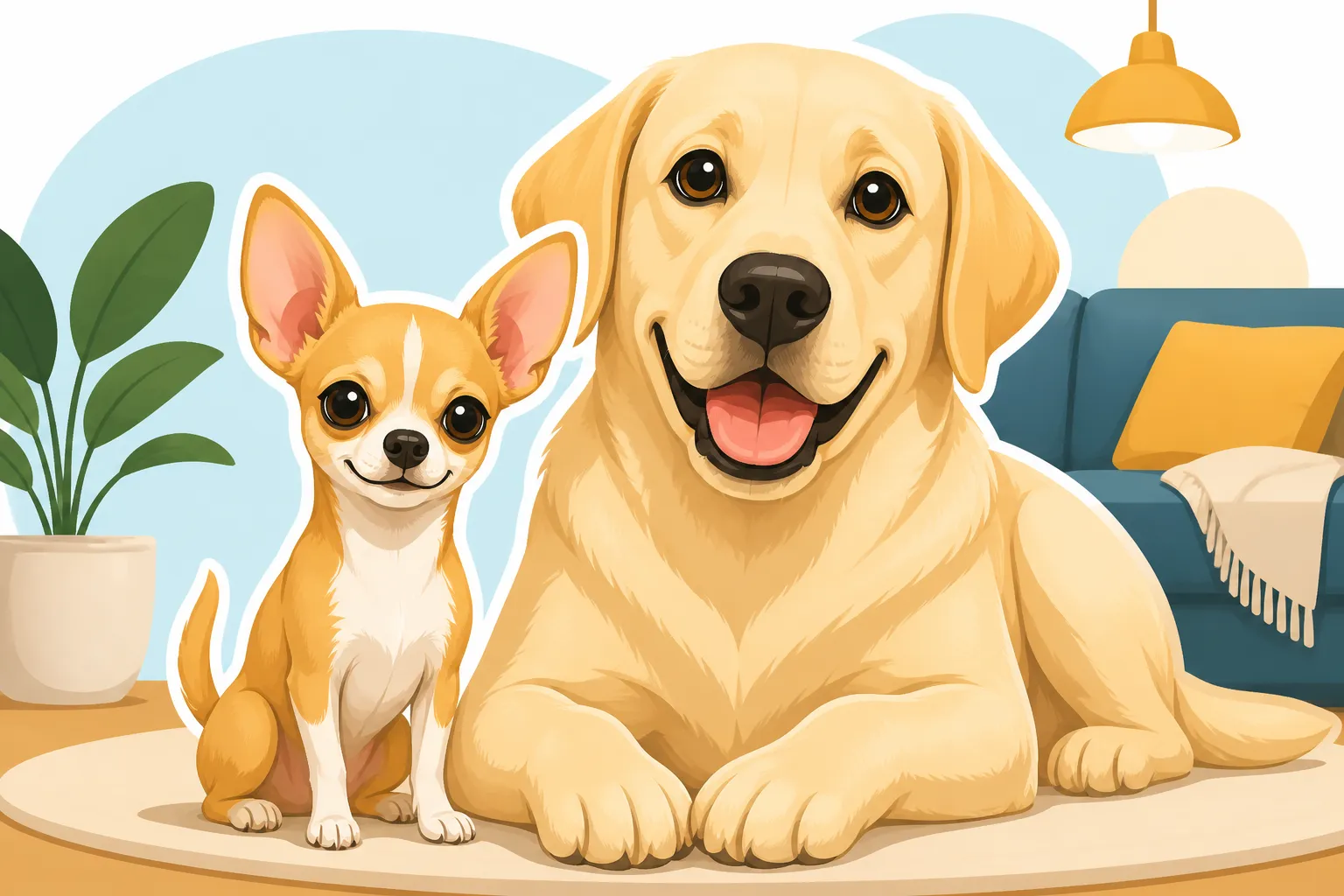
The visual contrast alone between a tiny Chihuahua and a robust Labrador Retriever often makes people chuckle, but it's more than just aesthetics. These two breeds present a fascinating study in contrasts that requires careful management and understanding from their human companions. It’s not about one breed being "better" than the other, but about recognizing their inherent differences and how they might interact.
Bridging the Size Gap: Chihuahua Fragility vs. Labrador Enthusiasm
The most obvious and often most concerning difference between a Chihuahua and a Labrador is their sheer size. A six-pound Chihuahua can easily be dwarfed by a sixty-pound Labrador. This isn't just a matter of appearance; it translates directly into physical vulnerability for the smaller dog. A well-meaning nudge from a Labrador, or an accidental paw placement during boisterous play, could spell disaster for a tiny Chihuahua. Imagine a playful Labrador puppy, still learning its body control, bounding around; what's a minor bump for another medium-to-large breed could be a serious injury for a Chihuahua. Chihuahua Lifespan and Why the Breed Reaches Sixteen gives you an idea of the longevity potential, which you certainly don't want to compromise with avoidable accidents.
Beyond the risk of accidental injury, there's also the challenge of navigating shared spaces. A Labrador might effortlessly jump onto a sofa, while a Chihuahua needs ramps or steps, which a jumping Labrador could easily dislodge. Even basic activities like walking side-by-side need consideration. A Labrador's stride length is far greater, and their natural pace can be much quicker. It's crucial for owners to acknowledge this physical disparity and actively create environments and routines that protect the Chihuahua while allowing the Labrador to express its natural behaviors within safe boundaries. It's about being proactive, not reactive, when it comes to their physical interactions.
Temperament Tangles: Confident Chi vs. Goofy Lab
While stereotypes often paint Chihuahuas as perpetually trembling and Labradors as universally friendly, the reality of individual dog temperaments can be far more nuanced. Many Chihuahuas, despite their small stature, possess an incredibly confident, often sassy, personality. They might be quick to bark, stand their ground, or even attempt to "boss" around much larger dogs. This feistiness can be endearing, but it can also lead to dangerous situations if a Labrador misinterprets their assertive signals. Conversely, Labradors are renowned for their outgoing, good-natured, and often goofy demeanor. They typically approach life with boundless enthusiasm and an eager-to-please attitude.
The challenge arises when these two temperaments clash. A boisterous, friendly Labrador might approach a new Chihuahua companion with an excited tail wag and a desire to play, not realizing that its sheer size and exuberance can be terrifying to the tiny dog. The Chihuahua, feeling threatened or overwhelmed, might resort to snapping or barking, which could then escalate the Labrador's excitement, or worse, lead to a defensive reaction. Understanding Chihuahua Fear Reactivity, the Breed's Real Problem is key here, as their "bravery" often stems from a place of fear. The goal is to facilitate respectful interactions where the Labrador learns to temper its energy and the Chihuahua feels secure enough not to feel constantly on edge.
Understanding Prey Drive and Play Styles
It's a common misconception that all dogs instantly know how to play nicely together, especially across breed lines. Labradors, originally bred as retrieving gun dogs, often have a natural retrieve drive and a robust, physical play style involving chasing, tackling, and mouthy interactions. They might use their paws, lean into other dogs, and engage in wrestling. Chihuahuas, while they can be playful, often prefer gentler games, like soft tug-of-war with appropriate toys, short bursts of fetch, or simply cuddling with their human. Their bodies are not built for impact or sustained roughhousing.
Furthermore, any significant size difference can inadvertently trigger a prey drive in the larger dog, even if they are typically friendly. While a well-socialized Labrador is unlikely to see a household Chihuahua as actual prey, the sight of a tiny dog running quickly might activate an instinct to chase. This isn't malicious; it's instinctual. It's vital to observe their play styles closely and understand that what's fun for one might be terrifying or dangerous for the other. Toys, for instance, need to be size-appropriate for each dog, and you certainly don't want a Labrador accidentally swallowing a small toy meant for the Chihuahua. Quality dog supplies from retailers like Chewy can help ensure you have safe, size-appropriate toys and enrichment items for both breeds.
Setting Up for Success: Creating a Harmonious Environment
Successfully blending a Chihuahua and a Labrador into one happy family requires proactive planning and a structured approach, especially in the initial stages. It's not about hoping for the best; it's about setting up an environment where both dogs can thrive safely and feel secure.
Designated Safe Zones and Retreats
One of the most important things you can do for both your Chihuahua and your Labrador is to establish clear, designated safe zones where each dog can retreat and feel completely unbothered. For your Chihuahua, this might mean an elevated dog bed that the Labrador cannot access, or a crate in a quiet corner that serves as their personal den. Consider using baby gates or exercise pens to create separate areas in different rooms. This allows your Chihuahua to have downtime away from the Labrador's potentially overwhelming presence, and it gives the Labrador a break from constantly having to "be careful" around the tiny dog.
For the Labrador, its safe zone might be a larger crate in a family room or a particular area of the yard. Even the most friendly Labrador can benefit from having a place where they aren't constantly being asked to monitor their movements or energy levels around their tiny housemate. These safe zones should be positive places, stocked with comfortable bedding, favorite toys, and water. Never use these areas for punishment. Making these zones accessible and respected by both dogs is paramount to reducing stress and fostering a sense of security for each pet.
Supervised Interactions and Controlled Introductions
Never, ever leave a Chihuahua and a Labrador unsupervised, especially not in the early stages of their relationship. Even after they seem to get along, the risk of accidental injury to the smaller dog is too high. All interactions should be closely monitored by a responsible adult. Initial introductions should be done on neutral territory, if possible, or in a very controlled indoor environment. Keep both dogs on leashes during these first meetings, allowing them to sniff and observe each other without direct physical contact. Introducing a Chihuahua to a Labrador Safely is a critical step, requiring patience and keen observation.
When you do allow for off-leash interaction, ensure it's in a secure, enclosed space where you can intervene immediately if needed. Keep these interactions short and positive. Offer high-value treats to both dogs when they are calmly together. It's important to reward calm behavior rather than excited, boisterous interactions. Pay close attention to both dogs' body language. A Labrador's gentle nudges might be too much for a Chihuahua, and a Chihuahua's sharp barks might trigger an unwanted reaction from the Labrador. Knowing What a Chihuahua Growl Is Actually Telling You can prevent escalation. Slowly increase the duration of supervised interactions as they demonstrate comfort and positive behavior around each other.
Separate Feeding and Playtime Protocols
To prevent resource guarding and ensure both dogs eat their appropriate meals without stress, always feed them separately. This could mean feeding them in different rooms, in their respective crates, or at different times. This eliminates any competition or anxiety around food, which can be a major source of conflict in multi-dog households. Food bowls should be picked up once meals are finished.
Similarly, specific playtime should be tailored to each dog's needs and preferences. Your Labrador will likely enjoy robust fetch sessions or vigorous tug-of-war with large, durable toys. Your Chihuahua might prefer gentle games of indoor fetch with soft toys or puzzle feeders that engage their mind. When both dogs are present, engage them in parallel play that doesn't involve direct competition. For example, give the Labrador a chew toy on one side of the room and the Chihuahua a smaller, softer chew on the other. Always supervise closely. When they do play together, provide toys that are size-appropriate for each, ensuring the Chihuahua's toys are too large for the Labrador to accidentally ingest, and the Labrador's toys are too tough for the Chihuahua to damage quickly. Chewy offers a fantastic selection of toys for all sizes.
Training and Socialization Strategies for Both Breeds
Effective training and ongoing socialization are not just for puppies; they are lifelong commitments that are especially important when you have a significant size disparity between your dogs. Both the Chihuahua and the Labrador need clear boundaries and consistent expectations.
Reinforcing Calmness and Respect
It's absolutely vital that both dogs learn to be calm in each other's presence. For the Labrador, this means teaching impulse control. Commands like "stay," "wait," and "settle" become incredibly important. Reward your Labrador heavily for ignoring the Chihuahua when it's just moving around normally, or for settling calmly when the Chihuahua enters the room. We want to avoid a situation where the Labrador sees the Chihuahua as an exciting toy that triggers a chase response.
For the Chihuahua, the focus is on building confidence and reducing fear-based reactions. This involves gradual exposure to the Labrador in controlled settings, always ensuring the Chihuahua feels safe. Avoid picking up your Chihuahua every time the Labrador approaches, as this can inadvertently teach the Chihuahua that the Labrador is a threat it needs to be "rescued" from. Instead, reward your Chihuahua for calmly observing the Labrador or for choosing to move away to its safe space if it feels overwhelmed. Training a Chihuahua Exactly Like a Big Dog is paramount; don't excuse behaviors you wouldn't tolerate from a larger dog just because the Chihuahua is small.
Teaching the "Leave It" Command for Safety
The "leave it" command is a lifesaver in any multi-dog household, but it's particularly critical when there's a size difference. This command can be used to prevent your Labrador from accidentally snatching a toy from the Chihuahua, to stop it from investigating the Chihuahua's food bowl, or even to disengage if play becomes too rough. Practice "leave it" frequently with various distractions. Start with low-value items and gradually work up to higher-value items, including other dogs or tempting food items.
This command also extends to guarding behaviors. If your Chihuahua tends to guard its small bed or a favorite toy, the Labrador needs to understand that it must respect that boundary. Conversely, the Chihuahua needs to learn to "leave" the Labrador's belongings. Consistency is key here. Everyone in the household needs to use the same command and enforce it every time. Having treats readily available from Chewy to reward successful "leave it" moments makes training much easier.
Consistent Rules for Both Dogs
One of the biggest mistakes owners make is having different sets of rules for their large and small dogs. This can lead to confusion and resentment. While their physical capabilities are different, the rules of the house should be consistent where possible. For example, if jumping on furniture is allowed, ensure both dogs are taught appropriate manners for getting on and off. If begging at the table is forbidden for the Labrador, it should also be forbidden for the Chihuahua.
Think about leash etiquette. A Chihuahua shouldn't be allowed to pull on a leash just because it's small, especially if you're trying to teach a Labrador not to pull. Using a harness for both, specifically Harnesses That Spare a Chihuahua Windpipe, is a good idea, as collars can be dangerous for Chihuahuas during sudden pulls or if another dog gets too close. Consistency in boundaries, obedience commands, and daily routines helps both dogs understand their place within the family structure and reduces opportunities for conflict or misunderstanding.
Addressing Common Challenges and Maintaining Peace
Even with the best preparation, living with two dogs of such different sizes will likely present unique challenges. Being prepared to address these issues promptly and effectively is essential for maintaining a peaceful home.
Managing Over-Excitement and Rough Play
Labradors, especially younger ones, can get incredibly excited, and that excitement often manifests physically. A Labrador's full-body wag, happy leaps, or attempts to initiate play might be perfectly normal for its size, but they can easily overwhelm or injure a Chihuahua. It’s your job to manage this excitement. Teach your Labrador to greet the Chihuahua calmly. This might involve keeping them separated when the Labrador is overly wound up, or using a leash for brief, controlled greetings until the Labrador has calmed down.
If you observe play becoming too rough – the Labrador is using its mouth or paws too much, or the Chihuahua is showing signs of stress like tucking its tail, trying to hide, or excessively barking – intervene immediately. Distract both dogs with a calm activity, or separate them for a cooling-off period. Encourage parallel play instead of direct physical interaction, and always provide positive reinforcement when they interact calmly and respectfully. Sometimes, a well-placed baby gate can be your best friend in preventing over-excitement from escalating.
Preventing Resource Guarding Issues
Resource guarding, where a dog becomes possessive over food, toys, sleeping spots, or even people, can be a major source of conflict. In a multi-dog home with a large size disparity, it's particularly dangerous because the smaller dog could be injured if a guarding incident escalates. As mentioned earlier, separate feeding is non-negotiable. Beyond that, be mindful of high-value items like chew bones or favorite toys. These should ideally be given when the dogs are separated, or only when you can supervise extremely closely.
Watch for subtle signs of resource guarding from either dog. For a Chihuahua, this might be a stiff posture, a low growl, or a quick snap when the Labrador approaches its favored spot. For the Labrador, it might be blocking access to its bed or toy from the Chihuahua. Address these behaviors with positive reinforcement training. Practice trading games (offering a higher-value treat for the guarded item) and ensure both dogs feel that good things happen when another dog is near their stuff, rather than feeling threatened. Consistency and proactive management can head off these issues before they become serious. Chihuahua Resource Guarding and Snapping is important to understand in this context.
Recognizing Stress Signals in Both Dogs
Learning to read your dogs' body language is one of the most powerful tools you have for preventing conflict and ensuring their well-being. Both Chihuahuas and Labradors will communicate their comfort levels and stress through subtle (and not-so-subtle) cues. For your Chihuahua, signs of stress might include trembling, yawning, lip-licking, averting eyes, tucking its tail, trying to hide, excessive barking, or even freezing in place. A direct stare from the Labrador might be perceived as a threat.
For the Labrador, signs of stress or discomfort could be a stiff body, whale eye (showing the whites of their eyes), lip-licking, excessive panting when not hot, or even an avoidance of the Chihuahua. Learning to differentiate between a playful growl and a warning growl, or between excited nips and aggressive nips, is crucial. If you see signs of stress from either dog, it's a signal to intervene, provide space, and re-evaluate the situation. Don't push interactions if one dog is clearly uncomfortable. Patience and careful observation will allow you to foster a truly harmonious relationship between your tiny firecracker and your gentle giant.
| Interaction Type | Chihuahua Needs | Labrador Needs | Safe Practice |
|---|---|---|---|
| Physical Space | Elevated beds, small crates, baby-gated areas | Larger crates, clear pathways, respectful distance | Designated safe zones for each, supervise all shared spaces. |
| Playtime | Gentle games, soft toys, mental puzzles, short sessions | Vigorous fetch, tug-of-war, wrestling (with appropriate partners) | Separate play sessions or parallel play, size-appropriate toys from Chewy. |
| Feeding | Quiet, secure area; small, frequent meals | Individual meal times; appropriate bowl size | Always feed separately in different rooms or crates. |
| Training | Positive reinforcement, confidence building, fear reduction | Impulse control, calmness, "leave it" command | Consistent rules for both, focus on calm interactions, reward good choices. |
| Socialization | Gradual, positive exposures, protection from overwhelm | Controlled greetings, teaching gentle interaction | Supervised interactions, short durations, focus on rewarding calm behavior. |
Disclaimer
This article is for general informational purposes only and does not constitute professional advice. Laws, prices and regulations vary by location and change over time. Consult a qualified professional for guidance on your specific situation.