The Aztec Conquest and a Smaller Dog
It's easy to look at our tiny Chihuahuas today, curled up on a warm blanket, and imagine them as purely modern companions. But their story stretches back centuries, long before they became lapdogs or celebrity accessories. In fact, to truly understand the Chihuahua, we need to journey back to ancient Mesoamerica, a time when powerful empires rose and fell, and when the ancestors of our little dogs played a far more complex role than simply being adorable. This guide delves into the profound impact of the Aztec conquest on the lineage of the Chihuahua, specifically how this formidable civilization contributed to making their canine companions smaller and more distinct.
The Techichi Before the Aztecs: A Robust Canine Companion
Before the mighty Aztec Empire dominated central Mexico, other sophisticated civilizations thrived, most notably the Toltec civilization. And with the Toltecs, there was a dog breed known as the Techichi, believed to be a direct ancestor of our modern Chihuahuas. These weren't the tiny, trembling creatures we sometimes envision; historical and archaeological evidence suggests they were more robust, slightly larger dogs, though still small by general canine standards. They were significant figures in Toltec culture, deeply integrated into daily life and spiritual beliefs.
Ancient Roots and Toltec Culture
Imagine a dog, a bit sturdier than today's Chihuahua, perhaps a bit longer in the leg and body, moving through the bustling Toltec cities like Tula. This was the Techichi. Carvings and figurines dating back as far as 300 BC depict these dogs, showcasing their importance long before the Aztecs entered the scene. The Toltecs considered these dogs companions, and more profoundly, spiritual guides. They believed Techichis could escort the souls of the deceased through the underworld, acting as crucial intermediaries in the afterlife. This belief system led to Techichis often being buried with their owners, a testament to their sacred status. It's a far cry from simply being a pet; these dogs were revered. If you're curious to learn more about their ancient past, read The Chihuahua Ancestor Carved in 300 BC.
Early Depictions and Purpose
The artistic representations of the Techichi are fascinating. From pottery to stone carvings, these dogs are consistently shown with erect ears, a somewhat rounded head, and a generally alert expression, not unlike what we see in Chihuahuas today, but often with a more substantial build. They weren't just for show; they likely served practical purposes too, perhaps assisting in hunting small game, acting as watchdogs, or even, in some interpretations, being a food source during times of extreme hardship – a stark reality for many domesticated animals in ancient societies. The spiritual significance, however, always seemed paramount, differentiating them from mere utility animals. We can glean a lot from these artifacts about What the Toltecs Believed About Their Dogs and how central these canines were to their world view.
The Aztecs Arrive: A Cultural Shift
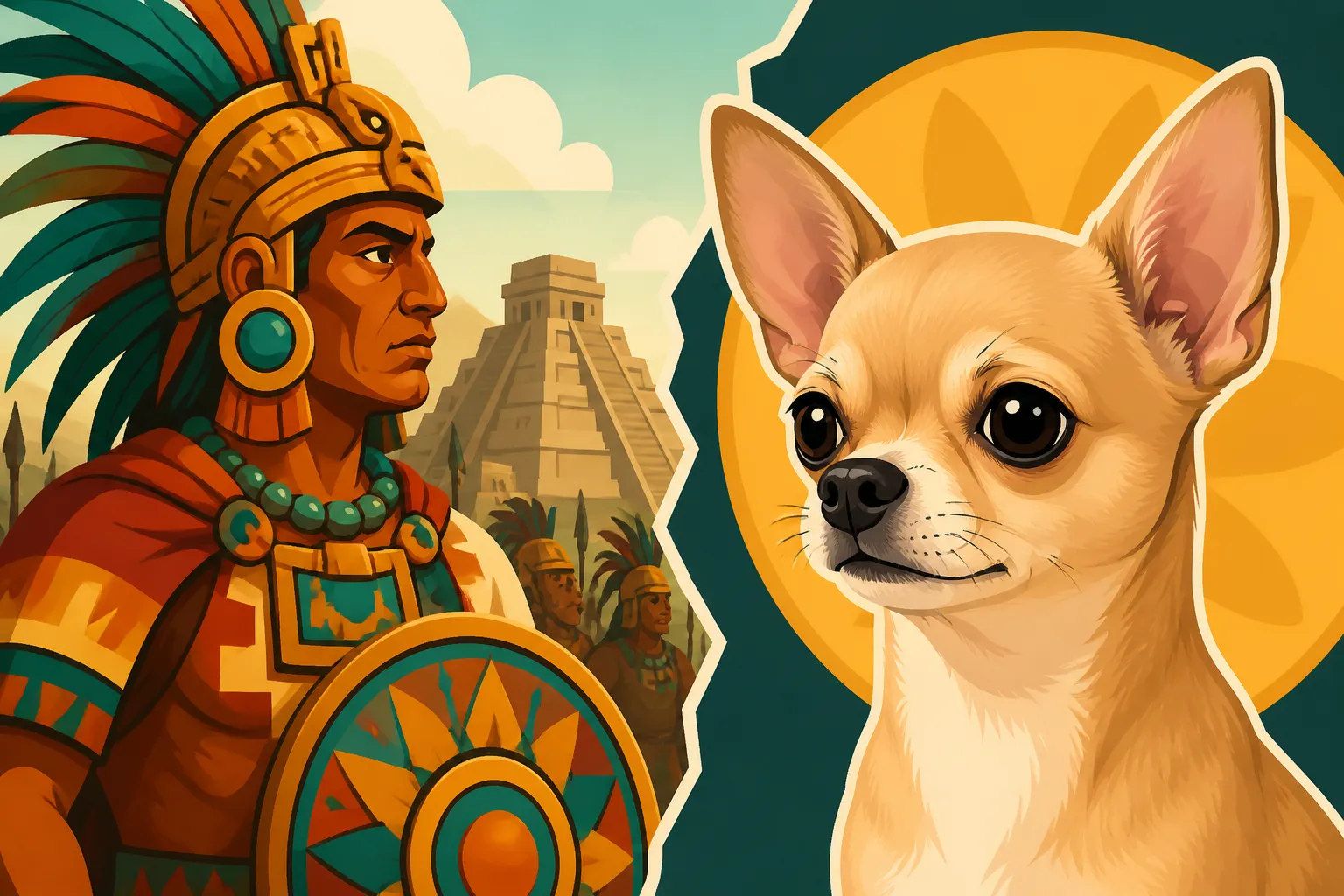
When the Aztecs rose to power, they didn't just conquer lands and peoples; they absorbed cultures, traditions, and even animals. The Techichi, already embedded in the spiritual and daily life of the region, found its way into the heart of the new Aztec Empire. The Aztecs, a highly organized and often fierce civilization, recognized the value and symbolism of the existing canine populations and began to integrate them into their own complex society. This was not a simple adoption, but a transformation, both for the dogs and for the perception of their role.
Conquest and Integration
The Aztec expansion was relentless, bringing many different peoples and their customs under their dominion. As they conquered Toltec territories, the Techichi dogs became part of the Aztec cultural tapestry. Instead of discarding them, the Aztecs adapted these dogs to their own needs and beliefs, allowing them to continue their spiritual roles, but also subtly reshaping them over generations. This integration wasn't always gentle; conquest rarely is. However, the Techichi's inherent qualities and established cultural significance meant it wasn't simply eradicated but transformed. It's a powerful example of how cultures interact, even at the level of domesticated animals. The history truly began much earlier; uncover more in How Old the Techichi Line Actually Is.
Aztec Society and the Techichi
In Aztec society, dogs held various positions. While some were certainly raised for food (a practice that might shock modern sensibilities but was common in many ancient cultures), others, particularly the refined Techichi, were elevated. They were kept by nobility, treated with reverence, and played a role in religious ceremonies. Historical accounts, though sometimes embellished, speak of dogs kept in royal courts, including a famous mention of Emperor Montezuma having a multitude of small dogs. These aren't wild exaggerations; dogs were valuable commodities and spiritual assets. Imagine walking through Tenochtitlan, the great Aztec capital, and seeing these little dogs amidst the grandeur. It gives you a deeper appreciation for the ancient lineage of your Chihuahua when you realize just how far back their companionship goes.
Why a Smaller Dog? Aztec Preferences and Purpose
Here's where the story gets really interesting for our Chihuahuas. While the original Techichi was small, archaeological and genetic evidence suggests the Aztecs began to intentionally breed for an even smaller size. This wasn't accidental; it was a deliberate choice, driven by a combination of practical needs, spiritual beliefs, and aesthetic preferences. This selective breeding is arguably the most significant Aztec contribution to the modern Chihuahua's distinct characteristics.
Selective Breeding for Utility and Symbolism
The Aztecs, masters of agriculture and engineering, also understood selective breeding. They weren't just letting dogs breed at random. They likely saw advantages in smaller dogs. Think about it: a smaller dog requires less food, making it more sustainable to keep in a large household or court. It's also easier to transport, whether for ceremonial purposes, as a companion for nobles on the move, or even as a compact, living "hot water bottle" during cold nights, a practice sometimes attributed to these small dogs.
But beyond utility, the symbolism was powerful. A smaller, more delicate dog might have been seen as more spiritually pure or more fitting for certain rituals. A smaller dog was easier to sacrifice, a grim reality of ancient practices that some researchers suggest may have contributed to their breeding choices. The goal was to produce a dog that embodied specific traits, both practical and mystical. This intention to miniaturize played a critical role in shaping the breed. You can explore this further in Why the Aztecs Wanted a Smaller Techichi.
The Concept of the Companion Dog
While the more utilitarian and spiritual roles are often highlighted, it's also crucial to consider the evolving role of the Techichi as a pure companion. A smaller dog is inherently more portable, more "lap-sized." As Aztec society grew more complex, and nobility accumulated wealth and leisure, the idea of a dog primarily for companionship, for emotional connection, would have taken root. The accounts of Montezuma keeping numerous small dogs in his palace hint at this. These weren't necessarily working dogs; they were probably pampered creatures, perhaps sleeping in the emperor's chambers, offering warmth and affection. It highlights that even in ancient times, the bond between humans and their canine friends transcended mere utility. For a glimpse into this royal canine entourage, see The Chihuahua's Ancestor Among Montezuma's Treasures.
The Legacy of Aztec Influence and the Chihuahua's Survival
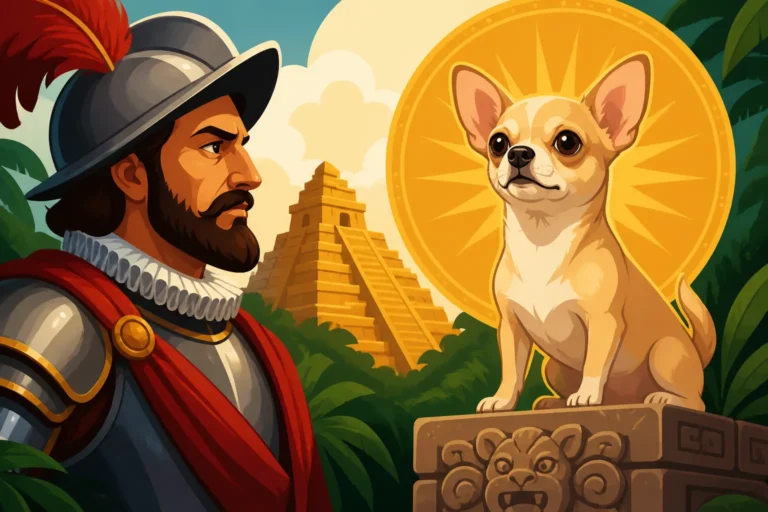
The Aztec Empire eventually fell to the Spanish conquistadors, a cataclysmic event that reshaped Mesoamerica forever. This period was incredibly harsh on the native cultures, and unfortunately, their animals suffered too. The Techichi faced an existential threat, but thanks to their resilience and perhaps a bit of luck, they persisted, carrying the genetic legacy shaped by centuries of Toltec and Aztec influence.
Spanish Conquest and Near Extinction
The arrival of the Spanish in the 16th century brought widespread devastation. Temples were razed, cities were dismantled, and countless cultural artifacts were destroyed. The native dog breeds, including the Techichi, were not immune. Many were killed, either out of disdain by the Europeans, to prevent them from becoming food for the native people, or simply because they were tied to a culture the conquerors wished to erase. It was a dark period, and the Techichi, once revered, teetered on the brink of extinction. It's a tragic chapter in their story, detailed more extensively in What the Spanish Conquest Did to the Chihuahua. For centuries after, these dogs were rarely seen or documented, retreating into obscurity. They survived largely in remote villages, perhaps kept by indigenous communities who clung to their traditions. This period of hiding is why it was so hard to trace their lineage for a long time; learn more in How the Chihuahua Survived Three Centuries Unrecorded.
The Modern Chihuahua Connection
Fast forward several hundred years to the mid-19th century. American travelers exploring Mexico's remote regions, particularly the state of Chihuahua, began discovering small, distinct dogs that closely resembled the ancient Techichi carvings. These were the direct descendants, having survived generations hidden from the wider world. Their small size, alert demeanor, and unique physical characteristics were a direct echo of the traits refined by the Aztecs.
The table below illustrates some of the key shifts in the perception and physical characteristics of the Techichi from its Toltec origins through Aztec influence:
| Feature | Toltec Techichi (Pre-Aztec) | Aztec Techichi (Post-Aztec Influence) | Modern Chihuahua (Today) |
|---|---|---|---|
| Size | Small, but relatively robust | Intentionally bred smaller, more compact | Very small, toy breed |
| Primary Role | Companion, spiritual guide | Companion, ritual significance, nobility pet | Companion, family pet |
| Cultural Value | Revered, afterlife escort | Valued by nobility, symbolic | Beloved pet, show dog |
| Food Source | Possible, if extreme scarcity | Possible, but less common for nobility dogs | Not a food source |
| Habitat | Toltec settlements | Aztec cities, noble households | Homes worldwide |
These dogs were brought back to the United States and other countries, eventually becoming the foundation stock for the modern Chihuahua breed. Their resurgence in popularity marked a new era. The genetic blueprint, subtly altered by the Aztecs for specific purposes, was now cherished for its companionship. From the ancient ceremonial grounds to our living room sofas, the journey of the Chihuahua is a testament to resilience and the enduring bond between humans and dogs. Modern science, through techniques like DNA studies, continues to confirm these incredible ancestral links, offering fascinating insights into DNA Studies on Chihuahua Origins and how our tiny friends came to be. It’s amazing to think that the kibble you might order from Chewy for your little one today is feeding a lineage that spans millennia and empires! The very existence of these dogs today is a direct result of those ancient cultural decisions, blending history, utility, and companionship into one tiny, incredible package. The journey from ancient artifact to cherished pet is long and complex, leading to the beloved breed we know today.
Disclaimer
This article is for general informational purposes only and does not constitute professional advice. Laws, prices and regulations vary by location and change over time. Consult a qualified professional for guidance on your specific situation.