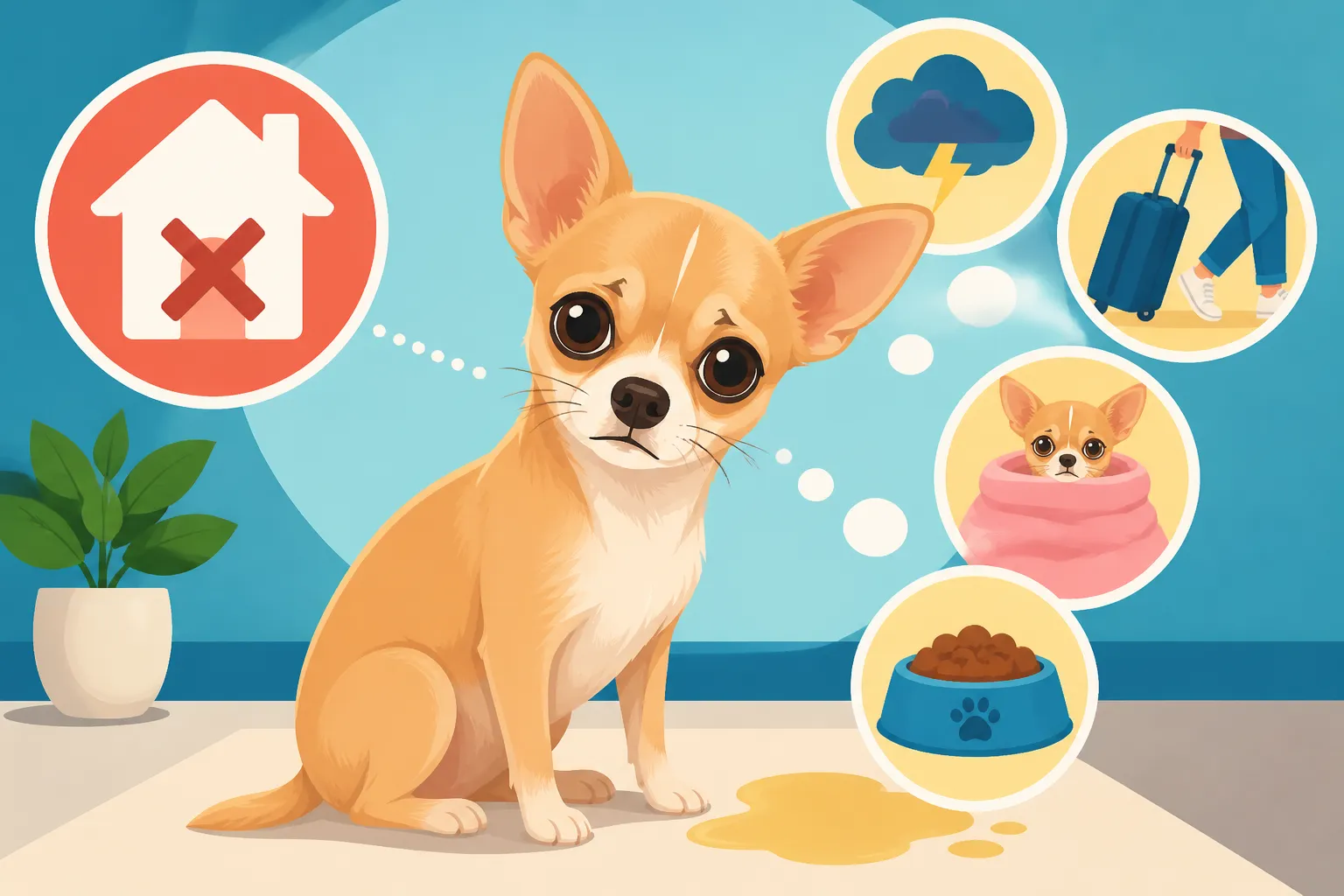
Why a Chihuahua Regresses on House Training
It's incredibly frustrating when your meticulously house-trained Chihuahua suddenly starts having accidents indoors. You thought you'd finally conquered the potty training hurdle, only to find yourself cleaning up puddles and feeling like you're back at square one. This guide is here to help you understand the most common reasons why a Chihuahua might regress on their house training and, more importantly, what actionable steps you can take to get things back on track.
Medical Reasons Behind House Training Regression
Before you start blaming yourself or your furry friend for a sudden lapse in manners, the very first thing you need to consider when a house-trained Chihuahua starts having accidents is their health. Our tiny companions can't tell us when something hurts or feels off, and often, an unexpected change in behavior, especially potty habits, is their way of signaling a medical issue. It’s an urgent plea for help, not an act of defiance.
Urinary Tract Infections and Bladder Issues
One of the most frequent culprits behind sudden house training regression is a urinary tract infection (UTI). Chihuahuas, like many small breeds, can be prone to these, and they can develop quickly. A UTI causes inflammation and discomfort in the bladder, leading to a sudden, overwhelming urge to urinate, often with little warning. Your Chihuahua might feel like they simply can't hold it until they get outside, or they might feel the need to go much more frequently than usual.
Beyond UTIs, other bladder issues could be at play. Bladder stones, for example, can irritate the bladder lining and cause similar symptoms of urgency and discomfort. You might notice your Chihuahua straining to urinate, passing only small amounts of urine at a time, or even licking their genital area excessively. Sometimes, the urine might appear cloudy or have a stronger odor. If you observe any of these signs, or even just unexplained accidents, a trip to the veterinarian is crucial to diagnose and treat any underlying bladder problems. Don't assume it's "just an accident"; it could be a cry for medical attention.
Other Health Concerns
While bladder issues are primary suspects, a host of other health problems can manifest as house training regression. Diabetes is one such condition, often leading to increased thirst and, consequently, increased urination. If your Chihuahua is suddenly drinking more water and needing to go out more often, diabetes should definitely be considered. Similarly, kidney disease can impact their ability to concentrate urine, causing them to produce larger volumes and need more frequent potty breaks. These conditions are serious and require prompt veterinary intervention.
Another often overlooked cause, particularly in spayed female Chihuahuas, is hormonal incontinence. This is typically characterized by passive leaking of urine, especially when resting or sleeping, rather than deliberate accidents. It's not a training issue but a physical one, and it's usually very treatable with medication. For older Chihuahuas, pain from conditions like Chihuahua Arthritis in the Teenage Years can make it difficult or painful to get up, go outside, or even posture correctly to urinate or defecate. They might choose to relieve themselves indoors because it's simply easier or less painful. In very senior Chihuahuas, Cognitive Decline in an Aging Chihuahua can play a role, as they may simply forget their training or become disoriented about where they are supposed to go. Always start with a thorough vet visit to rule out medical causes before assuming it's a training or behavioral problem.
Behavioral and Environmental Factors
Once you've ruled out any medical reasons with your veterinarian, it's time to put on your detective hat and look at what might be going on in your Chihuahua's world. Our small dogs are incredibly sensitive to their environment and routine, and even subtle changes can throw them off course, leading to a sudden return of indoor accidents.
Stress, Anxiety, and Fear
Chihuahuas are known for their strong bonds with their families and can be quite sensitive little souls. Any shift in their environment or routine can trigger stress, anxiety, or even fear, leading to house training regression. Think about what might have changed recently: Did you move to a new home? Introduce a new pet or a new human, like a baby? Is there a new work schedule keeping you away longer? All of these can be incredibly unsettling for a Chihuahua. Chihuahua Separation Anxiety and Time Alone, for instance, often manifests as accidents left while you're away, as a symptom of their distress.
Fear can also play a huge role. Perhaps a loud noise spooked them while they were outside, or they had a negative interaction with another dog on a walk. If your Chihuahua starts showing reluctance to go outside, trembles, or tries to dart back indoors immediately, they might be experiencing fear. Even weather can be a factor; many Chihuahuas absolutely detest rain, snow, or extreme cold, making them genuinely afraid or unwilling to go out and relieve themselves properly. In some cases, submissive urination, where a dog pees a little when overly excited or fearful during greetings, might be mistaken for a training regression. These emotional responses are not about being "naughty"; they're genuine expressions of discomfort that need patient, empathetic understanding and resolution.
Marking Behavior
It’s easy to confuse marking with simple house training accidents, but they often have different motivations and appearances. Marking is less about relieving a full bladder and more about scent communication. It's typically a smaller amount of urine, often on vertical surfaces like furniture legs, walls, or curtains. Both intact males and females can mark, especially when hormones are at play or when they feel insecure or stressed in their territory. If you have recently brought in a new piece of furniture, had guests over, or there’s a new dog in the neighborhood, your Chihuahua might feel compelled to "re-mark" their space.
While neutering or spaying can often reduce marking behavior, it's not a guaranteed fix if the behavior has become ingrained or is stress-related. It's important to differentiate between a large puddle from a full bladder and a smaller "spritz." If you suspect marking, managing the environment becomes key. Using belly bands for male Chihuahuas or doggy diapers for females can help prevent repeated marking on furniture while you address the underlying stress or territorial insecurity. Understanding the distinction is vital, as the approach to resolve marking is different from addressing standard accidents. You can read more about this behavior in A Chihuahua Marking the Same Corner.
Inadequate Potty Breaks or Schedule Changes
Sometimes, the simplest explanation is the most accurate: your Chihuahua simply isn't getting enough opportunities to go outside. Chihuahuas have tiny bladders, and expecting them to hold it for extended periods, especially longer than their original training schedule, is unrealistic and unfair. If your work schedule has changed, or you're simply more busy and accidentally pushing out their usual potty breaks, accidents are bound to happen. What seems like a few extra minutes to us can feel like an eternity to a small dog struggling to hold it.
Weather aversion is another huge factor for Chihuahuas. If it's raining, snowing, or simply too cold, many Chihuahuas will express extreme reluctance to go outside. Instead of truly emptying their bladder, they might rush through it, or worse, hold it until they come back inside and find a more comfortable spot. This isn't regression as much as it is a practical problem: they're cold and miserable! You can learn more about their bladder limits in How Long a Chihuahua Can Hold Its Bladder and strategies for bad weather in House Training a Chihuahua That Refuses the Rain. Consistency in your routine, ensuring frequent and sufficient potty breaks, is paramount to preventing these "avoidable" accidents.
Training Lapses and Management Mistakes
Even if your Chihuahua was once a house training champion, small inconsistencies in your routine or management can slowly chip away at their reliability. It's not usually a sudden defiance, but rather a gradual re-learning of what's acceptable, driven by mixed signals from us. Re-evaluating our own habits is often the key to resolving these issues.
Lack of Supervision and Management
One of the biggest pitfalls for owners of previously house-trained dogs is giving them too much freedom too soon. Once they seem reliable, we often stop actively supervising them indoors. This means your Chihuahua might sneak off to a quiet corner and have an accident without you even noticing until much later. Without immediate interruption and redirection, your dog doesn't connect the act with your disapproval, or more importantly, with the correct behavior of going outside.
Effective management is about setting your Chihuahua up for success. This might mean going back to basics with tethering them to you, keeping them in a playpen, or utilizing their crate more consistently. If your crate is too large, it might allow them to eliminate in one corner and sleep in another, undermining the purpose of crate training. Re-evaluating Chihuahua Crate Size and Setup can be helpful. For those times you simply cannot supervise, tools like belly bands (for males) or doggy diapers (for females) can be temporary solutions to prevent messes and interrupt the habit of indoor elimination, giving you time to re-establish proper training.
Inconsistent Routine or Reinforcement
Dogs thrive on routine and clear communication. If your potty schedule has become erratic, or you're no longer consistently rewarding successful outdoor potties, your Chihuahua might get confused. Imagine if sometimes they go out every two hours, and sometimes it's five hours – that's a lot of uncertainty for a little bladder! The act of going outside needs to be consistently paired with positive reinforcement, making it the most rewarding option.
Conversely, punishing or scolding your Chihuahua for accidents is almost always counterproductive. They don't understand that you're upset about the act of eliminating indoors; they only learn to associate your anger with their presence around the accident, or even with the act of going potty at all. This can lead to them hiding their accidents or becoming fearful of relieving themselves in front of you, making the problem harder to identify and solve. Instead, focus on praising and treating them enthusiastically every single time they go outside. Even a few minutes of Three Minute Training Sessions With a Chihuahua focused solely on successful outdoor elimination can make a huge difference. Positive reinforcement and consistency are the cornerstones of effective house training, for puppies and adults alike.
Incomplete Cleaning of Previous Accidents
This might seem like a minor detail, but it’s actually incredibly important. If previous indoor accidents aren't cleaned thoroughly with the right products, your Chihuahua's super-sensitive nose will still detect the scent. Dogs are naturally inclined to relieve themselves where they've gone before, and that lingering odor acts as a powerful "come hither" signal, inviting them to make the same mistake again. Regular household cleaners, while making things look and smell clean to us, often don't eliminate these enzymatic odors.
You need a good enzymatic cleaner specifically designed to break down pet urine. These cleaners work by neutralizing the odor-causing bacteria and chemicals. Without them, even if your carpet looks spotless, the smell beneath the surface can draw your Chihuahua back to the "spot." It's not enough to simply blot and spray; you need to saturate the area, let it sit, and then blot thoroughly, following the product instructions. This applies to all surfaces – carpets, rugs, hardwood, and even upholstered furniture. For severe cases, or if you have multiple "hot spots," investing in a black light can help you identify all the areas that need deep cleaning. Addressing this can dramatically reduce the likelihood of repeat accidents. For more details on effective cleaning, see Cleaning Chihuahua Accidents So They Do Not Repeat.
Steps to Re-House Train Your Chihuahua
Facing house training regression can feel overwhelming, but with a structured approach, you can help your Chihuahua regain their indoor manners. It’s about being patient, consistent, and proactive in addressing the root cause.
Consult Your Veterinarian First
I cannot stress this enough: before you change any training routines or make assumptions, your very first step must be a visit to your veterinarian. As we've discussed, many medical conditions can lead to sudden house training accidents, and ruling these out is crucial for both your peace of mind and your Chihuahua's health. Your vet will likely perform a thorough physical exam, and they might recommend a urine analysis to check for UTIs, crystals, or other bladder issues. They might also suggest blood work to screen for conditions like diabetes or kidney disease, especially if your Chihuahua is older.
Explaining the exact nature of the accidents (e.g., small puddles, large volumes, frequent attempts, straining, passive leaking) will provide valuable clues for your vet. Be ready to describe any other changes you've noticed, such as increased thirst, lethargy, or changes in appetite. Getting a clean bill of health from your vet gives you the green light to focus on behavioral and environmental factors, knowing you've addressed any potential underlying medical issues first. This initial step is non-negotiable.
Go Back to Basics with a Strict Routine
Once medical issues are off the table, it's time to treat your Chihuahua like a brand-new puppy when it comes to house training. This means re-establishing a strict, predictable potty schedule. Take your Chihuahua out first thing in the morning, immediately after waking up from naps, after every meal, after playtime, and right before bed. Aim for hourly or bi-hourly trips initially, gradually extending the time as they become more reliable. Even if you have a fenced yard, it's often best to put them on a leash for these trips to ensure they focus on the task at hand rather than getting distracted.
When outside, use a consistent potty phrase like "Go potty!" or "Do your business!" and wait patiently. The moment they eliminate, praise them enthusiastically and immediately offer a high-value treat. This instant reward helps them connect the act of going outside with something wonderful. Avoid playing or engaging too much until they've done their business; you want them to understand that outside time is for potty first, then fun. If they don't go, bring them back inside and try again in 10-15 minutes, repeating the routine. The more consistent you are, the faster they will remember what's expected of them. You can use the principles of Marker Training a Chihuahua From Eight Weeks to reinforce these good habits effectively.
Implement Management and Prevention
While you're working on the strict routine, it's equally important to manage your Chihuahua's environment to prevent future accidents. This means no unsupervised free-roaming until they are 100% reliable again. Consider tethering them to you with a leash while you're home, keeping them in a designated, easy-to-clean area like a playpen, or utilizing their crate for short periods when you can't actively watch them. The goal is to prevent them from having the opportunity to make a mistake indoors.
For Chihuahuas who are resistant to going outside due to weather, setting up an indoor potty solution can be a lifesaver. This could be puppy pads, an artificial grass patch, or even a litter box designed for dogs. While the ultimate goal is outdoor elimination, having an acceptable indoor alternative can prevent stress and accidents on particularly cold or rainy days, which Chihuahuas notoriously dislike. You can find many effective indoor potty solutions on platforms like Amazon. For training, brands like BAXTER & Bella offer online resources that can guide you through re-training steps with detailed instructions and support. Remember to always clean up any indoor accidents with an enzymatic cleaner to eliminate all traces of odor.
Potential Causes and Solutions for House Training Regression
| Potential Cause | Key Symptoms | Immediate Action |
|---|---|---|
| Medical Issues | Frequent urination, straining, small puddles, licking genitals, increased thirst, passive leaking, pain, confusion. | Vet visit is PARAMOUNT. Do not delay. Get a full check-up and urine analysis. |
| Stress/Anxiety | Accidents when alone, hiding, trembling, reluctance to go out, new environment, new people/pets. | Identify stressor, provide safe space, consistent routine, gentle reassurance. Consider a trainer. |
| Marking Behavior | Small amounts of urine, often on vertical surfaces, intact males/females, new items in home. | Vet check for UTIs (can cause marking), neuter/spay if applicable, use belly bands/diapers, strict cleaning. |
| Inadequate Potty Breaks | Accidents after long periods indoors, rushing outside, holding it in bad weather. | Increase frequency of potty breaks, stick to strict schedule, brave the weather with them. |
| Lack of Supervision | Accidents happen unnoticed, in quiet corners. | Return to strict supervision (tether, playpen, crate), limit unsupervised freedom. |
| Inconsistent Reinforcement | No praise/treats for outdoor success, scolding for accidents. | Heavily reward every outdoor success with praise and treats. Never punish accidents. |
| Incomplete Cleaning | Repeated accidents in the same indoor spots. | Use enzymatic cleaner thoroughly on all affected areas to eliminate residual odors. |
Disclaimer
This article is for general informational purposes only and does not constitute professional advice. Laws, prices and regulations vary by location and change over time. Consult a qualified professional for guidance on your specific situation.