Ramps and Steps for a Chihuahua Sofa
There's a familiar sight for many Chihuahua parents: that tiny bundle of energy launching itself off the sofa like it's a Olympic springboard. It might look cute, or even a little daring, but beneath the surface lies a real, often invisible, threat to their delicate little bodies. All too often, these seemingly harmless jumps can lead to painful injuries, expensive vet visits, and a lifetime of discomfort. This comprehensive guide is here to walk you through exactly why those jumps are so risky, and more importantly, how ramps and steps can become your Chihuahua's best friend, safeguarding their health and happiness for years to come.
The Hidden Dangers of Sofa Jumps for Chihuahuas
It's easy to dismiss a Chihuahua's leap from the couch as just part of their playful nature. After all, they’re so small and agile, right? The truth is, that tiny size is precisely what makes these everyday jumps so perilous. What might be a minor bump for a larger dog can be a significant trauma for a Chihuahua, leading to chronic issues that might not appear until much later in life.
Impact on Fragile Joints and Developing Bones
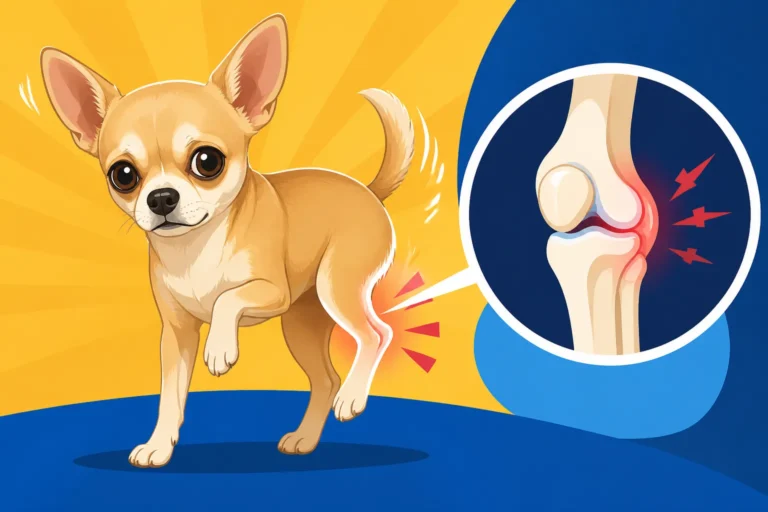
Imagine jumping from a second-story window every single day – that’s roughly the equivalent impact your Chihuahua experiences when they launch themselves from your average 18-inch high sofa. Their joints, especially their knees and hips, are simply not designed to absorb that kind of repeated shock. Chihuahuas are notoriously prone to certain orthopedic conditions, and frequent jumping exacerbates these vulnerabilities. For instance, a condition called Patellar Luxation, the Chihuahua's Commonest Joint Problem often starts with a kneecap that slips out of place. Each hard landing can further stress the ligaments, erode cartilage, and worsen the severity of the luxation, turning a minor issue into a painful, debilitating problem requiring costly surgery.
Even for young puppies, whose bones are still developing, the impact can be detrimental. Growth plates are delicate and can be easily damaged, leading to lifelong lameness or abnormal joint development. Owners often don't realize the extent of the damage until their Chihuahua is limping or showing signs of discomfort, at which point prevention would have been far more effective than treatment. This cumulative trauma is a silent enemy, slowly chipping away at their joint health without immediate, obvious signs until it's too late.
The Risk of Spinal Injuries and Head Trauma
Beyond the joints, a Chihuahua's spine is incredibly delicate. A miscalculated jump, an awkward landing, or a slip can lead to serious spinal injuries, including ruptured or bulging discs. Even a seemingly small twist can cause immense pain, nerve damage, or even paralysis. Picture a Chihuahua scrambling to get off the sofa, catching a paw, and tumbling. That sudden, uncontrolled impact on their back or neck can have devastating consequences. Chihuahua Back and Neck Pain is a very real concern for these little dogs, and one bad jump can be the catalyst.
Furthermore, their relatively large, apple-shaped heads (especially in the apple-head variety) make them susceptible to head trauma. A fall where their head hits a hard surface like a coffee table or a tiled floor can result in concussions, internal bleeding, or other severe neurological damage. Many owners don't consider this possibility until it happens, and then the emergency vet bills, even with a good plan from a provider like Healthy Paws, can be staggering. Protecting their tiny skulls from impact is just as crucial as protecting their joints, highlighting the need for safe ways to get up and down from furniture.
Aggravating Pre-Existing Conditions
If your Chihuahua already has an underlying health issue, those sofa leaps can turn a manageable condition into a crisis. For an older Chihuahua, who might already be experiencing the early signs of Chihuahua Arthritis in the Teenage Years, every jump sends a jolt of pain through their already stiff and achy joints. This can accelerate the progression of arthritis, making daily movement a struggle and significantly impacting their quality of life. What was once a minor stiffness can quickly escalate to severe chronic pain and lameness.
Even conditions that aren't overtly orthopedic can be worsened. A Chihuahua with a history of seizures, for example, might be more susceptible to having an episode triggered by the stress or sudden impact of a fall. Similarly, dogs recovering from any type of surgery, or those with fragile bones due to metabolic issues, are at extreme risk. Thinking proactively about these preventative measures means you're not just avoiding new injuries, but also helping to maintain the stability of their existing health. It's about ensuring their comfort and longevity, rather than reacting to a preventable emergency.
Understanding Chihuahua Physics: Why Jumps Are So Risky
It's tempting to think of our Chihuahuas as miniature versions of larger dogs, capable of the same feats, just on a smaller scale. However, their unique physical structure and metabolism mean that scaling down risks isn't as simple as it sounds. The physics of a jump for a six-pound dog off a two-foot-high surface are entirely different from a sixty-pound dog doing the same, making the potential for injury disproportionately higher.
Disproportionate Height and Force
Let's put this into perspective. A typical sofa sits about 18-24 inches off the ground. For a Chihuahua, who might only stand 6-9 inches tall at the shoulder, this is an immense height. Imagine a human, who averages around 5'6" (66 inches), jumping from a height that is three times their own standing height. That would be like jumping from a second-story balcony! The force exerted on their tiny joints and skeletal structure upon landing is incredible, easily exceeding what their small frames are built to withstand.
Their slight body mass means there’s less "cushion" to absorb the impact. A larger dog has more muscle and bone density to distribute the landing force. A Chihuahua, by contrast, hits the ground with concentrated force on delicate points, making fractures, sprains, and internal injuries far more likely. It’s not just the fall, it’s the abrupt stop at the end of it that does the damage. This disproportionate impact is a primary reason why investing in aids like ramps or steps is not a luxury, but a necessity for long-term health, helping to mitigate expenses later on that even great plans from Healthy Paws might struggle to fully cover without careful planning.
The Small Body, Big Energy Paradox
Chihuahuas are often described as "big dogs in little bodies," and it's true they possess an incredible amount of energy and confidence. They want to be right there with you, perched on the arm of the sofa or snuggled next to you. This enthusiasm, combined with their compact size, creates a paradox: they have the drive to jump and explore, but their bodies aren't biomechanically equipped for the repetitive stress that comes with it. They might zip up and down twenty times a day without immediately showing signs of pain, making owners believe it's perfectly safe.
This paradox often leads to owners inadvertently allowing behaviors that are harmful over time. Because a Chihuahua doesn't complain loudly or visibly limp after every jump, the cumulative damage goes unnoticed. It's like a tiny crack in a foundation, slowly worsening until a major structural failure occurs. Their boundless energy and desire to be near their human companions mean they will jump, climb, and launch themselves regardless of the risk, making it our responsibility as their caretakers to provide safe alternatives.
Long-Term Wear and Tear
Every single jump, every single landing, contributes to microscopic wear and tear on their joints, ligaments, and spinal discs. While a single jump might not cause a catastrophic injury, the accumulation of these small impacts over months and years absolutely does. Think of it like a car repeatedly hitting potholes; eventually, even if the car is well-built, components will fail. For a Chihuahua, this long-term wear and tear can lead to chronic pain, debilitating arthritis, and reduced mobility as they age. This is particularly relevant when considering the Chihuahua Lifespan and Why the Breed Reaches Sixteen or even longer. We want those golden years to be comfortable, not riddled with mobility issues.
The effects are often insidious. You might notice your once-spry Chihuahua gradually becoming less enthusiastic about playing, hesitating before jumping, or showing subtle signs of discomfort like a stiff gait in the mornings. By this point, significant damage has likely occurred. It's far better to proactively protect their joints from day one than to try and manage severe osteoarthritis or a blown knee several years down the line. Preventative measures, such as providing proper ramps and steps, are investments in their long-term comfort and mobility, delaying the onset of age-related joint issues.
Choosing the Right Ramp or Steps for Your Chihuahua
Once you understand the importance of safeguarding your Chihuahua, the next step is selecting the best solution. The market is flooded with options, and it can feel overwhelming trying to figure out what’s genuinely safe and effective for your tiny companion. Not all pet steps or ramps are created equal, especially when catering to the specific needs of a small breed like a Chihuahua.
Ramps vs. Steps: Pros and Cons for Chihuahuas
Deciding between a ramp and steps often comes down to your individual Chihuahua's preferences, age, and any existing health concerns.
Ramps:
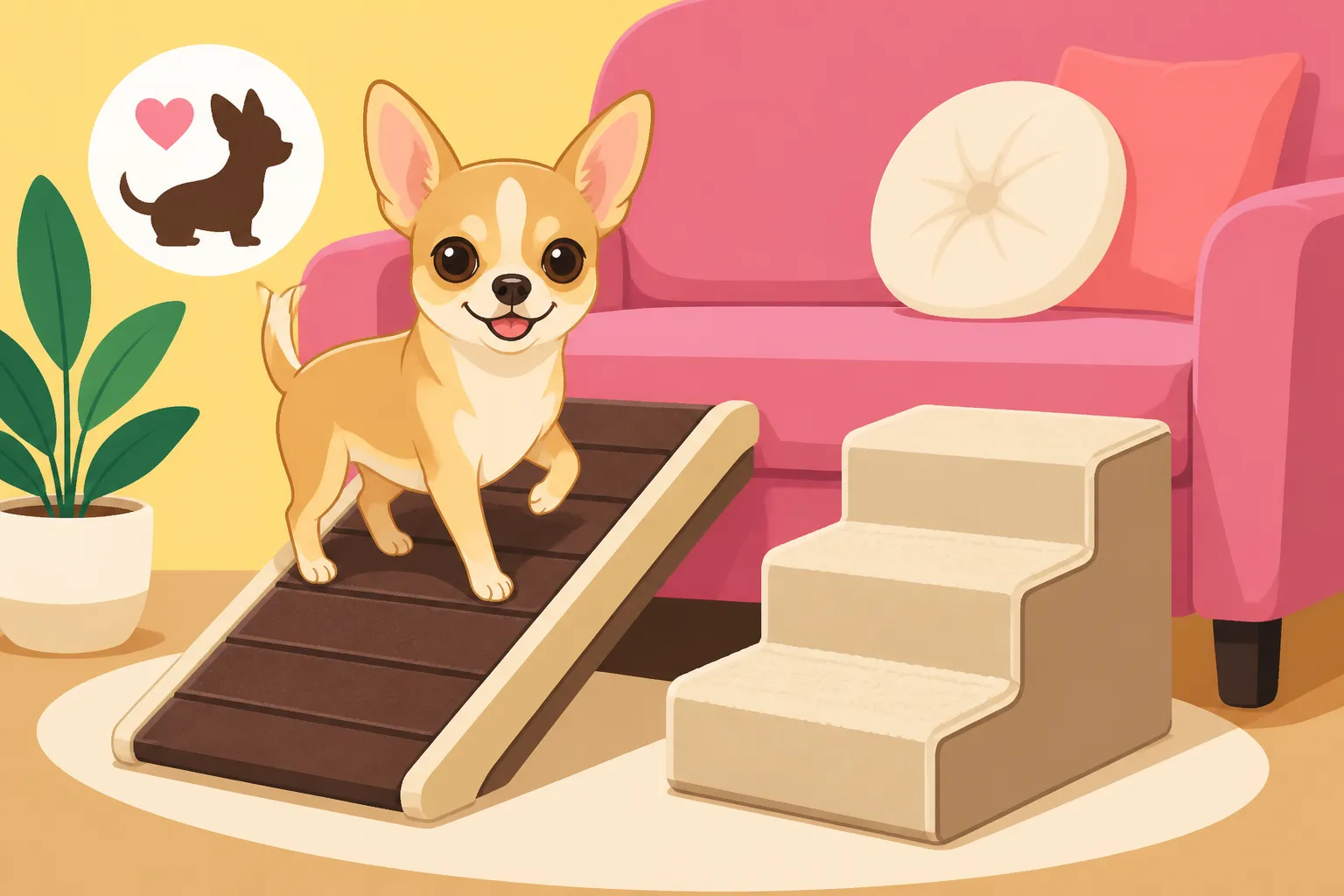
- Pros: Ramps provide a continuous, gentle incline, which is ideal for Chihuahuas who are very young, elderly, or those with existing joint problems like Patellar Luxation, the Chihuahua's Commonest Joint Problem or arthritis. It eliminates any jarring impact associated with stepping, making it the smoothest option for ascent and descent. Dogs who might be fearful of steps often adapt more easily to a ramp. They are also excellent for dogs with spinal issues where any jerky motion is to be avoided.
- Cons: Ramps can take up more floor space due to their necessary length for a gentle slope. They can also be perceived as more "slippery" if the surface isn't properly textured, requiring careful selection of materials. Some Chihuahuas, especially those with high energy, might try to run up or down a ramp too quickly, which still carries a slight risk if they lose their footing.
Steps:
- Pros: Steps generally take up less floor space than ramps, making them a good option for smaller living areas. For healthy, agile Chihuahuas, steps can be quick and easy to navigate. They can also be a good choice for dogs that prefer a more defined "climb" rather than a slope.
- Cons: Steps inherently involve more impact on the joints with each step up and down. This can be problematic for Chihuahuas prone to or already suffering from joint issues, hip problems like Chihuahua Legg-Calve-Perthes Disease, or spinal conditions. Very small or short-legged Chihuahuas might find the rise of each step too high, making them awkward or uncomfortable to use. They also require more coordination, which can be a challenge for puppies or senior dogs with vision impairment or cognitive decline.
Ultimately, for most Chihuahuas, especially those we want to protect for their entire Chihuahua Lifespan and Why the Breed Reaches Sixteen years, a ramp is generally the safer and more joint-friendly option, particularly for daily use to and from a sofa.
Material and Stability Considerations
The material and construction of the ramp or steps are paramount for your Chihuahua's safety. Cheap, flimsy options are not only ineffective but can actually be dangerous.
- Surface Traction: This is non-negotiable. Look for surfaces that are carpeted, ribbed, or have a non-slip grip. Smooth plastic or polished wood might look sleek, but your Chihuahua's tiny paws will struggle to find purchase, leading to slips and falls. Brands like Pet Gear and Majestic Pet offer ramps and steps with fabric covers or ribbed surfaces specifically designed for traction. The material should also be easy to clean – accidents happen!
- Stability: A wobbly ramp or set of steps is a recipe for disaster. Ensure the product has a wide, stable base and non-slip feet (rubber stoppers are excellent) to prevent it from shifting or tipping when your Chihuahua uses it. If it moves, your Chihuahua will be less likely to trust it and more likely to avoid it, or worse, get injured. Lightweight plastic options can be convenient, but make sure they are robust enough not to slide on your flooring. Consider options with a sturdy wooden or high-density foam core.
- Durability: You want something that will withstand daily use for years. Cheaper materials might degrade quickly, leading to exposed sharp edges or collapsing steps. Investing in a higher quality, durable product now can save you from having to replace it frequently and, more importantly, from potential vet bills down the line. A reliable pet product company usually stands behind its manufacturing quality.
Height and Incline: Matching the Product to Your Sofa and Chihuahua
Getting the right dimensions is crucial. A ramp or set of steps that’s too short, too steep, or too high won't serve its purpose.
- Measure Your Sofa: Before you buy, measure the height from the floor to the top of your sofa cushion. This is the height your ramp or steps need to reach comfortably. Don't eyeball it!
- Consider the Incline (for ramps): For Chihuahuas, a gentle incline is key. A general rule of thumb is that for every 12 inches of height, you need at least 36-48 inches of ramp length to achieve a gentle, comfortable slope. A steep ramp will still put strain on their joints and can be intimidating. If your sofa is 20 inches high, you'd ideally want a ramp that is 5-7 feet long for a truly gentle ascent. This is why space can be a factor.
- Step Rise and Depth (for steps): If opting for steps, ensure the rise (height) of each step is low enough for your Chihuahua to comfortably navigate without straining. Generally, a rise of no more than 4-6 inches is ideal for a Chihuahua. The depth of each step should also be sufficient for them to place all four paws without crowding. If the steps are too high or too shallow, they'll be awkward and potentially dangerous.
- Weight Capacity: While a Chihuahua is small, ensure the ramp or steps can support their weight plus a little extra. Most pet ramps are designed for a range of weights, but it's always good to double-check, especially if you have a slightly larger Chihuahua or multiple small dogs who might use it.
Matching these dimensions to your specific furniture and Chihuahua is essential for both effectiveness and safety. Don't forget that a little extra length on a ramp for a gentler slope is often worth the extra floor space, especially for preventing injuries that might otherwise require expensive interventions, even with a robust plan from a provider like Healthy Paws. Remember, preventing injuries like those covered in Keeping a Chihuahua Off Furniture to Protect Knees is always better than treatment.
Training Your Chihuahua to Use Ramps or Steps
So, you've got your perfect ramp or steps. Now comes the trickier part: convincing your Chihuahua to actually use them! Chihuahuas can be opinionated, and new objects can sometimes be met with suspicion or fear. But with patience, positive reinforcement, and a little creativity, you can absolutely teach them this vital skill.
Positive Reinforcement Techniques
The key to successful training for any dog, especially a small, sometimes sensitive breed like a Chihuahua, is positive reinforcement. Never force your dog onto the ramp or steps; this will only create a negative association and make them more resistant.
- Introduce it Slowly: Place the ramp or steps near the sofa, but don't attach it or expect immediate use. Let your Chihuahua sniff it, investigate it, and get comfortable with its presence in their environment. Praise them gently for any interaction, no matter how small. You might even place their favorite toy or a delicious treat on the first step or the bottom of the ramp to pique their curiosity.
- Lure with Treats: Start by luring your Chihuahua with high-value treats. Hold a treat just out of reach, encouraging them to take a single step onto the ramp or the first step. As soon as they do, give them the treat and lavish them with praise. Repeat this many times, gradually encouraging them to take another step, and another. For a ramp, you might place a trail of small treats leading up the incline.
- Use a Cue Word: As your Chihuahua begins to understand, introduce a consistent verbal cue like "up" or "steps" as they ascend, and "down" as they descend. This helps them associate the command with the action. Eventually, you should be able to simply say the cue, and they'll use the aid. Remember, consistency is key, and every small success deserves enthusiastic praise and a reward.
Making it a Safe and Fun Experience
Training shouldn't feel like a chore for either of you. Keeping it light, fun, and fear-free will yield much better results.
- Short, Frequent Sessions: Chihuahuas have short attention spans. Keep training sessions brief – 3 to 5 minutes at a time, several times a day. This prevents them from getting bored, frustrated, or overwhelmed. End each session on a positive note, even if it's just for a single successful step.
- Never Push or Pull: Seriously, avoid any physical coercion. If your Chihuahua is hesitant or seems scared, take a step back. Revert to an easier stage, use higher-value treats, or simply let them observe the ramp for a while longer without pressure. Building confidence is more important than speed. A fear-reactive Chihuahua won't learn effectively under duress.
- Celebrate Successes: Every time your Chihuahua uses the ramp or steps correctly, make a big deal out of it! Offer plenty of verbal praise ("Good boy!", "Smart girl!"), enthusiastic petting, and their favorite treats. This positive association reinforces the desired behavior and makes them eager to repeat it. If you're struggling, consider reaching out to a positive reinforcement trainer; sometimes a fresh perspective and professional guidance can make all the difference, though you'll want to factor in the Chihuahua Training and Behavior Help Costs.
Consistency is Key
This is where many owners falter. Once your Chihuahua is using the ramp or steps, it's crucial to maintain consistency.
- No More Jumping: The moment you introduce the ramp or steps, jumping from the sofa should become a forbidden behavior. Every time they try to jump, gently redirect them to the ramp or steps. If they jump down before you can stop them, don't scold them, just pick them up and place them at the bottom of the ramp, then encourage them to use it to go back up. This teaches them the new routine.
- Every Time, Every Person: Ensure everyone in the household is on board with the new rule. If one family member allows jumping, it will confuse your Chihuahua and undermine the training. Consistency from every person, every time they want to get on or off the furniture, is absolutely vital for making the ramp or steps their default behavior.
- Beyond the Sofa: If your Chihuahua frequently jumps off other elevated surfaces like beds, apply the same principles there. Consider purchasing additional ramps or steps for other furniture if needed. The goal is to establish a consistent pattern of safe ascent and descent throughout the home, ensuring their long-term health and preventing unexpected trips to the vet for injuries that a good plan from Healthy Paws might cover, but which are better avoided entirely.
Beyond the Sofa: Extending Safety Throughout Your Home
While the sofa is often the main culprit for high-impact jumps, it's important to remember that your Chihuahua can encounter similar risks in other areas of your home and even outside. A holistic approach to preventing injuries means considering all elevated surfaces and how your tiny companion interacts with them.
Bedside Ramps and Steps
Many Chihuahuas love to snuggle in bed with their humans. Just like sofas, beds, especially modern high-profile ones, can pose a significant jumping hazard. Imagine waking up to the sound of your little one attempting a heroic leap off the mattress! The same principles for sofa ramps apply here.
- Assess Bed Height: Measure your bed's height from the floor to the top of the mattress. This measurement will guide your choice for a bedside ramp or steps. Often, beds are even taller than sofas, requiring a longer ramp for a gentle incline.
- Prioritize Stability and Soft Landings: Look for ramps or steps that are stable against the bed frame. Some options even tuck underneath the mattress for added security. Consider options with plush carpet or a soft top layer for an extra comfortable surface for sleepy paws. Companies like PetSafe and Arf Pets offer various bed-specific ramps and steps that are both aesthetically pleasing and functional, ensuring your Chihuahua can join you for cuddles without risking their delicate joints.
- Consistency is Key (Again!): Just as with the sofa, ensure that once the bedside ramp or steps are in place, jumping off the bed becomes a no-go. Gently guide them to use the designated aid every single time. This will reinforce good habits and protect them, especially as they enter their senior years, where mobility help for a Mobility Help for a Fifteen Year Old Chihuahua becomes increasingly crucial.
Car Ramps for Easier Travel
For Chihuahuas who love to go on adventures, getting into and out of the car can also be a source of stress and potential injury. Lifting your Chihuahua might seem like the obvious solution, but for owners with back problems or for a Chihuahua that might squirm, a car ramp can be a game-changer.
- Portable and Lightweight: Look for car ramps that are lightweight, foldable, or telescopic for easy storage and transport. Aluminum or sturdy plastic options are common. You want something that's easy for you to deploy without struggle.
- Non-Slip Surface: A high-traction surface is even more important in a car ramp, as cars can have slick surfaces and wet weather can make things more precarious. Rubberized treads or heavy-duty sandpaper-like surfaces are excellent choices.
- Appropriate Length and Incline: Car heights vary wildly, from low sedans to tall SUVs. Ensure the ramp is long enough to provide a gentle incline from your car's entry point (trunk or side door) to the ground. A too-steep ramp will be difficult for your Chihuahua to navigate, and they might resist using it. Training your Chihuahua to use a car ramp with treats and praise, similar to sofa training, will ensure smooth journeys.
Investing in Prevention: A Long-Term Health Strategy
Ultimately, providing ramps and steps for your Chihuahua isn't just about convenience; it's a critical component of a proactive, long-term health strategy. The small investment in quality ramps or steps now can prevent a multitude of painful, expensive, and potentially debilitating injuries down the road.
Think of it as an insurance policy against preventable orthopedic issues. While a good pet insurance plan, like those offered by Healthy Paws, can certainly help cushion the financial blow of unexpected accidents or illnesses, preventing those issues in the first place is always the best course of action for your Chihuahua's well-being and your peace of mind. Regular exercise that's appropriate for their size, like Chihuahua Exercise Needs Every Day, combined with these safety measures, forms the bedrock of a healthy, long life. By creating a safe environment where your Chihuahua can navigate their world without unnecessary risk, you're ensuring they remain happy, mobile, and comfortable well into their golden years.
Disclaimer
This article is intended for informational purposes only and does not constitute veterinary advice. Always consult with a qualified veterinarian for any health concerns or before making any decisions about your Chihuahua's care or treatment.