Whether a Deer Head Chihuahua Behaves Differently
It's a common question, and one that sparks a lot of discussion among Chihuahua lovers: does the physical appearance of a "deer head" Chihuahua actually translate into a different personality or set of behaviors compared to their "apple head" counterparts? Many new owners, and even some seasoned ones, find themselves wondering if the longer muzzle and flatter skull of a deer head means they're getting a calmer, less "yappy" dog, or perhaps one with fewer health quirks. The truth, however, is far less about cranial structure and much more about genetics, environment, and good old-fashioned training. This guide will dive deep into this fascinating topic, helping you understand why your Chihuahua's head shape really doesn't dictate their temperament.
Understanding the Physical Distinctions: Deer Head vs. Apple Head
Before we tackle behavior, let's clarify what we mean when we talk about deer head and apple head Chihuahuas. These terms refer purely to physical characteristics, specifically the shape of their skull and muzzle. They aren't separate breeds, nor are they officially recognized varieties within breed standards like long coat versus smooth coat. Think of them more as descriptive types that have emerged over time.
Physical Traits of the Deer Head Chihuahua
A deer head Chihuahua, as the name suggests, often has a head shape that is more reminiscent of a young deer. This typically means a longer, more sloped forehead that blends smoothly into the muzzle, rather than forming a distinct "stop" (the indentation between the eyes). Their muzzle itself tends to be longer and more slender, and their eyes are usually set a little further apart, giving them a slightly less prominent, less "bug-eyed" appearance. Many deer head Chihuahuas also tend to be a bit larger, often pushing the upper limits of the breed standard's weight guidelines, or even exceeding them. They might have longer legs and a more athletic build overall. For example, if you picture a classic Chihuahua from a movie or TV show, chances are it's a deer head. This is the look that many people find appealing because it often appears less "fragile" than the traditional apple head.
Physical Traits of the Apple Head Chihuahua
The apple head Chihuahua, on the other hand, is the type specifically favored by the American Kennel Club (AKC) and other breed organizations, adhering to the official The Round Skull the Chihuahua Standard Asks For. Their skull is distinctively domed or rounded, much like an apple. They feature a very pronounced "stop" where the forehead meets the muzzle, creating an almost 90-degree angle. Their muzzle is typically much shorter and can appear quite dainty. One of their most striking features is their large, round, often prominent eyes that are set relatively close together. They also commonly have a The Chihuahua Molera and What a Soft Spot Means, which is an unclosed fontanel or soft spot on their skull, similar to a human baby's. Apple heads generally tend to be on the smaller side of the breed's weight range, though this isn't a hard and fast rule.
Debunking the Myth: Behavior Isn't About Head Shape
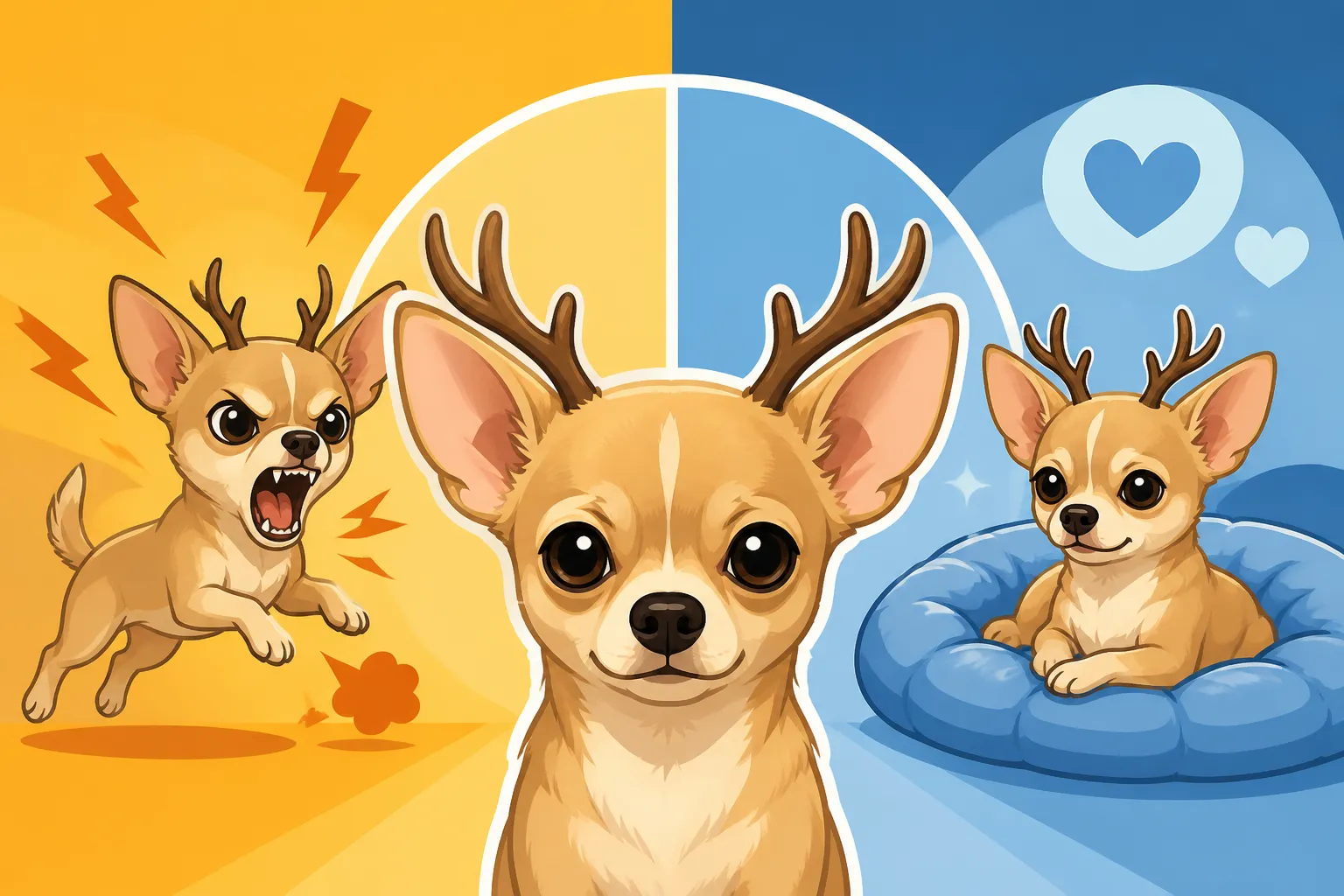
Now for the main event: does this difference in head shape lead to a difference in personality? The resounding answer from most canine behaviorists and experienced Chihuahua enthusiasts is no, not inherently. A Chihuahua's behavior is a complex tapestry woven from its genetic lineage, early life experiences, ongoing socialization, and consistent training, not the curve of its skull.
Genetics and Temperament
The core temperament traits of the Chihuahua breed – their loyalty, alertness, courage, and sometimes their tendency towards being a "one-person dog" – are embedded in the breed's genetic makeup. These traits are shared across the entire breed, regardless of whether a dog has an apple head or a deer head. Think of it like human hair color: two siblings can have different hair colors, but they still share the same core family personality traits and genetic predispositions for health. The genetic pool for temperament is the same for both head types. Therefore, a deer head Chihuahua is just as likely to be a feisty, confident companion as an apple head, and vice versa. It's truly about the individual dog's lineage and the specific temperament traits passed down from its parents, which you can sometimes infer if you have access to information about The Health Tests a Chihuahua Breeder Should Run.
The Impact of Environment and Socialization
This is where the real differences in behavior emerge. A Chihuahua's environment and the quality of its socialization during those crucial early weeks and months will have a far greater impact on its adult personality than its head shape ever could. A deer head Chihuahua raised in a quiet home with limited exposure to new people, places, or other dogs might become shy and reactive, just as an apple head would. Conversely, an apple head Chihuahua that receives consistent, positive Socializing a Chihuahua Without Overwhelming It will likely grow into a confident, well-adjusted dog. The key is exposure and positive reinforcement, starting from a young age. Without it, any Chihuahua can develop fear-based behaviors, such as barking at strangers or lunging on walks.
The "Small Dog Syndrome" Perception
Sometimes, perceived behavioral differences between deer heads and apple heads can be attributed to how owners treat them, often falling into the trap of Small Dog Syndrome and Why It Is Not Genetic. Because apple heads are often smaller and have that "fragile" appearance, owners might be more prone to coddling them, picking them up constantly, or letting them get away with behaviors they wouldn't tolerate in a larger dog. This can inadvertently foster undesirable habits like excessive barking, resource guarding, or snapping at hands.
A deer head, often being slightly larger and sturdier, might be treated more like a "regular" dog, with more consistent boundaries and expectations. This isn't because of its head shape, but because its physical presence might naturally lead owners to enforce rules more consistently. The result? The deer head appears better behaved, when in reality, it's just benefiting from clearer guidance. It's a perception issue, not an inherent behavioral one.
What Truly Shapes a Chihuahua's Personality
If head shape isn't the primary driver of behavior, then what is? A combination of factors, each playing a critical role in molding your Chihuahua into the unique companion they become.
Breeding and Early Life Experiences
The foundations of a Chihuahua's personality are laid long before they come home with you. The temperament of the parent dogs is hugely influential; a puppy from shy, fearful parents is more likely to inherit those predispositions. Moreover, the environment in which a puppy is raised during its first 8-12 weeks is paramount. Puppies from reputable breeders who prioritize health, temperament, and early socialization are more likely to be well-adjusted.
Consider a puppy born into a chaotic, noisy environment with little human interaction versus one raised in a home where it's gently handled daily, exposed to household sounds, and has positive interactions with various people. The latter will almost certainly be more confident and resilient. This early window is absolutely vital. If you're considering a puppy, asking about the parents' temperaments and the early environment is far more important than asking about head shape.
Training, Consistency, and Confidence Building
Regardless of whether your Chihuahua is an apple head or a deer head, consistent, positive reinforcement training is essential. These intelligent little dogs thrive on structure and knowing what is expected of them. Training a Chihuahua Exactly Like a Big Dog is not just a catchy phrase; it's a fundamental truth. They need to learn basic obedience cues like "sit," "stay," and "come." They need proper leash training using a comfortable harness (many good options are available on Amazon for tiny dogs). An online training program, like BAXTER & Bella, can provide excellent resources for building these foundations from puppyhood.
A confident Chihuahua is a well-behaved Chihuahua. Building confidence often means gently exposing them to new experiences, rewarding brave choices, and teaching them that the world isn't a scary place. This requires patience and consistency on your part, not a specific skull shape on theirs.
Health and Comfort
A dog in pain or discomfort is often a dog with behavioral issues. This is especially true for Chihuahuas, who are prone to certain health conditions that can manifest as changes in behavior. For example, a Chihuahua suffering from Chihuahua Arthritis in the Teenage Years might snap when touched or become withdrawn. A dog with Patellar Luxation, the Chihuahua's Commonest Joint Problem might suddenly avoid stairs or stop jumping onto furniture. Even chronic dental pain, which is incredibly common in Chihuahuas due to Chihuahua Dental Disease in a Crowded Small Jaw, can make them irritable or reluctant to eat.
Because deer heads can sometimes be larger and have slightly different conformation, some people might assume they are inherently healthier. However, both head types are Chihuahuas and share many of the same breed-specific health predispositions. Regular veterinary check-ups are crucial to rule out underlying medical causes for any sudden behavioral changes. A healthy, comfortable Chihuahua is generally a happier and better-behaved one.
Responsible Ownership for Any Chihuahua Head Type
Ultimately, fostering a well-adjusted, happy Chihuahua comes down to responsible ownership, regardless of the aesthetic differences between apple heads and deer heads. It's about meeting their needs as a small but mighty dog.
Treating All Chihuahuas Like Real Dogs
This means setting clear boundaries, having consistent expectations, and not excusing undesirable behaviors just because they're small. Your Chihuahua should have rules about where they can go, what they can chew, and how they interact with guests. This doesn't mean being harsh; it means being fair and consistent. For instance, if you don't want your Chihuahua barking excessively at every passerby, teach them a "quiet" cue. Don't simply pick them up and soothe them, reinforcing the barking behavior. Treat them like the capable, intelligent dogs they are.
Providing Proper Socialization
Continuing positive socialization throughout your Chihuahua's life is key. This isn't just about exposing them to new things, but making sure those experiences are positive and not overwhelming. Group puppy classes, often recommended by online training platforms like BAXTER & Bella, can be invaluable, provided they are structured for small breeds to ensure safety and comfort. Introducing them gradually to different people, gentle dogs of appropriate size, and various environments will help them develop confidence and resilience. Remember, a tiny dog can still navigate the big world with confidence if given the right tools and experiences.
Choosing the Right Gear
Because Chihuahuas are small and can be delicate, choosing the right gear is vital for their safety and comfort, regardless of head type. A well-fitting harness is absolutely essential for walks to protect their delicate windpipe, which can be prone to conditions like Collapsing Trachea and the Chihuahua Honking Cough. You can find a wide array of harnesses on Amazon that are specifically designed for small breeds, offering comfortable and secure options. Similarly, a cozy bed and appropriate clothing are not just accessories but necessities for keeping these little dogs warm, given their minimal body fat. Chihuahua Clothing and Cold Weather Gear covers this topic in depth.
Here's a quick comparison of the two head types, focusing on physical traits versus behavioral factors:
| Feature | Apple Head Chihuahua | Deer Head Chihuahua | Behavioral Implications |
|---|---|---|---|
| Skull Shape | Domed, rounded, prominent "stop" | Flatter, more sloped, less pronounced "stop" | None inherent |
| Muzzle Length | Shorter, often daintier | Longer, more slender | None inherent |
| Eye Prominence | Large, round, often prominent | Set further apart, less prominent | None inherent |
| Body Build | Often smaller, more delicate appearance | Often slightly larger, sturdier, more athletic | None inherent |
| Health Risks | Molera, hydrocephalus sometimes (not always linked) | Similar breed-specific risks (patellas, teeth) | None inherent |
| Temperament | Determined by genetics, training, socialization | Determined by genetics, training, socialization | Universal for breed |
| Training Needs | Consistent, positive reinforcement | Consistent, positive reinforcement | Universal for breed |
| Socialization | Essential from early age | Essential from early age | Universal for breed |
As you can see, the physical differences are clear, but when it comes to behavior, the path to a well-adjusted dog remains the same for both. Your Chihuahua's unique personality will blossom through your love, guidance, and commitment, not from the shape of their adorable little head.
Disclaimer
This article is for general informational purposes only and does not constitute professional advice. Laws, prices and regulations vary by location and change over time. Consult a qualified professional for guidance on your specific situation.