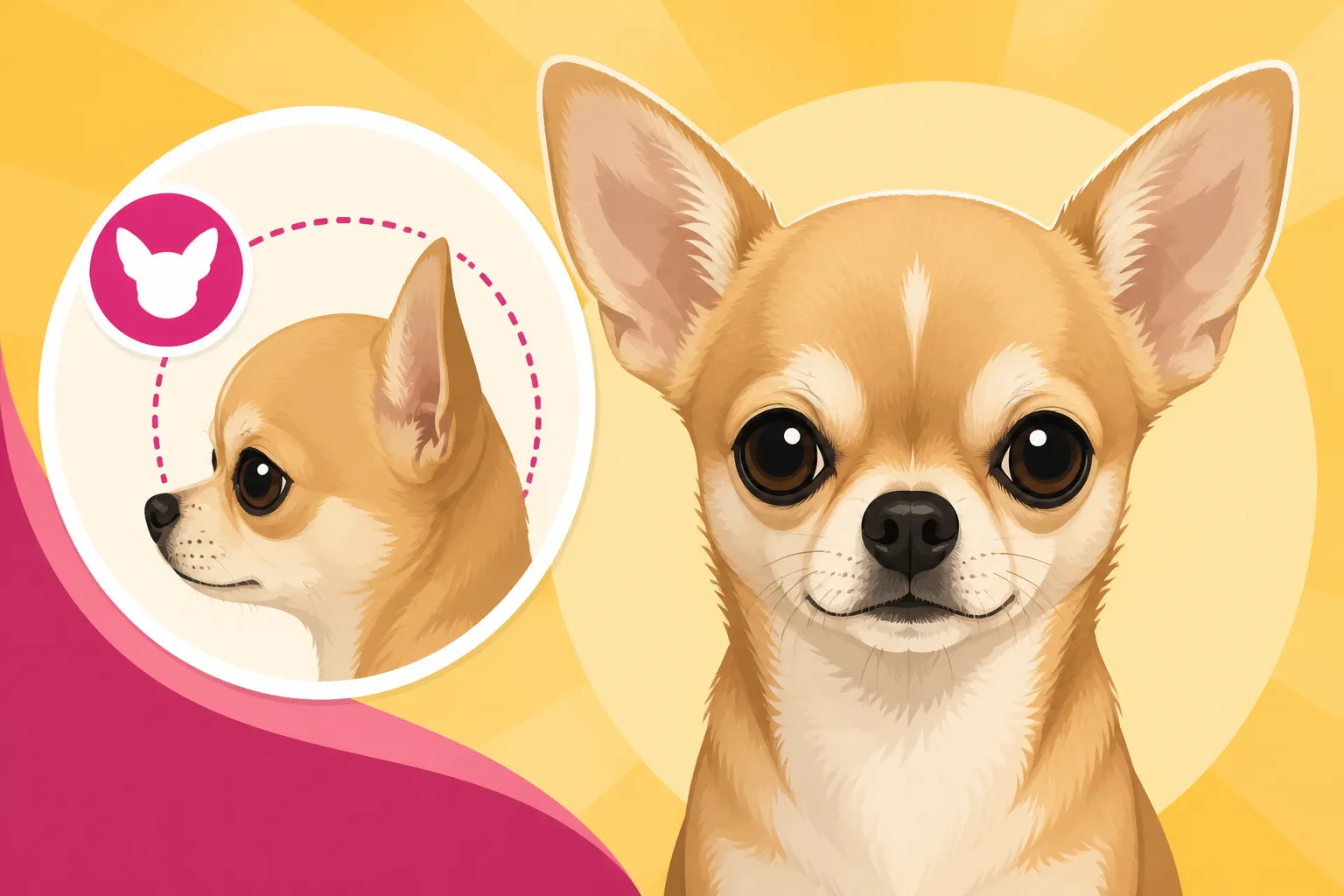
The Round Skull the Chihuahua Standard Asks For
It's quite common for new Chihuahua parents, and even those who've loved the breed for years, to feel a bit lost in the discussion around "apple heads" and "deer heads." Everyone has an opinion, and social media is rife with misinformation, but what does the official breed standard actually say? This guide is here to cut through the confusion and explain precisely what the Chihuahua breed standard, particularly for that classic rounded skull, means for these tiny, spirited companions.
Understanding the Chihuahua Breed Standard
When you look at a Chihuahua, you might see a tiny dog with huge personality, but for breeders and enthusiasts involved in showing, there's a very specific blueprint they aim for: the breed standard. This isn't just about aesthetics; it's a comprehensive description of the ideal Chihuahua, encompassing physical traits, movement, and even temperament.
What is a Breed Standard, Anyway?
Think of a breed standard as the official instruction manual for a specific dog breed. It's painstakingly written by the national breed club and approved by organizations like the American Kennel Club (AKC) to define the perfect specimen of that breed. Every detail, from the shape of the skull to the set of the tail, the size of the ears, and even the dog's gait, is meticulously outlined. This blueprint ensures that Chihuahuas, regardless of where they are bred, maintain consistency in their appearance and inherent characteristics. It's a way to preserve the unique essence of the breed over generations, acting as a guide for breeders and a judging rubric for dog shows.
It's not just about winning ribbons in the show ring, though that's certainly a part of it. The standard acts as a historical document, preserving the traits that defined the breed's ancestors and were considered most beneficial. It helps maintain genetic health by encouraging breeders to select for sound structure and balanced conformation, minimizing exaggerated features that could lead to health problems.
Why the Standard Matters for Health and Temperament
While the standard often seems focused on looks, its deeper purpose is to safeguard the breed's overall health and predictable temperament. When breeders adhere to the standard, they are, in theory, producing dogs that are less prone to certain structural issues and possess the characteristic personality traits of the breed. For example, a standard that asks for sturdy, well-boned legs (even if tiny) is indirectly promoting good joint health and preventing conditions like patellar luxation, which can plague toy breeds. A standard that describes a keen, alert, and saucy temperament ensures that the Chihuahua remains the bold, intelligent companion we adore, rather than becoming overly timid or aggressive.
Deviations from the standard, especially those leading to extreme features, can sometimes result in health problems. For instance, an overly flat face could lead to breathing issues, or a head too small for the brain could lead to other neurological concerns. Responsible breeders use the standard not as a beauty contest rulebook, but as a guide to produce healthy, well-adjusted dogs that truly represent their heritage.
The Chihuahua's Journey to Recognition
The story of the Chihuahua is a long and fascinating one, stretching back to ancient civilizations. These tiny dogs are believed to be descendants of the Techichi, small companion dogs kept by the Toltec people in Mexico as far back as 300 BC. Over centuries, through the Aztec civilization and eventually into the modern era, these little dogs captivated people with their diminutive size and lively spirit. It wasn't until the mid-19th century that Americans discovered them in the state of Chihuahua, Mexico, from which they ultimately got their name.
The breed's journey to formal recognition was a gradual one, culminating in the American Kennel Club officially recognizing the Chihuahua breed in 1904. AKC Recognition of the Chihuahua in 1904 This milestone cemented the breed's place in the dog world and led to the formal development of the breed standard we discuss today. Since then, the standard has evolved slightly, but the core essence of the breed, including its distinctive head shape, has remained central.
The Iconic Apple Head: A Defining Chihuahua Trait
When most people picture a classic Chihuahua, they envision the distinctive "apple head." This particular head shape is not just a preference; it's a cornerstone of the breed standard, setting the ideal appearance for show-quality Chihuahuas.
Describing the "Apple Head" Silhouette
The term "apple head" perfectly describes the rounded, dome-like contour of the Chihuahua's skull. Imagine a small, perfectly round apple sitting atop a delicate neck; that's the visual the standard aims for. This characteristic roundness is most evident when viewed from the front or the top, where the skull appears broad and domed, tapering down to a comparatively short, slightly pointed muzzle. The forehead is prominent, curving smoothly without any abrupt stops or flat spots.
This distinctive shape gives the Chihuahua an almost perpetually puppy-like, innocent expression. When you gently run your hand over an apple head Chihuahua's skull, you can feel the smooth, pronounced curve. This isn't just a surface characteristic; it defines the underlying bone structure of the dog's head and is a fundamental aspect of the breed's recognized appearance.
The Molera and the Apple Head
One unique feature often associated with the apple head Chihuahua is the presence of a "molera," also known as an open fontanel. Much like human babies are born with soft spots on their heads where the skull bones haven't fully fused, many Chihuahuas are born with a molera. It's a small, soft, often diamond-shaped area on the top of the skull. While it sounds alarming, and certainly warrants careful handling of puppies, a molera is actually specifically permitted, and even typical, within the Chihuahua breed standard.
For many years, the presence of a molera was considered a mark of a true apple head Chihuahua, though its size can vary significantly. Some close entirely, others remain small and palpable throughout the dog's life. It’s important for owners to understand what a molera is and is not, and how to protect their tiny friend. The Chihuahua Molera and What a Soft Spot Means While a small molera in an adult Chihuahua is generally not a cause for concern, it does mean that particular care must be taken to prevent head injuries, especially when they are young.
Eye and Ear Placement on an Apple Head
The apple head's unique skull shape directly influences the placement and appearance of the Chihuahua's eyes and ears, contributing to their alert and expressive look. The eyes are typically full, round, and set rather wide apart, giving them a bright, intelligent, and sometimes almost startled expression. Because of the domed skull, the eyes tend to be quite prominent, though they should not protrude excessively. This prominence, while adorable, also makes them a bit more susceptible to injury, so owners should be mindful during play or walks in brush.
The ears are large and erect, carried high on the head, often flaring slightly to the sides. They should be set relatively far apart on the broad portion of the skull, contributing to the breed's distinctive "bat-eared" silhouette. The combination of the rounded skull, large expressive eyes, and prominent ears creates a captivating and undeniable Chihuahua presence. Apple Head Chihuahua Eyes and Ear Set This overall head conformation is a hallmark of the breed and what gives them their unique charm.
Contrasting the Deer Head Chihuahua
While the apple head is the standard, many Chihuahuas, perhaps even the majority found in pet homes, possess what's commonly referred to as a "deer head." This head type is distinct from the apple head and, while perfectly lovely, does not conform to the official breed standard for show.
The Deer Head's Distinctive Features
A deer head Chihuahua presents a different silhouette altogether. Instead of the pronounced, rounded dome, the skull of a deer head is flatter across the top, often appearing longer and more streamlined. The muzzle tends to be longer and more slender, resembling the elegant profile of a young deer, hence the name. Their ears, while still large and erect, might be set a little closer together or lower on the head compared to their apple-headed counterparts. Their eyes might also appear less prominent, often having a slightly more almond shape rather than the perfectly round look.
The overall impression is one of elegance and refinement, often giving the dog a slightly more "foxy" or less "baby-faced" appearance. These Chihuahuas can be equally tiny and charming, possessing all the personality and spirit of the breed, just with a different facial structure. It's a variation that has become incredibly popular among pet owners who aren't concerned with conformity to show standards. The Flat Skull of a Deer Head Chihuahua
Why the Deer Head is Not in the Standard
Despite their widespread popularity, deer head Chihuahuas are not recognized under the official breed standard for conformation shows. The standard explicitly calls for the "apple head" with its distinct domed skull and short, pointed muzzle. This isn't to say that deer head Chihuahuas are inferior or "lesser" Chihuahuas; they simply don't match the specific physical description that judges look for in the show ring. The standard is a very precise document, and any deviation, no matter how minor, will result in the dog not placing.
This distinction often causes confusion for prospective owners. Many assume there are two separate "types" of Chihuahuas, when in fact, "deer head" is simply a descriptive term for a common head shape that falls outside the official show ring parameters. It highlights the difference between a dog bred for companionship versus one bred to perfectly embody the breed standard. Why the Deer Head Chihuahua Lost the Standard The focus on the apple head is about maintaining the breed's iconic, long-established image.
Health Implications and Deer Heads
When discussing head shapes, it's natural for people to wonder if one is healthier than the other. Anecdotally, some owners and even breeders suggest that deer head Chihuahuas might have a slightly lower incidence of certain conditions often associated with the very pronounced apple head. For example, the open fontanel (molera) is less common or typically smaller in deer heads, potentially reducing the (already low) risk of complications associated with head trauma or conditions like hydrocephalus. The longer muzzle of a deer head might also be perceived to offer slightly better breathing capacity compared to an extremely short, broad muzzle.
However, it's crucial to understand that these are general observations and not definitive health guarantees. Overall health in a Chihuahua, regardless of head type, is primarily determined by responsible breeding practices, genetic screening, and proper care. A well-bred deer head Chihuahua from health-tested parents is likely to be much healthier than a poorly bred apple head from questionable lineage. Likewise, a reputable breeder who focuses on the apple head standard will prioritize robust health and genetic soundness alongside correct conformation. Whether a Deer Head Chihuahua Is Healthier Ultimately, good health stems from good breeding and attentive ownership, not just head shape alone.
Beyond Head Shape: Other Standard Features
While the apple head is certainly a defining characteristic, the Chihuahua breed standard is far more comprehensive, covering every aspect of this tiny dog, from their size to their coat and even their inherent disposition. Understanding these other elements paints a complete picture of what makes a Chihuahua truly a Chihuahua.
Weight and Size Considerations
One of the most critical aspects of the Chihuahua breed standard, aside from the head, is its size. The standard explicitly states that a Chihuahua should not exceed six pounds in weight. This isn't just a suggestion; it's a firm guideline for show dogs and reflects the breed's heritage as one of the smallest dog breeds in the world. This weight limit directly influences the entire proportion and delicate structure of the dog. Exceeding this weight is considered a disqualification in the show ring.
This doesn't mean a seven-pound Chihuahua isn't a wonderful pet, but it does mean they wouldn't meet the ideal standard for breeding or showing purposes. The emphasis on small size underscores the breed's fragile nature and the care they require. For everyday owners, this weight guideline helps reinforce the need for proper diet to avoid obesity, which can be detrimental to such a tiny frame. The Six Pound Limit in the Chihuahua Standard It also means that all gear, from harnesses to travel carriers, must be perfectly sized for these diminutive companions.
Coat Varieties and Accepted Colors
Chihuahuas come in a delightful array of coats and colors, and the breed standard embraces this diversity. There are two primary coat varieties: the Smooth Coat and the Long Coat. The Smooth Coat, as its name suggests, is soft, glossy, and lies close to the body, with a ruff on the neck and feathering on the tail. The Long Coat, on the other hand, is soft and fine, with either flat or slightly wavy hair. It features a distinct ruff around the neck, feathering on the ears, legs, and tail, and often pantaloons on the hind legs.
Both coat types are equally acceptable under the standard, and they often appear in the same litter. Beyond texture, Chihuahuas boast an astonishing spectrum of colors and patterns. Almost any color, from solid black, white, fawn, and red to various sables, brindles, and tri-colors, is permissible. The standard states that "Any color – solid, marked or splashed – is permissible." This wide range of accepted colors means you can find a Chihuahua to suit almost any aesthetic preference, all while adhering to the official breed description. The Two Chihuahua Coat Varieties Explained
Temperament as Part of the Standard
It's easy to get caught up in the physical descriptions of the breed standard, but it’s vital to remember that temperament is just as, if not more, important. The Chihuahua breed standard describes the ideal temperament as "alert, with terrier-like qualities of self-importance, fearlessness, and animation." They should be lively, intelligent, and possess a bold, confident demeanor, despite their small size. This "terrier-like" spirit means they are often tenacious, curious, and incredibly aware of their surroundings.
A truly well-bred Chihuahua, adhering to the standard, should not be overly timid, shy, or aggressive. While some Chihuahuas develop fear-based reactivity due to a lack of proper socialization or handling, this is a behavioral issue, not an inherent breed trait the standard advocates for. Instead, the standard champions a "saucy" and self-reliant little dog who isn't afraid to stand up for themselves. This balanced temperament is what makes them such captivating and engaging companions, capable of bonding deeply with their families. Chihuahua Temperament and What the Standard Asks For
Living with a Standard-Compliant Chihuahua
Bringing a Chihuahua into your home, whether they perfectly match the breed standard or not, is a joy. However, understanding the standard's implications for their care and well-being can help you provide the best possible life for your tiny companion.
Finding a Reputable Breeder
If you're specifically seeking a Chihuahua that adheres closely to the breed standard, particularly the apple head, finding a reputable breeder is paramount. A good breeder will not only strive for correct conformation but will also prioritize health, temperament, and ethical breeding practices. They will be transparent about their dogs' health clearances, proudly showing you documentation for patella, cardiac, and eye exams on the parent dogs. The Health Tests a Chihuahua Breeder Should Run They will also be very knowledgeable about the breed standard and how their dogs fit into it.
A reputable breeder will not shy away from questions and will often have a waiting list for their puppies. They'll interview you to ensure you're a good fit for one of their dogs and provide ongoing support. Be wary of breeders who offer "teacup" Chihuahuas at exorbitant prices or advertise based solely on rare colors without discussing health. Such practices often indicate a focus on profit over breed welfare and responsible adherence to the standard.
Daily Care Considerations
Living with a Chihuahua, regardless of their specific head type, means being mindful of their tiny size and delicate nature. Their small stature dictates many aspects of their daily care, from their diet to their environment. For instance, managing their calorie intake is crucial; a Chihuahua might only need around 200 calories a day, depending on their size and activity level. Overfeeding, even slightly, can quickly lead to obesity, which puts immense strain on their tiny joints and organs. You'll want to measure their food precisely, perhaps with a kitchen scale, and ensure they get high-quality, small-kibble food. Many dedicated owners find excellent small-breed specific foods and treats from retailers like Chewy.
Keeping them warm is another key consideration, especially for smooth-coat Chihuahuas or those living in colder climates. Their lack of body fat means they chill easily. Keeping a Chihuahua Warm Through Winter Providing warm bedding, sweaters, and a controlled indoor temperature is vital. Regular dental care is also non-negotiable for Chihuahuas, as they are notoriously prone to dental disease. Daily brushing is the gold standard.
Training and Socialization for a Well-Adjusted Chi
Perhaps the most important aspect of caring for any Chihuahua, standard-compliant or not, is providing consistent training and ample socialization. Despite their small size, Chihuahuas are intelligent dogs who benefit immensely from being treated just like a big dog when it comes to training. They are capable of learning a wide range of commands and tricks, and positive reinforcement methods work wonders. Enrolling in puppy classes, even if your Chihuahua is the smallest in the room, can be incredibly beneficial for confidence building and early socialization. Training a Chihuahua Exactly Like a Big Dog
Proper socialization is crucial to prevent the development of fear reactivity, which is often misinterpreted as "small dog syndrome." Exposing them to a variety of sights, sounds, people, and other well-behaved dogs in a controlled, positive manner helps them grow into confident, well-adjusted adults. Carrying them everywhere, while tempting due to their size, can actually hinder their socialization and lead to fear and insecurity. Encourage them to explore the world on their own four paws, always safely on a harness and leash. For specific products like small training treats or durable toys scaled for a Chihuahua, Chewy offers a wide selection.
Here's a quick comparison of the two common head types:
| Feature | Apple Head Chihuahua | Deer Head Chihuahua |
|---|---|---|
| Skull Shape | Distinctly rounded, dome-like, prominent forehead | Flatter on top, often longer and more sloped |
| Muzzle | Shorter, often pointed, meets skull at a sharp angle | Longer, more slender, less abrupt stop to the forehead |
| Eyes | Large, full, round, set wide apart, prominent | Slightly less prominent, often more almond-shaped |
| Ears | Large, erect, set high and wide apart on skull | Large, erect, may be set slightly lower or closer together |
| Overall Profile | Classic, "baby-faced," iconic Chihuahua look | More elegant, "foxy," streamlined |
| Breed Standard | Required for show conformation | Not compliant with show conformation standard |
| Molera (Soft Spot) | More commonly present and accepted | Less common, often closes fully |
Remember, whether your Chihuahua has a perfectly rounded apple head or a graceful deer head, the most important thing is their health, happiness, and your bond with them. The breed standard serves as a guide for preservation, but love and responsible care are what truly make a wonderful companion. You can find everything from specialized small-breed food to cozy sweaters for your tiny friend on sites like Chewy, ensuring they are well-equipped for a happy life.
Disclaimer
This article is for general informational purposes only and does not constitute professional advice. Laws, prices and regulations vary by location and change over time. Consult a qualified professional for guidance on your specific situation.