Walking a Chihuahua Past a Barking Dog
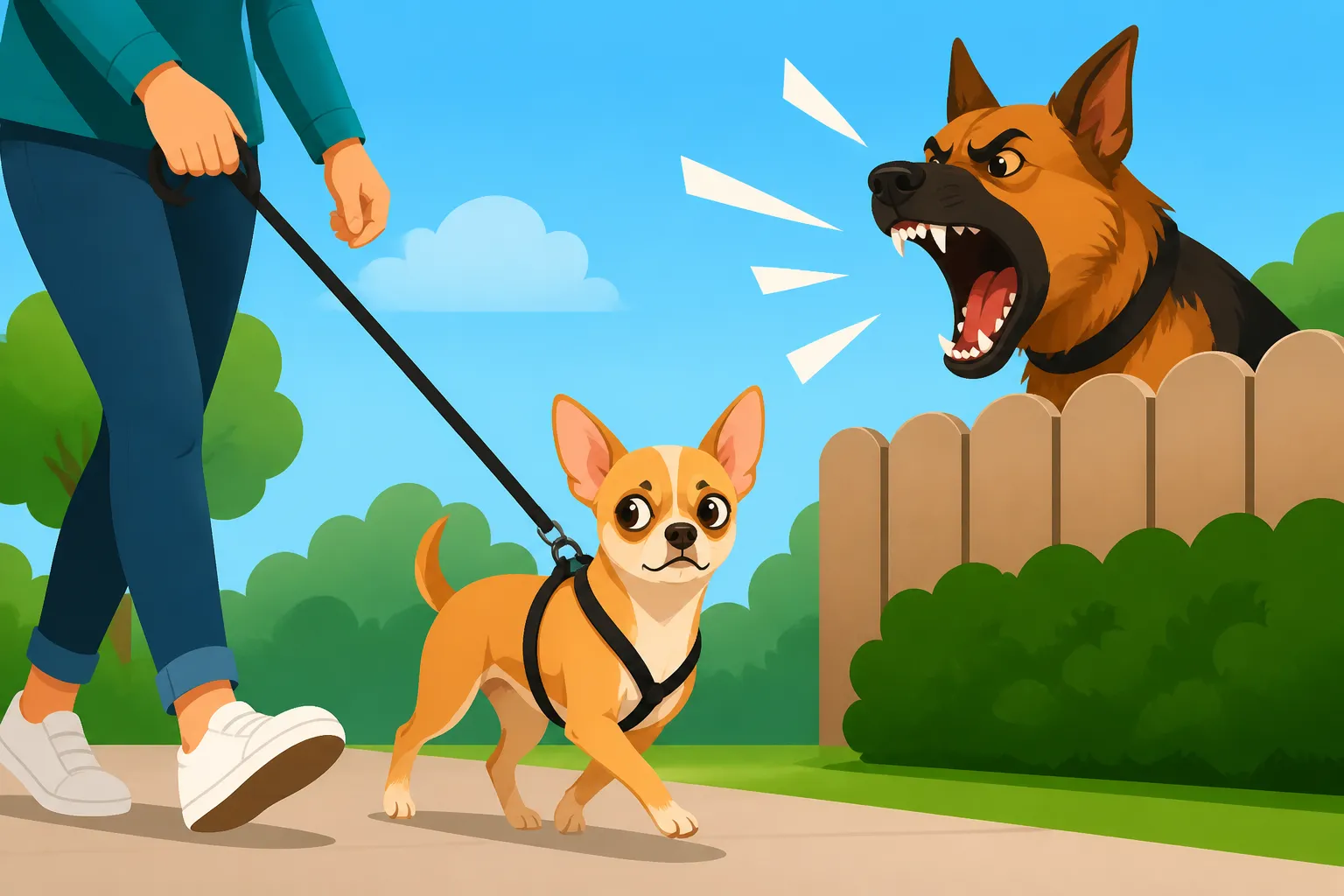
It's incredibly frustrating when you're trying to enjoy a peaceful walk with your sweet little Chihuahua, only for another dog's sudden, loud barking to send yours into a frenzy. That jarring reaction, whether it's barking back, lunging, or freezing in fear, isn't just embarrassing; it genuinely stresses both you and your tiny companion. This guide is here to walk you through why your Chihuahua reacts this way and, more importantly, how you can navigate these encounters with confidence and calm.
Understanding Why Your Chihuahua Reacts to Other Barking Dogs
You might feel like your Chihuahua is just being "naughty" or "stubborn" when they react to another barking dog, but it’s rarely that simple. For a dog of their size, the world can feel like a very big, often overwhelming, place. Their reactions stem from a complex mix of instinct, past experiences, and their unique place in the canine world.
The Instinctive Alarm System of a Small Dog
Imagine being roughly the size of a squirrel, then encountering a creature several times your weight, loudly asserting itself. For a Chihuahua, this isn't just an inconvenience; it can feel like a genuine threat. Their ancestors, even if they were confident little dogs, would have had a finely tuned sense of self-preservation. That alarm system is still very much active. When another dog barks, it's often perceived as a challenge or a warning, triggering their fight-or-flight response. Because they're so small, "flight" might not always be an option if they feel cornered or trapped on a leash, so they might resort to "fight" — which, for a Chihuahua, often manifests as barking, lunging, or snapping themselves. It’s their way of saying, "Hey! I see you! Stay back!" or even "I'm scared, don't come closer!" This isn't small dog syndrome; it's a valid, innate response to feeling vulnerable.
Think about it: a Golden Retriever might shrug off a distant bark, but your Chihuahua feels every vibration, hears every nuance, and processes it as a direct challenge to their small existence. This heightened sensitivity means that what might be a minor irritant to a larger dog is a significant event for your little one.
The Fear-Based Trigger Loop
Many Chihuahuas who react loudly to other barking dogs are actually experiencing fear reactivity. It's a common misconception that barking and lunging equals aggression; often, it's a frantic attempt to create distance and make the perceived threat go away. When your Chihuahua barks and lunges, and the other dog (or person) retreats, your Chihuahua learns that their frantic display "worked." This creates a self-reinforcing cycle. The next time they encounter a similar situation, their brain tells them, "Oh, I know this! Barking makes it stop!" It doesn't matter if the other dog was just being friendly or simply tied to a fence; your Chihuahua's brain interprets the result (the other dog moving away or you pulling them past) as success.
This fear can manifest in many ways. You might notice your Chihuahua's tail tucking, their body stiffening, or Reading a Chihuahua's Whale Eye right before the barking erupts. These are all subtle signs that they're uncomfortable and preparing for a defense. If this behavior isn't addressed, it can worsen over time, leading to a dog who is genuinely terrified of walks and any encounters with other dogs. It's not about being "dominant"; it's about being deeply, fundamentally scared.
How Previous Experiences Shape Reactions
Every walk, every interaction, every loud noise from a neighbor's yard shapes your Chihuahua's perception of the world. A single bad experience – perhaps being bowled over by a boisterous large dog, or being aggressively barked at by another small dog – can leave a lasting impression. Because Chihuahuas are so physically fragile, even a minor scuffle or an intimidating stare-down can be traumatizing. If your Chihuahua has had several negative encounters, especially during their critical socialization period as a puppy, they might generalize that all unknown dogs are a threat.
It’s also crucial to consider how you react. If you tense up, yank the leash, or instinctively pick them up every time another dog barks, your Chihuahua picks up on your anxiety. They learn that indeed, this situation is something to be worried about. Your reaction confirms their fear. This doesn't mean you've done anything wrong; it's a natural protective instinct. However, understanding this connection is the first step toward changing the dynamic. Recognizing that this is a common issue for many small breeds can help you approach the problem with more empathy and less frustration. It's not a flaw in your dog's character, but a learned coping mechanism.
Essential Gear and Preparedness for Walks
Before you even step out the door, setting yourself up for success involves more than just clipping on a leash. The right equipment and a thoughtful approach to your routine can significantly reduce stress for both you and your Chihuahua.
The Right Harness Makes a Difference
For a Chihuahua, a proper harness is non-negotiable, especially when dealing with reactivity. Collars can put immense pressure on their delicate trachea, which is already prone to issues like Collapsing Trachea and the Chihuahua Honking Cough. When your Chihuahua barks and lunges, that pressure intensifies, causing them pain and potentially exacerbating their fear or even causing injury. A well-fitting, comfortable harness distributes pressure across their chest and shoulders, giving you better control without risking their tiny windpipe.
Look for a Y-front harness that doesn't restrict shoulder movement and has a secure fit, so your Houdini-level Chihuahua can't back out of it when startled. Many brands, available on platforms like Amazon, offer harnesses specifically designed for tiny breeds, often with reflective stitching for safety. It's worth investing time to find one that fits snugly but doesn't chafe. You want to make sure the harness is comfortable enough that they hardly notice it, even during high-stress moments. The goal is to provide security and comfort, not to add to their discomfort when they're already stressed. Getting a good Harness Fitting on a Chihuahua Chest is paramount.
High-Value Treats and Calming Aids
When you're trying to redirect your Chihuahua's attention from a barking dog, everyday kibble just won't cut it. You need "high-value" treats – something so incredibly delicious and enticing that it can genuinely compete with the distraction of another barking dog. Think tiny pieces of cooked chicken, cheese, or specialized soft training treats. These treats should be broken down into pea-sized portions so your Chihuahua can consume them quickly without getting a full belly or losing focus. Keep a plentiful supply in an easily accessible pouch on your walks.
For some Chihuahuas, calming aids can also be beneficial, especially in the initial stages of training or for particularly anxious dogs. These might include pheromone sprays, calming chews, or even a thundershirt. While these aren't magic bullets, they can help lower your Chihuahua's baseline anxiety, making them more receptive to training. Always discuss any calming supplements with your vet before introducing them, just to be safe. The idea is to create an environment where your dog is relaxed enough to learn, rather than being constantly overwhelmed by fear. Don't forget to pack Treats Small Enough for Chihuahua Training for immediate rewards.
Planning Your Route and Timing
Being strategic about when and where you walk can dramatically reduce the number of challenging encounters. If you know there's a particular house with a reactive dog that barks incessantly from a window, try to find an alternate route. If you have flexibility, walk during off-peak hours when fewer dogs are out – early mornings or late evenings might be quieter than midday or after-work rushes.
Scouting your route beforehand can also be helpful. Are there wide sidewalks where you can create distance from other dogs? Are there open parks where you can see dogs approaching from afar? The goal is to maximize your ability to spot potential triggers before your Chihuahua does, giving you time to prepare or change direction. This proactive approach helps you manage the environment rather than being constantly reactive to it. Over time, as your Chihuahua gains confidence, you can gradually introduce more challenging environments, but start with success in mind.
Strategies for Navigating a Barking Dog Encounter
So, you're out on your walk, and you spot a potential trigger: a dog barking from a yard or approaching on a leash. This is where your preparedness and training strategies come into play. The key is to be proactive, not reactive, and to consistently show your Chihuahua that these encounters can be safe and even rewarding.
The Art of Distance and Redirection
Distance is your best friend when dealing with a reactive Chihuahua. The closer your dog gets to a trigger, the harder it is for them to control their emotions and learn. Your goal is to find your Chihuahua's "threshold" – the distance at which they notice the barking dog but haven't yet reacted. This might be across the street, or even half a block away.
When you spot a barking dog, calmly and cheerfully say your Chihuahua's name to get their attention. As soon as they look at you, start feeding them those high-value treats, one after another, while moving away from the trigger. The moment the barking dog is out of sight or out of earshot (or at least, out of your Chihuahua's reactive range), stop the treats. You're teaching your Chihuahua: "Barking dog means good things happen with you, and then we move away." This is the foundation of Counter-Conditioning a Fearful Chihuahua. The goal isn't to punish the barking, but to change their emotional response to the sight/sound of another dog. You want them to associate other dogs not with fear or confrontation, but with delicious treats and moving calmly with you.
Counter-Conditioning in Action
Counter-conditioning isn't about ignoring the problem; it's about changing your Chihuahua's underlying emotional response. Instead of seeing a barking dog and feeling fear or frustration, you want them to see or hear a barking dog and think, "Oh! Good things happen now!"
Here’s how to practice:
- Spot the trigger: As soon as you see or hear a barking dog at a distance where your Chihuahua notices but doesn't react.
- Mark and Reward: Immediately say "Yes!" or click a clicker, then rapidly give several high-value treats. Keep the treats coming as long as the barking dog is in view and your Chihuahua is calm.
- Move away: Turn and walk away from the trigger, continuing to feed treats until the trigger is no longer in sight/hearing.
- End the treats: Once the trigger is gone, the treat shower stops.
The timing is crucial: the treats happen while the trigger is present, not after your Chihuahua has already erupted. This process helps create a positive association. This systematic approach, perhaps guided by online training programs like those offered by BAXTER & Bella, can make a significant difference. It’s slow work, and it requires consistency, but it re-wires your dog's brain over time. Remember, the intensity of the treat should match the intensity of the distraction. A distant bark might get a few pieces of chicken, while a close, loud bark might warrant a whole string of them.
Managing the Moment of Reaction
Despite your best efforts, there will be times when your Chihuahua still reacts, whether it’s because a dog suddenly appears or they're having an off day. When this happens, the most important thing is not to panic, get angry, or punish them. That will only heighten their fear and worsen the behavior.
Instead, your primary goal is to disengage and create distance as calmly and quickly as possible. Don't try to correct the barking in the moment; your Chihuahua is too overstimulated to learn.
- Turn and leave: If possible, simply turn your body and walk in the opposite direction, creating space.
- Block their view: If you can, step in front of your Chihuahua to temporarily block their line of sight to the trigger.
- Keep moving: Don't linger or let them continue to bark. The longer they practice the reactive behavior, the more ingrained it becomes.
- Reassess: Once you're safely away from the trigger, take a moment to breathe. If your Chihuahua is still worked up, perhaps cut the walk short for the day or find a quieter area to continue. Sometimes, managing the moment means acknowledging that your Chihuahua reached their limit, and it's time to go home and try again another day. The less rehearsal your Chihuahua gets for the "barking dog" behavior, the easier it will be to build new, positive associations.
Long-Term Training and Building Confidence
Dealing with reactivity isn't a quick fix; it's a journey that requires patience, consistency, and a commitment to understanding your Chihuahua's needs. The good news is that with the right approach, you can significantly reduce their reactivity and build their confidence, making walks enjoyable again.
Consistent Positive Reinforcement Training
The foundation of successful long-term behavior modification lies in positive reinforcement. This means rewarding the behaviors you do want to see (calmness, looking at you, disengaging) rather than punishing the ones you don't. Enroll in a positive reinforcement obedience class, ideally one specifically for small dogs or one where the trainers understand toy breed nuances. Even if your Chihuahua knows basic commands, a class can provide a structured environment to practice focus around distractions.
Consistent practice, even in non-triggering environments, builds a strong "look at me" command and reinforces their bond with you. When your Chihuahua automatically looks to you for guidance, you have a powerful tool for redirection when a barking dog appears. Remember that Why a Chihuahua Deserves Real Obedience Training is not just about tricks; it's about building a language and trust that empowers them to feel safe in an unpredictable world. Consistency day in and day out is what truly changes behavior over time.
Here's a quick comparison of proactive vs. reactive approaches:
| Strategy Aspect | Reactive Approach (Often Less Effective) | Proactive Approach (More Effective) |
|---|---|---|
| Response to Barking Dog | Yelling, yanking leash, scolding, picking up dog | Calmly redirecting, treating, increasing distance |
| Focus | Punishing unwanted barking | Rewarding desired calm behavior and focus on owner |
| Gear | Collar only, ill-fitting harness | Secure, comfortable Y-front harness (e.g., from Amazon) |
| Walk Planning | Random routes, no consideration of trigger spots | Strategic routes, off-peak timing, scouting for triggers |
| Treats | Rarely used or low-value treats | High-value, pea-sized treats constantly available |
| Emotional Impact on Dog | Increased fear, anxiety, resentment | Increased confidence, positive association, trust |
| Long-Term Outcome | Worsening reactivity, stress for dog and owner | Reduced reactivity, more enjoyable walks |
Seeking Professional Guidance When Needed
If you're struggling to make progress on your own, or if your Chihuahua's reactivity is severe, don't hesitate to seek help from a qualified professional. Look for certified professional dog trainers (CPDT-KA) or veterinary behaviorists who specialize in positive reinforcement and fear-based behaviors. They can assess your Chihuahua's specific triggers, body language, and individual temperament, then develop a tailored training plan.
A good trainer won't use harsh methods or aversive tools; they'll focus on building your Chihuahua's confidence and teaching you how to effectively communicate with them. Organizations like BAXTER & Bella offer virtual training programs that can be incredibly helpful for owners needing guidance on a range of behavioral issues, including reactivity. They can provide valuable insights and support, and sometimes, an outside perspective is exactly what you need to break through a plateau. Remember, Vetting a Trainer Before You Book a Chihuahua is a critical step to ensure you get the right kind of help for your tiny companion.
Creating a Calm Home Base
The work doesn't just happen on walks. Your home environment plays a huge role in your Chihuahua's overall stress levels. A calm, predictable home base helps them recharge and feel secure. Ensure they have a designated safe space, like a comfortable crate or a cozy bed in a quiet corner, where they can retreat when feeling overwhelmed. Consistent routines for feeding, potty breaks, and playtime also provide a sense of security.
Work on Building a Chihuahua's Confidence Outdoors starts indoors. Practice focus exercises, positive reinforcement games, and gentle handling in a low-distraction environment. The more confident and secure your Chihuahua feels generally, the better equipped they will be to handle the occasional barking dog on a walk. This holistic approach, where you address both specific triggers and overall well-being, is key to helping your Chihuahua become the confident, happy companion they're meant to be.
Disclaimer
This article is for general informational purposes only and does not constitute professional advice. Laws, prices and regulations vary by location and change over time. Consult a qualified professional for guidance on your specific situation.