Why a Chihuahua Should Never Be Leashed by the Neck
It’s easy to assume that a tiny dog like a Chihuahua can simply wear a neck collar, just like many larger breeds. But what countless loving owners don't realize is that their small, delicate neck is simply not built for the pressure a collar can exert, potentially leading to serious and chronic health issues. This guide will dive deep into why leashing your Chihuahua by the neck is a significant risk and empower you with safer, more effective alternatives for walks and daily wear.
The Delicate Anatomy of a Chihuahua's Neck
Our Chihuahuas might be mighty in spirit, but their physical structure, especially around the neck and throat, is incredibly fragile. They aren't built like a sturdy Labrador or even a strong Terrier. Understanding this delicate anatomy is the first step toward keeping them safe and comfortable.
Understanding the Trachea and Its Vulnerability
The trachea, or windpipe, is a tube made of C-shaped cartilage rings that carries air to and from the lungs. In Chihuahuas, these rings are inherently smaller and often weaker than in larger breeds. When a collar applies pressure directly to the neck, especially during a sudden pull or even just consistent tension from walking, it can easily compress or damage these fragile cartilage rings. Imagine pinching a straw – that's what can happen to your Chihuahua's windpipe. This compression doesn't just restrict airflow in the moment; it can lead to a condition known as Collapsing Trachea and the Chihuahua Honking Cough, a progressive and often irreversible disease where the tracheal rings flatten over time, making breathing incredibly difficult. Even a slight tug can exacerbate an already weakened trachea or, over time, contribute to its collapse. It's not just big, dramatic jerks that cause problems; consistent, low-level pressure can be just as insidious. Many owners report their Chihuahua making a distinctive honking sound, especially after being on a leash, which is a classic sign of tracheal irritation or collapse.
The Fragile Cervical Spine
Beyond the trachea, a Chihuahua's cervical spine – the bones in their neck – is also remarkably delicate. These are tiny vertebrae, supported by small muscles and ligaments, all designed to hold up a relatively large, apple-shaped head. Any sudden strain or force on a neck collar can cause hyperextension, sprains, or even more serious spinal injuries. Think about how easily a human baby's neck needs to be supported; while an adult Chihuahua is not a baby, their neck structure demands similar consideration. A playful lunge at a squirrel, an unexpected trip, or even just the dog reaching the end of the leash abruptly can put immense stress on these tiny bones and the nerves they protect. Such injuries can range from temporary pain and stiffness to chronic nerve damage, leading to issues with mobility, pain management, and a significantly reduced quality of life. Owners might notice their dog holding its head at an odd angle, reluctance to turn its head, or crying out during seemingly normal movements.
The Immediate and Long-Term Dangers of Neck Collars
The risks associated with leashing a Chihuahua by the neck are not just theoretical; they manifest as real, often painful, problems that can impact your dog's health for years to come. It’s a common pitfall that many well-meaning owners fall into, simply because they haven't been adequately warned about the unique vulnerabilities of their tiny companions.
Acute Injuries: From Coughs to Collapses
The most immediate danger of a neck collar on a Chihuahua is the potential for acute injury to the windpipe. That distinctive, loud "honking" cough often associated with excitement or exertion can be triggered or worsened by collar pressure. It’s a clear sign that the trachea is being irritated or even collapsing. Imagine someone squeezing your throat every time you moved too quickly or pulled slightly. That's what a collar can feel like to a Chihuahua. In severe cases, constant pulling can lead to acute respiratory distress, where your dog struggles visibly to breathe, gagging, gasping, and even turning blue. This is a terrifying emergency situation that can happen far too easily. These aren't just minor coughs; they are indicators of a serious anatomical vulnerability being actively threatened. Owners might also notice their Chihuahua swallowing repeatedly or drooling excessively after a walk on a collar, which can be signs of discomfort or irritation to the esophagus, also located in that delicate neck region.
Chronic Issues and Behavioral Fallout
The problems don't stop at acute injury. Long-term use of a neck collar can lead to chronic pain and discomfort, affecting your Chihuahua's overall well-being. Constant pressure can cause irritation to the thyroid gland, which is located in the neck, potentially impacting its function. More commonly, persistent neck pain can lead to behavioral changes that owners often misinterpret. A Chihuahua that suddenly becomes "reactive" on walks, barking and lunging at other dogs or strangers, might not be aggressive but rather fearful and in pain. They might associate the discomfort of the collar tightening around their throat with the presence of other dogs or people, leading to what looks like aggression but is, in fact, Chihuahua Fear Reactivity, the Breed's Real Problem. This negative association can make walks a miserable experience for both dog and owner. Moreover, dogs experiencing chronic pain might become withdrawn, less playful, or even snappish when handled around the neck. It becomes a vicious cycle where discomfort leads to anxiety, which in turn leads to more fear-based behaviors, further complicating training and daily life. A Chihuahua Snapping Because Its Knee Hurts is one example of how pain can manifest as behavioral issues, and the same applies to neck pain.
Why a Harness is the Only Safe Choice for Your Chihuahua
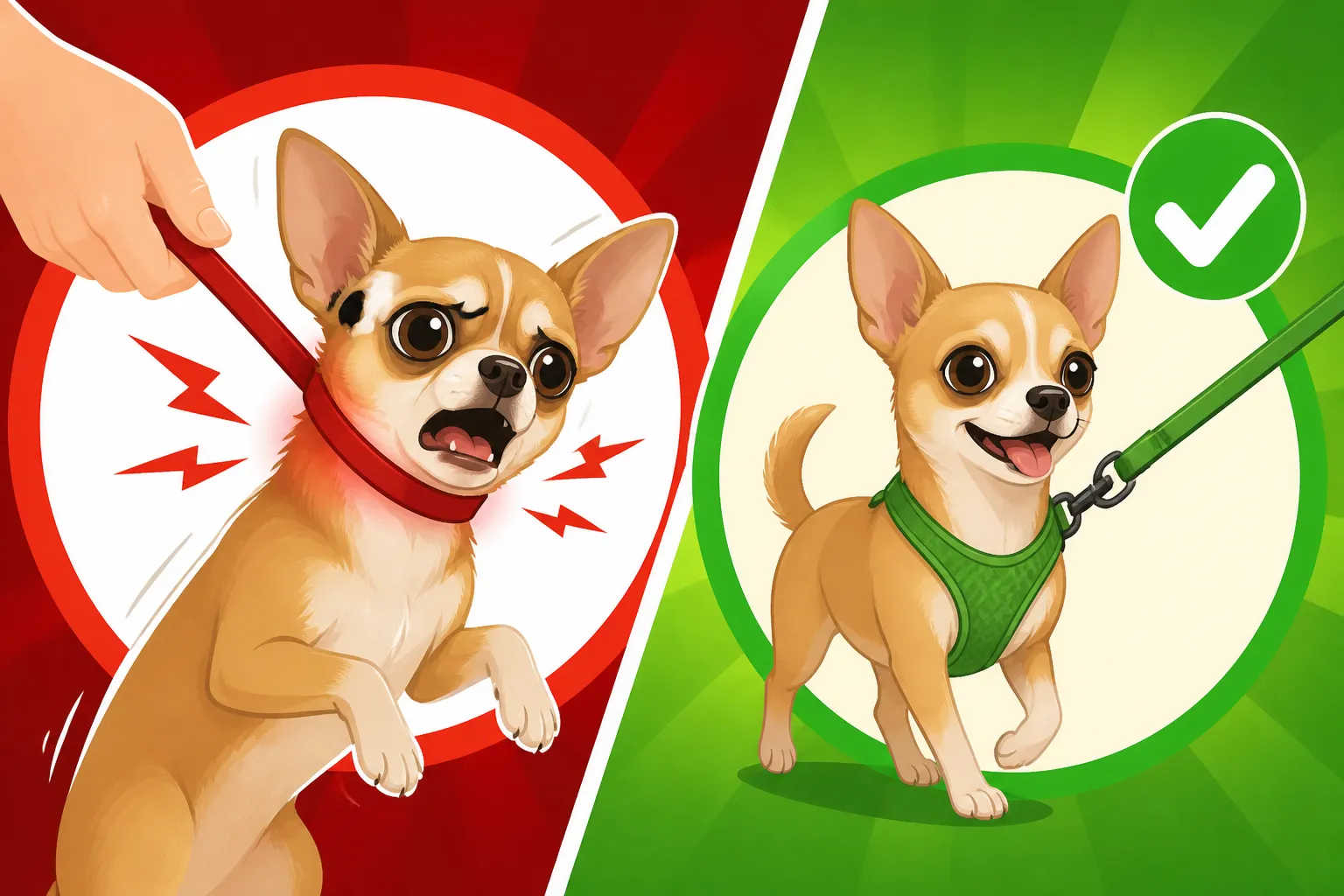
Given the inherent risks of neck collars, the choice for a Chihuahua becomes clear: a harness is not just an alternative, it's a necessity for their safety and comfort. It fundamentally changes how leash pressure is applied, protecting their most vulnerable areas.
Distributing Pressure Safely Across the Body
A properly fitted harness works by distributing any pressure from the leash across your Chihuahua's chest, shoulders, and back, completely bypassing the delicate neck and trachea. This means that if your Chihuahua pulls, lunges, or even gets startled, the force is absorbed by their sturdier skeletal and muscular structures. Think about how a backpack distributes weight across your shoulders versus carrying a heavy bag by a strap around your neck – it's a similar principle of leverage and comfort. This allows your Chihuahua to walk, explore, and react naturally without the constant threat of choking or injury. The freedom of movement and the absence of pain mean a more enjoyable walk for them, and a less stressful experience for you. It allows for natural head movement, sniffing, and interaction without the restrictive pull at their throat. This is particularly crucial for Chihuahuas who are still learning Chihuahua Leash Training on a Harness or those prone to sudden bursts of energy or curiosity.
Choosing the Right Harness for a Tiny Dog
Not all harnesses are created equal, especially when it comes to the unique needs of a tiny breed like a Chihuahua. The fit is paramount. You want a harness that fits snugly but doesn't chafe, with straps that sit away from the armpits to prevent irritation. Look for designs often called "Y-front" or "H-style" harnesses, which have straps that run along the chest bone and around the rib cage, keeping pressure off the throat. Vest-style harnesses, which often cover more of the chest and back, can also be excellent options, providing warmth in colder weather and a wide area for pressure distribution.
When selecting a harness, consider the material – something lightweight and breathable is often best, but also durable. Always measure your Chihuahua carefully according to the manufacturer's guide. Many fantastic online retailers, like Amazon, offer a wide variety of options, from simple mesh vests to more structured, escape-proof designs. It's worth investing in a few different styles from a retailer like Amazon to see what your individual Chihuahua finds most comfortable and secure. Pay attention to the adjustment points; you'll want at least two, preferably three, to get a truly custom fit. A good fit means you should be able to slide two fingers comfortably under any strap, but no more. Resources from training platforms like BAXTER & Bella often include specific advice on choosing and fitting harnesses for small dogs, ensuring you're making the best choice for your particular pup's body shape and activity level.
Transitioning Your Chihuahua to a Harness
If your Chihuahua has only ever worn a neck collar, or if they have had a negative experience with one, introducing a harness needs to be a gentle, positive process. Patience and positive reinforcement are key to making this transition smooth and stress-free for your little one.
Positive Reinforcement and Gentle Introduction
Start by simply letting your Chihuahua sniff and investigate the harness. You can place it on the floor and put a high-value treat on it, or hold it out and reward them for approaching it calmly. The goal is to create a positive association from the start. Once they're comfortable with its presence, gently drape it over their back without fastening it, immediately giving a treat and praise. Do this for just a few seconds at a time. The next step is to buckle it, even if just for a moment, and then immediately remove it, followed by more treats and praise. Build up the time they wear it gradually. Start with short sessions inside the house, allowing them to wear it for a few minutes while playing or eating, always supervised. Never force the harness on them; if they resist, take a break and try again later. Many online training programs, including those offered by BAXTER & Bella, feature step-by-step guides and video tutorials for harness introduction, which can be invaluable. This gentle approach helps prevent any fear or aversion, making the harness a comfortable and normal part of their routine.
Leash Training on a Harness
Once your Chihuahua is comfortable wearing the harness, you can introduce the leash. Again, start indoors. Attach the leash and let them drag it around for a few minutes (under supervision, of course, to prevent it from getting snagged). Then, pick up the leash and practice very short walks within the house, rewarding them for walking alongside you without pulling. The harness itself isn't a magical solution for pulling; it's a safety device. You'll still want to work on Chihuahua Leash Training on a Harness techniques, such as rewarding loose-leash walking and redirecting attention, but now you can do so without risking their delicate neck. Remember, the goal is always a relaxed, enjoyable walk where your Chihuahua feels secure and you feel confident in their safety. If your Chihuahua has previously shown reactivity or nervousness on walks, the new comfort of a harness might even reduce some of those stress-induced behaviors, creating a calmer experience for everyone involved.
Here's a quick comparison to help you visualize the differences:
| Feature | Neck Collar | Harness (Properly Fitted) |
|---|---|---|
| Pressure Distribution | Concentrated on the neck, trachea, and spine | Distributed across chest, shoulders, and back |
| Risk of Tracheal Injury | High (especially for Chihuahuas) | Very Low |
| Risk of Spinal Injury | Moderate to High (due to sudden tugs) | Very Low |
| Choking/Gagging | Common, especially with pulling | Rare, even with pulling |
| Comfort for Dog | Can be uncomfortable, restrictive, potentially painful | Generally comfortable, allows natural movement |
| Security/Escape Risk | High if not fitted extremely tight | Lower if properly fitted, harder to slip out of |
| Leash Training Aid | Can exacerbate pulling due to discomfort | Does not inherently stop pulling, but allows safe training |
Choosing a harness for your Chihuahua is one of the simplest yet most impactful decisions you can make for their long-term health and happiness. It’s an investment in their well-being that will pay dividends in comfortable walks and peace of mind for you. Make the switch today, and enjoy countless safe adventures with your tiny companion.
Disclaimer
This article is for general informational purposes only and does not constitute professional advice. Laws, prices and regulations vary by location and change over time. Consult a qualified professional for guidance on your specific situation.