Chihuahua Recall in a Fenced Yard
It's incredibly frustrating when you open the back door, ready for your little Chihuahua to zip out into the fenced yard for a quick potty break or some zoomies, and instead, they just give you a blank stare, wander off to sniff an invisible blade of grass, or worse, act like they suddenly can't hear you when it's time to come back in. Many owners assume a fenced yard means recall isn't a big deal, but it's crucial for safety and control. This guide will walk you through building a reliable recall for your Chihuahua, even in the "safe" confines of your own yard.
Why a Fenced Yard Doesn't Guarantee Recall
You might think, "My Chihuahua can't escape, so why does a rock-solid recall matter in the backyard?" This is a common and understandable misconception, but it overlooks several key realities. Even within a seemingly secure perimeter, your Chihuahua can encounter distractions, potential dangers, or simply develop habits that make them less responsive when you really need them to be.
The Illusion of Safety in a Fenced Space
A fence is a physical barrier, but it's not a magical force field against all outdoor stimuli. Think about it: your neighbor's dog might bark incessantly, a squirrel could scamper up a tree, or the mail carrier might walk by on the other side. For a tiny Chihuahua, whose world is already full of much larger things and often perceived threats, these can be huge, overwhelming distractions. They might become so engrossed in barking at the fence line or frantically digging at a gopher hole that your voice becomes background noise.
Moreover, a fence doesn't protect against everything. A hawk or owl could swoop low, or a determined predator could find a way in. A loose dog from a few streets over might dig under or jump over a weaker section. If your Chihuahua isn't trained to respond instantly to your call, even in an emergency, those precious seconds lost while you try to coax them in could lead to a dangerous situation. It's about preparedness, not just containment. Relying solely on the fence means you're missing a vital layer of communication and safety with your dog.
The Risk of Unintended Habits and Ignored Cues
Without consistent recall training, even in your yard, you risk inadvertently teaching your Chihuahua that your voice isn't that important when they're having fun or are highly engaged. If you frequently call them, and they ignore you, but eventually you just go out and grab them, you're reinforcing the idea that they don't really have to come. They learn that "come" is optional until you physically intervene. This habit can quickly spill over into other situations.
Imagine a situation where your dog slips out the front door accidentally. If they've learned that your "come" command in the backyard is more of a suggestion than an absolute, how likely are they to heed it when they're enjoying the thrill of an unexpected escape onto the sidewalk? This is why the principles of Training a Chihuahua Exactly Like a Big Dog are so important; every command, including recall, needs to carry weight, regardless of the environment. A small dog still needs serious training to be a well-behaved and safe companion.
Building a Rock-Solid Recall Foundation
Before you even step foot in the yard, a successful recall begins indoors, in a low-distraction environment. This is where your Chihuahua learns the meaning of the recall cue and builds a positive association with coming to you. It's not just about them hearing the word; it's about them understanding that responding means something really good is about to happen.
Start Indoors with High-Value Rewards
The very first step is to teach your Chihuahua that "come" (or whatever word you choose) means "run to me for something amazing!" Begin in a quiet room with no distractions. Get down to your Chihuahua's level, show them a super high-value treat – something they absolutely go crazy for, like tiny pieces of cooked chicken, cheese, or even a dollop of peanut butter on your finger. Say their name, then your recall cue (e.g., "Fifi, come!"), and as soon as they take a single step towards you, mark the behavior with a verbal "yes!" or a clicker, and give them the treat.
Repeat this many times, making it a fun, exciting game. Don't chase them; always encourage them to come to you. Vary your location slightly within the room, moving a few steps away. The goal here is to create an incredibly strong positive emotional response to your recall cue. It should feel like winning the lottery every single time. Consistency is key. Every time you say the cue, they should be rewarded for even the slightest movement towards you, until they are confidently running to you. For ideas on appropriate rewards, consider Treats Small Enough for Chihuahua Training.
Gradually Introduce Distractions and Distance
Once your Chihuahua is reliably coming to you in a quiet room, it's time to slowly increase the difficulty. This is where many owners go wrong; they jump from the living room to a bustling dog park. Instead, think of it like climbing a ladder, one rung at a time.
- New rooms: Practice in different rooms of the house. The kitchen, the bedroom, the hallway – each offers slightly different sounds and smells.
- Mild distractions: Introduce very mild distractions. Have another family member walk slowly across the room, or have a quiet toy lying nearby (not actively played with).
- Short distances: Start calling them from a few feet away, then gradually increase the distance across the room.
- Long leash indoors: If you have a long leash (10-15 feet), practice indoors to simulate more distance while still having control. Call them, and if they hesitate, gently reel them in while still using your positive reinforcement.
The key is to set your Chihuahua up for success. If they fail to come, you've moved too fast. Go back to a simpler step where they consistently succeed. Always end on a positive note, making sure their last recall of the session is a successful one, followed by a huge reward. The Commands Every Chihuahua Should Know emphasizes this step-by-step approach to build lasting understanding.
Mastering Recall in the Fenced Yard
Now that your Chihuahua understands and loves the recall game indoors, it's time to transfer those skills to the fenced yard. This transition needs to be managed carefully, as the yard presents a whole new world of exciting smells, sounds, and sights.
Start with a Long Line and Controlled Exposure
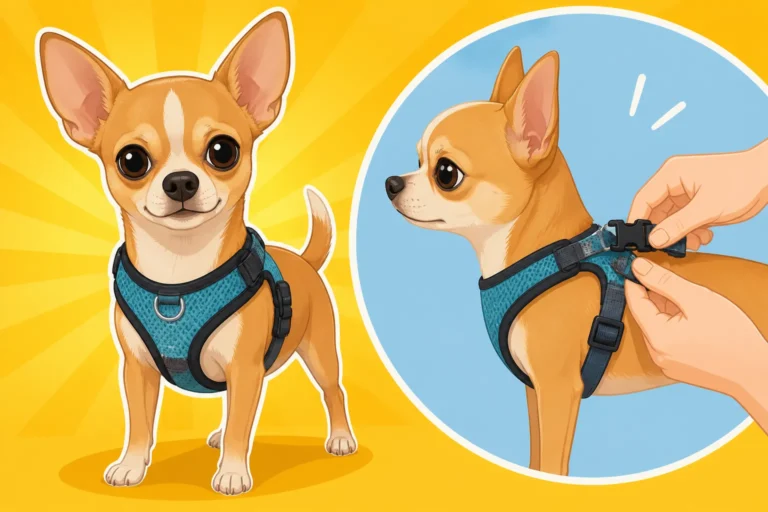
Even though your yard is fenced, you want to maintain control during these initial training sessions. Clip a lightweight, long line (15-30 feet) to your Chihuahua's harness. This isn't for punishment, but as a safety net and a gentle guide. It ensures that if they get too distracted, you can still help them succeed by gently reeling them in as you give your recall cue. Harnesses are always preferred over collars for Chihuahuas, especially given potential tracheal issues, and fitting is crucial; check out Harness Fitting on a Chihuahua Chest.
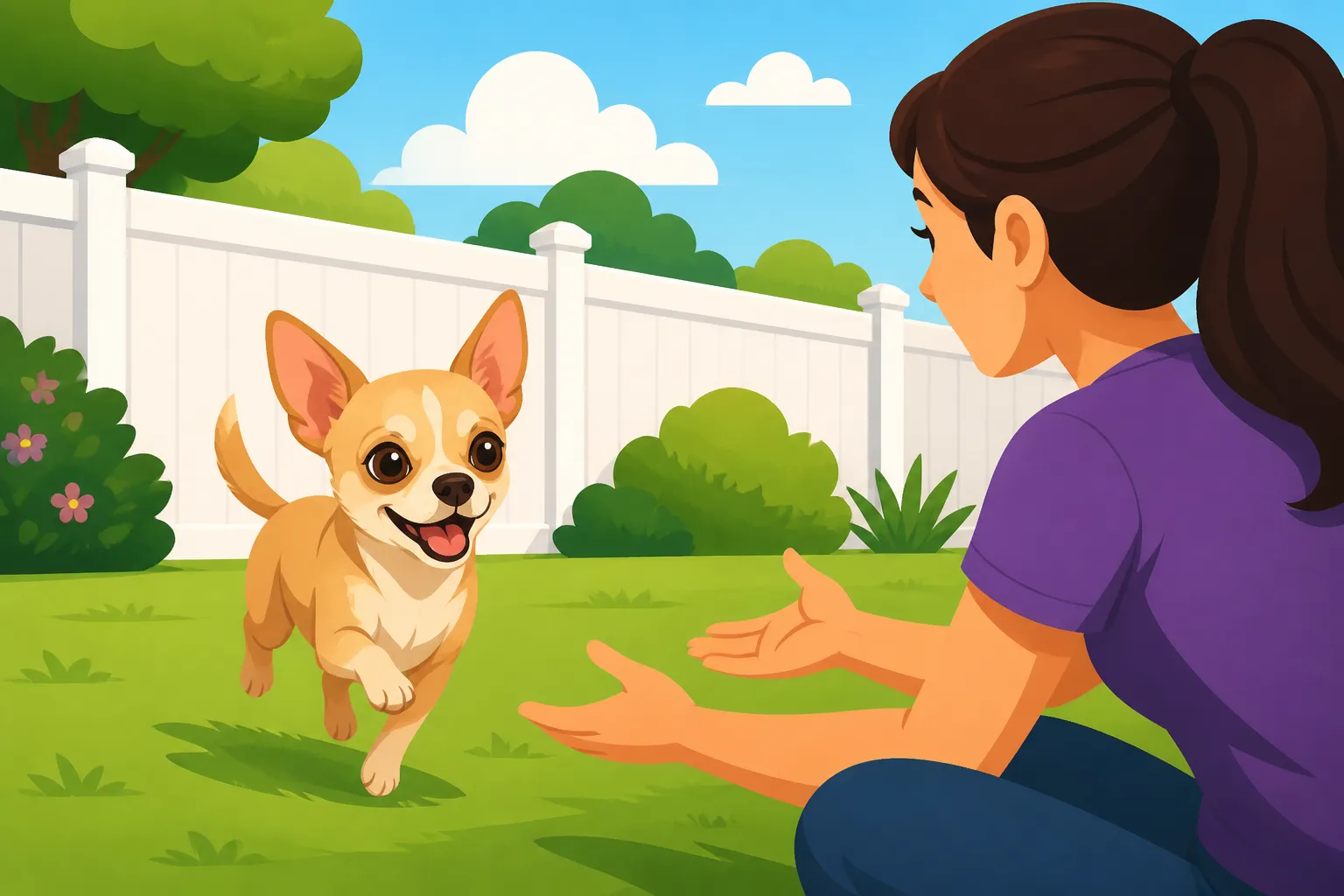
For the first few sessions, go into the yard with your Chihuahua on the long line when distractions are minimal – perhaps early morning or late evening. Let them sniff around for a minute or two, then get down low, enthusiastically call them using their name and cue. As they come, mark the behavior and reward heavily. If they hesitate, gently guide them with the long line while repeating your cue in a happy tone. Don't drag them; just provide a little nudge to remind them. Remember, the goal is always to make coming to you a joyful event.
Utilize Play and Varying Rewards
Chihuahuas love to play! Incorporate recall into their yard playtime. If they're chasing a toy or doing "zoomies," interrupt the fun with a recall cue, reward them, and then immediately release them to continue playing. This teaches them that coming to you doesn't mean the end of all fun; sometimes, it means more fun!
Varying your rewards can also keep things interesting. Don't just stick to food. Sometimes, the reward can be a favorite squeaky toy, a quick game of tug, or enthusiastic praise and petting. Use a "reward hierarchy" – save the absolute highest-value treats for when you need a perfectly instant recall, especially when distractions are high. This keeps them guessing and excited about what they might get. Many trainers, like those at BAXTER & Bella, emphasize building engagement through varied reinforcement.
Here’s a quick overview of how to escalate yard recall training:
| Stage | Environment/Distraction Level | Equipment | Key Action | Reward Strategy |
|---|---|---|---|---|
| Foundation | Quiet Indoor | None | Call, Mark, Treat | High-value treats (consistent) |
| Mild Distraction | Indoor (slight activity) | None | Call from distance, Mark, Treat | High-value treats (consistent) |
| Yard Intro (Phase 1) | Yard, Low Distractions | Long line, Harness | Call, gently guide if needed, Mark, Treat | High-value treats, praise |
| Yard Intro (Phase 2) | Yard, Moderate Distractions | Long line, Harness | Call, incorporate into play, Mark, Treat | Varied: treats, toys, praise |
| Off-Line Practice | Yard, Low Distractions | Harness (no line) | Call, reward for quick response | High-value treats, jackpot |
| Real-World Yard | Yard, Normal Activity | Harness (no line) | Random calls during play/sniffing | Varied, sometimes releasing to play |
Handling Distractions and Setbacks
Distractions in the yard will inevitably be tougher than indoors. The moment you notice your Chihuahua getting highly engaged with something – a smell, a sound, a leaf blowing – is often the best time to issue your recall cue. If you wait until they are completely absorbed, your voice won't even register.
If your Chihuahua ignores you, resist the urge to get frustrated or shout. Never punish them for not coming, as this will only teach them to associate coming to you with negative feelings. This aligns with advice on Why Harsh Handling Damages a Chihuahua Fast. Instead, calmly walk over, gently take their harness, and lead them back to where you originally called them from. Then, immediately re-engage them with a quick, easy recall command from a very short distance, reward heavily for success, and then go back to what you were doing. This "reset" helps them understand what you wanted without making it a negative experience.
If your yard has specific high-distraction areas (e.g., a fence line where another dog barks), practice recall near these spots gradually. Start far away, and as your Chihuahua becomes more reliable, move closer. Always carry irresistible treats on you when you're in the yard, ready for those "jackpot" moments when they choose you over a fascinating smell. Building a Chihuahua's Confidence Outdoors also helps them feel more secure and less reactive to distractions, which can improve recall.
Advanced Yard Recall and Safety Considerations
Once your Chihuahua is consistently coming when called in the yard, it's time to refine that skill and layer in essential safety protocols. A good recall isn't just about coming; it's about coming reliably and swiftly even when there's an emergency.
Emergency Recall: A Non-Negotiable Skill
Beyond your everyday "come" command, it's vital to teach an "emergency recall." This is a different cue (a distinct word like "NOW" or "CRITICAL") that you use only in true emergencies. It should be associated with an immediate, massive reward – not just a single treat, but a whole handful of their favorite goodies, a special toy they only get for this command, or a minute of intense, joyful play.
Practice this emergency recall rarely, but consistently, in controlled settings. You don't want to dilute its power by using it every day. The idea is that if you ever need it – perhaps if you spot Hawks, Coyotes and the Off Leash Chihuahua near your yard, or if a gate accidentally swings open – your Chihuahua will drop everything and rocket to you because the stakes are incredibly high, and the reward is even higher. It's an insurance policy for your dog's safety.
| Recall Type | Cue Example | Frequency | Reward Type | Purpose |
|---|---|---|---|---|
| Standard Recall | "Fifi, Come!" | Daily, Multiple times | High-value treats, praise, toy | General responsiveness, daily interactions |
| Emergency Recall | "Fifi, NOW!" | Rarely, deliberate practice | Jackpot (multiple treats, special toy, intense praise) | Life-saving, immediate response in critical situations |
Addressing Yard-Specific Challenges
Even in a fenced yard, specific challenges can crop up. Some Chihuahuas might become obsessed with digging, barking at fence lines, or simply lounging in the sun and ignoring your calls.
- Digging: If your Chihuahua loves to dig, a strong recall can help interrupt this behavior. Call them away, reward them, and then redirect them to a more appropriate activity. Sometimes, creating a designated "digging pit" (a sandpit they are allowed to dig in) can help.
- Fence Barking: This is a common issue. Again, recall can interrupt the behavior. Call them away from the fence, reward them for moving away, and if needed, use a long line to gently guide them to a calmer spot. For persistent barkers, you may need to manage their view of the triggers or work on counter-conditioning.
- Sunbathing/Laziness: Sometimes, Chihuahuas are just enjoying their moment. Make your recall cue exciting! Crouch down, clap your hands, use an enthusiastic, high-pitched voice. Don't sound angry or bored. Think of it as inviting them to the best party ever. If they're a particularly sun-loving Chihuahua, you might need to schedule their yard time around cooler parts of the day, especially if they are getting on in years, as discussed in Senior Chihuahua Care Past the Age of Twelve.
Remember that a fenced yard does not mean your Chihuahua doesn't need to be trained on recall. On the contrary, it's a perfect, relatively safe environment to truly solidify this vital skill. It's about empowering your Chihuahua to make the right choice to come to you, even when there are fascinating smells or exciting squirrels to pursue. The long-term safety and bond you build through this consistent training are invaluable.
Disclaimer
This article is for general informational purposes only and does not constitute professional advice. Laws, prices and regulations vary by location and change over time. Consult a qualified professional for guidance on your specific situation.