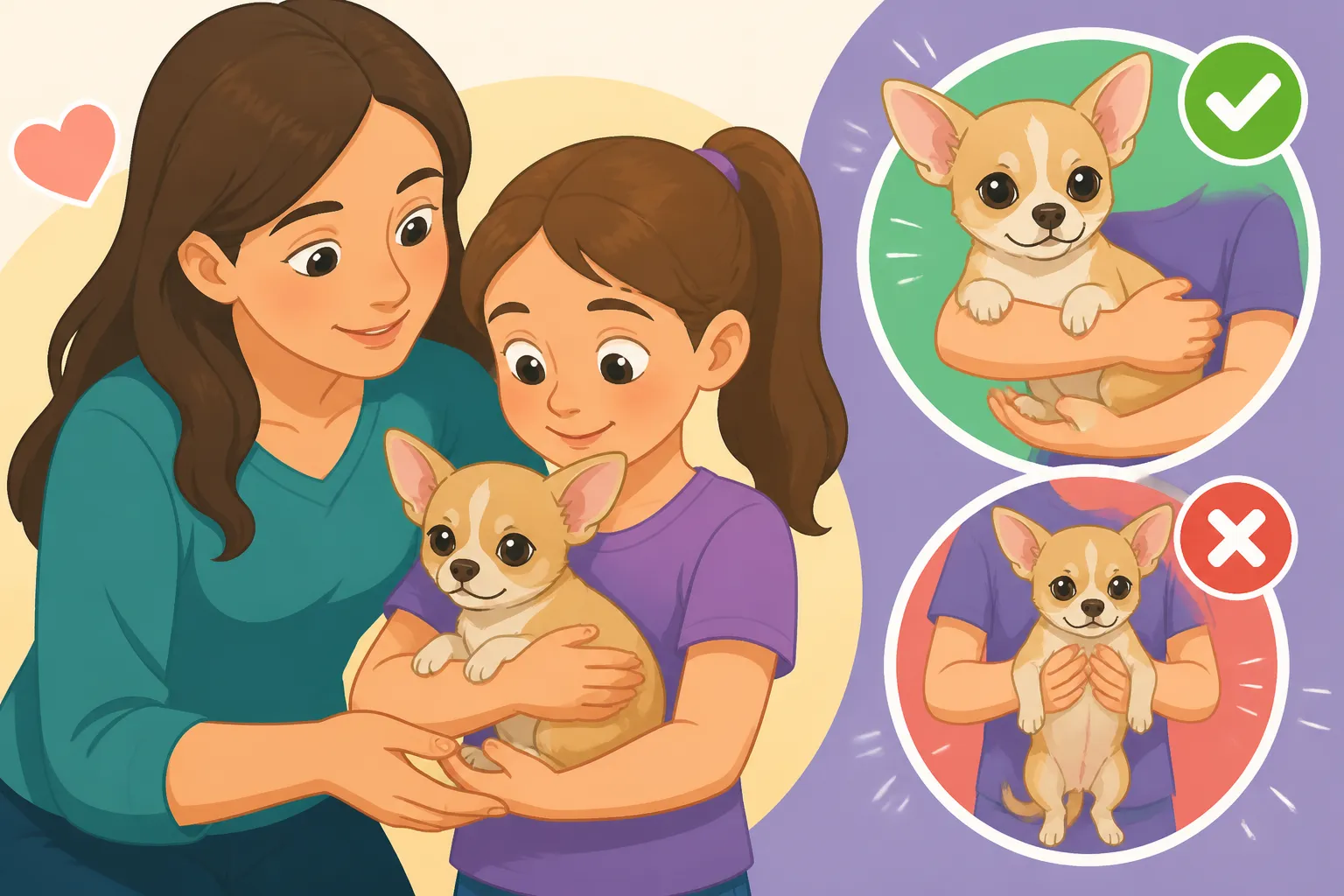
Showing a Child How to Hold a Chihuahua
It can be incredibly nerve-wracking to watch your child interact with your beloved Chihuahua. You adore both of them, but you know just how delicate your little dog can be, and you also know children, especially young ones, don't always grasp the concept of "gentle." This guide will walk you through the crucial steps of teaching children how to safely and respectfully hold a Chihuahua, ensuring everyone stays happy and healthy.
Why Chihuahuas Require Extra-Gentle Handling
Let's be honest, Chihuahuas aren't built like a sturdy Labrador. Their tiny frames, often weighing less than a newborn baby, mean they are inherently more vulnerable to accidental injury. Understanding this fundamental difference is the first step in teaching any child how to approach them.
The Chihuahua's Delicate Build and Vulnerabilities
Think about it: a full-grown Chihuahua can weigh as little as three pounds. That's a lot less than a cat! Their bones are small and fine, making them susceptible to fractures if they're dropped, squeezed too hard, or even land awkwardly after a short fall. Many Chihuahuas, particularly the classic apple-head variety, are also born with a molera, which is a soft spot on their skull similar to a baby's fontanelle. While it often closes with age, some Chihuahuas carry this vulnerability throughout their lives. Imagining a child accidentally pressing on this area can send shivers down any Chihuahua owner's spine. Their eyes, often large and somewhat prominent, are also easily scratched or injured.
It's not about being overly dramatic; it's about acknowledging their physical reality. A clumsy hug or an unexpected jostle that wouldn't faze a Golden Retriever could be quite serious for a Chihuahua. Explaining this delicate nature to a child in simple terms – "our little dog is like a tiny, fragile bird, we have to be super careful" – can help them grasp the importance of gentle hands. Remember that these little guys live a long time, often well into their teens, and protecting them from injury early on helps set the stage for a healthy Chihuahua Lifespan and Why the Breed Reaches Sixteen.
Chihuahua Temperament and Fear Responses
Beyond their physical fragility, Chihuahuas possess a unique personality that can sometimes be misunderstood. They are often incredibly loyal and bond deeply with their family, but they can also be prone to fear-based reactivity. Because they are so small and often feel overshadowed by the world around them – literally and figuratively – they can easily become overwhelmed or frightened by sudden movements, loud noises, or unfamiliar hands.
When a Chihuahua feels threatened or scared, their primary defense mechanism is often to make themselves seem bigger and louder. This can manifest as barking, growling, or even snapping. It's not aggression for aggression's sake; it's usually a desperate attempt to create space and protect themselves from what they perceive as a threat. A child, reaching in quickly or grabbing without warning, can easily trigger this fear response. It's a sad reality that many Chihuahua Fear Reactivity, the Breed's Real Problem cases stem from feeling unsafe or not having their personal space respected. We want to avoid a situation where a child approaches too quickly, and the Chihuahua, feeling trapped, resorts to snapping. Knowing A Chihuahua That Freezes Before It Bites is a crucial sign to watch for.
Why Carrying Can Backfire for a Chihuahua
It's incredibly tempting to scoop up your Chihuahua and carry them everywhere. After all, they fit perfectly in a handbag or snuggled in your arms! And let's be honest, many of us do it. However, constant carrying, especially when they are young, can inadvertently contribute to behavioral issues. If a Chihuahua rarely touches the ground, they miss out on crucial experiences that build confidence and help them understand the world. They might become overly dependent on being held, fearful of walking on a leash, or even anxious when placed on the ground.
Moreover, if they are always being carried, they never learn how to navigate social interactions on their own terms. When a child always picks them up, the dog loses the ability to choose to approach or retreat. This lack of agency can increase fear and reactivity. We want our Chihuahuas to feel secure both on and off the ground, and that means respecting their boundaries and teaching them to be comfortable with gentle handling, rather than constant scooping. This is why Chihuahua Handling and Why Carrying Backfires is such an important topic. True respect for a Chihuahua involves Chihuahua Handling and Consent, letting them have a say in interactions whenever possible.
Teaching Children the Golden Rules of Chihuahua Interaction
The best way to foster a safe and loving relationship between your child and your Chihuahua is to establish clear rules and expectations from the very beginning. This isn't just about protecting the dog; it's also about teaching your child valuable lessons in empathy, respect, and responsible pet ownership.
The "Four Paws on the Floor" Rule
For young children, especially toddlers, the safest initial rule is "four paws on the floor." This means that unless an adult explicitly gives permission and is actively supervising, the Chihuahua stays on the ground, and the child interacts with them there. This simple rule minimizes the risk of dropping the dog, squeezing too hard, or any other accidental injury that can occur when a small child tries to hold an even smaller dog.
Instead of lifting, teach children to gently pet the Chihuahua while the dog is standing or lying down. Guide their hand to appropriate petting spots, like the chest or shoulders, away from the top of the head (which can be startling) or the tail (which can be pulled). You can show them how to offer a flat hand for the Chihuahua to sniff before petting. This empowers the child to interact while keeping the dog physically safe and grounded.
Approaching a Chihuahua with Respect
Just like people, Chihuahuas appreciate being approached respectfully. Teach your child not to rush up to the dog, especially if the Chihuahua is sleeping, eating, or relaxing in their bed. Instead, encourage a slow, calm approach. A great technique is to have the child sit down on the floor a little distance away and let the Chihuahua come to them. This gives the dog a choice and builds trust.
When the Chihuahua does approach, teach your child to offer a closed hand for the dog to sniff, then gently pet on the side of the neck or chest. Avoid sudden movements, loud noises, or reaching over the dog's head. Imagine how you'd feel if a giant hand suddenly swooped down on you! This respectful interaction helps the Chihuahua feel safe and in control, making them much more likely to enjoy the interaction. You want to cultivate a scenario where the Chihuahua feels comfortable enough to initiate contact, which is essentially Letting a Chihuahua Choose to Approach.
Reading Chihuahua Body Language
This is perhaps one of the most vital lessons for both children and adults. Chihuahuas are constantly communicating, but their signals are subtle and often missed. Teaching your child to recognize these signs can prevent countless uncomfortable or potentially dangerous situations. Look for:
- Lip licking or yawning: These often indicate stress or discomfort, not necessarily hunger or tiredness.
- Turning away or trying to move away: The Chihuahua is saying, "Please give me space."
- Tucked tail or flattened ears: Clear signs of fear or anxiety.
- "Whale eye": When you can see the whites of the Chihuahua's eyes, it often means they are stressed or feeling threatened. Reading a Chihuahua's Whale Eye is a classic signal.
- Stiff body or frozen posture: This is a warning sign that the dog is uncomfortable and might be about to react.
If a child sees any of these signs, the rule should be to immediately stop what they're doing, move away, and tell an adult. It's about respecting the Chihuahua's boundaries and teaching your child that "no" doesn't just come from people.
Here's a quick guide for children on how to interact:
| Good Interactions | Bad Interactions |
|---|---|
| Sit on the floor calmly. | Run or rush up to the dog. |
| Let the Chihuahua come to you. | Chase the Chihuahua. |
| Offer a gentle hand to sniff. | Grab or poke the Chihuahua. |
| Pet gently on the chest or side. | Pet on the head, tail, or tummy without permission. |
| Use a calm, quiet voice. | Shout or make loud noises. |
| Stop petting if the Chihuahua moves away. | Follow or corner the Chihuahua. |
| Tell an adult if the Chihuahua looks uncomfortable. | Ignore warning signs like lip-licking or turning away. |
The Step-by-Step Guide to Safely Lifting and Holding a Chihuahua
Once a child understands the "four paws on the floor" rule and can read a Chihuahua's body language, they might be ready to learn how to properly pick them up. This should always be done under strict adult supervision and only when the Chihuahua is calm and willing.
Establishing Trust and Consent First
Before even thinking about lifting, ensure the Chihuahua actually wants to be held. If your dog is consistently fearful or tries to hide when a child approaches, you need to work on building positive associations first. This might involve having the child gently toss treats from a distance, or sit quietly while the Chihuahua is given a special chew toy. Positive reinforcement is key here; make every interaction a good one.
Consider involving the child in positive reinforcement training, like basic "sit" and "stay" commands, using tiny, high-value treats. This helps the Chihuahua see the child as a source of good things, not just potential grabby hands. Companies like BAXTER & Bella offer excellent online puppy training programs that emphasize positive methods, which can be adapted for older dogs and involve children in a structured, safe way.
The Proper Lifting Technique
This is where adult guidance is absolutely critical. Show your child, step-by-step, how to use two hands to lift a Chihuahua, supporting both the chest and the hindquarters.
- Approach Calmly: Have the child approach the Chihuahua slowly, speaking in a soft, reassuring voice.
- Offer a Hand: Child extends a hand for the Chihuahua to sniff, confirming the dog is comfortable with the interaction.
- One Hand Under Chest: Child slides one hand under the Chihuahua's chest, right behind the front legs.
- Second Hand Under Hindquarters: Child slides the second hand under the Chihuahua's rear end, supporting their bottom and hind legs.
- Lift Smoothly and Close to Body: In one smooth motion, the child lifts the Chihuahua, keeping them close to their own body. This prevents dangling and makes the dog feel secure. Emphasize that the Chihuahua should feel like they are sitting in a "basket" made by their hands.
Never allow a child to scoop a Chihuahua from under their armpits, grab them by the torso, or lift them with only one hand. The goal is to make the lift feel stable and secure for the dog.
Holding a Chihuahua Securely
Once lifted, the way a Chihuahua is held is just as important as the lift itself. The cardinal rule is always support their entire body.
- Sitting is Best: For younger children, insist that they sit on the floor before attempting to hold the Chihuahua. This reduces the risk of dropping the dog from a standing height. They can sit cross-legged and gently place the Chihuahua in their lap.
- Full Body Support: The Chihuahua should be cradled, with their back and hindquarters supported against the child's body or arm, and the other arm supporting their chest. Imagine holding a football or a delicate vase – you wouldn't let it dangle! Their legs should never be hanging freely.
- Keep it Close: The closer the Chihuahua is held to the child's body, the more secure they will feel.
- Short Sessions: Keep holding sessions brief, especially at first. A minute or two is plenty. If the Chihuahua shows any signs of discomfort (struggling, lip-licking, trying to jump down), it's time to gently put them back on the floor.
Reinforce that the Chihuahua is not a doll or a toy that can be squeezed or dressed up. They are living, breathing creatures with feelings.
When and How to Put a Chihuahua Down
Putting a Chihuahua down safely is just as important as picking them up. A bad landing can cause injury.
- Lower Gently: The child should lower the Chihuahua slowly, using both hands, until all four paws are firmly on the ground.
- Feet First: Emphasize that the Chihuahua's feet should always touch the ground first. Never drop them, even from a short height.
- Safe Surface: Always put the Chihuahua down on a stable, flat surface where they won't immediately slip or fall. If the child is sitting on the sofa, they should get down to the floor to put the dog down, or an adult can assist.
- Praise: Praise both the child and the Chihuahua for a successful interaction.
Teaching a child how to use ramps or steps for furniture can also be helpful, especially if your Chihuahua is frequently on and off the sofa. You can find many options on Amazon that are sized perfectly for a Chihuahua and can encourage independent movement rather than constant lifting.
Common Pitfalls and How to Avoid Them
Even with the best intentions, things can go wrong. Being proactive and understanding common mistakes can prevent a lot of stress and potential injury.
Avoiding "Roughhousing" and Over-Excitement
Chihuahuas are not built for rough play. Tug-of-war games that involve vigorous shaking, wrestling, or intense chasing can be dangerous for their tiny bodies. Their delicate necks and backs are particularly vulnerable. Instead, guide children towards calmer games like gentle fetch with soft toys, puzzle toys, or hide-and-seek.
Teach children that getting a Chihuahua overly excited can lead to accidental nips or scratches, not out of malice, but simply due to over-stimulation. A calm, respectful interaction is always the goal. If a child becomes too boisterous, immediately redirect their energy away from the dog. This helps to prevent Why Harsh Handling Damages a Chihuahua Fast by fostering a gentle approach.
Supervising All Interactions
This cannot be stressed enough: never leave a young child unsupervised with a Chihuahua. Even the most well-behaved child and the most patient dog can have an accident. Children, by nature, are impulsive and can forget rules in the heat of the moment. Chihuahuas, when startled or hurt, can react defensively. An adult should always be present, actively watching, and ready to intervene if needed.
Think of yourself as a referee, ensuring fair play and safety for both parties. Your presence alone can prevent many mishaps. If you can't actively supervise, it's best to separate the child and the dog, perhaps by putting the Chihuahua in a secure playpen or crate in another room. Chihuahuas Around Toddlers and Rough Hands often need constant monitoring, as do situations where Why a Chihuahua Is Risky Around Small Children comes into play.
Consistency and Positive Reinforcement
Consistency is key when teaching children new rules, especially about pets. Everyone in the household, including other adults, needs to enforce the same rules every single time. If one parent allows rough play while another strictly forbids it, the child will become confused, and the Chihuahua will also struggle to understand expectations.
Praise your child profusely when they interact gently and correctly with the Chihuahua. "Great job being so soft with Fifi!" or "I love how you let Peanut sniff your hand first!" Positive reinforcement works wonders for both humans and dogs. You can even create a reward chart for your child, giving them a sticker for every gentle interaction. If you're struggling to teach your child (or your Chihuahua!), don't hesitate to seek professional help. A good dog trainer, especially one experienced with toy breeds, can provide personalized guidance and ensure everyone is on the same page. Sometimes, attending a Chihuahua Puppy Class and Trainer Fees can even benefit older dogs and their human siblings. Being proactive and consistent will prevent many of The First Year Mistakes Chihuahua Owners Make.
Disclaimer
This article is for general informational purposes only and does not constitute professional advice. Laws, prices and regulations vary by location and change over time. Consult a qualified professional for guidance on your specific situation.