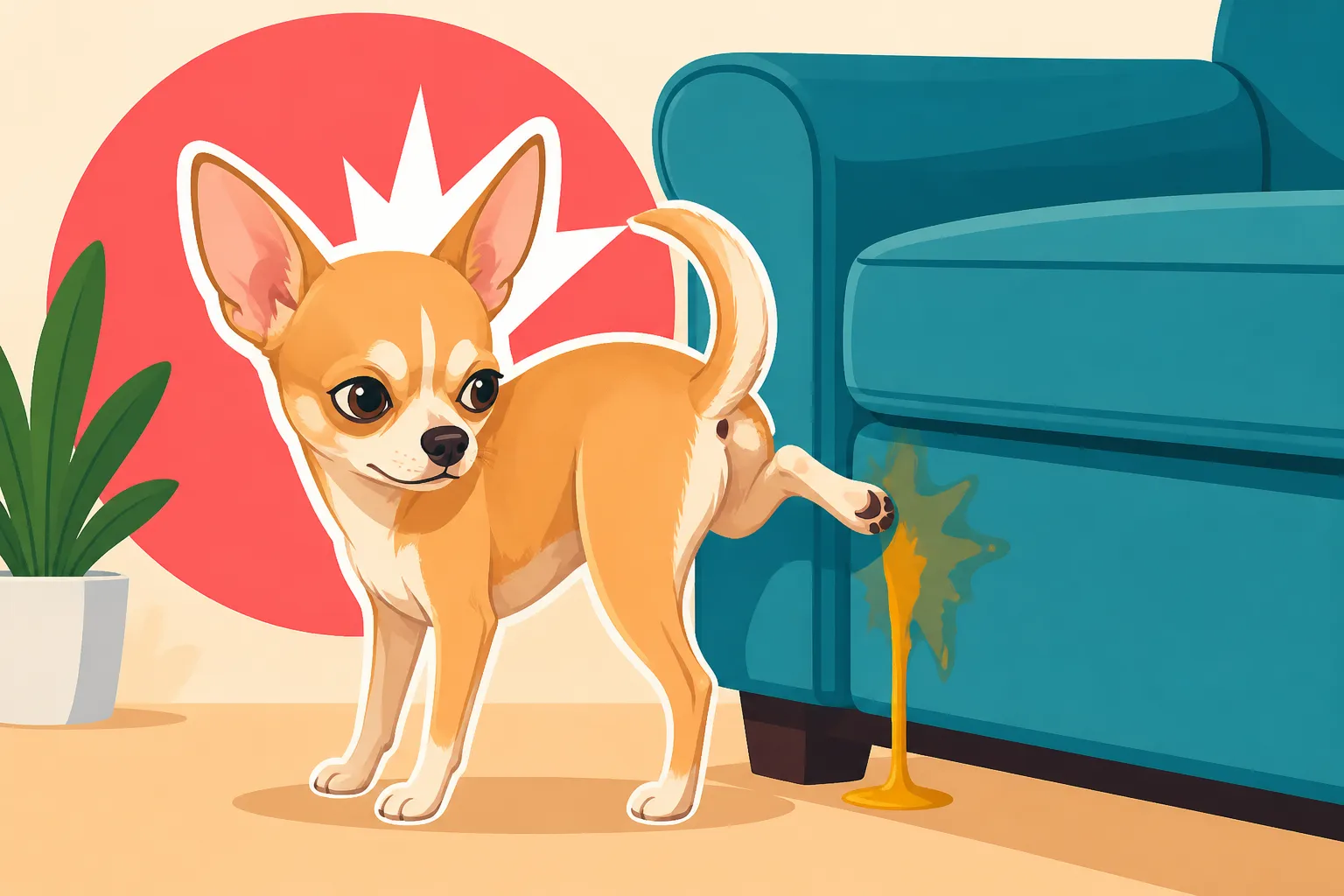
A Chihuahua Marking on Furniture
It's incredibly frustrating, isn't it? You walk into a room, catch that tell-tale whiff, and there it is – a tiny damp spot, or worse, a stained chair leg, courtesy of your otherwise adorable Chihuahua. You might be at your wit's end wondering why your tiny companion insists on marking your beloved furniture, despite seeming to know better. This guide will dive deep into the world of Chihuahua marking behavior, helping you understand the 'why' behind it and giving you actionable steps to reclaim your home from those unwelcome surprises.
Understanding Why Chihuahuas Mark Furniture
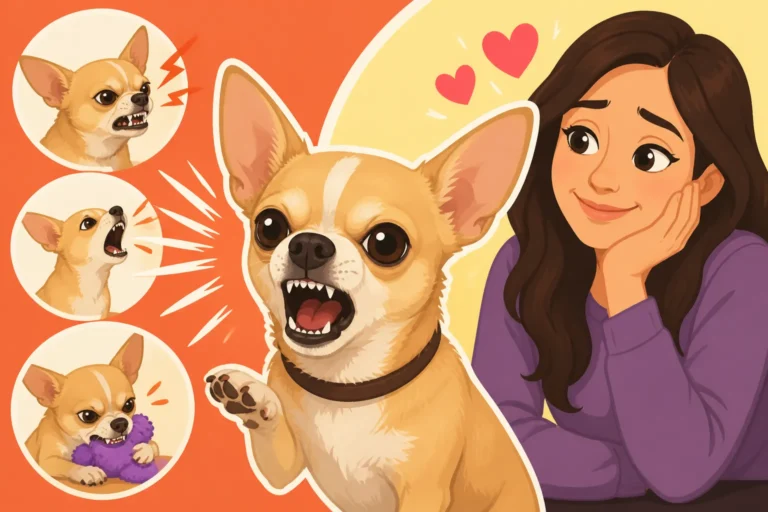
When a Chihuahua marks, it's not usually about spite or simply forgetting their house training. Instead, it's often a complex mix of instinct, communication, and sometimes, underlying stress or health issues. It's their way of leaving a message in a very small, potent package.
The Instinctual Drive to Mark Territory
At its core, marking is a territorial behavior. Dogs, including our pint-sized Chihuahuas, use urine and sometimes feces to communicate their presence and claim ownership of a space or object. Think of it as their version of a "graffiti tag" – "Chihuahua was here!"
- Hormonal Influence: This behavior is particularly common in intact male Chihuahuas, whose hormones drive a strong urge to assert their masculinity and broadcast their availability to potential mates. While neutering can significantly reduce, or even eliminate, this hormonal drive, it's not a magic bullet. If marking behavior is deeply ingrained, it might persist even after the surgery. However, studies show a marked decrease in marking post-neuter for many dogs. Females, especially intact ones, can also mark, particularly when they are in heat or when there are other dogs in the household creating a sense of competition or territoriality.
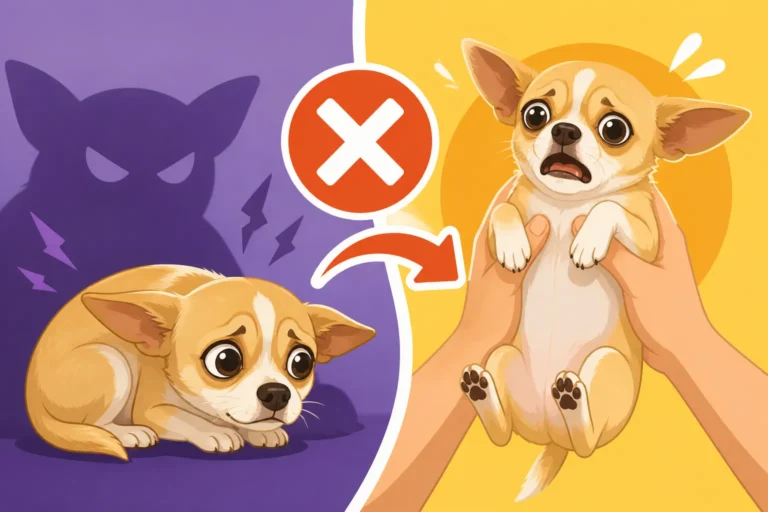
- Feeling Small in a Big World: Imagine being a Chihuahua, navigating a world built for giants. Everything around them is huge, and they can feel incredibly vulnerable. Marking, even on something as imposing as a sofa, can be a way for them to say, "I'm here, I matter, this is my space too!" It's an attempt to gain control and assert themselves in an environment where they often feel outsized. They might mark new items brought into the house, or even items that carry the scent of another animal or human guest.
- Social Status and Anxiety: Marking can also be a display of social status, especially in multi-dog households. A Chihuahua might mark to reinforce their position within the pack, or simply to cope with anxiety caused by other dogs. This isn't just about aggression; it can stem from feeling insecure or threatened. A Chihuahua might be trying to boost their confidence by spraying their scent on something important in their perceived territory.
Triggers for Marking Behavior
Chihuahuas are sensitive little souls, and many things can trigger their marking instinct. It's rarely random; there's usually a reason, even if it's not immediately obvious to us.
- New Scents and Visitors: Introducing a new piece of furniture, a guest's purse, or even a friend's shoes can be like waving a red flag to a Chihuahua. These unfamiliar scents carry messages from the outside world, and your Chihuahua might feel compelled to "cover" them with their own scent to re-establish their territory. This is particularly true if the new scent belongs to another animal. Think about it: a friend brings their cat carrier over, and even if the cat isn't there, the lingering scent can trigger your Chihuahua's instinct to mark.
- Changes in Environment or Routine: Chihuahuas thrive on routine and predictability. Any disruption can be a source of stress or anxiety. Moving to a new home, rearranging furniture, a new baby, or even a change in your work schedule can throw them off. When they feel insecure, marking can be a self-soothing behavior, a way to make their environment feel more familiar and "theirs" again. They might also pick up on your stress during these changes, amplifying their own anxiety.
- Presence of Other Animals: This is a big one. If you have multiple dogs, especially if one is new or if there's an imbalance in their social dynamic, marking can escalate. Even a cat or another small pet can trigger a Chihuahua to mark. They might be trying to assert dominance, or conversely, marking out of insecurity in response to another animal's presence or scent. Sometimes, seeing another dog outside the window can be enough to start a marking spree. Why a Chihuahua Barks at Everything Outside could be related to this territoriality.
Medical Conditions Mimicking Marking
Before you label your Chihuahua as a naughty marker, it's absolutely crucial to rule out any underlying medical issues. Sometimes, what looks like marking is actually a sign of discomfort or illness.
- Urinary Tract Infections (UTIs): A UTI can cause a Chihuahua to feel an urgent, frequent need to urinate, often in small amounts. Because their bladder is irritated, they might not be able to hold it as long as usual, leading to accidents or what appears to be marking. The small volume of urine can easily be confused with a territorial spray.
- Bladder Stones or Crystals: These can cause similar symptoms to a UTI, including frequent, small urinations and discomfort. They can also lead to blockages, which are a serious emergency. Any sudden change in urination habits warrants a vet visit to check for these conditions.
- Kidney Disease: As Chihuahuas age, kidney function can decline, leading to increased thirst and more frequent urination. This can result in accidents around the house, especially if they can't make it outside in time. What looks like marking could just be an inability to control their bladder due to medical reasons.
- General Pain or Discomfort: Sometimes, a Chihuahua who is experiencing pain (perhaps from Chihuahua Arthritis in the Teenage Years or Chihuahua Back and Neck Pain) might start marking or having accidents because it's too painful to get to their designated potty spot, or because the pain is causing stress and anxiety that manifests as marking. A thorough veterinary check-up is always the first step.
Marking vs. Accidents: Spotting the Difference
It's easy to assume any puddle on the floor or furniture is just an "accident," but there are subtle clues that can tell you if your Chihuahua is marking or simply couldn't hold it. Understanding this distinction is key to addressing the behavior effectively.
The Tell-Tale Signs of Marking
Marking is often a deliberate act, even if it feels sneaky to us. Chihuahuas usually have a particular ritual or preference for where and how they mark.
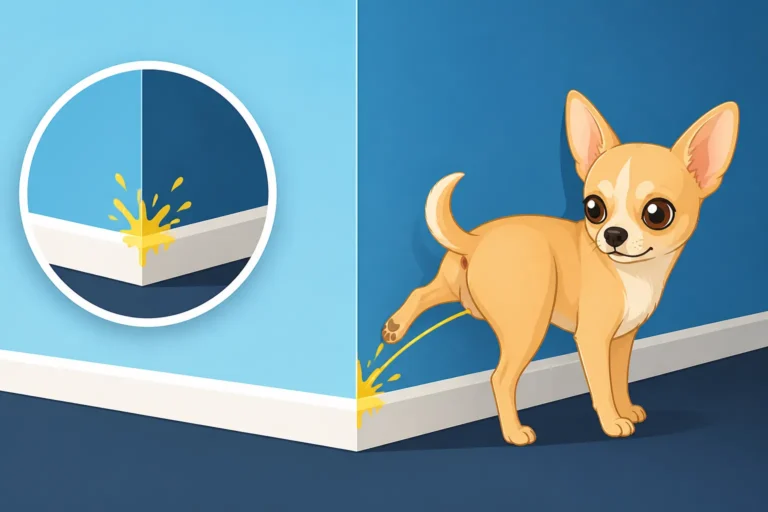
- Small Volume and Location: The most significant clue is the amount of urine. Marking typically involves a small squirt, not a large puddle. It's just enough to leave a scent. Also, Chihuahuas often aim for vertical surfaces like chair legs, sofa corners, curtains, or even the side of a bed. If it's a new item or something that smells "different," that's a prime target.
- Body Language: Male Chihuahuas, especially, will often lift a leg high to deposit their scent. It’s a very intentional, deliberate motion. Females might squat briefly, but it's usually a quick, targeted squat, not the prolonged squat you'd see for a full bladder emptying. They might also be very stealthy, trying to do it when they think you're not looking.
- Context: Does the marking happen when new guests arrive? When another pet is visiting? Or when a new piece of furniture is brought in? These social and environmental triggers are strong indicators of marking behavior rather than a simple accident. If it's the first thing they do after coming in from outside, where they just went potty, it's definitely marking.
Distinguishing From an Accident
Accidents, on the other hand, usually happen for different reasons and have different characteristics.
- Larger Volume, Different Location: An accident due to a full bladder will typically result in a larger puddle. It's often on a horizontal surface like the middle of the rug, a tile floor, or a dog bed. It happens because the Chihuahua genuinely couldn't hold it any longer.
- Urgency or Lack of Control: A Chihuahua having an accident might be pacing, whining at the door, or showing other signs of needing to go out, but you might have missed the cues. In puppies, it's simply a matter of their tiny bladders. How Long a Chihuahua Can Hold Its Bladder is not very long at all! For older dogs, it could be age-related incontinence.
- Absence of Triggers: If there are no apparent environmental or social triggers, and your Chihuahua hasn't been out in a while, it's more likely an accident. This could point to a need for more frequent potty breaks or a revision of your house training schedule.
To help clarify the distinction, here's a quick comparison:
| Characteristic | Marking Behavior | Accident |
|---|---|---|
| Volume of Urine | Small squirt, often just a few drops | Larger puddle |
| Location | Primarily vertical surfaces (chair legs, curtains) | Primarily horizontal surfaces (floor, middle of rug) |
| Body Language | Leg lift (males), quick squat (females), often stealthy | Full squat, may show signs of urgency beforehand |
| Context | New people/pets, new objects, territorial disputes | Long time since last potty, ignored cues, medical issue |
| Motivation | Communication, territorial assertion, anxiety | Inability to hold bladder, lack of access to potty spot |
Strategies to Stop Furniture Marking
Once you've determined that your Chihuahua is indeed marking, and you've ruled out medical causes, it's time to implement a comprehensive strategy. This isn't usually a quick fix, but with consistency and patience, you can definitely make progress.
Start with a Vet Visit
Seriously, this is non-negotiable. Before you try any behavioral modifications, make an appointment with your veterinarian. Explain all the symptoms and behaviors you're seeing. As we discussed, a UTI, bladder stones, or other medical issues can mimic marking. If there's an underlying medical problem, no amount of training will solve it. Your vet can perform a physical exam, urinalysis, and potentially bloodwork or imaging to get to the bottom of it. This step is about your Chihuahua's health first and foremost.
Go Back to House Training Basics
Even if your Chihuahua was perfectly house-trained, marking behavior means something has gone amiss in their understanding or ability to comply. Treat them like a new puppy again when it comes to potty training.
- Frequent Potty Breaks: Take your Chihuahua out much more often than you think they need, especially first thing in the morning, last thing at night, after waking from naps, and after playing or eating. Reward them enthusiastically every single time they eliminate outside. Make it a huge celebration! For Chihuahuas with their tiny bladders, you might need to reconsider How Many Meals a Day a Chihuahua Needs to manage their output effectively.
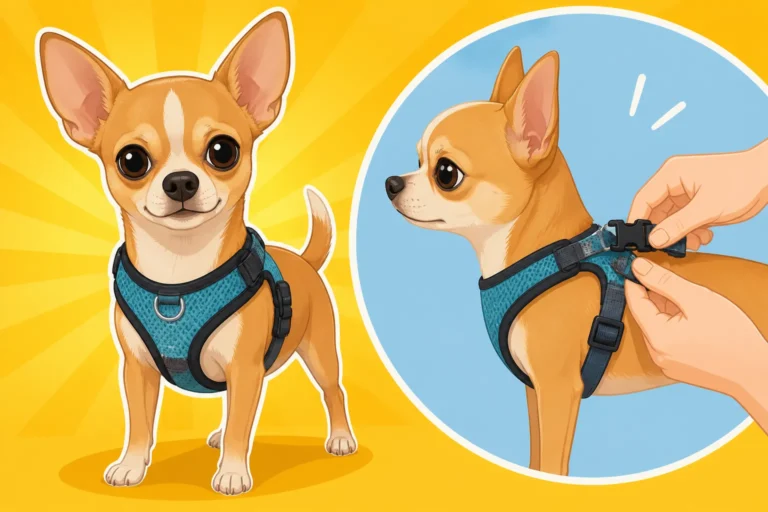
- Supervised Freedom: When indoors, keep your Chihuahua on a leash tethered to you, or in a Chihuahua Crate Training space, or in a secure playpen. This prevents them from having the opportunity to mark unsupervised. If they can't sneak away to mark, they can't practice the behavior. This also helps you learn their potty cues better. As soon as you see any sniffing, circling, or looking for a spot, whisk them outside.
- Indoor Potty Solutions: For Chihuahuas who truly despise going out in bad weather, or for those in apartments, considering Puppy Pads Against Outdoor Only for a Chihuahua or even a designated indoor potty area can be a good management strategy. Ensure it's not near furniture they typically mark, and still heavily praise them for using it.
Manage the Environment and Triggers
This involves making it harder for your Chihuahua to mark and reducing the situations that provoke the behavior.
- Belly Bands (for males): For male Chihuahuas, a belly band is an absolute lifesaver. This is a strip of fabric that wraps around their waist, covering their private parts, with an absorbent pad inside. If they try to mark, the urine is caught in the band, not on your furniture. It's a management tool, not a cure, but it stops the marking immediately and helps break the habit. You can find a wide variety of belly bands on Amazon, often with reusable or disposable pads. Belly Bands for a Marking Chihuahua is a great next read. Remember to remove it for outdoor potty breaks.
- Neutralize Scents: Dogs are driven by scent. If your Chihuahua has marked a spot before, the lingering odor (even if you can't smell it) tells them, "This is a potty spot!" You must use an enzyme-based cleaner specifically designed to break down pet urine. Regular household cleaners will not work and can even set the stain and odor, making it more attractive for future marking. Spray the affected areas thoroughly and let them air dry completely. Cleaning Chihuahua Accidents So They Do Not Repeat is crucial here.
- Block Access: Physically prevent your Chihuahua from accessing areas or items they tend to mark. Use baby gates, closed doors, or even temporary covers on furniture. This might mean keeping them in the same room as you, or even crating them when you can't actively supervise. For some high-value marking targets, like a favorite antique chair, consider covering it with a waterproof protector.
- Reduce Stress: Identify and reduce stress triggers. If new visitors cause marking, have them interact calmly with your Chihuahua, or have your Chihuahua in their crate or on a leash initially. If other dogs are a factor, manage their interactions carefully. Providing a consistent, predictable routine can go a long way in reducing overall anxiety.
Address Underlying Behavioral Issues
Sometimes, marking is a symptom of a deeper behavioral issue like anxiety or fear. This is where professional help can be invaluable.
- Anxiety and Fear-Based Marking: If your Chihuahua marks when stressed, fearful, or left alone, it might be connected to anxiety. They might be marking to self-soothe or to communicate their distress. Chihuahuas can be prone to Chihuahua Fear Reactivity, the Breed's Real Problem and sometimes Chihuahua Separation Anxiety and Time Alone.
- Professional Training: A certified professional dog trainer or veterinary behaviorist can help you identify the root cause of the anxiety and develop a tailored behavior modification plan. Look for trainers who use positive reinforcement methods. Online programs like BAXTER & Bella offer structured training resources that can be adapted for Chihuahuas, helping you build confidence and address behavioral challenges from the ground up. They can guide you through counter-conditioning and desensitization techniques.
- Vet Behaviorist and Medication: In some cases, especially with severe anxiety, your veterinarian might recommend a consultation with a veterinary behaviorist. These specialists can prescribe anti-anxiety medication in conjunction with a behavior modification program. Whether Anxiety Medication Helps a Chihuahua can be a game-changer for some dogs when paired with comprehensive training.
Long-Term Prevention and Management
Stopping the immediate marking is one thing, but preventing its return requires ongoing commitment to a stable environment and consistent training.
Maintain a Consistent Routine
Chihuahuas thrive on predictability. A consistent schedule for feeding, potty breaks, exercise, and playtime can significantly reduce anxiety and the likelihood of marking.
- Scheduled Potty Breaks: Stick to your frequent potty schedule like glue. Even if you think they don't really need to go, take them out. This reinforces the idea that outdoor (or designated indoor) spots are the only places to eliminate.
- Predictable Day: Try to keep mealtimes, walks, and quiet times consistent. This helps your Chihuahua feel secure and reduces the unknown elements that might trigger marking. A stable routine builds confidence.
Continued Supervision and Management
You might not need the tether all the time forever, but maintaining a watchful eye and using management tools when necessary is crucial.
- Supervise Unfamiliar Situations: Anytime there are new guests, new furniture, or other potential triggers, keep your Chihuahua closely supervised or use a belly band. Don't give them the opportunity to revert to old habits.
- Regular Scent Checks: Even after cleaning, occasionally sniff around the old marking spots to ensure no lingering odors remain. A black light can also reveal hidden urine spots that your nose might miss.
- Furniture Rules: It's important to set clear Setting Furniture Rules for a Chihuahua. Decide whether your Chihuahua is allowed on certain furniture or not, and consistently enforce those boundaries. This helps them understand their place in the home and reduces the urge to mark "their" sofa.
Enrichment and Exercise
A bored or under-stimulated Chihuahua can be an anxious Chihuahua. Ensuring they get adequate mental and physical exercise can help reduce stress and inappropriate behaviors.
- Daily Exercise: Even though they're small, Chihuahuas still need regular physical activity. Short, frequent walks, indoor games of fetch, or puzzle toys can help burn off energy and provide mental stimulation. A good twenty-minute walk can do wonders. Read Chihuahua Exercise Needs Every Day for more ideas.
- Mental Stimulation: Puzzle feeders, training sessions, and new tricks keep their minds engaged. A tired dog, both physically and mentally, is less likely to engage in anxious behaviors like marking.
- Positive Reinforcement: Continue to use positive reinforcement for desired behaviors. Reward calm behavior, good potty habits, and choosing appropriate toys. Building a strong bond through positive training helps your Chihuahua trust you and feel more secure in their environment.
Reconsidering Spay/Neuter
If your Chihuahua is intact and marking is a significant issue, discussing spaying or neutering with your vet is definitely a good idea. While, as mentioned, it's not a guaranteed fix for established habits, it can significantly reduce the hormonal drive behind territorial marking in many dogs. Especially for males, neutering can lessen the strong impulse to advertise their presence through scent. For females, spaying eliminates the hormonal fluctuations that can lead to marking when in heat or feeling competitive. It's a decision to make with your vet, considering all aspects of your Chihuahua's health and behavior. Spay Timing for a Chihuahua Under Six Pounds could be a good resource to discuss with your vet.
Dealing with a Chihuahua marking on furniture can be a trying experience, but with a structured approach that addresses both medical and behavioral factors, you can guide your little companion towards better habits and restore peace (and fresh scents!) to your home. It takes time, patience, and a lot of enzyme cleaner, but it's absolutely achievable.
Disclaimer
This article is for general informational purposes only and does not constitute professional advice. Laws, prices and regulations vary by location and change over time. Consult a qualified professional for guidance on your specific situation.