The Chihuahua Separation Signs Owners Miss
It's incredibly frustrating when you come home to a mess or a seemingly "misbehaving" Chihuahua, and it's even more heartbreaking when you suspect your tiny companion is genuinely distressed when you're away. Many Chihuahua owners miss the subtle, quiet signals of separation anxiety, often attributing their dog's actions to naughtiness or stubbornness. This comprehensive guide will help you decode those hidden cues, understand why your little shadow struggles with your absence, and offer actionable steps to bring peace to both your home and your beloved Chihuahua's heart.
Understanding the Root of Chihuahua Separation Anxiety
Chihuahuas are renowned for their intense loyalty and affectionate nature, often forming incredibly strong bonds with their primary caregivers. While this devotion is one of their most charming traits, it can also set the stage for separation anxiety, making alone time a genuine challenge for these tiny dogs. It's not just about a dog being "clingy" – it’s a profound distress reaction.
The Intense Bond: A Chihuahua Trait
Let's be real, Chihuahuas aren't just pets; they're family members who often seem to believe they are us. They thrive on human companionship, often preferring to be in physical contact with their person, whether it's burrowed under a blanket on your lap or tucked into the crook of your arm. This deep attachment is beautiful, but it creates a situation where being alone can feel like an existential threat to them. For a dog that might weigh less than a newborn baby, the world can seem vast and scary, and their human is often their primary source of security. Why a Chihuahua Bonds Hard to One Person is a concept deeply ingrained in the breed.
Imagine for a moment being completely dependent on one person for everything – food, safety, comfort, and entertainment. Then, suddenly, that person vanishes. For a Chihuahua with a strong attachment, this isn't just a mild inconvenience; it can be terrifying. They're not just missing you; they're feeling abandoned, vulnerable, and utterly alone in a world that feels too big for them. This intense focus on their primary human makes any absence a significant emotional event.
The Fearful Nature: Amplifying Anxiety
Chihuahuas, despite their mighty spirit, can also be inherently a bit nervous or prone to fear. Their small size means they perceive many everyday things as much more imposing than a larger dog might. A loud noise, a stranger, or even a sudden movement can trigger a fear response. When you combine this natural inclination towards fear with their intense bond to you, being left alone can become an overwhelming anxiety-inducing experience.
Think about how your Chihuahua might react to something new or startling. They might tremble, bark, or try to hide. Now, amplify that feeling to an hour or more of you being gone, and the fear becomes a constant, gnawing presence. This isn't a Chihuahua being "dramatic"; it's a genuine physiological and emotional reaction to perceived danger or insecurity. Their fear makes them believe they cannot cope without their protector, which is you. Chihuahua Fear Reactivity, the Breed's Real Problem often stems from this innate nervousness.
What Separation Anxiety Actually Is
It's crucial to understand that separation anxiety isn't a form of spite or a lack of training. It's a genuine panic disorder. When a Chihuahua with separation anxiety is left alone, they experience a level of distress similar to what a human might feel during a full-blown panic attack. It's not about being bored or simply wanting attention; it's about genuine fear and inability to cope with isolation.
The behaviors you see – barking, destroying things, having accidents – are not intentional acts of defiance. They are coping mechanisms, desperate attempts to alleviate their profound discomfort, reunite with you, or simply burn off the intense adrenaline coursing through their tiny bodies. Understanding this shift from "naughty dog" to "panicked dog" is the first and most critical step in helping your Chihuahua. It requires empathy, patience, and a recognition that they are truly suffering. The Noise a Panicking Chihuahua Makes isn't always obvious; sometimes, distress manifests silently.
Subtle Behavioral Cues You Might Be Missing
When we think of separation anxiety, our minds often jump to the dramatic stuff: incessant barking, chewed-up furniture, or messes on the floor. While these are certainly signs, Chihuahuas, being incredibly sensitive creatures, often display much more subtle behavioral cues that owners might overlook or misinterpret. These quiet signals are your Chihuahua trying to communicate their growing unease before it escalates to full-blown panic.
Quiet Withdrawal Before You Leave
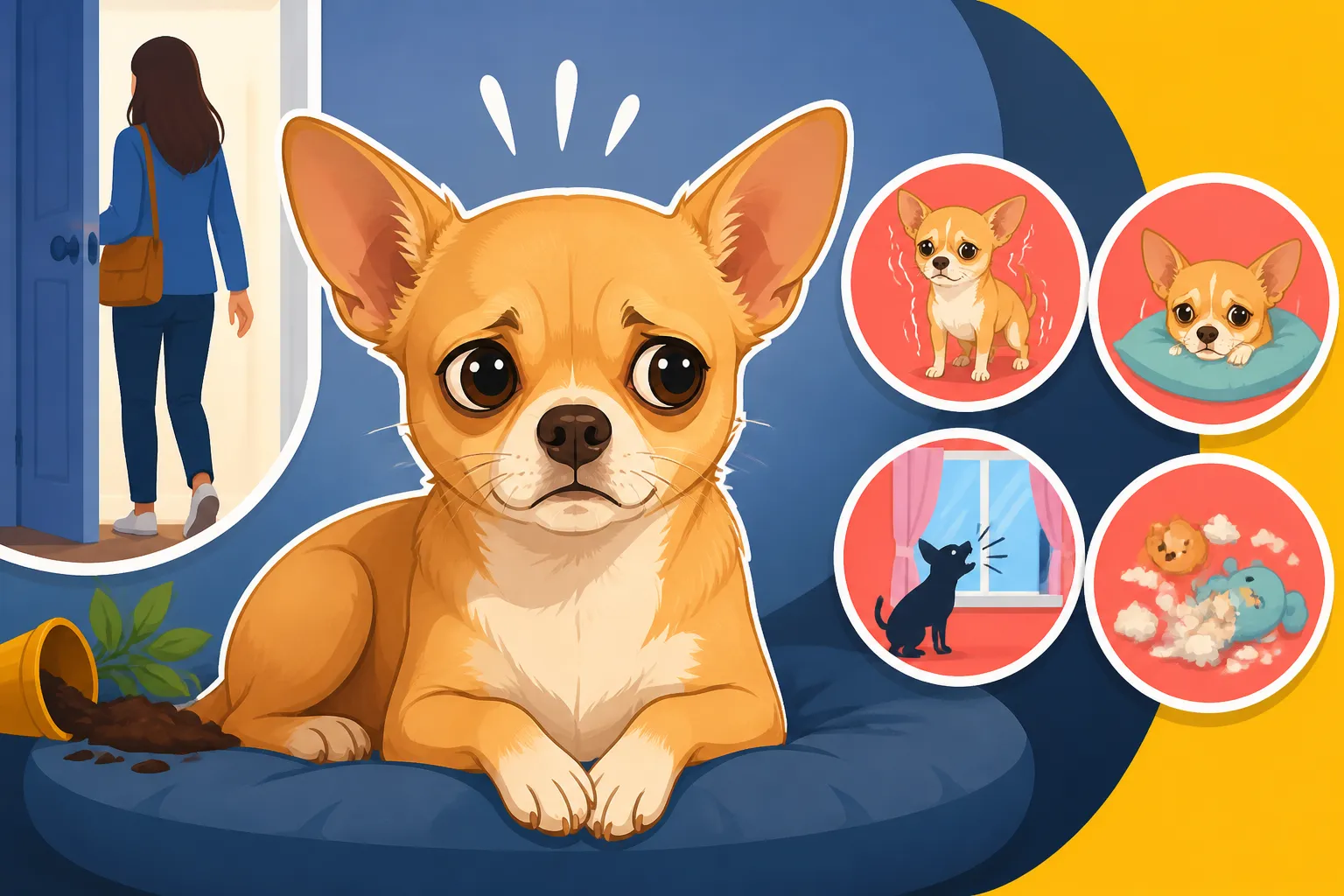
One of the most easily missed signs isn't what your Chihuahua does when you're gone, but what they do before you even walk out the door. Many Chihuahuas with separation anxiety will become noticeably subdued, withdrawn, or even avoidant as you go through your departure routine. Instead of following you around or begging for attention, they might suddenly become very quiet, lie down in a corner, or even hide under furniture.
You might be rushing around, grabbing your keys, bag, and jacket, completely missing the little shadow that has suddenly become still and small. This isn't them being "good" or accepting your departure; it's often a sign of anticipatory anxiety. They recognize the cues that mean you're leaving, and the dread sets in. They might try to make themselves invisible, hoping that if you don't see them, you won't leave, or perhaps just bracing themselves for the inevitable sadness and fear. Pay close attention to this shift from active companion to quiet observer.
Excessive Greetings Upon Return
Another subtle indicator can be found in your Chihuahua's greeting when you come home. Of course, all dogs are happy to see their humans! But a Chihuahua suffering from separation anxiety might display an over-the-top greeting that goes beyond normal excitement. This can manifest as prolonged, frantic jumping, excessive licking, submissive urination even if they've just been outside, or a general inability to calm down for an extended period after you walk through the door.
This isn't just pure joy; it's often relief mixed with residual anxiety from their alone time. They're not just saying "hello"; they're saying "thank goodness you're back, I thought you were gone forever!" The intensity of their greeting can be a direct reflection of the depth of their distress while you were away. It's their emotional overflow from the intense period of stress they just endured. Observing how long it takes for them to settle after your return can be a key clue.
Changes in Play and Interest While Alone
Many owners mistakenly believe that if their Chihuahua isn't tearing the house apart, they must be fine while alone. However, a significant subtle sign of distress is a complete disinterest in toys or activities they normally love. You might set out a favorite puzzle toy or a special chew, hoping it will keep them occupied, but find it untouched hours later.
If your Chihuahua is truly panicking, they won't be in a mental state to engage in play or self-soothing activities. Their brain is in survival mode, focused on your absence. A dog that is merely bored might eventually pick up a toy or gnaw on something, but a dog with separation anxiety will often ignore all forms of enrichment because their anxiety overrides any desire for play or food. Setting up a camera (many affordable options are available on Amazon these days) can be incredibly insightful here, showing you exactly what your Chihuahua does (or doesn't do) when left to their own devices.
Physical Symptoms That Point to Distress
Beyond the dramatic behaviors, your Chihuahua's body can offer critical clues about their emotional state when left alone. These physical symptoms are often involuntary and can be a clear sign that your dog is experiencing significant stress, even if they aren't barking or destroying property. Recognizing these physiological responses can help you understand the depth of their struggle.
Drooling, Panting, and Trembling
These are classic signs of anxiety in many animals, and Chihuahuas are no exception, though their small size might make them harder to notice. If you come home to a slightly damp area where your Chihuahua was resting, or find their fur wet around their mouth, it might be due to excessive drooling caused by stress. Similarly, panting heavily, even in a cool room, is a clear sign of anxiety, not just warmth. And trembling, while sometimes dismissed as just "being a Chihuahua," can be a profound indicator of fear and nervous energy when associated with alone time.
Imagine coming home and your little one is still shaking, perhaps subtly, long after you've walked through the door. This isn't just the excitement of your return; it's the lingering adrenaline from their anxiety. These physical manifestations show that their body is in a state of high alert, a "fight or flight" response, because they perceive your absence as a threat. It's a silent scream for help. Telling Chihuahua Cold From Chihuahua Fear is an important distinction to make here.
Loss of Appetite or Excessive Thirst
When a Chihuahua is extremely anxious, their digestive system can be thrown into disarray. You might leave a small bowl of food or a treat, only to find it completely untouched when you return. This isn't because they're not hungry; it's because anxiety suppresses appetite. When a dog's body is in a state of stress, blood is diverted away from digestive functions and towards systems needed for fight or flight, making eating undesirable or even impossible.
Conversely, some Chihuahuas might display excessive thirst as a coping mechanism or as a result of panting. You might notice their water bowl is emptied much faster than usual. While an empty water bowl could simply mean they were thirsty, if combined with other anxiety signs, it could indicate a frantic attempt to self-soothe or a physiological response to heightened stress. Check for these subtle shifts in their eating and drinking habits; they can be telling.
Self-Grooming or Chewing
While destructive chewing on household items is a common anxiety sign, some Chihuahuas turn their anxiety inward through self-grooming or chewing. This might look like excessive licking of their paws, legs, or flanks, sometimes to the point of creating hot spots or raw skin. They might also chew on their tail, nails, or other body parts. These are displacement behaviors, attempts to soothe themselves by focusing on a repetitive action.
This self-directed behavior is often a desperate attempt to cope with overwhelming emotions. It's a way for them to release nervous energy. If you notice new bald spots, irritated skin, or an increase in your Chihuahua's self-licking habits that only occur when you're away, it's a strong indicator that they are struggling emotionally. Always rule out medical causes for these symptoms first, but once those are clear, consider separation anxiety as a primary suspect.
Environmental Clues and Damage That Indicate Anxiety
It's common for owners to focus on what their Chihuahua does when they're present, but the environment they leave behind can tell a powerful story about their state of mind when alone. Separation anxiety often manifests through actions that directly reflect a dog's panic and attempts to cope with your absence. These environmental clues go beyond simple "accidents" or "naughty chewing."
Potty Accidents Beyond House Training Issues
This is one of the most heartbreaking signs, as owners often interpret it as a deliberate act of defiance or a failure in house training. However, if your fully house-trained Chihuahua (especially one who has mastered House Training a Chihuahua With a Tiny Bladder) is consistently having accidents only when left alone, it is a very strong indicator of anxiety. Anxious urination or defecation is not a choice; it's an involuntary physical response to severe stress, similar to how a human might feel sick to their stomach when extremely nervous.
The context is key here: if they can hold it all night or when you're home, but not for even a short period when you're gone, it's probably not a bladder control issue or a forgotten training lesson. It's a panic response. These accidents often occur near exit points (doors, windows) as if the dog was distressed and trying to get out. Cleaning these thoroughly is important, but addressing the underlying anxiety is paramount. Cleaning Chihuahua Accidents So They Do Not Repeat is vital to prevent scent-marking.
Destructive Chewing and Digging at Exits
While some dogs chew out of boredom, Chihuahuas with separation anxiety often focus their destructive energy on specific areas related to your departure. This means chewing doorframes, scratching at windowsills, digging at carpets near doors, or even trying to dismantle their crate if they're confined. The goal isn't just to chew; it's to escape or to release intense, trapped energy.
This isn't a random act of destruction. It's purposeful, albeit desperate, behavior driven by their panic. They believe if they can get out, they can find you. The damage is a testament to their struggle, showing precisely where their anxiety was focused. You might come home to find splinters of wood, torn screens, or a door that looks like it's been gnawed by a beaver. This level of damage goes far beyond casual chewing; it indicates significant distress.
Rearranging Bedding or Crate Contents
Sometimes, the damage isn't to the house itself but to your Chihuahua's immediate environment. If you consistently find their bed torn up, blankets shredded, or toys completely pulled apart only after you've been gone, it can be a sign of anxiety. While some dogs just enjoy de-stuffing toys, if this behavior is linked solely to your absence and seems frantic, it might be anxiety.
For Chihuahuas who are crate trained (Chihuahua Crate Training), you might find that blankets are pulled through the bars, or their bedding is wadded up into a corner, sometimes soiled, even if they usually keep their crate clean. This "rearranging" can be an attempt to nest and find comfort, or it can be a manifestation of restless, nervous energy. They might be trying to create a "safe space" within their confinement or, conversely, attempting to get out of it in a panic, resulting in the disheveled state of their belongings.
Differentiating Separation Anxiety from Other Issues
It's easy to jump to conclusions when a tiny dog is acting out, especially when you're not there to witness the context. However, it's incredibly important to differentiate true separation anxiety from other behavioral or medical issues that can present similarly. Misdiagnosing the problem means applying the wrong solution, which won't help your Chihuahua and can prolong their distress.
Ruling Out Medical Conditions
Before assuming any problematic behavior is purely behavioral, especially new onset accidents or changes in eating/drinking, consult your veterinarian. Medical issues can mimic anxiety symptoms. For instance, a urinary tract infection or bladder stones could cause accidents, while dental pain might lead to a loss of appetite. Hormonal imbalances or even pain from an orthopedic issue (like The Skipping Gait That Signals a a Chihuahua Knee) can cause a Chihuahua to become restless, irritable, and appear anxious or destructive.
A thorough vet check-up, including blood work, urinalysis, and perhaps imaging, is a crucial first step. Explain all the symptoms you're seeing, even the subtle ones. It's not uncommon for physical discomfort to manifest as behavioral problems, and treating the underlying medical condition might resolve the "anxiety-like" symptoms entirely. Never skip this vital diagnostic phase.
Boredom Versus True Panic
This is a critical distinction. A bored Chihuahua might chew on things, whine a bit, or even have an accident because they simply couldn't hold it or wanted to go outside. However, their body language and the intensity of their actions differ significantly from a dog in true panic. A bored dog might eventually settle, play with some toys, or find a comfortable spot to nap. Their chewing might be exploratory or for entertainment, rather than frantic or escape-motivated.
A Chihuahua suffering from genuine separation anxiety is in a state of terror. Their actions are not leisurely; they are frantic, persistent, and often self-injurious. They rarely settle, and they ignore high-value toys or food. Their behavior is often directed at exit points, and their physical signs (panting, trembling, drooling) are pronounced. If you're unsure, a pet camera can really help differentiate. Watch for the level of sustained distress and the inability to self-soothe. A Chihuahua's First Nights Alone in a New House can sometimes highlight initial panic versus simple adjustment.
House Training Regression
Sometimes, an otherwise perfectly house-trained Chihuahua will start having accidents inside. This could be due to separation anxiety, but it could also be a simple regression in house training, especially if there's been a recent change in routine, an increase in alone time beyond their bladder capacity, or simply a lack of consistent reinforcement. For instance, if you've recently moved or if their potty schedule has become erratic, they might simply be confused or truly unable to hold it. Hours Alone Against a Chihuahua's Bladder Limit is a real factor.
Separation anxiety accidents tend to be more pervasive, often accompanied by other anxiety behaviors like barking, pacing, or destruction focused on exits. A training regression might see accidents happen anywhere, at any time, not just during periods of isolation. If the accidents are the only symptom you're seeing, it's worth re-evaluating your house training routine and consistency before jumping straight to separation anxiety as the sole cause. A pet camera can again reveal the context: did the dog calmly pee, or were they frantically pacing and then eliminated?
Here's a quick comparison of the two:
| Behavior | Signs of Boredom/Training Issue | Signs of Separation Anxiety |
|---|---|---|
| Pacing/Restlessness | Occasional, might explore house | Persistent, often repetitive, focuses on exits |
| Vocalizing | Mild whining, attention-seeking bark | Incessant barking, howling, distressed cries |
| Chewing/Destruction | Random items, toys, not frantic | Doorways, windows, crates, frantic, self-injurious |
| Potty Accidents | Isolated, not necessarily near exits | Frequent, near exits, involuntary, accompanied by other signs |
| Reaction to Toys/Food | Might eventually engage, eat | Ignores high-value items, too stressed to eat/play |
| Physical Symptoms | Minimal or absent | Drooling, panting, trembling, self-licking |
| Greeting Upon Return | Happy, settles quickly | Frantic, prolonged, overly excited, takes long to calm |
Next Steps: Addressing the Subtle Signs
Once you've carefully observed your Chihuahua and confirmed that these subtle signs point to separation anxiety rather than another issue, it's time to take action. Addressing separation anxiety requires patience, consistency, and often a multi-faceted approach. Remember, your Chihuahua isn't being "bad"; they are genuinely suffering and need your help.
Gradual Departures and Desensitization
This is the cornerstone of treating separation anxiety. The goal is to slowly desensitize your Chihuahua to your departure cues and gradually increase the time they can comfortably spend alone. Start by performing your departure routine (grabbing keys, putting on shoes) without actually leaving. Do this multiple times a day until your Chihuahua no longer reacts to these cues.
Then, gradually introduce very short absences. Step out the door for literally 5 seconds, then return before your Chihuahua shows any signs of distress. As they remain calm, slowly increase the duration, but always vary the time. Don't always go for 10 seconds, then 20; mix it up with 7 seconds, then 15, then back to 5. The key is to keep them under their anxiety threshold. If they start to panic, you've gone too long, and you need to shorten the duration next time. A pet camera is invaluable here to monitor their real-time reaction. This process takes time, sometimes weeks or months, but consistency is key.
Enrichment and Comfort Strategies
While you're working on desensitization, it's important to provide your Chihuahua with tools and strategies to help them cope when they are alone. High-value, long-lasting chews or puzzle toys filled with treats can keep their minds engaged and provide a positive association with your absence. Amazon offers a wide variety of interactive toys sized perfectly for Chihuahuas. Consider rotating toys so there's always something novel.
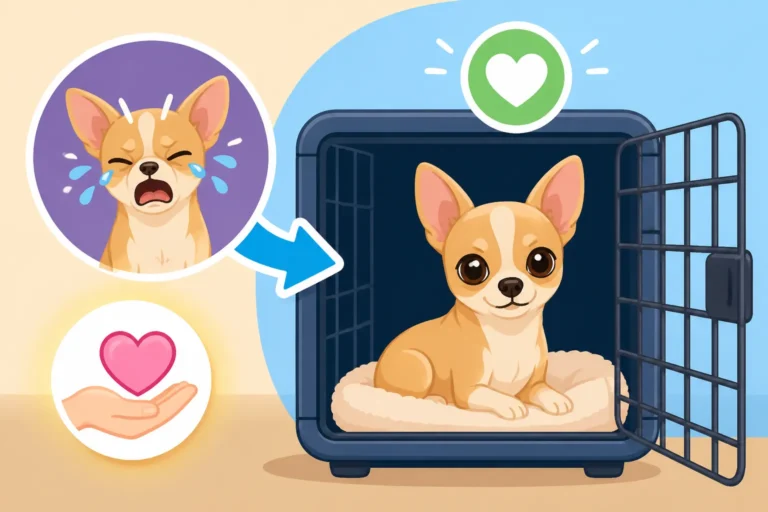
Creating a safe, comfortable "den" for your Chihuahua can also help. This might be a cozy crate covered with a blanket, a small room with their favorite bed, or a designated quiet corner. Some Chihuahuas find comfort in specific scents; an old t-shirt with your scent on it can be reassuring. You might also try a white noise machine or calming music designed for dogs to mask external triggers. Ensure their chosen space feels like a sanctuary, not a punishment.
Seeking Professional Guidance
For many Chihuahuas with separation anxiety, especially those exhibiting severe symptoms, professional help is essential. This isn't a sign of failure on your part, but rather a responsible step towards ensuring your dog's well-being. A certified professional dog trainer or a veterinary behaviorist has specialized knowledge and experience in treating anxiety disorders. They can create a tailored behavior modification plan and guide you through the process, offering crucial support and strategies. Finding a Trainer Who Takes a Chihuahua Seriously is important for toy breeds.
They might also recommend specific calming aids or, in some severe cases, medication to help manage the anxiety while you work on behavior modification. Medications don't "cure" separation anxiety but can lower your Chihuahua's overall anxiety levels enough for them to be receptive to training. Resources like BAXTER & Bella offer comprehensive online training programs that can provide structured guidance and support, often including valuable advice on separation-related behaviors, without the need for in-person visits every time. Remember, you're not alone in this, and asking for help is an act of love for your tiny companion.
Disclaimer
This article is for general informational purposes only and does not constitute professional advice. Laws, prices and regulations vary by location and change over time. Consult a qualified professional for guidance on your specific situation.