The Chihuahua Faults That Disqualify
It's incredibly frustrating when you believe your beloved Chihuahua is the most perfect creature on earth, only to hear whispers about "breed standards" and "disqualifying faults" if you've ever considered the show ring. Many owners aren't looking to compete, but understanding these specific criteria can illuminate aspects of your dog's health and heritage. This guide will meticulously break down the exact faults that would lead to a Chihuahua being disqualified in a conformation show, offering a deeper understanding of the breed's ideal form and function.
Understanding the Breed Standard: Why Disqualifying Faults Matter
When you delve into the world of purebred dogs, the "breed standard" is essentially the blueprint for what an ideal specimen of that breed should look like and how it should behave. It's not just about aesthetics; it's about preserving the original purpose and health of the breed. For Chihuahuas, this standard is set by organizations like the American Kennel Club (AKC), detailing everything from skull shape to temperament.
The Purpose of a Breed Standard
Think of the breed standard as a highly detailed job description for a dog. It describes the physical traits, temperament, and movement that are considered desirable for a particular breed. This standard guides breeders in making responsible pairing choices, ensuring that they are producing Chihuahuas that not only look the part but also embody the characteristics that define the breed. It helps to maintain consistency across generations and prevents the breed from straying too far from its established type. For example, a standard might specify the ideal The Round Skull the Chihuahua Standard Asks For to ensure the iconic apple-head shape.
Without a standard, breeders might make arbitrary decisions, leading to a fragmented breed with no uniform appearance or predictable temperament. This consistency is vital for the breed's long-term health and recognition. It provides a common goal for all those dedicated to the breed's future.
The Role of Disqualifying Faults
Disqualifying faults are traits that are considered so far outside the acceptable range of the breed standard that they immediately prevent a dog from being awarded points in a conformation show, regardless of its other qualities. These aren't just minor imperfections; they're deal-breakers. They exist to eliminate traits that are either severely detrimental to the breed's health, indicative of poor breeding practices, or so atypical that they fundamentally alter the breed's identity.
For instance, a disqualifying fault might be an incorrect bite or a specific color pattern that suggests mixed ancestry or a genetic health concern. These are non-negotiable points that judges are specifically trained to identify. It's a way to safeguard the integrity of the breed and ensure that only dogs that truly represent the ideal are recognized in the show ring.
Beyond the Show Ring: Why it Matters to Owners
Even if you have no intention of ever stepping foot in a show ring, understanding these disqualifying faults can still be incredibly valuable. It gives you insight into responsible breeding practices and helps you appreciate the nuanced traits of your own Chihuahua. Knowing what constitutes a fault can also sometimes hint at potential health predispositions, even if your dog isn't disqualified on a technicality.
It also helps you recognize the differences between a well-bred Chihuahua and one from less reputable sources. For example, breeders who consistently produce dogs with disqualifying faults might not be prioritizing the breed standard or the health of their lines. Being informed allows you to make more educated decisions, whether you're looking for a puppy or just curious about why your little companion looks and acts the way they do.
Physical Characteristics That Lead to Disqualification
The Chihuahua breed standard is very specific about physical appearance, and certain deviations are considered severe enough to warrant immediate disqualification. These are often traits that either impact the dog's health and function or stray significantly from the recognized breed type.
Weight and Size Extremes
Perhaps one of the most well-known aspects of the Chihuahua standard is its weight requirement. The standard explicitly states that a Chihuahua should not exceed six pounds. This is a hard and fast rule in the show ring. If a dog weighs even an ounce over this limit, it's immediately disqualified. This focus on weight is critical to maintaining the breed's toy size, which is a defining characteristic.
While a Chihuahua at home might be a perfectly healthy seven-pound cuddle bug, they simply wouldn't make the cut in conformation. Conversely, while there's no official minimum weight for disqualification, excessively tiny Chihuahuas, often marketed as "teacups," frequently come with severe health issues like Chihuahua Hypoglycemia and the Puppy Emergency or delicate bone structures that make them prone to injury. While not a direct disqualification by standard for being too small, these dogs often exhibit other health-related issues that would indirectly disqualify them or make showing impossible. The Six Pound Ceiling for a Show Chihuahua is a critical detail.
Dental and Jaw Structure Issues
A healthy mouth is crucial for any dog, and the Chihuahua standard details specific requirements for dentition and jaw alignment. Any severe deviation here can lead to disqualification. For example, an undershot or overshot bite where the teeth do not meet correctly is a serious fault. An undershot bite occurs when the lower jaw extends beyond the upper jaw, while an overshot bite means the upper jaw protrudes past the lower. Both can affect a dog's ability to chew and can indicate structural issues.
Additionally, a Chihuahua is expected to have a full complement of teeth, though some minor omissions might be considered faults rather than disqualifications. However, significant missing teeth beyond what's acceptable for the breed or severe dental malocclusions would certainly lead to disqualification. Chihuahua Dental Disease in a Crowded Small Jaw is a common issue for pet Chihuahuas, but in the show ring, it's about structural integrity from the start.
Ear, Tail, and Coat Irregularities
The Chihuahua's distinctive appearance also includes its ears, tail, and coat. Deviations from the standard in these areas can result in disqualification. For ears, the standard typically calls for large, erect ears that are wide at the base and taper to a slightly rounded tip. Ears that are cropped, or naturally "down" or "rose" ears (like those of a bulldog) would be disqualifying.
For the tail, it should be carried up and over the back, forming a gentle curve. A tail that is docked (shortened), curly, or too short would be a disqualifying fault. The coat varieties, smooth and long coat, each have their own specifications regarding texture and length. A smooth coat should be soft and close-fitting, while a long coat should be soft, flat or slightly wavy, with feathering. Any coat that is excessively sparse, wiry, or otherwise outside these descriptions could be a disqualifying factor, especially if it suggests a mixed breed heritage.
Skull and Head Deformities
The iconic "apple head" is a hallmark of the Chihuahua breed. A distinctly "deer head" Chihuahua, while common and beloved as pets, would be disqualified in the show ring because it deviates significantly from the standard's requirement for a well-rounded skull. Apple Head Against Deer Head Chihuahuas is a significant distinction in conformation.
Furthermore, a very pronounced molera (soft spot on the skull), if excessively large or easily damaged, could be seen as a fault or even a disqualification depending on its severity and whether it impacts the dog's overall soundness. While many Chihuahuas are born with a molera, the expectation is for it to close, or at least be small and well-protected. Any sign of Hydrocephalus in an Apple-Head Chihuahua, a serious neurological condition often associated with a domed skull, would also prevent a dog from competing.
Here's a quick overview of some key physical disqualifying faults:
| Category | Disqualifying Fault |
|---|---|
| Weight | Over 6 pounds |
| Jaw/Teeth | Undershot or overshot bite |
| Severely misaligned or missing teeth | |
| Ears | Cropped ears |
| Drop ears (not erect) | |
| Tail | Docked tail |
| Curly tail (screw tail) | |
| Head | Deer head (flat skull) |
| Excessively large, open molera that impairs function | |
| Coat | Any coat type not conforming to smooth or long |
| Eyes | Wall eyes (one blue or glass eye) |
| General | Cryptorchidism (undescended testicles in males) |
Temperament and Behavior: When a Chihuahua Can't Compete
While physical appearance is paramount in the show ring, a Chihuahua's temperament and behavior are equally critical. The breed standard calls for a specific disposition, and any deviation that makes the dog unstable or untrainable will lead to disqualification. It's not just about looking good; it's about acting the part.
Aggression or Extreme Shyness
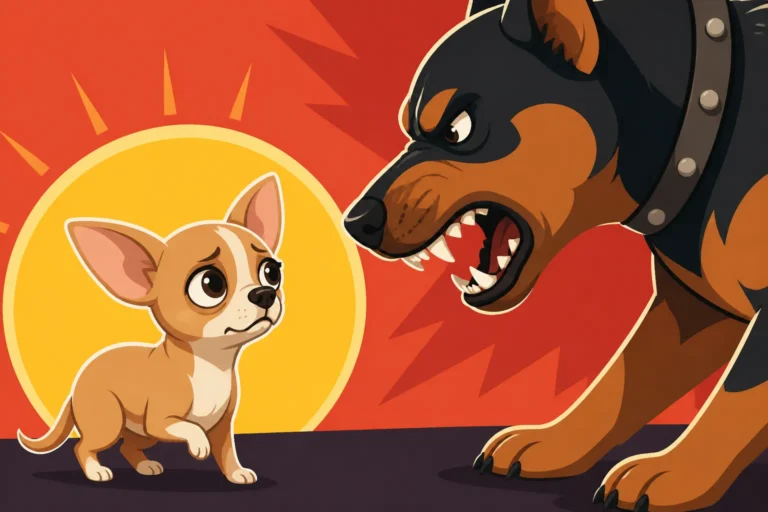
The Chihuahua standard describes the breed as possessing a "terrier-like" spirit: alert, lively, and intelligent, with a watchful nature. However, this alertness should never cross over into aggression, either towards humans or other dogs. A dog that displays any form of aggression—snapping, lunging, biting, or even showing an extreme menacing demeanor—towards judges, handlers, or other dogs will be immediately disqualified. This is not only for the safety of those involved but also because such behavior goes against the desired temperament of a companion animal.
On the flip side, extreme shyness or fearfulness can also be a disqualifying fault. A Chihuahua that is so terrified it cannot be properly examined by the judge, or one that constantly tries to escape, shakes uncontrollably, or acts completely shut down, also fails to meet the standard. While some Chihuahuas can be reserved around strangers, the expectation is that they should be able to tolerate examination calmly and confidently. This is often where Chihuahua Fear Reactivity, the Breed's Real Problem comes into play, as fear can manifest as aggression or extreme avoidance.
Lack of Trainability or Unruly Behavior
A show dog needs to be poised, cooperative, and able to perform its job in the ring. This means being able to stand for examination, gait (walk) appropriately on a leash, and generally be manageable. A Chihuahua that is constantly pulling, jumping, barking incessantly, or otherwise acting unruly and unable to be controlled by its handler would make it impossible to judge fairly. While not always an immediate disqualification on its own, a dog that cannot be properly evaluated due to its behavior will certainly not win.
Judges need to assess the dog's movement, structure, and overall presentation. A dog that resists handling, thrashes about, or tries to escape every time a judge approaches is demonstrating a fundamental lack of the desired temperament. This isn't about perfectly polished obedience, but about a foundational level of calm and cooperation required for the environment. This is why consistent training, even with basic commands, is so important, as outlined in Training a Chihuahua Exactly Like a Big Dog. Products from pet supply stores like Chewy can help with training, offering small, soft treats perfect for toy breeds.
Health-Related Disqualifications in the Conformation Ring
While the breed standard doesn't list every single health condition as a disqualifying fault, there are certain serious health issues or genetic markers that directly impact a dog's ability to be sound, functional, or represent the breed as intended. These are often indicators of poor breeding choices or severe congenital problems.
Severe Health Conditions Affecting Soundness
A show dog is expected to be "sound," meaning it should be healthy and able to move and function without pain or impediment. While a dog might have a minor health issue that's managed, any severe, chronic, or debilitating condition that affects its ability to move or its overall well-being can lead to disqualification. For instance, severe lameness from conditions like Patellar Luxation, the Chihuahua's Commonest Joint Problem would prevent a dog from being able to gait properly and display its movement, thus leading to disqualification.
Similarly, other congenital defects that visibly affect the dog's structure or health, such as certain heart conditions that cause visible distress or respiratory issues like severe Collapsing Trachea and the Chihuahua Honking Cough that limit activity, could lead to a judge determining the dog is not sound for competition. These are typically cases where the health issue is so pronounced that it impacts the dog's ability to participate or indicates a severe genetic defect.
Cryptorchidism and Breeding Implications
One specific health-related disqualification for male dogs is cryptorchidism. This is a condition where one or both testicles fail to descend into the scrotum. For conformation showing, a male dog must have two descended testicles. This is a crucial point because cryptorchidism can be an inherited trait, and affected males are often infertile or have a higher risk of developing testicular cancer.
The requirement for two descended testicles is not just about aesthetics; it's a measure to ensure the reproductive soundness of the breed line. Dogs with this condition are disqualified to prevent them from being used for breeding purposes within a responsible program, thereby helping to eliminate the trait from the gene pool. Even if a male Chihuahua appears otherwise perfect, this single fault would bar him from the show ring. For owners of pet Chihuahuas, it's worth discussing this with your vet, and perhaps finding specific supplements or health items on Chewy that cater to neutered males if this applies.
The Journey of a Show Chihuahua: What It Takes
Becoming a show champion Chihuahua is a long and dedicated journey, one that starts even before the puppy is born. It requires careful planning, responsible breeding, and consistent training and care. Every detail, from the tip of their nose to the curve of their tail, and their very demeanor, is scrutinized against the breed standard.
From Puppy to Potential Champion
The journey begins with selecting a puppy from a reputable breeder who prioritizes the health and conformation of their lines. Such breeders conduct health screenings on parent dogs for common Chihuahua issues like patellar luxation, heart conditions, and eye problems. They aim to produce puppies that not only have excellent temperaments but also conform closely to the breed standard from the start.
Once a potential show prospect is identified, often around 8-12 weeks, the real work of socialization and training begins. A show Chihuahua needs to be comfortable with being handled by strangers, accustomed to loud environments, and confident on a leash. This period of intense The Chihuahua Puppy Curriculum Month by Month is crucial for their development, building the foundation for their future career.
The Dedication of Training and Presentation
Beyond inherent qualities, a show Chihuahua requires extensive training. They need to learn how to stand perfectly still for examination, trot gracefully at a handler's side, and present their best features to a judge. This isn't just about basic obedience; it's about conditioning them to enjoy the show environment and to perform under pressure. Handlers dedicate countless hours to practicing stacks, gaits, and ring presence.
Proper grooming is also paramount. Whether a smooth coat or long coat, every hair must be in place, clean, and healthy. While you might find everyday grooming supplies on Chewy, show preparation often involves specialized tools and techniques to highlight the dog's best features. The goal is to present a dog that is not only structurally sound but also a picture of health and vitality.
The Judge's Eye: A Standard Applied
When a Chihuahua steps into the show ring, the judge's eye quickly assesses how well that dog conforms to the breed standard. They are looking for the cumulative effect of all the desired traits: the correct skull shape, the erect ears, the specific bite, the elegant movement, and the confident yet cooperative temperament. Any disqualifying fault, as discussed, is an immediate deal-breaker, removing the dog from consideration.
It’s important to remember that judging is subjective to a degree, as different judges may emphasize certain aspects more than others. However, disqualifying faults are objective. If a dog weighs over six pounds, has a docked tail, or displays aggression, the judge has no choice but to disqualify it. This strict application of the standard ensures that the essence of the Chihuahua breed is preserved and honored in the show ring.
Disclaimer
This article is for general informational purposes only and does not constitute professional advice. Laws, prices and regulations vary by location and change over time. Consult a qualified professional for guidance on your specific situation.