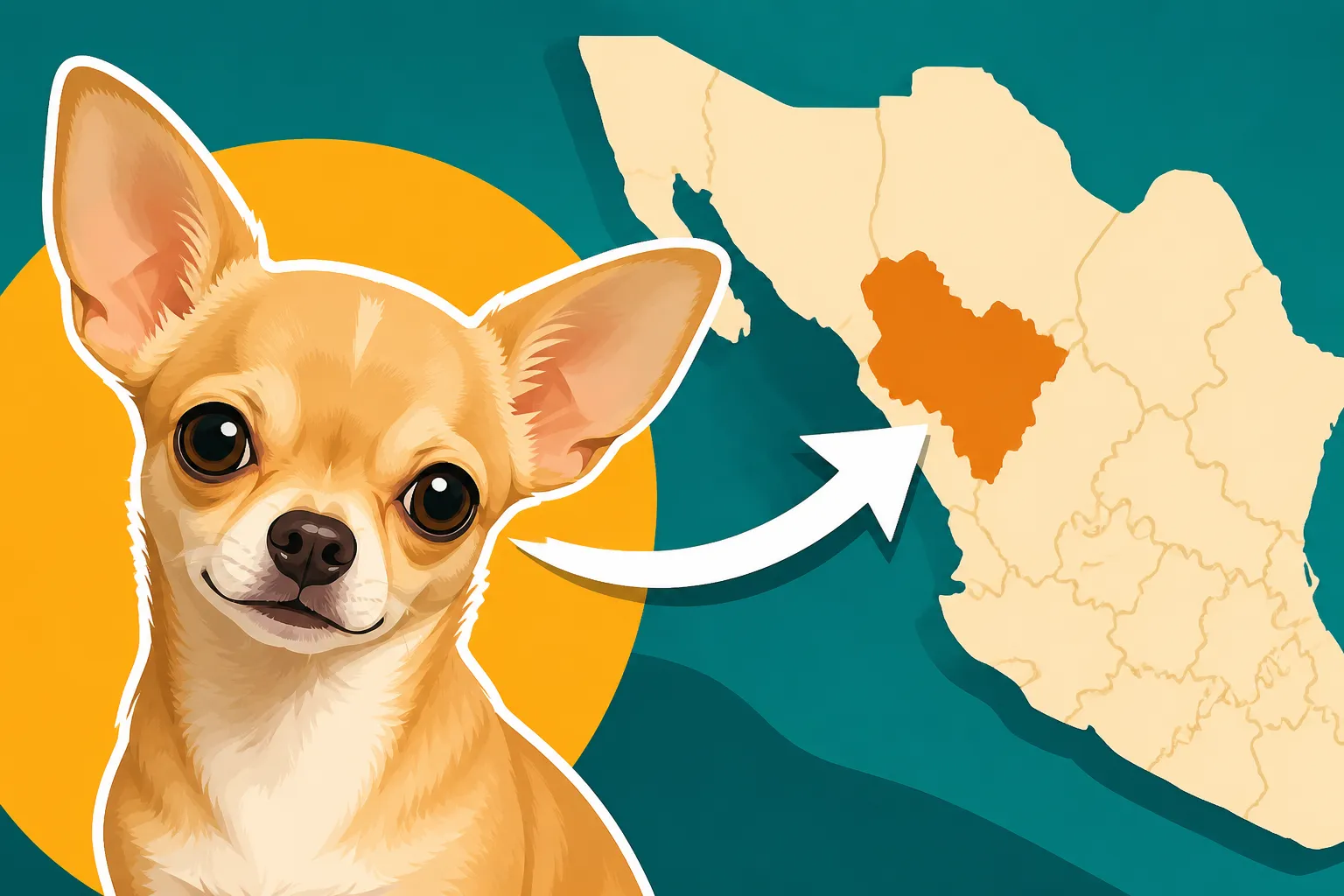
Why the Breed Carries a Mexican State’s Name
It's quite common to encounter a Chihuahua and wonder about their origins, especially given their unique name. Many new Chihuahua parents, or even those just admiring the breed, might not realize that their beloved little companion carries a name that's deeply rooted in a specific geographical location. This guide will take you on a journey through history, explaining precisely why this remarkable breed proudly bears the name of a Mexican state, delving into the fascinating story behind it.
The Chihuahua's Deep Mexican Heritage: More Than Just a Name
When we think of Chihuahuas, we often picture tiny dogs with big personalities, but their story stretches back centuries, long before they became the popular household pets we know today. Their heritage isn't just a fun fact; it's intrinsically woven into the very fabric of Mexican culture and history, particularly in the northern regions. The connection to the Mexican state of Chihuahua isn't merely coincidental; it's a testament to where these dogs were truly "discovered" by the wider world.
Tracing Back to the Ancient Techichi
To understand the Chihuahua's name, we must first look further back in time, to the ancestors that roamed ancient Mexico. The most commonly cited ancestor is the Techichi, a small, long-haired dog that was a prominent feature in pre-Columbian Mesoamerican civilizations. These dogs were quite different from the sleek, tiny Chihuahuas we see today, but they were undeniably small canids that shared a geographical lineage. Archeological finds and ancient artwork, like those from the Colima culture dating back to 300 BC, depict small dogs with certain shared characteristics, suggesting a long presence of toy dogs in the region. The Chihuahua Ancestor Carved in 300 BC
These early dogs weren't just wild animals; they were integrated into the daily lives and even spiritual beliefs of the people. While we can't definitively say a Techichi is a direct Chihuahua, it’s widely accepted that they are at least distant relatives, contributing to the genetic pool from which the modern Chihuahua eventually emerged. It’s this deep, enduring presence of small dogs in Mexico that laid the groundwork for the breed's eventual recognition and naming. The area that would become the state of Chihuahua was part of this rich historical landscape, and the presence of these small dogs throughout the region contributed to the eventual association.
The Techichi's Role in Pre-Columbian Cultures
The Techichi held a significant, often sacred, place in the societies of ancient Mexico, particularly among the Toltecs and later the Aztecs. They weren't simply pets; they were believed to have spiritual significance, often buried with their owners to guide them through the afterlife. What the Toltecs Kept the Chihuahua's Ancestor For Imagine a time when dogs were considered companions not just for this life, but for the next! This belief underscores the deep reverence these cultures had for these animals.
Their role wasn't limited to the spiritual realm; they were also a food source and, importantly, companions. This long history of close interaction meant these small dogs were highly valued and protected. When the Spanish conquistadors arrived, they noted the presence of these small dogs, though the ensuing societal upheaval led to a decline in their numbers and records. For centuries, these small dogs continued to exist, primarily in remote villages and isolated communities, blending into the background of local life until later rediscovery. This sustained, quiet existence ensured the breed's survival within the region, maintaining its connection to the land that would later give it its name.
From Regional Gem to Global Icon: How the Name Took Hold
Fast forward many centuries, and the small dogs of Mexico began to re-emerge into the public eye, particularly during the mid-19th century. This period marked a significant turning point, as American travelers and merchants venturing into Mexico started noticing these distinct little canines. This wasn't an organized expedition to find a new breed; it was a more organic discovery, fueled by curiosity and the burgeoning interest in unique animals.
American Travelers and the Northern Mexican Border
In the mid-1800s, as trade routes opened and American interest in Mexico grew, travelers, merchants, and even explorers began frequenting the border regions of northern Mexico. It was in these areas that they frequently encountered small, alert dogs that captured their attention. These dogs were often sold by local villagers to tourists passing through, particularly near towns and train stations. Imagine arriving in a bustling market, and there, among the crafts and produce, are these tiny, spirited dogs! How Americans Found Chihuahuas in the 1800s
These early dogs were often quite small, and their unique appearance quickly made them popular curiosities. The region where these encounters were most frequent included the vast, arid landscapes of what is now the state of Chihuahua. People started taking these dogs back across the border to the United States, often simply referring to them by the name of the place where they were acquired. It was a practical, albeit informal, naming convention born out of common experience.
The State of Chihuahua as the Primary Source
The reason the state of Chihuahua became so central to the breed's naming is simply because it was the most concentrated and well-known source of these particular small dogs during their re-introduction to the wider world. While small dogs were found in other parts of Mexico, the state of Chihuahua, being a large and strategically important northern state bordering the United States, was where most of the initial exchanges and sales took place. When someone bought one of these tiny dogs, and was asked where it came from, the answer was often, "From Chihuahua."
Consider the logistical reality of the time: travel was arduous, and collecting animals from further south would have been significantly more challenging. The state of Chihuahua provided an accessible and consistent source. The dogs became so strongly associated with this particular region that the name stuck. It was less about a single "discovery" event and more about a sustained pattern of acquisition and distribution originating from this specific Mexican state. If you were looking for one of these unique toy dogs, your best bet was often the area around the state of Chihuahua.
To illustrate this historical connection:
| Era | Key Event | Significance to Naming |
|---|---|---|
| Pre-Columbian | Techichi dogs widespread in Mesoamerica | Established long history of small dogs in Mexico |
| 16th-18th C. | Spanish Conquest; Techichi retreat to isolated areas | Survival of small dog lineage |
| Mid-19th C. | American travelers discover small dogs in N. Mexico | Dogs gain recognition outside local communities |
| Late 19th C. | State of Chihuahua becomes primary source of dogs | Direct association with the geographical area |
| Early 20th C. | Formal breed recognition and naming | Official adoption of "Chihuahua" as breed name |
When people were searching for food or toys for their newly acquired Chihuahuas back then, they certainly weren't thinking about convenient online shopping like Chewy provides today, but rather about how to sustain these unique little animals from a distant land!
Formalizing the Identity: The Breed's Official Recognition
Once these charming little dogs started making their way into American homes, there was a natural progression towards formalizing their status as a distinct breed. This involved the establishment of breed clubs, the creation of breed standards, and ultimately, registration with kennel clubs. This is where the informal regional name truly became cemented as the official designation for the entire breed.
Early Registries and the Mexican Connection
As more and more of these tiny dogs were brought into the United States, enthusiasts began to organize. They recognized the unique qualities of these dogs and sought to preserve and standardize the breed. The process of registering a new breed requires a name, and given the consistent origin point, "Chihuahua" was the most logical and widely accepted choice. It directly referenced the region that had provided the earliest and most numerous examples of the breed to American fanciers.
One of the earliest and most pivotal moments in the breed's formal recognition came in 1904 when the American Kennel Club (AKC) officially recognized the Chihuahua. The very first Chihuahua registered with the AKC was a dog named Midget. His registration marked a significant milestone, solidifying the name "Chihuahua" as the official breed name. AKC Recognition of the Chihuahua in 1904 This act wasn't just about paperwork; it was about acknowledging a specific lineage and a geographical origin, permanently linking the breed to the Mexican state. It’s fascinating to think that a decision made over a century ago still influences how we refer to our tiny friends today.
Cementing the Name in the United States
The AKC's recognition was a huge step, but the name "Chihuahua" wasn't universally adopted overnight without question. In the early days, some people referred to them by other descriptive terms, such as "Mexican Hairless" (though this confused them with Xoloitzcuintli) or "Texas Chihuahuas," reflecting local points of sale or discovery. However, the official recognition by a prominent kennel club like the AKC played a crucial role in standardizing the name.
Breed clubs formed, dedicated to promoting and protecting the Chihuahua. These clubs rigorously adhered to the name, and as the breed gained popularity across the country, so too did its official designation. Publications, dog shows, and breeders all used "Chihuahua," reinforcing the name in the public consciousness. Over time, any alternative names faded away, leaving "Chihuahua" as the undisputed identifier for this unique toy breed.
This strong geographical tie is a testament to the breed's journey. From its ancient roots in Mesoamerica to its quiet survival in remote Mexican villages, and finally to its "discovery" by American travelers in the state of Chihuahua, every step reinforces why this remarkable little dog carries such a distinctive and meaningful name. Knowing this history makes you appreciate your Chihuahua's resilient spirit even more, whether you're ordering their favorite treats from Chewy or just cuddling on the couch.
It's a wonderful reminder that every dog, even the smallest among us, has a rich story behind them, a heritage that connects them to a place and a past. Our Chihuahuas are living historical artifacts, carrying the legacy of a Mexican state right in our laps. The Chihuahua From Techichi to American Lapdog
Disclaimer
This article is for general informational purposes only and does not constitute professional advice. Laws, prices and regulations vary by location and change over time. Consult a qualified professional for guidance on your specific situation.