How a Papillon Differs From a Chihuahua
It's easy to look at two toy breeds, see their small size, and assume they're interchangeable. Many people come across the elegant Papillon and the feisty Chihuahua and might think they're similar enough, especially if they're looking for a compact companion. However, beneath their diminutive stature, these two breeds possess distinct characteristics in appearance, temperament, and care requirements that make them unique. This guide will meticulously break down the differences between a Papillon and a Chihuahua, helping you understand which might be the better fit for your lifestyle.
Distinctive Appearances: Beyond Just Small Size
While both breeds fall squarely into the toy group, a closer look reveals a world of difference in their physical attributes. From their iconic ear shapes to their body structure and coat textures, the Papillon and the Chihuahua tell very different stories with their looks.
Head Shape and Signature Ears
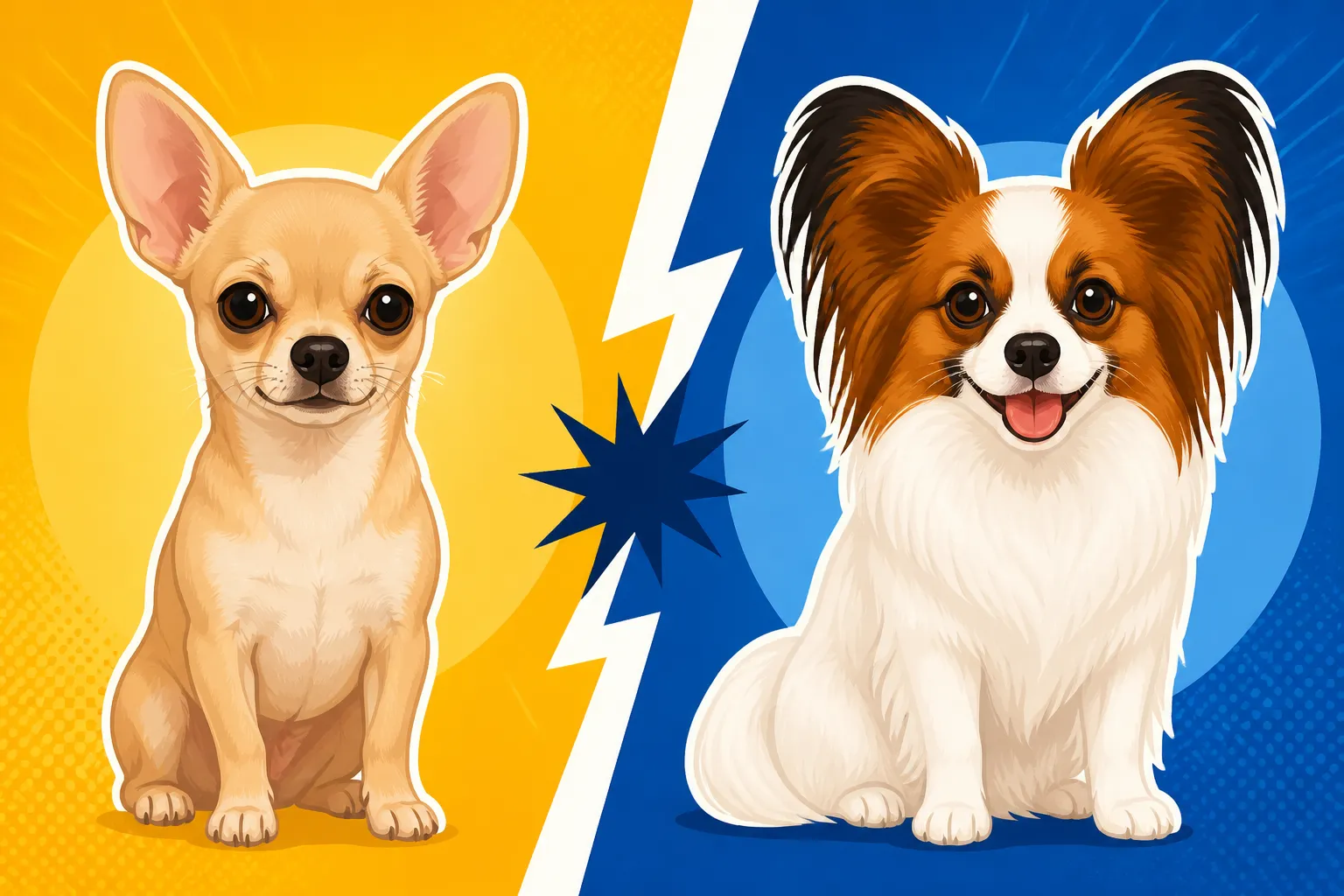
Perhaps the most obvious distinction lies in their heads and, specifically, their ears. The Papillon is famed for its large, fringed ears that stand erect and resemble the wings of a butterfly, hence its name "Papillon," the French word for butterfly. These ears are typically set high on the head, giving them an alert, elegant, and often quite regal expression. Occasionally, you'll see a Papillon with dropped ears, known as a Phalène (French for moth), but the erect "butterfly" ear is the breed's hallmark. Their skull is usually rounded, but not to the extreme apple-dome of some Chihuahuas, and they have a moderately pointed muzzle.
In contrast, the Chihuahua often presents with an "apple head" – a distinctly rounded, domed skull. This unique head shape is a defining trait of the breed standard. Their ears are typically large and erect as well, but they are generally less fringed than a Papillon's and don't have that outward "wing" appearance. Instead, they stand straight up, often slightly flared at the base, giving the Chihuahua a perpetual look of intense curiosity. You'll also encounter "deer head" Chihuahuas, which have a less extreme dome, a longer muzzle, and ears that might be less prominent, but these are not within the breed standard for show. The Chihuahua Molera and What a Soft Spot Means also ties into the apple head structure, being a unique cranial feature for many Chihuahuas.
Coat Types and Textures
Both breeds boast beautiful coats, but their textures and maintenance demands vary significantly. The Papillon almost exclusively comes in a long coat. This coat is fine, silky, and flowing, often with elegant feathering on the ears, chest, legs, and tail. Despite its luxurious appearance, it’s a single coat, meaning it lacks an undercoat, which can simplify grooming compared to double-coated breeds. This flowing hair adds to their refined look, creating a delicate silhouette as they move.
Chihuahuas, however, come in two distinct coat varieties: the smooth coat and the long coat. The smooth coat is short, soft, and close to the body, often with a glossy sheen. It's incredibly easy to care for, requiring minimal brushing. The long coat Chihuahua features soft, fine hair, either flat or slightly wavy, with feathering on the ears, legs, and tail, similar in areas to the Papillon but generally with a denser, sometimes double, coat structure. The feathering is typically less profuse and more confined than a Papillon's. Understanding The Two Chihuahua Coat Varieties Explained can help you appreciate these differences.
Size and Overall Build
When it comes to size, both are true toy breeds, but there are subtle differences in their build and typical weight. Papillons are generally slender and finely boned, giving them an agile and graceful appearance. They typically stand a bit taller than Chihuahuas, usually between 8 to 11 inches at the shoulder, and weigh anywhere from 5 to 10 pounds. Their gait is light and free, reflecting their athletic potential.
Chihuahuas are recognized for their compact and slightly sturdier build relative to their tiny size. The breed standard generally calls for a dog that does not exceed 6 pounds, though many companion Chihuahuas can weigh up to 10 pounds or more. They typically stand shorter, often between 5 to 8 inches at the shoulder. Their body is often described as slightly longer than it is tall. What a Chihuahua Weighs Under the Standard delves deeper into these specific weight guidelines. Their movement, while often energetic, can sometimes appear more delicate due to their small frame.
Temperament and Personality: Lively vs. Loyal
Beyond their looks, the personalities of these two breeds diverge quite a bit. Both are intelligent and capable of strong bonds, but the way they express themselves and interact with the world around them can be very different.
Energy Levels and Playfulness
Papillons are often described as spirited and highly energetic little dogs, despite their delicate appearance. They possess a surprisingly high stamina for their size and love to be active. They excel in dog sports like agility, flyball, and obedience, demonstrating a keen intelligence and eagerness to learn. They thrive on mental stimulation and physical activity, enjoying long walks, games of fetch, and learning new tricks. Their playful nature makes them engaging companions for active individuals or families who appreciate a dog with a zest for life.
Chihuahuas, while certainly capable of bursts of energy and playful antics, generally have lower exercise requirements than Papillons. They are content with shorter walks and indoor play sessions. While they can be very active, their tiny size means they tire more quickly. Many Chihuahuas enjoy lounging and cuddling just as much, if not more, than prolonged physical exertion. Their playful moments are often characterized by quick dashes, toy squeaking, and affectionate wrestling with their chosen people. For a closer look at their activity needs, see Chihuahua Exercise for a Dog That Fits in a Bag.
Affection and Loyalty: One-Person Dog vs. Family Dog
Chihuahuas are famously known for bonding deeply with one or two specific individuals. They often become incredibly devoted to their chosen person, often shadowing them, demanding attention, and showing intense loyalty. This strong bond can sometimes manifest as aloofness or even suspicion towards strangers or other pets in the household, particularly if not properly socialized. While they can certainly be affectionate with multiple family members, that primary attachment is a hallmark of the breed. This intense loyalty is part of Chihuahua Temperament and What the Standard Asks For.
Papillons, while also loyal and affectionate, tend to be more universally friendly and outgoing. They often form strong bonds with their entire family rather than singling out one person. They are generally more welcoming to strangers and other pets, provided they have been well-socialized from a young age. Their cheerful and amenable disposition makes them excellent companions for families, including those with older, respectful children. They enjoy being the center of attention and participating in family activities.
Protective Instincts and Alertness
Both breeds are excellent watchdogs due to their alert nature and keen senses, but their motivations and expressions can differ. Chihuahuas are well-known for their strong protective instincts, often barking vigorously at perceived threats, which can range from a squirrel in the yard to a delivery person at the door. They have a reputation for being rather fearless, despite their size, and will often stand their ground, sometimes with a lot of noise. This can be challenging for owners, leading to behavior often labeled as "small dog syndrome" if not managed with proper training and socialization. Chihuahua Fear Reactivity, the Breed's Real Problem touches on this aspect of their personality.
Papillons are also very alert and will typically bark to announce visitors or unusual sounds. However, their protective instincts are usually less intense than a Chihuahua's. They are more likely to be curious and observant rather than overtly aggressive or overly territorial. While they might alert you to something new, they are generally less prone to incessant barking or fear-based reactivity. Their intelligence and more open nature often mean they are quicker to accept new people or situations once they've had a chance to assess them.
Care Requirements: Grooming, Exercise, and Health
Even in their daily needs, these two toy breeds present different considerations for potential owners, particularly concerning their coats, activity levels, and breed-specific health predispositions.
Grooming Needs
The Papillon's long, silky coat, despite its elegance, is surprisingly low-maintenance compared to many other long-haired breeds. Because it's a single coat, it tends not to mat as easily as breeds with dense undercoats. Regular brushing, about two to three times a week, is usually sufficient to keep it free of tangles and looking its best. Special attention should be paid to the feathering on their ears and tail, which can be prone to collecting debris or small knots. Occasional baths are needed to keep their coat clean and shiny.
Chihuahuas, depending on their coat type, have varying grooming needs. Smooth coat Chihuahuas are incredibly low-maintenance, requiring only a quick brush once a week to remove loose hair and keep their coat healthy. They shed, but the short hairs are generally less noticeable. Long coat Chihuahuas need more frequent brushing, typically two to three times a week, to prevent matting in their feathering and keep their longer hair tidy. They can shed more noticeably than their smooth-coated counterparts. Both types benefit from regular nail trims and ear cleaning. You can find many of the necessary grooming tools for either breed at a reliable pet supply store like Chewy. For specifics on Smooth Coat and Long Coat Chihuahua Grooming, there's a dedicated resource.
Exercise Demands
As mentioned earlier, Papillons are energetic little dynamos. They require a good amount of exercise and mental stimulation daily to keep them happy and well-behaved. This could include a brisk walk, interactive playtime in a secure yard, or engaging in puzzle toys indoors. They are adaptable and can certainly enjoy a good cuddle on the couch, but neglecting their exercise needs can lead to boredom and potentially destructive behaviors. Many owners find success channeling their Papillon's energy into dog sports.
Chihuahuas, on the other hand, have more moderate exercise requirements. Short, regular walks around the block or enthusiastic play sessions indoors are often sufficient to meet their physical needs. Their small size makes them well-suited for apartment living, as long as they get their daily outings. It's important to protect them from extreme weather conditions during walks, as their small bodies can get cold quickly in winter or overheat easily in summer. For Keeping a Chihuahua Warm Through Winter, specialized clothing might be needed.
Common Health Concerns
Both breeds are generally robust for their size and have respectable lifespans, but like all purebreds, they have certain genetic predispositions to be aware of.
Papillons are known to be prone to conditions such as patellar luxation (slipping kneecaps), dental disease, and occasionally progressive retinal atrophy (PRA), which affects their vision. Hypoglycemia (low blood sugar) can also be a concern, particularly in very young puppies or adult dogs that miss meals. Responsible breeders screen for these conditions, and regular vet check-ups are crucial for early detection and management.
Chihuahuas share some of these concerns but also have their unique set of issues. Patellar luxation is very common in Chihuahuas, and many will experience it to some degree. Patellar Luxation, the Chihuahua's Commonest Joint Problem details this extensively. Dental disease is also a massive issue for Chihuahuas due to their crowded small jaws, often leading to significant costs and discomfort if not managed with daily brushing and regular professional cleanings. Chihuahua Dental Disease in a Crowded Small Jaw is a must-read for any Chihuahua owner. Other concerns include hydrocephalus (water on the brain), particularly with the apple-head variety and open moleras, collapsing trachea, and hypoglycemia in puppies. Chihuahua Hypoglycemia and the Puppy Emergency is essential reading for new puppy owners. Due to their shallow eye sockets, Chihuahua Eye Problems in a Shallow Socket are also a concern.
Here’s a quick overview of some key differences:
| Feature | Papillon | Chihuahua |
|---|---|---|
| Ears | Large, erect, fringed, butterfly-like | Large, erect, less fringed, flared at base |
| Head Shape | Rounded, moderately pointed muzzle | "Apple head" (domed) or "deer head" |
| Coat Type | Long, silky, single coat, feathered | Smooth (short) or Long (fine, feathered) |
| Height | 8-11 inches at shoulder | 5-8 inches at shoulder |
| Weight | 5-10 pounds | Typically under 6 pounds (some up to 10+) |
| Energy Level | High, spirited, loves activity | Moderate, bursts of energy, enjoys lounging |
| Affection | Bonds with whole family, generally outgoing | Tends to bond strongly with one person, devoted |
| Watchdog | Alert, barks to announce visitors | Very alert, strong protective instincts, vocal |
| Grooming | Moderate (2-3x/week brushing) | Low (smooth coat) to moderate (long coat) |
| Common Health | Patellar luxation, PRA, dental issues | Patellar luxation, dental, hydrocephalus, collapsing trachea, hypoglycemia |
Training and Socialization: Different Approaches for Different Natures
Training and socialization are critical for any dog, but the inherent traits of Papillons and Chihuahuas mean that their owners might approach these aspects with slightly different strategies.
Trainability and Intelligence
Both Papillons and Chihuahuas are intelligent breeds, capable of learning a wide array of commands and tricks. Papillons are particularly celebrated for their eagerness to please and quick grasp of new concepts, often making them stars in obedience and agility rings. Their high energy and desire for mental stimulation mean they thrive on consistent, positive reinforcement training. They enjoy the process of learning and solving problems, which makes them highly trainable companions.
Chihuahuas are also very smart, but their independent streak and strong personalities can sometimes make them a bit more challenging to train, or at least require more patience and consistency. They respond best to positive reinforcement and can be quite food-motivated. However, their tendency to bond closely with one person means they might be less inclined to perform for others. It’s crucial to start training early and maintain it throughout their lives, treating them like any other dog, regardless of their size. Training a Chihuahua Exactly Like a Big Dog emphasizes this point.
Socialization Strategies
Effective socialization is paramount for both breeds, but the potential pitfalls differ. For Papillons, early and consistent socialization is key to ensuring their naturally outgoing nature develops into a well-adjusted adult. Exposing them to a variety of sights, sounds, people, and friendly dogs from a young age helps them grow into confident, well-mannered companions. They generally enjoy meeting new people and other animals when introduced properly.
Chihuahuas, due to their often-protective instincts and potential for fear reactivity, require particularly careful and positive socialization. It’s vital to introduce them to new experiences gradually, ensuring positive associations. This isn't about exposing them to everything at once, which can be overwhelming for a small dog, but rather controlled, positive encounters. Carrying them everywhere or letting them snap at strangers can exacerbate negative behaviors, leading to "small dog syndrome." Instead, structured positive experiences are best. Tools and treats from a reputable source like Chewy can be helpful for rewarding positive behavior during socialization.
Handling and Confidence
The delicate nature of both breeds means careful handling is always important, but particularly for the Chihuahua. Their small bones are more susceptible to injury from falls or rough play. While a Papillon is generally more robust and enjoys active play, a Chihuahua's extreme fragility, especially as a puppy, means constant vigilance. Children should always be supervised around them, and rules about gentle interaction must be strictly enforced.
Building confidence in a Chihuahua often involves empowering them to explore the world safely on their own four paws, rather than constantly being carried. While it's tempting to scoop up a small dog to protect it, this can actually hinder their confidence and social development. Encouraging them to walk on a properly fitted harness and lead, exploring new environments, and learning to trust their surroundings can make a huge difference. Harnesses and Leads Sized for a Chihuahua can guide you on proper equipment.
Ultimately, both the Papillon and the Chihuahua are wonderful companion dogs, each bringing their own unique set of characteristics to a home. Your choice will depend on your lifestyle, your preferences for grooming and exercise, and the kind of personality you're looking for in your furry friend.
Disclaimer
This article is for general informational purposes only and does not constitute professional advice. Laws, prices and regulations vary by location and change over time. Consult a qualified professional for guidance on your specific situation.