Frozen Chews for a Teething Chihuahua
Oh, the joys (and pains!) of a Chihuahua puppy's teething phase! If you're currently navigating a miniature land shark with needle-sharp teeth attached to a body that weighs less than a bag of sugar, you know exactly what I'm talking about. That relentless chewing, the little grunts of frustration, and the way they try to gnaw on anything and everything—including your fingers and toes—can be utterly exhausting. It’s a completely normal part of their development, but that doesn't make it any less challenging. This guide is all about finding some sweet, cool relief for your tiny terror's aching gums by exploring the wonderful world of frozen chews, helping you both get through this puppy stage with a little more peace.
Understanding Your Teething Chihuahua Puppy's Needs
Before we dive into the icy goodness, let's really get into what your little Chihuahua is experiencing during teething. It’s not just a passing phase; it’s a full-on construction project happening inside their tiny mouth, and it can be genuinely uncomfortable for them. Understanding this helps us approach the problem with more patience and the right tools.
The Teething Timeline for Tiny Mouths
Just like human babies, Chihuahua puppies are born without teeth. But it doesn't take long for those first pearly (or rather, pin-sharp) whites to emerge! Typically, their deciduous, or "milk," teeth start erupting around 3-4 weeks of age. By the time you bring your little one home, usually around 8-12 weeks, they’ll have a full set of 28 tiny baby teeth. And trust me, they know how to use them! These are the infamous Needle Teeth on a Chihuahua Puppy that can make playtime feel like a tiny acupuncture session.
The real fun begins when these baby teeth start making way for their adult set, which usually starts between 12 and 16 weeks (about 3-4 months old). This is when you'll really notice the increase in chewing behavior. Their 28 baby teeth are replaced by 42 adult teeth, and that's a lot of dental traffic in such a small jaw! The process of baby teeth falling out and adult teeth pushing through can cause significant gum inflammation, soreness, and an intense urge to chew. Most Chihuahuas will have all their adult teeth by around 6-7 months of age, but the discomfort can wax and wane throughout this period. It’s a marathon, not a sprint, for those little gums.
Why Chewing Becomes a Frenzy During Teething
Imagine having a constant dull ache in your mouth, sometimes throbbing, sometimes itchy, as new teeth try to break through the surface of your gums. That's essentially what your Chihuahua puppy is feeling. Chewing provides a natural way for them to massage their sore gums, relieve pressure, and even help loosen those stubborn baby teeth that are trying to hang on for dear life. It's an instinctual behavior, hardwired into them as a way to self-soothe and facilitate the process.
For a Chihuahua, whose mouth is already so small and delicate, this can feel even more intense. They don't have the sheer jaw power of a larger breed, but their persistence is legendary! They'll try to chew on anything that offers resistance and provides that satisfying counter-pressure. This is why your chair legs, your remote control, and, yes, your fingers become prime targets. It's not malicious; it's purely a drive to alleviate discomfort. Providing appropriate and satisfying outlets for this chewing instinct is absolutely crucial to save your household items (and your sanity!).
The Dangers of Inappropriate Chews
While the urge to chew is strong, not all chews are created equal, especially for a tiny Chihuahua. Giving your puppy the wrong kind of chew can lead to serious health problems. Super hard items, like real animal bones (cooked or raw), antlers, or very dense nylon bones not specifically designed for toy breeds, can actually break those delicate puppy teeth or even adult teeth that are just coming in. A fractured tooth is painful and can lead to infection and costly veterinary intervention.
Another huge concern for Chihuahuas is the risk of choking or intestinal blockages. Small, flimsy toys can be quickly ripped apart and swallowed. Bits of rawhide, while popular, can be difficult to digest and may swell in the stomach or intestines, causing a blockage. Even some seemingly safe chews can pose a risk if they're too small and can be swallowed whole. Always consider the chew's material, size, and durability. You're looking for something that allows them to chew and massage without breaking or posing a choking hazard. When looking at options, whether online at Amazon or in a local pet supply store, always read reviews and product descriptions with your Chihuahua's tiny size and powerful chewing instinct in mind.
The Soothing Power of Frozen Chews
Now that we understand the plight of the teething Chihuahua, let's talk about the superhero of this stage: frozen chews. The simple power of cold can make a world of difference for your puppy's inflamed gums.
How Cold Helps Inflamed Gums
Think about when you have a sore muscle or a headache; often, applying something cold can bring immediate relief. The same principle applies to your Chihuahua's teething gums. The cold temperature acts as a mild analgesic, numbing the pain receptors in their inflamed gums. It also helps to reduce swelling and inflammation, which are major contributors to their discomfort.
When a puppy gnaws on a frozen chew, the sustained coolness against their gums provides that much-needed soothing sensation. It's like a tiny, frosty massage that eases the ache and lessens the urge to chew quite so frantically. It transforms their painful chewing into a more comfortable, productive activity. This is why you'll often see them settle down with a frozen treat, happily gnawing away, a stark contrast to the frantic, sometimes frustrated chewing they might exhibit on other items.
Types of Safe Frozen Chews for Chihuahuas
When choosing frozen chews, safety is paramount. We want things that will thaw slowly, provide relief, and won't splinter or be swallowed in dangerous chunks.
Here's a breakdown of excellent options:
- Frozen Fruits and Vegetables: Many fruits and veggies are perfectly safe and healthy for Chihuahuas in moderation. Think small chunks of frozen banana, apple slices (ensure no seeds, as they contain cyanide!), baby carrots, or green beans. These offer a firm, cold texture and some nutritional value. Always cut them into appropriate, tiny, chewable sizes to prevent choking hazards.
- Frozen Wet Food or Purees: This is a fantastic option. You can take your puppy's regular wet food (or a high-quality, Chihuahua-appropriate wet food like that offered by Ollie, known for its fresh ingredients), mash it into an ice cube tray, and freeze. Once frozen, pop out a cube for a delicious, long-lasting, and soothing chew. You can also use puppy-safe purees like pumpkin or sweet potato. These are soft enough not to damage developing teeth but firm enough when frozen to provide good pressure.
- Puppy-Safe Freezable Toys: Many companies design specific toys that can be filled with treats or water and then frozen. Look for soft, durable rubber toys (like a small Kong or similar brand) that can withstand chewing without breaking apart. These often have nubs or textures that feel extra good on sore gums. Fill them with a little peanut butter (xylitol-free!), yogurt, or wet food before freezing. You can find a huge variety of these online through retailers like Chewy or Amazon, often specifically marketed for small breeds.
- Frozen Washcloths/Rags: A simple, cost-effective solution! Wet a clean washcloth, wring it out, twist it into a rope or knot, and freeze it. The icy fabric provides excellent relief for sore gums. Just be sure to supervise closely, as some pups might try to ingest the cloth if left unattended, which could lead to a Chihuahua Hypoglycemia and the Puppy Emergency if they can't eat or worse, an obstruction.
Here's a quick comparison of popular frozen chew options:
| Chew Type | Pros | Cons | Preparation |
|---|---|---|---|
| Frozen Banana/Apple | Natural, healthy, sweet, good texture | Can be sticky, apple seeds are toxic, higher in sugar | Cut into small, seedless pieces; freeze on parchment paper |
| Frozen Carrots/Green Beans | Crunchy, healthy, low calorie, good for dental health | Can be too hard if full-sized; small pieces can be swallowed quickly | Use baby carrots or small pieces; freeze |
| Frozen Wet Food/Puree | Highly palatable, customizable, good for picky eaters, soft when thawing | Can be messy, requires preparation, potential for staining | Mash into ice cube trays or small molds; freeze |
| Freezable Rubber Toys | Durable, reusable, provides mental stimulation, safe | Initial cost, requires supervision, needs cleaning after each use | Stuff with wet food/yogurt/peanut butter; freeze |
| Frozen Wet Washcloth | Cheap, easy to make, good texture | Can be ingested if unsupervised, not very durable | Wet, wring, twist/knot; freeze |
Preparing Frozen Chews Safely
Making frozen chews for your Chihuahua puppy is straightforward, but a few safety tips can ensure a positive experience:
- Portion Control is Key: Chihuahuas are tiny, so their treats should be tiny too. An entire frozen banana might be too much; a small slice or a quarter of a small ice cube is often plenty for one session. Overfeeding, even healthy treats, can lead to tummy upset or unwanted weight gain. Remember, Daily Calories for a Three to Seven Pound Chihuahua are very limited.
- Supervise Always: Never leave your Chihuahua puppy unattended with a frozen chew, especially one that could potentially break into smaller pieces or be swallowed. Even with supposedly safe items, things can go wrong. Supervision ensures they are chewing appropriately and don't try to swallow anything too big.
- Cleanliness Matters: Always use clean ice cube trays, molds, or washcloths. Wash fresh fruits and vegetables thoroughly before freezing. This prevents introducing bacteria to your puppy's delicate system.
- Gradual Introduction: If your puppy hasn't had a particular fruit, vegetable, or frozen treat before, introduce it slowly. Give a very small amount and watch for any signs of digestive upset. Just like people, some dogs can be sensitive to new foods.
- Placement is Everything: Offer frozen chews in an area where cleanup is easy, like a tiled floor or a designated "chewing mat." They can be a bit messy as they melt!
By following these simple guidelines, you can provide a safe, soothing, and enjoyable experience for your teething puppy.
DIY Frozen Treats Your Chihuahua Will Love
One of the best things about frozen chews is how easy they are to make at home. You can tailor them perfectly to your Chihuahua's preferences and dietary needs. Plus, it's often more cost-effective than buying specialized chews, and you know exactly what ingredients are going into them.
Simple Frozen Fruit and Veggie Bites
These are a go-to for many Chihuahua parents because they’re healthy, refreshing, and provide a lovely texture for sore gums.
- Frozen Banana Slices: Peel a ripe banana, slice it into small, coin-sized pieces, and freeze them on a parchment-lined tray. Once solid, you can transfer them to a freezer bag. Bananas are naturally sweet and become wonderfully firm but not rock-hard when frozen, perfect for a tiny mouth.
- Apple Chunks (Seedless!): Core an apple thoroughly, making sure absolutely no seeds remain, as apple seeds contain cyanide and are toxic. Cut the apple into small, Chihuahua-appropriate chunks. Freeze them in a similar way to bananas. Apples offer a satisfying crunch even when frozen and are great for dental stimulation.
- Baby Carrots: These can be given whole if your Chihuahua is a strong chewer, but for smaller or less robust puppies, cutting them in half lengthwise or into smaller discs can make them safer. Frozen baby carrots are a fantastic, low-calorie option that provides great resistance. They're like a natural toothbrush!
- Green Beans: Fresh or frozen green beans (ensure they are plain, unsalted) can be given as is. They’re a gentle, cool option that many Chihuahuas enjoy.
Always remember the golden rule: moderation. A couple of small pieces are often enough. For wider variety, What a Chihuahua Costs From Eight Weeks to Sixteen provides broader context on food expenses, but these DIY treats are a thrifty choice.
Frozen Broth or Yogurt Pops
These are wonderfully hydrating and incredibly soothing. They're also super easy to make!
- Low-Sodium Broth Pops: Take some low-sodium chicken or beef broth (make sure it doesn't contain onions or garlic, which are toxic to dogs). Pour it into small ice cube trays. Once frozen, you have convenient, savory "broth-sicles" that your Chihuahua can lick and gnaw on. This is especially good if your puppy isn't drinking enough water due to teething discomfort, helping with Chihuahua Water Intake at Low Body Weight.
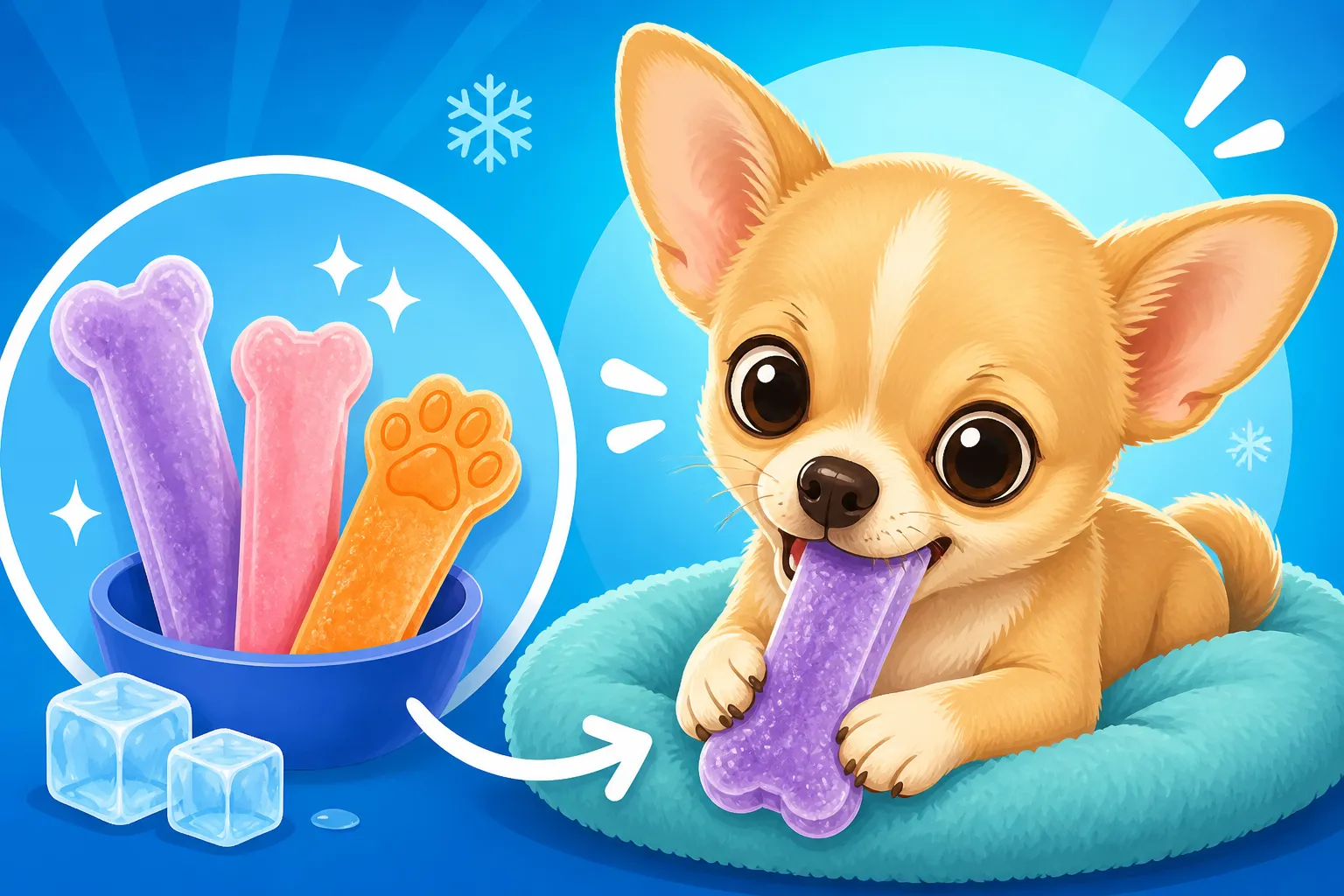
- Plain Yogurt Bites: Use plain, unsweetened yogurt (Greek or regular, full-fat is often fine, but check for any dairy sensitivities). Avoid yogurts with artificial sweeteners like xylitol, which is highly toxic to dogs. Spoon small dollops onto parchment paper or fill tiny molds (you can find silicone molds shaped like bones or paws on Amazon or Chewy). Freeze until solid. Yogurt provides probiotics and is another gentle, soothing option.
Both of these options melt into a liquid, so they are generally safe from choking hazards, but supervision is still recommended to manage any mess.
Wet Food-Stuffed Kongs and Puzzle Toys
This is where you can combine mental stimulation with physical relief. Stuffable toys, like those from Kong, are perfect for this.
- Choose the Right Size: Ensure the toy is appropriately sized for your Chihuahua. A toy that's too large will be difficult for them to hold and maneuver, while one that's too small could pose a choking risk.
- Stuff with Wet Food: Take your puppy's regular wet food or a high-quality fresh food. Brands like Ollie offer fresh, human-grade food that can be easily mashed and stuffed into these toys. You can mix it with a little plain pumpkin puree or peanut butter (again, check for xylitol!) to make it extra appealing and help it stick.
- Freeze It Solid: Once stuffed, pop the entire toy into the freezer for a few hours, or even overnight, until the contents are frozen solid.
- Offer and Supervise: Give the frozen, stuffed toy to your Chihuahua. The challenge of getting the food out, combined with the cold, will keep them happily occupied and soothe their gums. This is a great enrichment activity, especially if you need to keep them Chihuahua Crate Training or otherwise occupied in one spot. As it thaws, it becomes a tasty reward.
These types of frozen chews can last a surprisingly long time for a Chihuahua, offering extended relief and engagement.
Best Practices for Teething Chihuahua Management
While frozen chews are fantastic, they're just one tool in your comprehensive puppy-raising toolkit. Holistic management of the teething phase involves several other strategies to ensure your Chihuahua puppy stays healthy, happy, and well-behaved.
Rotation and Supervision of Chews
Just like with human toddlers, variety is the spice of life for a teething puppy. Offering a rotation of different types of safe chews—some frozen, some softer rubber, some textured—can keep your Chihuahua interested and prevent them from getting bored and turning to inappropriate household items. You might have one specific toy they love for its texture, and then rotate in a frozen treat for relief.
However, the most important aspect remains supervision. Never, ever leave your tiny Chihuahua puppy alone with any chew that has the potential to break, fray, or be swallowed whole. Even seemingly indestructible toys can become a hazard if a determined Chihuahua manages to chew off a piece. When you can't actively watch your puppy, it's best to remove all chews that aren't 100% safe (like a very large, immovable, solid rubber toy, for example). This also goes for any fabric chews like frozen washcloths. Preventing accidents is always easier than dealing with them.
Combining Frozen Chews with Other Teething Strategies
Frozen chews are a powerful ally, but they work best when combined with other smart strategies:
- Gentle Gum Massage: Sometimes, your puppy just needs a little extra comfort. You can gently rub their gums with your clean finger. This can provide direct pressure and soothing. Make sure your puppy is comfortable with this, as some might be too sore or not keen on having fingers in their mouth. Start slow and make it a positive experience.
- Appropriate Puppy Toys: Beyond freezable options, ensure you have a variety of safe, durable puppy toys specifically designed for small breeds. These should be too large to swallow but small enough for their tiny mouths to manipulate. Look for materials like soft rubber or puppy-safe rope toys. Chihuahua Toys That Survive Small Sharp Teeth are an investment in their comfort and your peace of mind.
- Positive Reinforcement for Appropriate Chewing: Whenever your puppy chooses to chew on an approved chew toy instead of your furniture or fingers, praise them lavishly! This teaches them what they should be chewing on. When they nip at you, a firm "no," and redirecting them to a toy is often effective. For tips on managing those sharp puppy nips, check out Chihuahua Puppy Biting at Fingers.
- Maintain Routine and Comfort: Teething can make puppies a little more irritable or unsettled. Stick to a consistent daily routine for feeding, potty breaks, and playtime. Ensure they have a cozy, warm, safe spot for rest, like a Chihuahua Crate Size and Setup where they feel secure. This consistency can help reduce overall stress during a challenging time. Remember that Settling a Two Pound Chihuahua Puppy Into the House often involves managing these early physical discomforts.
When to Consult Your Vet About Teething Troubles
Most Chihuahuas navigate teething without serious complications, but there are times when a call to your veterinarian is absolutely warranted.
- Excessive Pain or Reluctance to Eat: While some discomfort is normal, your puppy shouldn't be in so much pain that they refuse to eat their regular meals or become lethargic. If you notice a significant decrease in appetite or energy, especially concerning for breeds prone to Chihuahua Hypoglycemia and the Puppy Emergency, contact your vet immediately. Persistent whining or crying might also indicate unusual pain.
- Retained Baby Teeth: This is a very common issue in Chihuahuas and other small breeds. Sometimes, a baby tooth (especially the canines) doesn't fall out when the adult tooth starts to erupt. This means you might see two teeth trying to occupy the same spot, creating a "double row" of teeth. This can lead to food getting trapped, increased plaque buildup, misalignment of the adult teeth, and even damage to the jaw. If you notice Why a Chihuahua Keeps Its Puppy Canines or Chihuahua Tooth Crowding and Retained Baby Teeth, your vet will likely recommend extraction of the retained baby teeth. This is usually done during spay/neuter surgery, but sometimes earlier if it's causing problems. While the idea of Anesthesia Risk During a Chihuahua Dental for a tiny pup can be worrying, addressing retained teeth is crucial for their long-term oral health and preventing Chihuahua Dental Disease in a Crowded Small Jaw later in life.
- Swollen, Bleeding Gums or Odor: A little bit of blood on a chew toy is normal during teething as baby teeth fall out. However, if your puppy's gums are severely swollen, bright red, bleeding excessively, or if you notice a foul odor coming from their mouth, it could be a sign of infection or another problem.
Always err on the side of caution with your tiny Chihuahua. They are masters of hiding discomfort, so any overt signs should be taken seriously. Your vet is your best partner in navigating these early stages of your puppy's life.
Disclaimer
This article is for general informational purposes only and does not constitute professional advice. Laws, prices and regulations vary by location and change over time. Consult a qualified professional for guidance on your specific situation.