Calculating a Chihuahua Ration at Forty Calories a Pound
One of the trickiest parts of owning a tiny Chihuahua is figuring out just how much food they actually need. It feels like such a small amount, and yet, getting it wrong can lead to serious health issues, from obesity to dangerous blood sugar crashes. This guide will walk you through a reliable method for calculating your Chihuahua's daily caloric needs using the "40 calories per pound" rule, helping you ensure your little companion gets exactly the right fuel.
Why "Forty Calories a Pound" is Your Chihuahua's Starting Point
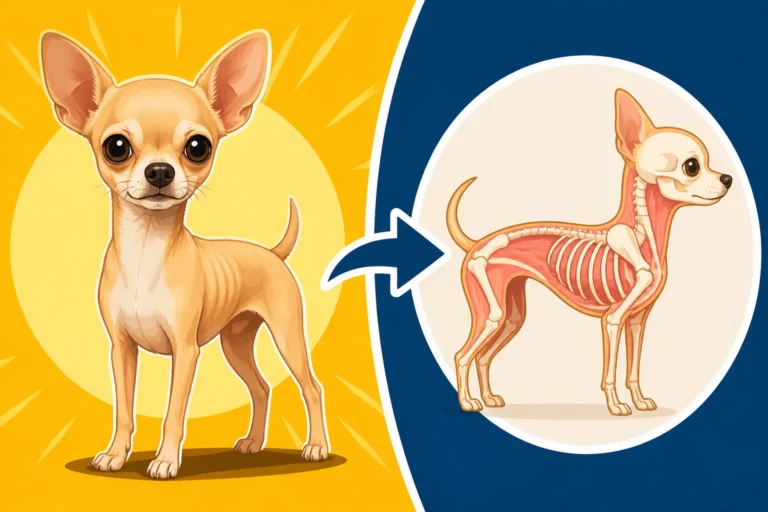
When you have a dog that can fit into a handbag, it's easy to assume they don't need much fuel. But Chihuahuas, despite their diminutive size, have a remarkably fast metabolism. Their small bodies burn through energy at a higher rate per pound compared to much larger dogs. This means their caloric needs are often more concentrated, and getting the portion size right is absolutely critical for their long-term health and vitality. The "40 calories per pound of ideal body weight" rule offers a fantastic starting point for adult Chihuahuas, providing a foundational guideline before you fine-tune for individual needs.
Understanding Your Chihuahua's Metabolic Rate
Think about it: a tiny Chihuahua weighing just four pounds has a massive surface area relative to its body mass. This isn't just about heat loss, although that's a factor in why they shiver so much! It's also about how their organs function and how quickly they process nutrients. Their little hearts beat faster, their digestion can be quicker, and they're often surprisingly active, even if it's just zooming around your living room. All these factors contribute to a higher metabolic rate per pound than, say, a 60-pound Labrador Retriever. This rapid metabolism is why a seemingly small deviation in their diet can have a much more pronounced effect on a Chihuahua than on a larger breed.
This baseline of 40 calories per pound helps account for this elevated metabolic rate, ensuring they get enough energy to maintain their body functions without feeling perpetually hungry or, conversely, gaining weight too easily. Of course, this is an average, and an exceptionally energetic Chihuahua might need slightly more, while a very sedate senior dog could require a bit less.
The Dangers of Overfeeding a Tiny Dog
It's tempting to spoil our Chihuahuas with extra treats or a slightly larger meal, especially when they give you those adorable puppy-dog eyes. However, for a breed as small as a Chihuahua, even a fraction of an extra cup of kibble each day can quickly lead to significant weight gain. Imagine an extra ounce on a human; for a four-pound dog, an extra ounce of body weight is a far more substantial percentage of their total mass. This is why Chihuahua Obesity on a Six Pound Frame is a serious concern.
Excess weight puts immense strain on their delicate joints, exacerbating conditions like Patellar Luxation, the Chihuahua's Commonest Joint Problem. It can also worsen respiratory issues like Collapsing Trachea and the Chihuahua Honking Cough, making it harder for them to breathe. Obesity also increases the risk of heart disease and diabetes, shortening their already precious lifespan. Because their ideal weight range is so narrow—typically between two and six pounds for the breed standard—maintaining a healthy weight is paramount. It’s a loving act to be disciplined about their food portions.
The Risk of Underfeeding and Hypoglycemia
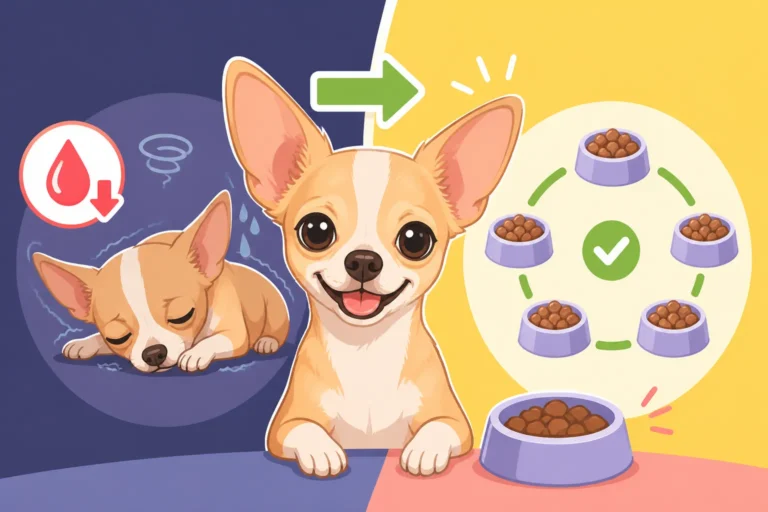
While overfeeding is a common pitfall, the opposite extreme—underfeeding—can be just as dangerous, if not more so, for Chihuahuas, especially puppies. Their small size and rapid metabolism mean they have very little in the way of energy reserves. If a Chihuahua, particularly a young one, doesn't eat frequently enough or doesn't consume enough calories, their blood sugar can drop dangerously low, a condition known as hypoglycemia.
The signs of hypoglycemia can be frightening: lethargy, disorientation, trembling, and in severe cases, seizures and collapse. It's a true emergency. This is why understanding and meeting their caloric needs is non-negotiable, particularly for growing puppies who are more susceptible. Neglecting to provide adequate, consistent nutrition can quickly lead to a crisis. If you suspect your Chihuahua puppy is experiencing this, you need to act fast. Keeping glucose gel or syrup on hand can be a lifesaver in these situations.
Step-by-Step: How to Calculate and Adjust Your Chihuahua's Daily Ration
Now that we understand the "why," let's get down to the "how." Calculating your Chihuahua's ideal daily caloric intake isn't rocket science, but it does require precision and a commitment to ongoing observation. The 40 calories per pound rule provides a solid foundation, but remember, it's a starting point, not an unchangeable law.
Accurately Weighing Your Chihuahua
This is the very first and most crucial step. You cannot accurately calculate your Chihuahua's food ration without knowing their precise weight. Forget the "estimate" or "guess" based on how they feel in your arms. You need a digital scale. A small pet scale works wonders, or even a good kitchen scale if your Chihuahua is small enough and cooperative.
Here's a simple method:
- Zero Out the Scale: If using a kitchen scale, place an empty bowl or container on it and press the "tare" or "zero" button.
- Weigh Your Chihuahua: Gently place your Chihuahua in the bowl or directly on the scale. Try to do this when they're calm. If they're squirmy, you can weigh yourself, then weigh yourself holding your Chihuahua, and subtract your weight. Make sure you use the same method each time for consistency.
- Record the Weight: Write down their weight in pounds, including fractions (e.g., 4.5 lbs).
This precise weight is essential not just for calculating food, but also for monitoring their health over time. Even a half-pound change on a small Chihuahua can be significant.
The Initial Calculation (Weight x 40 Calories)
Once you have your Chihuahua's accurate, ideal body weight, the calculation is straightforward. Multiply their weight in pounds by 40.
Formula: Ideal Body Weight (in pounds) x 40 calories = Daily Caloric Needs
Let's look at some examples:
- For a 3-pound Chihuahua: 3 lbs x 40 calories/lb = 120 calories per day
- For a 5-pound Chihuahua: 5 lbs x 40 calories/lb = 200 calories per day
- For a 7-pound Chihuahua: 7 lbs x 40 calories/lb = 280 calories per day
This number represents the total calories your Chihuahua should consume in a 24-hour period, including any treats or dental chews. It's a solid benchmark, but it's important to understand that every dog is an individual.
Fine-Tuning for Activity Level, Age, and Health
The 40 calories per pound is a general guideline for an average, healthy adult Chihuahua. Your specific dog might need slight adjustments:
- Activity Level: Is your Chihuahua a couch potato who enjoys short, leisurely strolls, or are they an energetic zoomer who loves playing fetch for extended periods? A highly active Chihuahua might need closer to 45-50 calories per pound, while a very sedentary one might do better at 35 calories per pound.
- Age: Growing puppies, as mentioned, have much higher caloric demands. They might need closer to 50-60 calories per pound, sometimes even more, to support their rapid development. On the other hand, Senior Chihuahua Care Past the Age of Twelve often means a slower metabolism. An older Chihuahua who is less active and sleeps more might need a slightly reduced intake to prevent weight gain. An Old Chihuahua That Stops Eating Breakfast might also indicate a shift in their metabolic needs or other health concerns.
- Health Status: Certain medical conditions can affect a Chihuahua's caloric needs. Dogs recovering from surgery, those with certain metabolic diseases, or those on specific medications might have altered requirements. Always consult your veterinarian if your Chihuahua has a health condition that might influence their diet. They can provide tailored advice and guidance on calorie adjustments.
Start with the calculated 40 calories per pound, then observe your Chihuahua's body condition and energy levels over a couple of weeks. Are they gaining too much weight? Are they looking a bit too thin? Are they lethargic? These observations will guide your fine-tuning.
Practical Tips for Portioning and Meal Management
Once you have your target daily caloric intake, the next challenge is accurately portioning their food and managing meal times. This is where many owners fall short, often inadvertently over or underfeeding their tiny companions.
The Absolute Necessity of a Kitchen Scale
This cannot be stressed enough: for a Chihuahua, a measuring cup is practically useless. The difference between a "level scoop" and a "heaping scoop" of kibble for a large dog might be 10-20 calories. For a Chihuahua, that same difference could be 50 calories – a massive percentage of their total daily intake! This is why Why a Measuring Cup Is Useless for a Chihuahua is a critical point.
You absolutely need a digital kitchen scale.
- Weigh the Food: Look at your dog food bag for the caloric content per cup or, ideally, per gram or ounce.
- Calculate Grams/Ounces: Divide your Chihuahua's total daily caloric needs by the calories per gram/ounce of their food. This will give you the precise weight of food they need daily.
- Portion Accurately: Use the kitchen scale to measure out their food each day. This ensures consistency and accuracy. You can find excellent, affordable kitchen scales on platforms like Amazon, making this essential tool readily accessible. Measuring Chihuahua Food to the Gram is the gold standard for tiny dogs.
| Chihuahua Weight (Ideal) | Daily Calorie Target (40 cal/lb) | Example Food (350 cal/cup) | Food by Volume (Cups) | Food by Weight (Grams) |
|---|---|---|---|---|
| 3 lbs | 120 calories | 0.34 cups | ~28.6 grams | |
| 4 lbs | 160 calories | 0.46 cups | ~38.1 grams | |
| 5 lbs | 200 calories | 0.57 cups | ~47.6 grams | |
| 6 lbs | 240 calories | 0.69 cups | ~57.1 grams |
Note: These are examples. Always check your specific dog food's caloric content, as it varies widely.
Dividing the Daily Ration into Small, Frequent Meals
Because Chihuahuas have such small stomachs and a fast metabolism, it's far better for their health to feed them several small meals throughout the day rather than one or two large ones. This helps to stabilize their blood sugar levels, preventing those dangerous drops that can lead to hypoglycemia, particularly in puppies. This is why Three Small Meals a Day for a Chihuahua is generally recommended, or even four for very young puppies.
- Puppies: For very young puppies (under 4-6 months), 4-5 small meals spread throughout the day is ideal. This also helps with Chihuahua Hypoglycemia in the First Twelve Weeks.
- Adults: Most adult Chihuahuas thrive on 2-3 meals a day. A common schedule might be breakfast, lunch, and dinner, or even breakfast and dinner with a small mid-day snack.
- Before Bed: A small meal or snack before bed can be very beneficial, especially for Chihuahuas prone to hypoglycemia, as it helps to keep their blood sugar stable overnight.
Free-feeding, where food is left out all day, is almost never a good idea for Chihuahuas. Not only does it make accurate calorie tracking impossible and often leads to obesity, but it also doesn't prevent hypoglycemia effectively, as a dog might eat too much at once and then go too long without. Why a Chihuahua Should Never Graze All Day is a principle to live by.
Accounting for Treats and Chews in the Total
It's easy to forget that every single treat, bite of human food, or dental chew adds calories to your Chihuahua's daily intake. Those tiny pieces add up quickly! To maintain their ideal weight, these calories must be factored into their daily total.
- Treat Budget: Decide on a small percentage of their daily calories (e.g., 10%) that can be allocated to treats. For a 200-calorie-a-day Chihuahua, that's 20 calories.
- Small Treats: Choose very small, low-calorie treats. Many brands, like those found on Chewy, offer tiny training treats perfect for Chihuahuas. Even better, break regular treats into pea-sized pieces. Your Chihuahua likely cares more about the frequency of the treat than its size.
- Healthy Alternatives: Consider using small pieces of plain cooked chicken, green beans, or carrots as low-calorie, healthy treat options.
- Dental Chews: If you give dental chews, read the calorie count! Some can be surprisingly high and eat up a significant portion of their daily allowance. Remember that Chihuahua Dental Disease in a Crowded Small Jaw is common, but dental chews are not a substitute for daily brushing.
By meticulously accounting for every calorie, you're not depriving your Chihuahua; you're actively supporting their health and longevity. It's a small dog, so every calorie counts!
Monitoring Your Chihuahua's Body Condition and Making Adjustments
Even with the most precise calculations, your Chihuahua's needs can change. Metabolism shifts with age, activity, and even the weather. Regular monitoring of their body condition is key to ensuring your initial calculations remain appropriate. Your eyes and hands are your best tools for ongoing assessment.
Feeling a Chihuahua's Ribs and Waist
The "body condition score" is a visual and tactile assessment that veterinarians use, and you can learn to do it at home. It’s far more accurate than just looking at their general shape, especially with a long-haired Chihuahua whose coat can mask a lot.
Here’s how to assess your Chihuahua’s body condition:
- Ribs: Gently run your hands along your Chihuahua's side. You should be able to easily feel their ribs, almost like feeling the knuckles on the back of your hand. You shouldn't see them prominently sticking out, but you also shouldn't have to press hard to feel them under a layer of fat.
- Waist: Look at your Chihuahua from above. They should have a noticeable "waist" tucking in behind their ribs, before flaring out slightly over their hips. If they look like a little furry sausage with no definition, they're likely overweight.
- Abdominal Tuck: From the side, their belly should tuck up slightly from their chest, not hang low or be straight in line with their chest.
A healthy Chihuahua should have a lean, athletic build, even if they spend most of their time cuddling. Don't be afraid to adjust their food slightly up or down based on what you feel and see. Even What a Half Pound Means on a Chihuahua can make a visible difference in their body condition.
Keeping a Food Diary and Tracking Weight
Consistency is your best friend when managing a Chihuahua's weight. Don't rely on memory alone. A simple food diary can be incredibly helpful.
- Daily Log: Jot down everything your Chihuahua eats each day: exact amount of kibble (by weight!), type and quantity of treats, any shared human food, and approximate timing.
- Weekly Weigh-ins: Weigh your Chihuahua once a week, at the same time of day (e.g., before breakfast), and record the weight. This helps you catch any trends early.
- Note Activity Changes: If your Chihuahua has a particularly active week with more walks or playtime, or a very lazy week, make a note of it. This context helps explain any minor weight fluctuations.
By tracking this data, you'll gain valuable insights into how different foods and activity levels impact your individual Chihuahua. If you notice a consistent weight gain or loss over a few weeks, it's a clear signal to re-evaluate your calorie calculation and adjust accordingly.
When to Consult Your Vet About Calorie Needs
While these guidelines are a fantastic starting point for most healthy Chihuahuas, there are times when professional veterinary advice is essential. You should always consult your vet if:
- Persistent Weight Issues: Despite your best efforts at tracking and adjusting, your Chihuahua is consistently gaining or losing weight outside of a healthy range.
- Sudden Weight Changes: Any sudden, unexplained weight loss or gain can be a sign of an underlying health issue and warrants a vet visit.
- Health Conditions: If your Chihuahua has a diagnosed medical condition (like heart disease, kidney disease, or diabetes), their caloric and dietary needs might be very specific. Never make drastic changes to their diet without veterinary guidance.
- Growth Concerns: If you have a puppy that isn't growing as expected or seems underweight, your vet can help determine if their caloric intake is sufficient or if there are other issues at play.
- Transitioning Diets: If you're considering a new food, especially a fresh food option like Ollie, or a prescription diet, your vet can help you calculate the appropriate caloric transition to avoid digestive upset or nutritional imbalances.
Your veterinarian is your most valuable resource in managing your Chihuahua's health, including their dietary needs. Don't hesitate to reach out to them for personalized advice.
Disclaimer
This article is for general informational purposes only and does not constitute professional advice. Laws, prices and regulations vary by location and change over time. Consult a qualified professional for guidance on your specific situation.