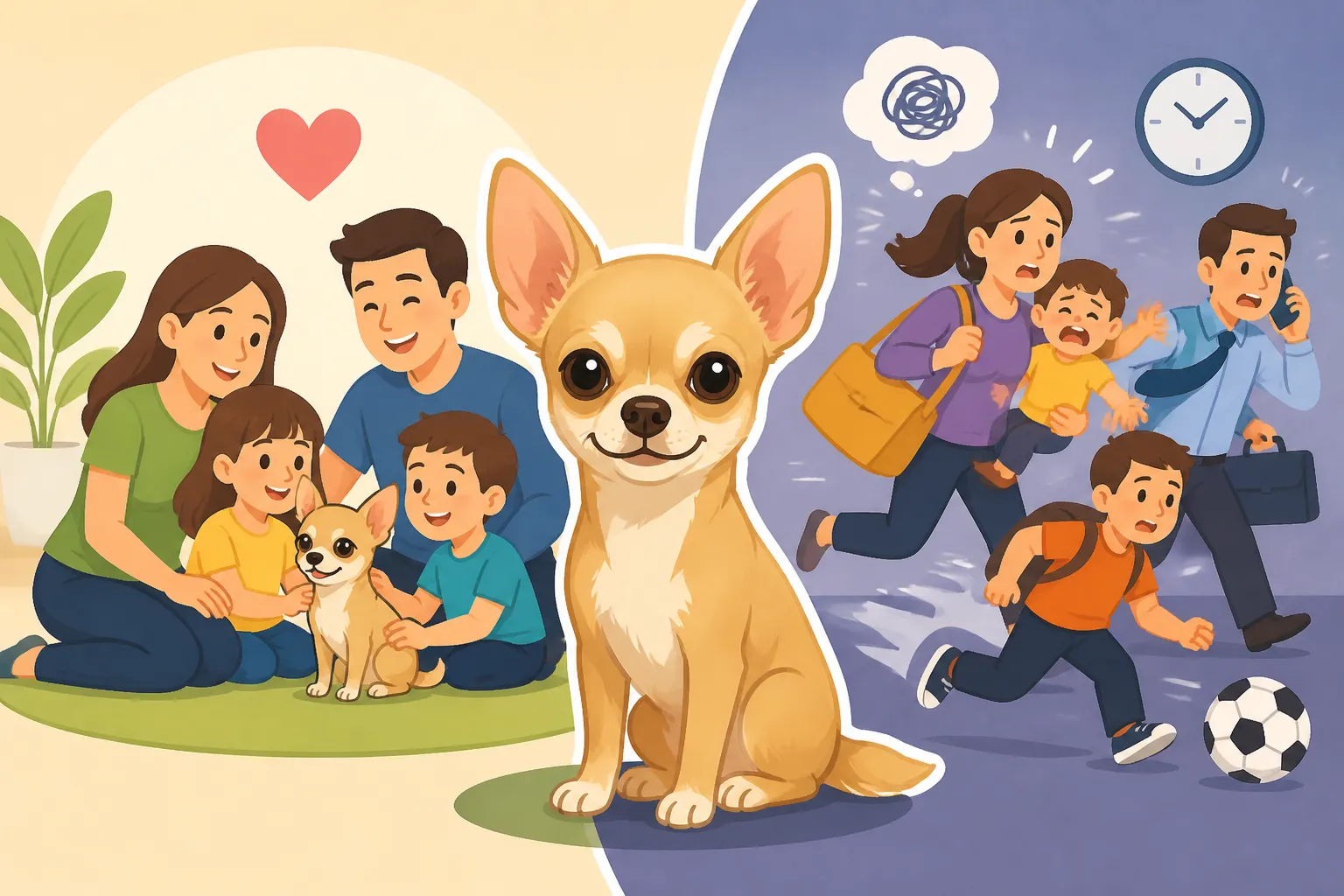
Whether a Chihuahua Fits a Busy Family
It's a question I hear so often from hopeful Chihuahua owners: "I have a busy family, is a Chihuahua really the right dog for us?" It’s a completely fair and honest concern. Many people picture a tiny dog fitting seamlessly into a fast-paced life, perhaps tucked into a handbag, and believe a small dog means small commitment. But the reality is far more nuanced, and a Chihuahua, despite its size, has significant emotional and physical needs that a busy household absolutely must meet. This guide will help you honestly assess if your family's dynamic is a good match for this spirited little breed.
Understanding the Chihuahua's Core Needs
Before we even dive into what "busy" means, it's crucial to understand the fundamental requirements of a Chihuahua. These aren't just decorative dogs; they are intelligent, sensitive, and often fiercely loyal companions who thrive on connection and routine. Their small stature doesn't translate to small needs.
The Deep Need for Companionship
Chihuahuas are renowned for forming incredibly strong bonds with their human family members, often singling out one person as their absolute favorite. This isn't just a cute quirk; it's a deep-seated instinct for a breed that historically lived in close quarters with humans. If your family is constantly on the go, leaving your Chihuahua alone for long stretches, this intense need for companionship can quickly turn into profound loneliness or even Chihuahua Separation Anxiety and Time Alone.
Imagine a scenario: You rush out the door at 7 AM, kids to school, parents to work, and don't return until 6 PM. That's 11 hours of solitude for a little dog who often just wants to be curled up on a lap. While they can learn to tolerate alone time, expecting them to be content with minimal interaction day in and day out is unrealistic and unfair to the dog. They need active engagement, cuddles, and consistent interaction to truly thrive.
Consistent Routines and Predictability
Just like toddlers, Chihuahuas feel most secure when their day is predictable. Knowing when meals are coming, when potty breaks will happen, and when playtime is scheduled reduces anxiety and helps them feel safe in their environment. A busy, unpredictable schedule can be incredibly unsettling for them.
Think about house training, for example. A Chihuahua has a tiny bladder, which means frequent potty breaks are non-negotiable, especially when they're puppies. If your family's schedule means long gaps between outings, or inconsistent times for walks, you're setting your little one up for failure, and potentially, accidents indoors. House Training a Chihuahua With a Tiny Bladder is already a task that requires dedication, and a chaotic schedule makes it exponentially harder. They need to know when their next opportunity is, and if that opportunity is always shifting, it can cause confusion and stress.
Exercise and Mental Stimulation Beyond Just Lap Time
It's a common misconception that Chihuahuas don't need much exercise because they're small. While they might not need miles of running like a Border Collie, they still need daily physical activity and, perhaps even more importantly, mental stimulation. This isn't just about walks; it's about engaging their sharp little minds.
A quick trip around the block might suffice for a potty break, but a truly fulfilled Chihuahua needs more. They need opportunities to sniff new smells, explore safe environments, and play interactive games. Without this, a bored Chihuahua can quickly become a destructive or excessively vocal one. Imagine a Chihuahua stuck inside all day, with no new challenges or sights. They might start barking at every little sound, or even chew on things they shouldn't, simply because they have pent-up energy and an unengaged mind. Chihuahua Exercise for a Dog That Fits in a Bag can be achieved indoors or out, but it requires intentional effort from the family.
Assessing Your Family's "Busy" Level
Not all "busy" is created equal. There's a big difference between a family with many predictable activities and one with a chaotic, constantly shifting schedule. Let's break down how your specific type of busy might mesh with a Chihuahua.
The Predictably Busy Family: Structured Activity
If your family is busy but operates on a relatively stable schedule—say, school, work, and predictable extracurriculars—a Chihuahua can absolutely fit in. The key here is predictability and the willingness to integrate your dog into that structure.
For example, if the kids have soccer practice every Tuesday and Thursday afternoon, that's a consistent chunk of time when someone is not home. But if the rest of the week follows a clear pattern of family time, meals, and walks, your Chihuahua can learn to adapt. They'll know that Tuesday and Thursday afternoons mean quiet time or a scheduled nap. The routine, even if it includes alone time, provides security. This type of family often excels because they can plan ahead, ensuring the Chihuahua's needs are met within the existing framework. They can schedule walks before school, have a dedicated playtime when everyone gets home, and ensure that weekend adventures include their furry friend.
The Occasionally Busy Family: Spontaneous Outings and Travel
This is where things can get a little trickier. If your family frequently has last-minute plans, spontaneous weekend trips, or unpredictable work demands, it can be unsettling for a Chihuahua. Their small size makes them excellent travel companions, but consistent, sudden changes to their routine can cause stress.
Think about those unexpected overnight trips or late-night meetings. Who will feed your Chihuahua? Who will take them out for their essential potty breaks? While options like pet sitters or trusted friends exist, relying on them too often can still disrupt the dog's sense of stability. It’s not just about getting their basic needs met; it’s about maintaining their emotional well-being. A Chihuahua thrives on knowing their people are there, and frequent, unannounced departures can heighten their anxiety.
The Chronically Overwhelmed Family: Constant Chaos
This is the scenario where a Chihuahua might struggle the most. If your family's life is genuinely chaotic, with little routine, inconsistent attention, and constant stress, it's probably not the best environment for a Chihuahua. These dogs are sensitive and can pick up on the household's energy.
In such an environment, essential tasks like regular house training, daily teeth brushing (a huge issue for Chihuahuas as detailed in Chihuahua Dental Disease in a Crowded Small Jaw), and consistent training might fall by the wayside. A Chihuahua needs dedicated time for training and Socializing a Chihuahua Without Overwhelming It to prevent behavioral issues from developing. If you're always feeling rushed, stressed, and unable to commit to these fundamental aspects of dog ownership, it's unfair to bring a Chihuahua into that situation. They might develop fear-based behaviors, excessive barking, or even become snippy due to insecurity and lack of consistent guidance.
Strategies for Integrating a Chihuahua into a Hectic Life
If your family is leaning towards the "predictably busy" side, there are definitely ways to make it work. It requires intentional planning, smart resource utilization, and a commitment from everyone in the household.
Smart Scheduling and Delegation
The most effective strategy is to create a schedule and stick to it as much as possible. This means designating specific times for walks, meals, and playtime, and assigning responsibilities to different family members.
Here's an example:
| Time Slot | Responsibility | Activity for Chihuahua |
|---|---|---|
| 7:00 AM | Parent A or Older Child | Morning Potty Break, Breakfast, Short Playtime |
| 12:00 PM | Dog Walker/Neighbor/Wag | Midday Potty Break, Quick Stretch |
| 5:00 PM | Parent B or Older Child | Evening Potty Break, Dinner, Longer Walk/Fetch (20-30 min) |
| 7:00 PM | Whole Family | Cuddle Time, Training Session (5-10 min) |
| 9:30 PM | Parent A | Final Potty Break, Bedtime Routine |
This kind of structure ensures that even when individuals are busy, the dog's core needs are met. It also teaches the Chihuahua what to expect, reducing anxiety. Remember, everyone in the family needs to be on board with these responsibilities, not just one person.
Utilizing Modern Conveniences and Support Systems
We live in an age where technology and services can be a huge help to busy pet owners. Don't be afraid to lean on these resources.
- Dog Walkers and Pet Sitters: For those midday potty breaks or when you have an unexpected late evening, a reliable dog walker can be a lifesaver. Look for local services or platforms like Wag or Rover. For longer trips, a dedicated pet sitter who comes to your home can be less stressful for a Chihuahua than boarding.
- Doggy Daycare (Toy Dog Specific): Some Chihuahuas absolutely love daycare, especially if it's a facility that has separate play areas for small breeds. This ensures they get socialization and exercise in a safe environment while you're at work. Just be sure to find one that screens dogs carefully and understands the unique needs of toy breeds.
- Automatic Feeders: While not a replacement for interaction, an automatic feeder can help maintain consistent meal times, especially if your schedule is unpredictable around breakfast or dinner. Make sure to get one with small portion sizes, as Chihuahuas only eat a few ounces a day.
- Online Shopping: Services like Chewy offer auto-ship options for food and treats, meaning you'll never run out of essentials. They also have a fantastic selection of puzzle toys and enrichment items that can keep a Chihuahua's mind busy when you can't actively engage with them.
Creating an Enriching and Safe Home Environment
Even when alone, a Chihuahua's environment can contribute significantly to their well-being. Make sure your home is set up to support them.
- Safe "Den" Space: A comfortable crate or a cozy bed in a quiet corner of a main living area provides a secure retreat. Many Chihuahuas love to burrow, so providing soft blankets or a covered bed can make them feel safe and secure when resting or alone.
- Interactive Toys: Puzzle feeders, treat-dispensing toys, and durable chew toys (sized appropriately for their tiny jaws!) can keep a Chihuahua entertained and mentally stimulated when you're not actively playing with them. Rotating toys regularly can keep things fresh and exciting. Chihuahua Toys That Survive Small Sharp Teeth are a good investment.
- Window Perches: Chihuahuas often love to observe the world outside. A safe, secure perch by a window can provide hours of entertainment and mental stimulation, especially if you live somewhere with interesting foot traffic.
- Ramps and Steps: To protect their delicate joints, especially if they are prone to Patellar Luxation, the Chihuahua's Commonest Joint Problem, provide ramps or steps for accessing sofas and beds. This reduces dangerous jumping and makes getting around easier for them, especially as they age. Ramps and Steps for a Chihuahua Sofa can make a huge difference.
Potential Challenges and Solutions for Busy Owners
Being a busy owner doesn't mean you can't be a good owner. It just means you need to be proactive in addressing common challenges.
House Training Hurdles
Chihuahuas are notorious for being a bit more challenging to house train. Their small bladders, combined with their tendency to dislike cold or wet weather, can lead to accidents indoors, especially if potty breaks are infrequent.
Solution: Consistency is king. Stick to a strict potty schedule. If outdoor trips are a challenge due to weather or your schedule, consider an indoor potty solution like pee pads or a litter box specifically designed for dogs. Many Chihuahuas take to these readily, and it can be a great backup for those times when an outdoor trip isn't feasible. Remember to reward success lavishly to build positive associations. Puppy Pads and Indoor Potty Costs for a Chihuahua can be an ongoing expense, but worth it for a happy dog.
Socialization and Exposure
A busy schedule can mean less time for deliberate socialization, which is crucial for preventing a Chihuahua from becoming overly fearful or reactive. Without proper exposure, they can become wary of strangers, other dogs, or new environments.
Solution: Integrate socialization into your existing schedule. Take your Chihuahua with you to pet-friendly stores (in a carrier, for safety from larger dogs), on walks in different neighborhoods, or to visit friends with calm, vaccinated dogs. Enroll in a puppy class or obedience course; many offer options for small breeds only, providing a safe space for Chihuahua Play With Dogs Its Own Size. Even short, positive interactions are more beneficial than none. Prioritize positive experiences and always allow your Chihuahua to approach on their own terms, never forcing interaction.
Managing Separation Anxiety
Because of their strong bonds, Chihuahuas are particularly prone to separation anxiety if not properly prepared for alone time. Symptoms can range from incessant barking and destructive chewing to house soiling and self-harm.
Solution: Start small and build up. Practice leaving your Chihuahua alone for very short periods, gradually increasing the duration. Provide engaging toys or long-lasting chews when you leave. Avoid making a big fuss when you depart or return, as this can heighten their anxiety. If the problem is severe, consult with a professional dog trainer or a veterinary behaviorist. Sometimes, medication in conjunction with behavior modification can be necessary to help a severely anxious dog. A secure, comfortable crate can also provide a sense of security during alone time, if introduced properly.
Red Flags: When a Busy Life Might Not Be Fair to a Chihuahua
While many busy families can successfully integrate a Chihuahua, there are scenarios where it truly might not be the right fit. It's important to be honest with yourself about whether you can truly meet the demands of this breed.
Chronic Loneliness and Lack of Connection
If your family's busy schedule consistently results in your Chihuahua being alone for more than 8-10 hours a day, most days of the week, and without sufficient human interaction when you are home, this is a major red flag. A Chihuahua needs to feel like an integral part of the family, not just a pet that exists in the background.
A Chihuahua that is perpetually lonely will likely exhibit behavioral problems stemming from stress and boredom. This could be excessive barking, destructive chewing, or even becoming withdrawn and depressed. It's a sad reality when a dog is physically present but emotionally neglected due to a lack of time and attention. Remember, What Actually Shortens a Chihuahua's Life often relates to preventable health issues or chronic stress.
Neglecting Essential Care and Training
If your busy life means you frequently skip walks, forget to brush your Chihuahua's teeth daily, or don't have time for basic training and mental enrichment, it's not a fair deal for the dog. These are not optional extras; they are fundamental to a Chihuahua's health and well-being.
Ignoring dental care, for instance, leads to painful Chihuahua Dental Disease in a Crowded Small Jaw, potentially requiring expensive extractions and even leading to systemic health issues. Neglecting training can lead to a dog that's difficult to live with, barking constantly or nipping due to insecurity. While the monthly cost of keeping a Chihuahua can be quite reasonable, averaging around $95 to $205 a Chihuahua Costs Monthly, dental bills can be a recurring and significant expense if preventative care is skipped. If your schedule is so packed that you can't reliably carve out time for these consistent, vital needs, it's best to reconsider.
Unrealistic Expectations
Perhaps the biggest red flag is holding onto an unrealistic expectation of what a Chihuahua is and what it needs. If you're hoping for a low-maintenance, "set it and forget it" type of pet that won't require much of your already limited time, then a Chihuahua is likely not the right choice.
They are not just small, cuddly ornaments. They are living, breathing, sensitive beings with minds of their own, needing direction, affection, and consistent care. They are often intelligent and capable of learning complex commands, as discussed in Why a Chihuahua Deserves Real Obedience Training, but this requires a family willing to put in the time. If your family doesn't have the collective time, energy, and commitment to truly invest in a Chihuahua's physical and emotional needs for its entire Chihuahua Lifespan and Why the Breed Reaches Sixteen, then a different type of pet, or waiting until your life is less hectic, might be a more responsible decision.
Ultimately, whether a Chihuahua fits a busy family comes down to the type of busy and the family's willingness to adapt and prioritize. If you can build structure, utilize support, and commit to meeting their deep need for companionship, then a Chihuahua can absolutely enrich your busy life. But if your schedule is truly chaotic and leaves no room for consistent, dedicated interaction and care, it might be an unfair burden to place on such a small, loving creature.
Disclaimer
This article is for general informational purposes only and does not constitute professional advice. Laws, prices and regulations vary by location and change over time. Consult a qualified professional for guidance on your specific situation.