Whether the Chihuahua Has Chinese Ancestry
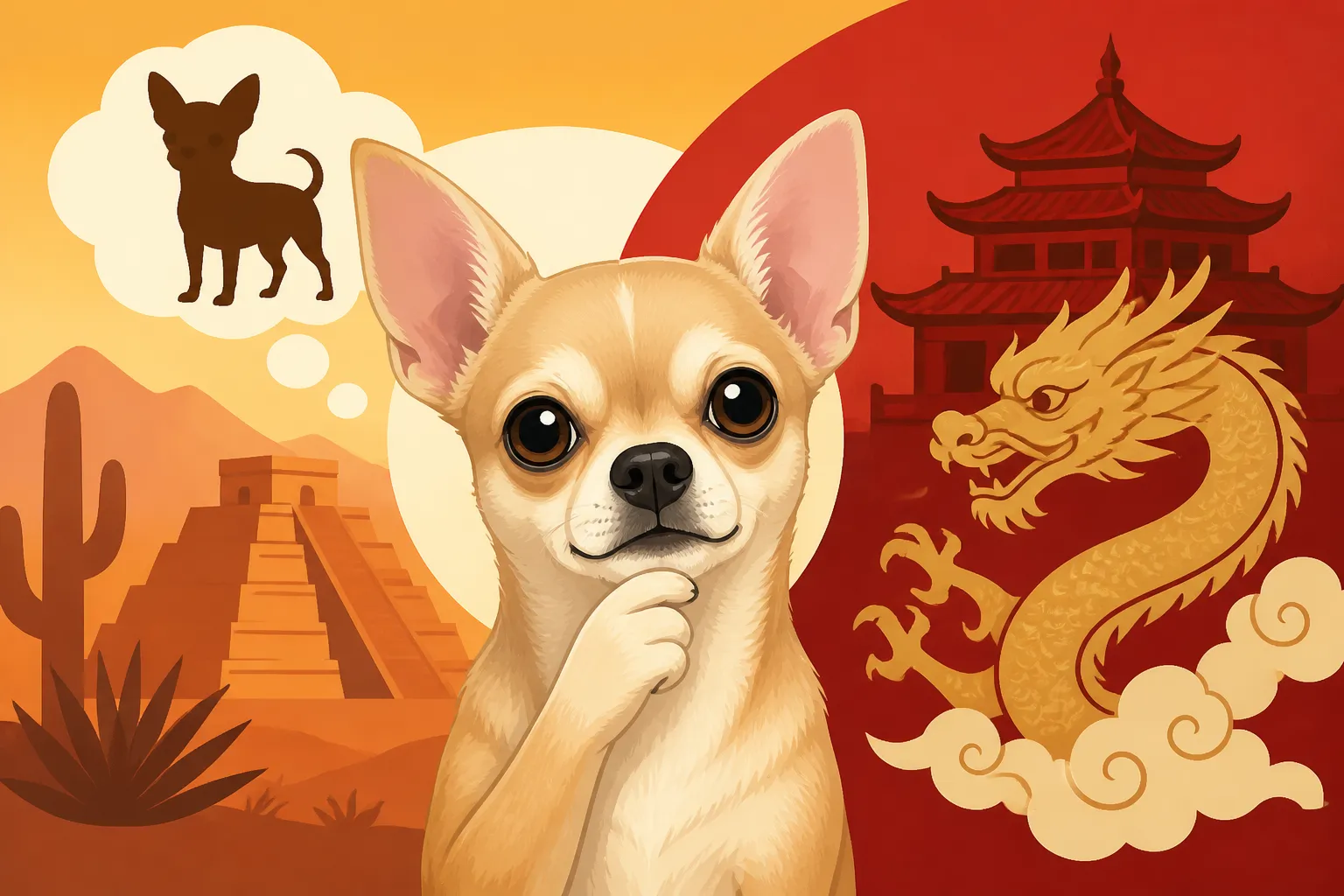
It's easy to get tangled up in all the conflicting theories about where our beloved Chihuahuas actually came from. For such a tiny dog, they carry a huge amount of historical mystery, and one persistent idea suggests they might have roots in ancient China. This guide is here to untangle that knot, exploring the historical evidence and modern scientific insights to give you the most accurate picture of your Chihuahua's true ancestry.
Addressing the Chinese Ancestry Myth Directly
The idea that Chihuahuas might have originated in China is one of those theories that pops up fairly often, especially when people are trying to trace the lineage of various toy breeds. It’s not an entirely baseless thought when you consider the long history of small dogs in Asian cultures and the ancient trade routes that connected continents. For centuries, tiny, companion dogs were highly prized by Chinese royalty and nobility, leading to the development of several distinct toy breeds there.
The "Chinese Crested" Connection
One reason this Chinese ancestry theory might gain traction is the superficial resemblance some Chihuahuas share with certain other small breeds, particularly the Chinese Crested. Both breeds can be quite small, and while the Chinese Crested is often hairless, there's also a "powderpuff" variety with soft fur. People might see a tiny, fine-boned dog and instinctively link it to other well-known small breeds from Asia, assuming a shared heritage or a common ancestor somewhere along the line. It's a common human tendency to group things based on visible traits, even if the underlying genetics tell a different story.
Another factor is the sheer popularity and widespread distribution of small, highly portable dogs from China throughout history. Breeds like the Pekingese, Shih Tzu, and Pug all have deep roots in China and were eventually spread globally through trade and diplomacy. It’s not a huge leap for someone unfamiliar with specific breed histories to wonder if the Chihuahua, another beloved toy breed, might have followed a similar path, being carried across continents by merchants or explorers.
The Silk Road Theory
The famous Silk Road, an ancient network of trade routes connecting the East and West, is often brought into discussions about dog breed migration. The theory goes that if goods and ideas could travel thousands of miles along these routes, why not small, precious dogs? It's a romantic notion, imagining tiny Chihuahuas nestled in merchant caravans, making their way from the imperial courts of China to Mesoamerica. However, while the Silk Road facilitated immense cultural exchange, direct evidence of specific dog breeds, let alone Chihuahuas or their direct ancestors, making this particular journey in reverse or across the Pacific to the Americas is conspicuously absent.
While it's true that the movement of people and animals has shaped the genetic landscape of many species, relying solely on the existence of trade routes without direct archaeological or genetic proof can lead to mistaken conclusions. The narrative often focuses on European influence bringing dogs to the Americas, but the idea of an Asian origin suggests a different, perhaps more mysterious, path. Without solid evidence, though, it remains a captivating but unproven theory, much like trying to figure out if your Chihuahua's favorite Chewy toy arrived by ancient trade ship or modern delivery truck.
The Prevailing Theory: Mesoamerican Origins
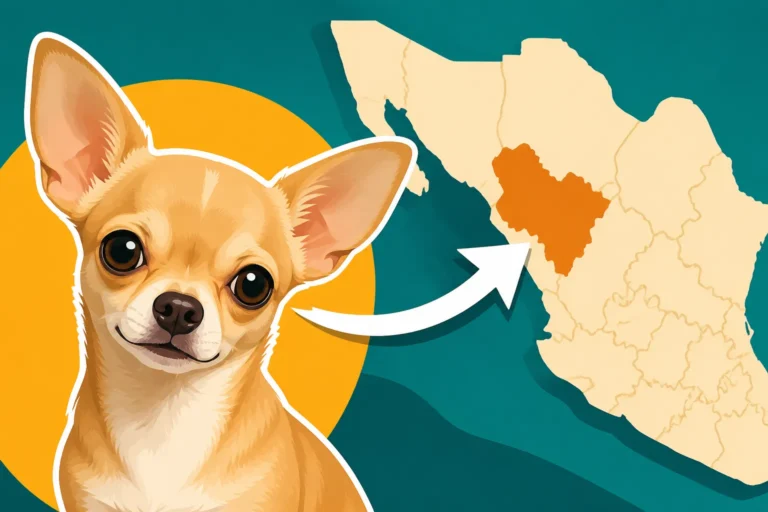
When we peel back the layers of history and look at the most compelling evidence, the story of the Chihuahua firmly points to Mesoamerica, specifically the region of modern-day Mexico. This isn't just speculation; it's backed by a wealth of archaeological findings, historical accounts, and cultural representations that stretch back centuries.
The Ancient Techichi Dog
The true ancestor of the modern Chihuahua is widely accepted to be the Techichi, a small companion dog revered by ancient civilizations in what is now Mexico. We're talking about a lineage that goes back a long, long time, centuries before Columbus ever set sail. Imagine digging up evidence of a dog breed that's been around since 300 BC! That's how old the Techichi line actually is. How Old the Techichi Line Actually Is These dogs weren't just wild canids; they were clearly domesticated and held significant cultural importance.
Archaeologists have unearthed artifacts, carvings, and even skeletal remains that depict these small dogs in incredible detail. Techichi Figures Found in Mexican Tombs These findings show a distinct small dog with features that strongly resonate with those of modern Chihuahuas – a compact body, upright ears, and an alert expression. The presence of these dogs in ancient burial sites alongside human remains further emphasizes their cherished status and integral role in society.
Aztec and Toltec Civilizations
The Techichi dogs were particularly prominent in the Toltec civilization, which flourished in Mesoamerica between the 10th and 12th centuries. These were sophisticated cultures with complex belief systems, and the Techichi played a spiritual role. What the Toltecs Kept the Chihuahua's Ancestor For They were believed to guide souls through the underworld, acting as companions in the afterlife. This wasn't just about having a cute pet; it was about a profound spiritual connection. Imagine your little Chihuahua being seen as a guide to the great beyond – pretty powerful stuff for such a small creature!
Later, when the Aztec empire rose to prominence, they too adopted and continued the tradition of keeping these small dogs. In fact, some historians suggest that the Aztecs actively worked to make the Techichi even smaller. The Aztec Conquest and a Smaller Dog Why? Perhaps for practical reasons of portability, or to further enhance their symbolic value as precious, almost otherworldly, beings. There are accounts of these dogs being among the treasures of Aztec emperors, further solidifying their high status.
The Spanish Conquest and Beyond
The arrival of the Spanish conquistadors in the 16th century brought immense upheaval to Mesoamerica, and unfortunately, many indigenous cultures and their practices were disrupted or destroyed. The Techichi, too, faced a precarious future. There's a lingering question about whether Cortez really found the Emperor's dogs and what happened to them afterward. Whether Cortez Really Found the Emperor's Dogs It's believed that many of these dogs either became feral, interbred with European dogs brought by the conquistadors, or simply disappeared from public record as the indigenous populations dwindled.
For centuries, the existence of these small dogs became more obscure, with many believing the breed was lost. However, isolated populations undoubtedly persisted, particularly in remote areas of Mexico. It wasn't until the mid-19th century that Americans rediscovered these distinctive little dogs in the state of Chihuahua, Mexico, from which the modern breed gets its name. How Americans Found Chihuahuas in the 1800s This rediscovery marked the beginning of their journey into the modern world, eventually leading to their recognition by kennel clubs and their explosion in popularity globally. The continuity of their presence in Mexico, from ancient times to their rediscovery, is a crucial piece of evidence against a distant Asian origin.
Dispelling Misconceptions and Lack of Evidence
While the idea of a far-flung Chinese ancestry is intriguing, it simply doesn't hold up under scrutiny when compared to the concrete evidence supporting Mesoamerican origins. Sometimes, common myths persist because they're easy to imagine or because a lack of specific knowledge allows them to fill a void.
Lack of Archaeological Records
One of the strongest arguments against Chinese ancestry for Chihuahuas is the complete absence of archaeological or historical records supporting such a claim. If Chihuahuas or their direct ancestors had indeed traveled from China to Mesoamerica, we would expect to find some trace of them along that journey, or within ancient Chinese records themselves. Yet, there are no ancient Chinese artworks, writings, or skeletal remains that unmistakably depict dogs matching the Chihuahua's distinctive characteristics and linking them to the breed's eventual appearance in the Americas.
Furthermore, there’s no documented historical narrative of a significant migration of toy dogs from Asia to the Americas during the periods when the Techichi was already established in Mexico. The journey across the Pacific or via the Bering land bridge would have been arduous and primarily undertaken by larger, more utilitarian dogs accompanying human migrations, not delicate companion animals intended for royalty. Without a paper trail, or rather, a dig trail, the theory remains purely speculative.
Distinct Physical Traits
While all small dogs might seem similar at a glance, Chihuahuas possess several distinct physical traits that differentiate them from most ancient Chinese toy breeds. Take, for example, the iconic apple head. While not every Chihuahua has an exaggerated dome, the standard apple-head chihuahua is a classic representation of the breed. This head shape, often accompanied by a significant molera (a soft spot on the skull), is far more characteristic of Chihuahuas than traditional Chinese breeds like the Pekingese or Shih Tzu, which typically have flatter, broader skulls. Apple Head Against Deer Head Chihuahuas
Consider also the lean, compact body and the often large, upright ears. While some Chinese breeds can be delicate, their overall conformation and specific facial features, ear sets, and coat types (like the heavy, flowing coats of a Shih Tzu or the distinctive "lion's mane" of a Pekingese) tend to be quite different. These differences aren't just cosmetic; they reflect distinct evolutionary paths and breeding histories. The unique combination of features in a Chihuahua points squarely to its independent development within the Americas, rather than a direct lineage from Asian dogs. Even their energetic, sometimes feisty temperament, often described as "terrier-like," sets them apart from the more placid or stoic dispositions often found in ancient Asian lapdogs.
Modern DNA Research and What It Tells Us
In the modern age, we have tools that our ancestors could only dream of, and these tools are helping us unlock the secrets of dog ancestry with incredible precision. DNA research has become a powerful arbiter in settling long-standing debates about breed origins, and it has spoken quite clearly on the Chihuahua.
Genetic Markers Point to the Americas
Thanks to advancements in genetic sequencing, scientists can analyze the DNA of modern dog breeds and compare it to ancient dog remains found around the world. What these studies consistently show is that the Chihuahua possesses unique genetic markers that strongly tie it to ancient dog populations in the Americas. In fact, some research has indicated that Chihuahuas carry a significant genetic signature from pre-Columbian dogs of Mexico, differentiating them from European and Asian breeds.
This genetic evidence essentially provides a biological passport for the Chihuahua, stamping its origin in the New World. It’s like finding a family tree that clearly shows generations of ancestors living in the same region, leaving little room for a sudden, undocumented detour from a distant continent. These genetic studies don't just disprove the Chinese ancestry theory; they actively reinforce the long-held belief in the Techichi as the Chihuahua's forebear.
What DNA Studies on Chihuahua Origins Have Revealed
Numerous studies have delved into the genetic makeup of various dog breeds, including the Chihuahua, to map their evolutionary journeys. DNA Studies on Chihuahua Origins These analyses have revealed that while some modern dog breeds do show evidence of genetic mixing due to global human migration and trade over centuries, the core genetic blueprint of the Chihuahua remains firmly rooted in indigenous American dog populations. This means that even if there was some minor interbreeding with European dogs after the Spanish Conquest, the foundational genetics of the Chihuahua are distinctly Mesoamerican.
For instance, one study might compare mitochondrial DNA, which is inherited from the mother, or Y-chromosome DNA, inherited from the father, across various breeds. By tracing these genetic lines, researchers can identify common ancestors and geographic origins. The findings consistently point away from Asia and towards the Americas for the Chihuahua's primary lineage. This scientific clarity is incredibly valuable, replacing old theories with verifiable data. It allows us to appreciate the true, rich history of this remarkable breed, understanding that their small stature and charming personalities are a testament to centuries of development right there in what is now Mexico, not some distant land. You can find plenty of resources, including detailed scientific articles or even specialized food and health items for Chihuahuas, on platforms like Chewy, all informed by our modern understanding of their unique needs and background.
Comparative Table of Chihuahua and Ancient Chinese Toy Dog Origins
To further illustrate the clear distinction, here's a quick overview comparing the primary evidence for Chihuahua and typical ancient Chinese toy dog origins:
| Feature/Category | Chihuahua (Mesoamerican Origin) | Ancient Chinese Toy Breeds (e.g., Pekingese, Shih Tzu) |
|---|---|---|
| Archaeological Evidence | Numerous artifacts, carvings, skeletal remains (Techichi) in Mexico dating back 300 BC. Techichi Figures Found in Mexican Tombs | Extensively documented in ancient Chinese art, writings, and palace records. |
| Historical Records | Documented by Toltec and Aztec civilizations, then rediscovered by Americans in 19th century Mexico. The Chihuahua From Techichi to American Lapdog | Long history as imperial dogs in China, with extensive records of royal ownership. |
| Geographic Origin | Mexico (specifically the state of Chihuahua for modern breed). | China (various regions, often associated with imperial courts). |
| Genetic Ancestry | DNA studies confirm strong ties to pre-Columbian indigenous American dog populations. DNA Studies on Chihuahua Origins | DNA studies confirm ancestry rooted in ancient East Asian dog lineages. |
| Distinct Physical Traits | Apple-shaped head, molera (soft spot), large upright ears, lean body. | Often flatter faces, brachycephalic skulls, abundant long coats, specific ear sets. |
| Earliest Known Appearance | Around 300 BC in Mesoamerica. | Thousands of years ago in China, with specific breeds developing over centuries. |
This table clearly highlights that the Chihuahua's story is deeply intertwined with the history and geography of the Americas, distinguishing it definitively from the rich but separate lineage of Chinese toy breeds. Understanding this true history allows us to better appreciate the unique qualities of our Chihuahuas, from their long lifespan Chihuahua Lifespan and Why the Breed Reaches Sixteen to their specific care needs.
Disclaimer
This article is for general informational purposes only and does not constitute professional advice. Laws, prices and regulations vary by location and change over time. Consult a qualified professional for guidance on your specific situation.