The Training Gap Chihuahua Owners Create
It's a scene played out in homes and parks all across the country: a tiny Chihuahua, trembling slightly, held securely in its owner's arms as a larger, boisterous dog approaches. The owner might coo, "Oh, he's just too little for all that roughhousing!" or "He gets scared easily, so I just carry him." While well-intentioned, these everyday acts, often driven by a deep love for our tiny companions, can inadvertently create what I like to call "the training gap" – a chasm between how we raise big dogs and how we raise Chihuahuas, leading to preventable behavioral issues. This guide will help you understand this gap, identify common pitfalls, and equip you with the knowledge to raise a confident, well-adjusted Chihuahua, treating them as the capable, intelligent dogs they truly are, regardless of their diminutive size.
Understanding the "Small Dog Syndrome" Myth
Let's be honest: we've all seen, or perhaps even indulged in, the idea that small dogs like Chihuahuas are just inherently different. They're fragile, they're yappy, they're nervous, they're untrainable. This narrative has given birth to the widespread concept of "small dog syndrome," often used as a blanket explanation for less-than-ideal behaviors. But here’s the tough truth, my friends: "small dog syndrome" isn't a genetic trait or an inherent fault of the breed. It's almost always a human-created problem, born from our differential treatment and lower expectations for our tiny companions.
The Behaviors Owners Excuse in a Chihuahua
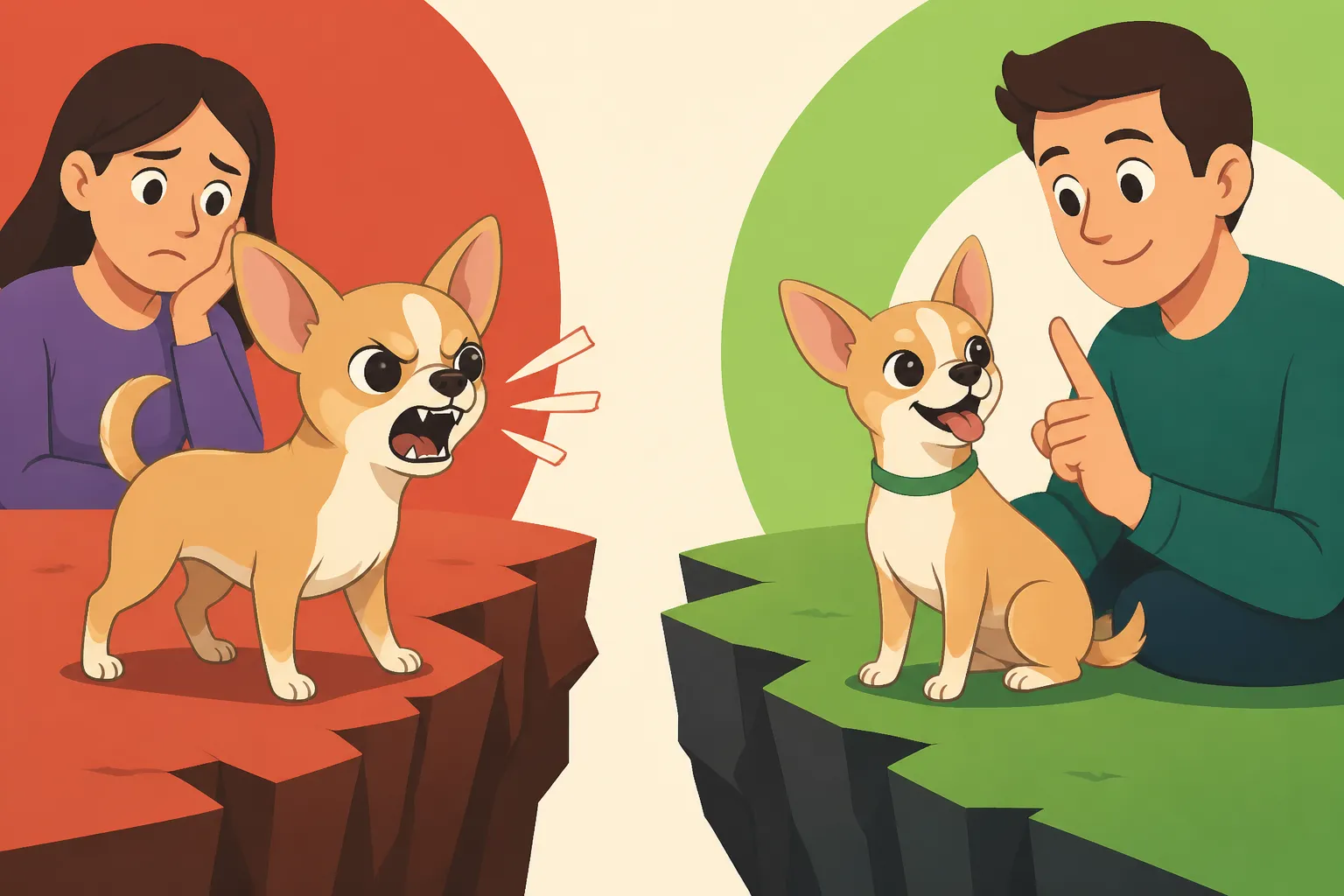
It's natural to feel protective of something so small. When your six-pound Chihuahua growls fiercely at a guest who reaches down to pet them, it's easy to dismiss it with a chuckle and say, "Oh, he's just being a typical Chihuahua!" or "He’s just got a big personality!" Perhaps your little one barks incessantly at every leaf that blows past the window, or lunges on the leash at every passing dog, and you tell yourself, "That's just how Chihuahuas are." This kind of dismissive thinking allows problem behaviors to escalate because they aren't corrected or managed with the same seriousness as they would be in a larger breed.
Imagine for a moment if a 70-pound Labrador snarled at a guest. Would you find it endearing? Unlikely. You’d probably be rushing to sign up for obedience classes and consult a trainer. Yet, when a Chihuahua does it, we often excuse it due to their size, effectively teaching them that these behaviors are acceptable, or even rewarded with attention. This includes everything from demanding attention with a sharp bark to resource guarding toys or even a favorite lap. The result is a dog who, while physically small, believes they are in charge of every situation, leading to increased anxiety and reactivity because they feel compelled to manage their world.
Why Small Dog Rules Should Match Big Dog Rules
The fundamental principle of good dog ownership should apply universally: a dog is a dog, regardless of size. This means that house rules, training expectations, and socialization efforts for a Chihuahua should mirror those for a German Shepherd or a Golden Retriever. Consistency, clear communication, and appropriate boundaries are crucial for every canine, ensuring they understand their place in the household and feel secure in your leadership.
Setting furniture rules for a Chihuahua, for example, is just as important as it is for a Mastiff, especially considering joint health. Teaching a Chihuahua to wait patiently for their food, rather than jumping and yipping, reinforces impulse control, a skill vital for any well-behaved dog. When we expect the same level of polite behavior from our small dogs, we empower them to navigate the human world more successfully and confidently. It’s about respect for their intelligence and capabilities, understanding that they are just as capable of learning and adapting as their larger counterparts, given the right guidance. For more on this, check out Why Small Dog Rules Should Match Big Dog Rules.
What Small Dog Syndrome Means for a Chihuahua
As I mentioned, "small dog syndrome" isn't a medical diagnosis; it's a behavioral pattern. For a Chihuahua, it typically manifests as a combination of anxiety, over-reactivity, and a lack of confidence, often masked by bravado. A Chihuahua that barks frantically at strangers or lunges at other dogs isn't usually trying to be "tough"; more often, they are terrified and feel the need to create distance or a loud deterrent because their humans haven't taught them how to cope in a calm, confident manner.
When a dog is consistently picked up, pampered, or allowed to control situations, they don't learn critical life skills. They might not understand how to appropriately greet other dogs, interact politely with new people, or even walk calmly on a leash. This lack of appropriate social skills and environmental exposure leaves them vulnerable and often leads to a lifetime of stress and fear, which can then manifest as aggression or extreme timidity. It's a vicious cycle where our protective instincts, when misguided, actually do our little Chihuahuas a disservice, robbing them of the chance to be resilient and well-adjusted. The key takeaway here is that "small dog syndrome" is almost entirely preventable through proper training and socialization from a young age. If you're wondering how to avoid this, have a look at What Small Dog Syndrome Means for a Chihuahua.
The Unintended Consequences of Carrying a Chihuahua
It's so tempting, isn't it? To scoop up your tiny Chihuahua and carry them around, especially when you're out and about. They fit perfectly in a handbag or nestled in your arms, safe from the trampling feet of a crowd or the curious sniff of a large dog. But while carrying them might feel like the ultimate act of protection, it often creates significant gaps in their development and understanding of the world, leading to more, not fewer, behavioral challenges down the line.
Chihuahua Handling and Why Carrying Backfires
When we constantly carry our Chihuahuas, we inadvertently shield them from vital experiences that build confidence and social skills. Every time you lift your Chihuahua rather than letting them navigate a new person, another dog, or a novel environment on their own four paws, you send them a subtle message: "This situation is dangerous, and you cannot handle it without me." This can foster dependence and exacerbate fear, creating a dog that feels helpless and vulnerable when not in your arms.
Moreover, being carried elevates a Chihuahua to eye-level with larger dogs and adult humans, which can be perceived as confrontational or frightening, especially if they are already prone to anxiety. Imagine a tiny dog, perched in your arms, barking down at a curious Labrador. This elevated position, combined with fear, can lead to increased reactivity, as the Chihuahua feels trapped and often resorts to vocalizing or snapping as its only defense mechanism. This can reinforce their belief that the world is a scary place they need to aggressively ward off. To learn more about this, see Chihuahua Handling and Why Carrying Backfires.
What a Chihuahua Loses by Never Touching the Ground
A Chihuahua that spends most of its time being carried misses out on crucial physical and mental development opportunities. Every walk on varied surfaces—grass, pavement, gravel—engages different muscles, develops coordination, and strengthens their tiny paws. It's not just about exercise; it's about sensory input and proprioception, the body's ability to sense its position and movement. A dog that is rarely allowed to walk on its own terms will have less developed spatial awareness and may be more clumsy or insecure on unfamiliar terrain.
Beyond the physical, a carried Chihuahua misses out on a rich tapestry of scents, sounds, and sights at ground level. This constant exposure to the world, even mundane things like a discarded plastic bottle or the smell of another dog's urine, is a vital part of socialization and helps them understand their environment. A dog that doesn't explore the world with their nose and feet can develop a narrower, more fearful perception of it, becoming anxious about anything new or unexpected. They also don't learn crucial self-soothing behaviors or problem-solving skills that come from navigating challenges independently. Find more on this topic at What a Chihuahua Loses by Never Touching the Ground.
Getting a Chihuahua to Step Into Your Hands
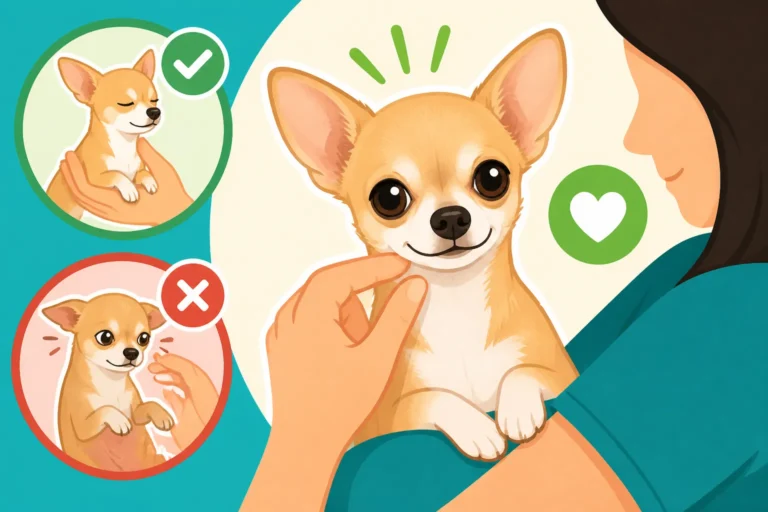
Teaching your Chihuahua to willingly step into your hands, rather than being scooped up, is a game-changer for building trust and promoting consent-based handling. This simple practice respects their autonomy and makes handling a positive, predictable experience. Start by sitting on the floor, gently tapping your leg, and inviting them with a cheerful "Up!" or "Lap!" As they approach, guide them onto your lap, rewarding them with a tiny, high-value treat and gentle praise.
The goal is to make stepping onto you a rewarding choice, not a sudden imposition. Practice this frequently in calm environments. You can even use a small stool or a sturdy step to help them get used to ascending. Once they are comfortable, you can extend your hands, inviting them to step onto your palms for a brief lift, always followed by a reward and immediate return to the ground. This approach teaches them that being picked up is part of a positive interaction, and they learn to trust your hands as a safe, predictable place. This also helps immensely when a vet needs to handle them, or a groomer needs to pick them up.
The Overlooked Importance of Basic Obedience
When we talk about dog training, many people envision large dogs performing complex tricks or working through severe behavioral issues. It's often assumed that a Chihuahua, being so small and seemingly uncomplicated, doesn't need formal obedience training. This couldn't be further from the truth. In fact, due to their delicate size and potential for fear-based behaviors, obedience training is arguably even more crucial for a Chihuahua's safety and well-being.
Why a Chihuahua Deserves Real Obedience Training
Every dog, regardless of size, benefits immensely from real obedience training. For a Chihuahua, it's not just about manners; it's about building confidence, providing mental stimulation, and ensuring their safety in a world that can often feel overwhelming. A well-trained Chihuahua understands boundaries, responds reliably to cues, and is far more equipped to handle novel situations without resorting to fear-based reactions like barking or snapping.
Obedience training strengthens the bond between you and your Chihuahua, establishing a clear line of communication based on trust and mutual respect. It gives them a "job" to do, which fulfills their innate canine need for purpose and mental engagement. Think of it as providing them with a language to understand your expectations and a way to communicate their own willingness to comply. A Chihuahua that knows what "stay" means can be kept safe from a rapidly approaching cyclist, while one that understands "come" can be recalled from a potentially dangerous situation. For more details, explore Why a Chihuahua Deserves Real Obedience Training.
The Commands Every Chihuahua Should Know
While you don't need to turn your Chihuahua into a competitive obedience champion, a solid foundation of basic commands is essential. These aren't just parlor tricks; they are tools for safety, communication, and a harmonious life together.
- Sit and Stay: Essential for impulse control, polite greetings, and waiting safely.
- Come (Recall): Potentially life-saving, ensuring your Chihuahua returns to you reliably, especially if they slip their leash or bolt out a door.
- Leave It: Teaches them to ignore tempting but potentially dangerous items on the ground, a crucial skill for tiny dogs who can ingest small objects.
- Drop It: Useful for giving up a guarded toy or something they shouldn't have in their mouth.
- Polite Leash Walking: Prevents pulling, which can be dangerous for their delicate necks and tracheas, especially if they suffer from Collapsing Trachea and the Chihuahua Honking Cough. Using a properly fitted harness, like those found on Amazon, can also make a huge difference here.
- Place/Go to Bed: Teaches them to settle calmly in their designated spot, great for when guests arrive or during mealtimes.
Practicing these commands in short, fun sessions throughout the day with tiny, high-value treats will yield fantastic results.
Marker Training a Chihuahua From Eight Weeks
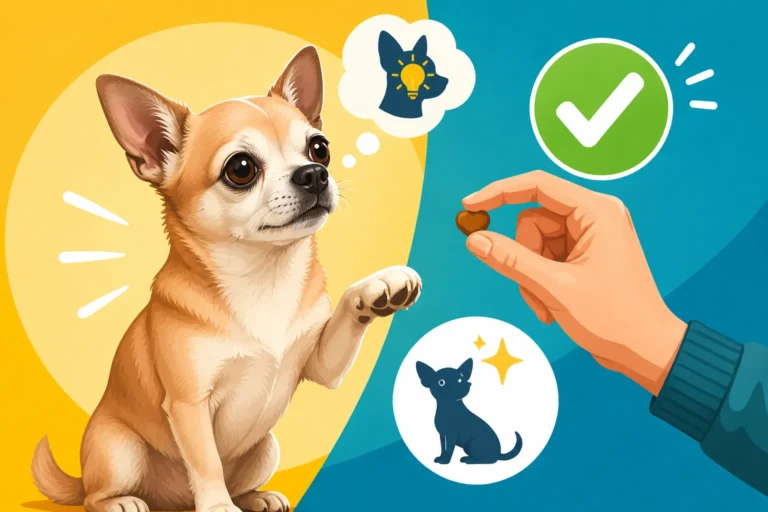
Marker training, typically using a clicker or a verbal marker like "Yes!", is incredibly effective for Chihuahuas, even starting as young as eight weeks. Their sharp minds absorb information quickly, and positive reinforcement training builds a strong, happy relationship. The principle is simple: mark the exact moment your Chihuahua performs the desired behavior, then immediately follow with a reward. This precision helps them understand exactly what they did right.
Since Chihuahuas are so small, you'll want to use tiny, pea-sized training treats. Think softened kibble, bits of cooked chicken, or even specialized small training treats from brands you can find on Amazon. Consistency is key. Keep training sessions short (2-3 minutes) and fun, ending on a positive note. This early, positive foundation not only teaches them commands but also instills a love for learning and a strong desire to work with you. Online training programs, such as those offered by BAXTER & Bella, can provide structured guidance for puppy training from the comfort of your home, using these positive reinforcement methods.
Socialization Done Right for a Tiny Dog
Socialization is arguably one of the most critical aspects of raising a well-adjusted dog, and it's especially vital, and often misunderstood, for Chihuahuas. Many owners, fearing for their tiny dog's safety, inadvertently undersocialize or poorly socialize their Chihuahuas, leading to fearful and reactive behaviors later in life. Proper socialization isn't about throwing your Chihuahua into every dog park; it's about controlled, positive exposure to a wide variety of sights, sounds, people, and appropriate dogs.
The Chihuahua Socialization Window and Its Deadline
The most crucial period for socialization is between 3 and 16 weeks of age. During this "socialization window," puppies are most receptive to new experiences and form lasting impressions of the world. For Chihuahuas, whose initial experiences might be limited due to their size, this window is even more precious. It's during this time that they learn what is safe, what is neutral, and what might be a cause for concern.
Missing this critical window can make later socialization much harder, as a dog that hasn't been exposed to various stimuli during this period may become wary, fearful, or reactive towards anything new. While socialization can continue throughout a dog's life, the foundation laid during these early weeks is paramount. Therefore, even if you just got your Chihuahua, don't waste a moment; get started on gentle, positive exposure as soon as your vet gives the all-clear after initial vaccinations. You can read more about this at The Chihuahua Socialization Window and Its Deadline.
Socialization That Does Not Flood a Chihuahua
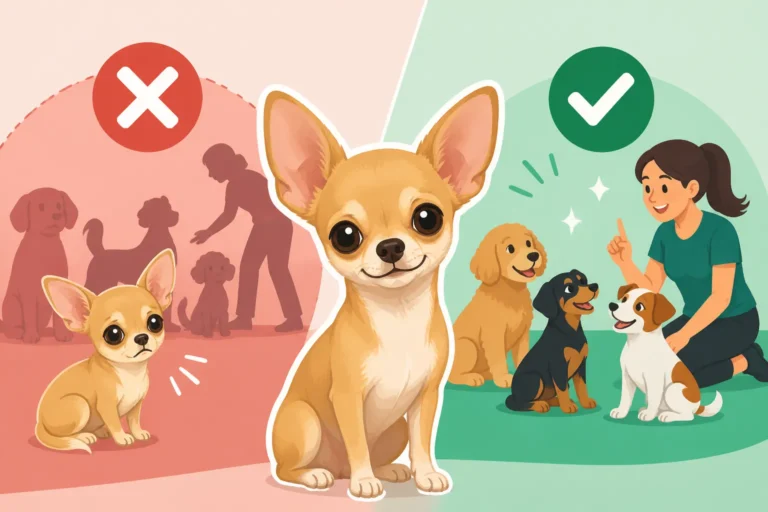
The key to successful Chihuahua socialization is quality over quantity, and avoiding "flooding." Flooding means overwhelming your dog with too much, too soon, forcing them into a situation they are not comfortable with. For a Chihuahua, this could mean being dropped into a crowded dog park or being subjected to endless petting by strangers. Instead, focus on controlled, positive, and gentle exposure.
- Observe from a Distance: Introduce new things (people, dogs, sounds, objects) from a distance where your Chihuahua is comfortable, rewarding them for calm observation.
- Positive Associations: Pair every new experience with high-value treats and praise. See a new person? Treat! Hear a loud truck? Treat! This helps them associate new things with good feelings.
- Variety is Key: Expose them to different surfaces (wood, carpet, tile, grass), different sounds (doorbells, traffic, children playing), different people (hats, glasses, beards), and different gentle dogs.
- Short and Sweet: Keep interactions brief and positive, pulling them out of the situation before they become overwhelmed or fearful. Always end on a good note.
Remember, a positive experience is far more valuable than simply "meeting" a dozen new things without a good outcome. For more on this, check out Socialization That Does Not Flood a Chihuahua.
Puppy Classes That Group Chihuahuas With Toys
Finding the right puppy class can make all the difference for a Chihuahua. Ideally, look for classes that group puppies by size and temperament. While it’s important for your Chihuahua to see larger dogs, their primary playmates during active socialization should be other small, gentle puppies. This prevents accidental injury and ensures they have positive play experiences, learning appropriate dog-to-dog communication without feeling intimidated.
A good puppy class will also incorporate various surfaces, sounds, and gentle handling exercises, all while focusing on positive reinforcement. The instructors should understand the unique needs of small breeds and prioritize safety and confidence-building. Many trainers, including those affiliated with online programs like BAXTER & Bella, emphasize controlled puppy play and structured exposure. This environment allows your Chihuahua to develop crucial social skills, learn basic obedience in a distracting setting, and build confidence under the guidance of experienced professionals.
Addressing Reactivity and Fear-Based Behaviors
One of the most common complaints among Chihuahua owners is reactivity, often manifesting as incessant barking, lunging, or even snapping at perceived threats. While it might look like aggression, these behaviors are almost always rooted in fear. Because Chihuahuas are so small, the world can feel like a giant, intimidating place, and their natural instinct is to create distance or vocalize loudly to ward off what scares them.
Fear Reactivity as the Top Chihuahua Complaint
A Chihuahua that barks frantically at the mail carrier, lunges at every passing dog on a walk, or trembles and snaps when a stranger tries to pet them is exhibiting fear reactivity. This isn't just an annoyance; it's a sign that your Chihuahua is genuinely stressed and uncomfortable in these situations. Their small size makes them feel vulnerable, and without proper training and confidence-building, they quickly learn that being loud and confrontational is their most effective defense mechanism. This can be especially frustrating for owners who want their Chihuahuas to be friendly and outgoing but instead have a dog that acts like a tiny, furry guard dog.
Many owners mistakenly believe their Chihuahua is being aggressive or "dominant," but in almost all cases, it's a desperate cry for help from a dog who feels threatened and lacks coping skills. This reactivity can significantly limit a Chihuahua's quality of life, making walks stressful, preventing guests from visiting, and isolating them from potentially positive experiences. For more on this, read Fear Reactivity as the Top Chihuahua Complaint.
Counter-Conditioning a Fearful Chihuahua
Counter-conditioning is a powerful technique for addressing fear reactivity by changing your Chihuahua's emotional response to a trigger from negative (fear, anxiety) to positive (excitement, happiness). The core idea is to pair the scary thing with something highly rewarding, like a delicious treat, before your Chihuahua reacts.
Here’s how it works:
- Identify the Trigger: What specifically makes your Chihuahua reactive? Other dogs, strangers, doorbells, squirrels?
- Find Their Threshold: Determine the distance at which your Chihuahua notices the trigger but doesn't react. This is their "comfort zone."
- Positive Association: When the trigger appears at that comfortable distance, immediately give your Chihuahua a high-value treat. The moment the trigger disappears, stop the treats.
- Repeat and Progress: Practice this repeatedly. Gradually, over many sessions, you can try to decrease the distance or increase the intensity of the trigger, always staying below their reaction threshold. The goal is for your Chihuahua to start seeing the trigger and thinking, "Yay, treats!" instead of "Oh no, danger!"
This process takes patience and consistency, but it's incredibly effective at building a more positive emotional response. You might find a small pouch filled with tiny, irresistible treats from Amazon to be an indispensable tool during these sessions.
Reading a Chihuahua's Whale Eye
Understanding your Chihuahua's body language is paramount, especially when dealing with fear and reactivity. One of the clearest, yet often overlooked, signs of stress, discomfort, or impending escalation is "whale eye." This is when you can see the whites of your Chihuahua's eyes, either at the top, bottom, or corners, creating a crescent shape. It usually means they are feeling anxious, stressed, or are giving a warning.
A Chihuahua displaying whale eye is likely feeling trapped or threatened and is signaling their discomfort. They might also exhibit other subtle signs: a stiff body, ears pinned back, a low growl, a tucked tail, lip licking, yawning, or turning their head away. Recognizing these early signals allows you to intervene before they feel the need to bark, lunge, or snap. If you see whale eye, it's a clear indicator to remove your Chihuahua from the situation, increase distance from the trigger, or give them space. Never push a Chihuahua that is showing whale eye; respect their communication. Learning to read these subtle cues can help prevent escalation and protect both your dog and others. For more on this, check out Reading a Chihuahua's Whale Eye.
The Impact of Inconsistent House Training
Chihuahuas have a reputation for being difficult to house train. While their tiny bladders certainly play a role, inconsistency from owners, misunderstanding their needs, and environmental factors often contribute more to house training struggles than the breed itself. It's a common area where the "training gap" truly widens, leading to frustration for both dog and owner.
Why a Chihuahua Regresses on House Training
There are several reasons why a Chihuahua might struggle or regress with house training, and few of them boil down to pure stubbornness.
- Tiny Bladders: Let’s start with the obvious. A Chihuahua puppy, especially one under six months, simply cannot hold their bladder for very long. Expecting them to go hours without a potty break is setting them up for failure. Even adult Chihuahuas have limits that are far shorter than a larger dog's.
- Weather Aversion: Many Chihuahuas absolutely despise going out in cold, wet, or snowy weather. Their thin coats and lack of body fat mean they chill easily. If going outside is an unpleasant experience, they'll seek indoor alternatives.
- Marking Behavior: For intact males (and sometimes females), marking territory indoors can become a habit, even after successful house training.
- Inconsistent Schedules: If potty breaks are sporadic or if the owner doesn't consistently take them to the same designated potty spot, the Chihuahua won't build a strong association between going outside and relieving themselves.
- Past Accidents: If previous accidents haven't been thoroughly cleaned with an enzymatic cleaner, the lingering scent can attract the Chihuahua back to the same spot, perpetuating the problem.
- Underlying Medical Issues: Sometimes, frequent accidents can indicate a urinary tract infection or other health problem, making a vet visit essential.
Understanding these factors is the first step to addressing the issue. You can dive deeper into this topic by reading Why a Chihuahua Regresses on House Training.
Puppy Pads Against Outdoor Only for a Chihuahua
The debate over puppy pads for Chihuahuas is a lively one. For many owners, especially those in apartments or regions with harsh weather, puppy pads offer a convenient solution. They provide an accessible indoor potty option, which can be particularly helpful for tiny puppies who need to go frequently or Chihuahuas who refuse to venture out in the rain or snow. Brands like Amazon offer a wide variety of pads to choose from.
However, puppy pads can also create confusion. The primary goal of house training is to teach a dog that the only acceptable place to eliminate is outdoors. Puppy pads teach them that it's okay to go inside on a specific surface. This can inadvertently prolong house training or even create a "dual training" problem where the dog understands both options. If you choose to use puppy pads, the ideal approach is to gradually transition your Chihuahua from pads to outdoor-only eliminations. This involves slowly moving the pad closer to the door and eventually outside, eventually phasing it out entirely. For more on this, consider Puppy Pads Against Outdoor Only for a Chihuahua.
Cleaning Chihuahua Accidents So They Do Not Repeat
A crucial, often underestimated, part of successful house training is thoroughly cleaning up accidents. If a dog can still smell the residual odor of urine or feces in a spot, even if you can't, it acts as an attractant, telling them, "This is a good spot to go again!" Standard household cleaners won't break down the enzymes in urine, so it's essential to use a high-quality enzymatic cleaner specifically designed for pet odors.
When an accident happens:
- Blot, Don't Rub: Use paper towels to blot up as much liquid as possible without rubbing it further into the carpet or floor.
- Apply Enzymatic Cleaner: Saturate the soiled area with the enzymatic cleaner, following the product's instructions for dwell time. Many require letting it sit for 10-15 minutes or even longer to allow the enzymes to work.
- Blot Again: Once the cleaner has worked its magic, blot up the excess.
- Prevent Access: While the area is drying, try to prevent your Chihuahua from accessing it to ensure they don't have another accident there.
Consistent and thorough cleaning helps eliminate the scent cues that encourage repeat offenses, making it much easier for your Chihuahua to learn that indoors is not the potty zone.
Chihuahua Training Gap Summary Table
To help visualize some of these common differences in approach and their outcomes, here's a quick comparison:
| Training Aspect | Big Dog Approach | Common Small Dog Exception (The Gap) | Outcome for Chihuahua |
|---|---|---|---|
| Obedience Training | Formal classes, daily practice, high expectations | "He's too small," "Just a lap dog," minimal training | Lack of impulse control, reactive, anxious, unsafe |
| Socialization | Varied exposure, appropriate play, positive encounters | Sheltered, carried, protected from other dogs/people | Fearful, territorial, aggressive (due to fear) |
| Leash Walking | Harness/collar, daily walks, proper leash manners | Carried, pulled on leash, no real training for walking | Tracheal issues, pulling, barking at triggers, no exercise |
| House Training | Consistent schedule, immediate outdoor access, clean up | Puppy pads without transition, inconsistent schedule, excused accidents | Inconsistent potty habits, marking, messes indoors |
| Behavior Correction | Consistent 'no,' redirection, time-outs | Excused ("he's just cute!"), picked up, reinforced | Escalation of unwanted behaviors, dog thinks they're in charge |
| Physical Activity | Daily exercise, mental stimulation | Carried, minimal walks, no engaging play | Boredom, destructive behavior, obesity, joint problems |
Disclaimer
This article is for general informational purposes only and does not constitute professional advice. Laws, prices and regulations vary by location and change over time. Consult a qualified professional for guidance on your specific situation.