Feeling a Chihuahua’s Ribs and Waist
It’s a common worry for any Chihuahua parent: is my tiny companion eating enough? Or, perhaps, too much? Because their frames are so delicate and their ideal weight so low, it can feel like a guessing game to determine if they’re at a healthy body condition. This guide is here to take the guesswork out of it, showing you exactly how to feel your Chihuahua’s ribs and waist to accurately assess their physique and ensure they're thriving.
Why Body Condition is Crucial for Chihuahuas
When you have a dog that can fit into a teacup – though we don't recommend putting them in one! – every single ounce makes a monumental difference. Unlike a larger breed where a pound or two might go unnoticed, for a Chihuahua, even half a pound can dramatically shift their health profile. Knowing how to assess their body condition isn't just about aesthetics; it's a fundamental part of proactive health care, preventing serious issues from either end of the weight spectrum.
The Hidden Dangers of Underweight
It’s completely understandable to worry about a tiny Chihuahua puppy seeming too fragile. Their small size makes them particularly vulnerable to issues like low blood sugar. If a Chihuahua is significantly underweight, their body lacks the necessary fat reserves to maintain stable glucose levels, especially if they skip a meal or get stressed. This can quickly lead to a serious condition called hypoglycemia, which can cause them to become weak, disoriented, or even collapse. You can learn more about this emergency in Chihuahua Hypoglycemia and the Puppy Emergency.
An underweight Chihuahua also has less insulation, making them more susceptible to cold, and their immune system might not be as robust. They might seem more lethargic, struggle to recover from minor illnesses, or have less energy for play and exploration. It's not just about looking skinny; it's about not having the internal resources to cope with the daily demands on their tiny bodies. We want them to have enough healthy padding, not too much bone showing.
The Serious Risks of Obesity
On the flip side, many Chihuahua owners, myself included, have fallen into the trap of thinking a little extra chubbiness is "cute" or provides extra protection. However, even a small amount of excess weight on a Chihuahua's tiny frame can have devastating health consequences. Imagine putting a 20-pound backpack on a human, then imagine a four-pound Chihuahua carrying an extra pound – it's a huge percentage of their body weight, akin to a 150-pound person gaining 35 pounds. This added stress contributes to conditions like Chihuahua Obesity on a Six Pound Frame.
That extra weight puts immense pressure on their delicate joints, exacerbating or accelerating conditions like patellar luxation – where their kneecap slips out of place. It can also strain their tiny hearts, making them work harder, and contribute to respiratory issues, especially if they have a tendency towards collapsing trachea. Overweight Chihuahuas are also at a higher risk for developing diabetes, skin folds that can harbor infections, and a reduced quality of life, struggling with mobility and heat intolerance. It truly is a case where "less is more" when it comes to their waistline. For more on how much difference even a small weight change makes, check out What One Extra Pound Does to a Chihuahua and Two Extra Pounds on a Chihuahua Explained.
How to Feel for Your Chihuahua's Ribs and Waist
This is where you become your Chihuahua's personal body condition expert. It’s a hands-on process, literally, and it requires a gentle touch and a bit of practice. Don't worry if it feels a bit awkward at first; you'll get the hang of it quickly. The goal is to learn what a healthy weight feels and looks like, so you can make informed decisions about their diet and exercise.
The Rib Test: A Hands-On Approach
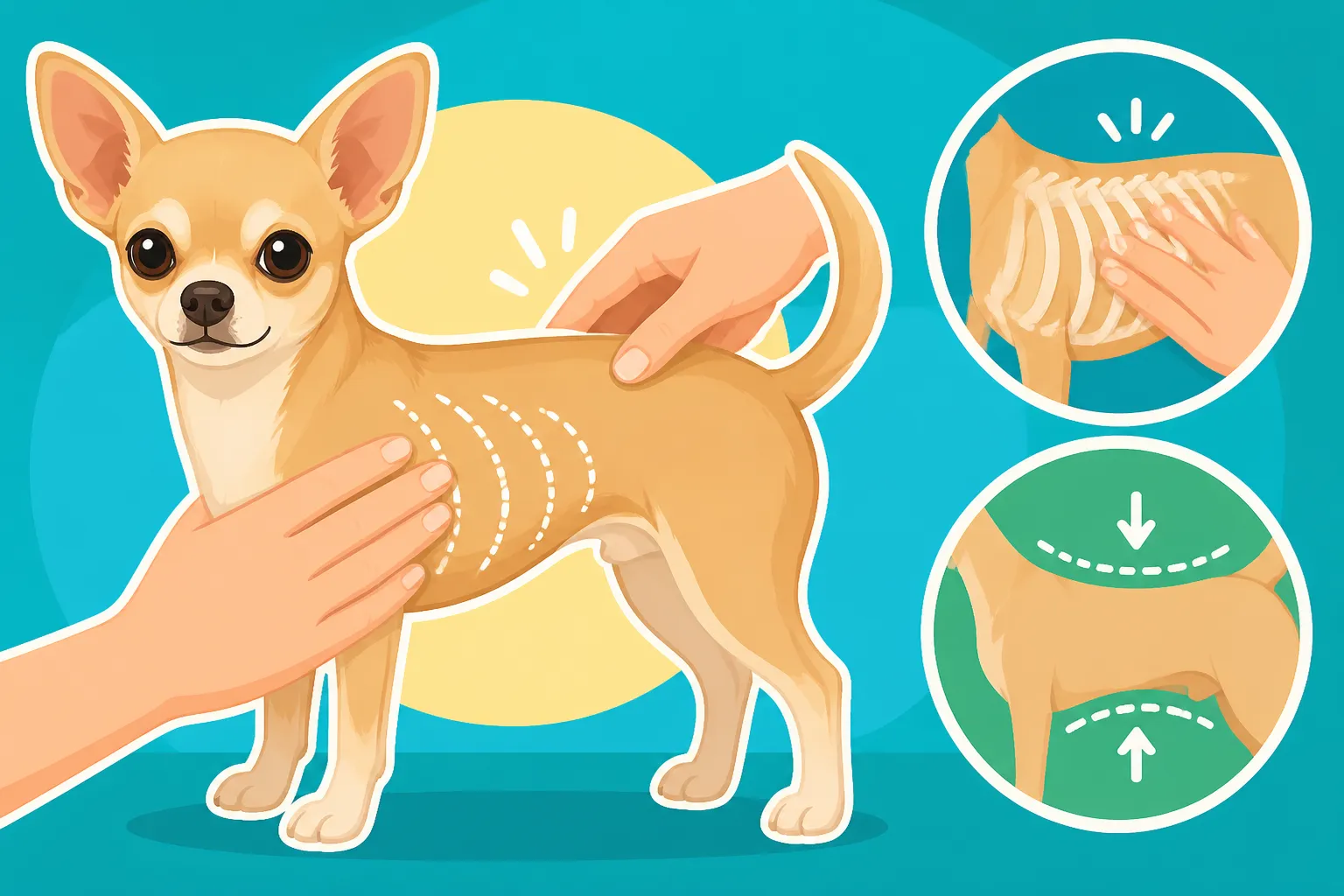
To perform the rib test, gently place both your palms flat on either side of your Chihuahua's chest, just behind their front legs. Your fingers should be pointing towards their tail. Now, run your fingertips gently but firmly along their ribs, feeling for the individual bones.
What you're looking for is a subtle, distinct feel of each rib, almost like feeling the knuckles on the back of your hand when your hand is flat. You should be able to count the ribs without having to press hard. If you can see the ribs clearly without touching, your Chihuahua is likely too thin. If you can’t feel the ribs at all without really pressing, or they feel cushioned by a layer of fat, they are probably overweight. An ideal body condition means you feel the ribs easily under a thin layer of muscle and fat, much like placing your hand flat against your palm and feeling the bones under the skin. This feeling indicates a healthy, lean physique without being bony or overly padded.
Assessing the Waist and Abdominal Tuck
Beyond the ribs, the visual and tactile assessment of your Chihuahua's waist and abdominal tuck is incredibly telling. Look at your Chihuahua from directly above while they are standing. A dog at an ideal weight should have a noticeable "hourglass" shape, with a distinct tuck-in behind their rib cage, leading to their hips. If they look straight and boxy from rib cage to hips, or even bulge out, they are carrying too much weight. If their waist seems extremely narrow, with a dramatic tuck and visible hip bones, they might be underweight.
Next, look at them from the side. A healthy Chihuahua should have an "abdominal tuck," meaning their belly line should rise upwards from the bottom of their rib cage to their hind legs, not sag downwards. This tuck should be evident but not extreme. If their tummy hangs low, or if there's no upward slope, it's a sign of excess weight. An exaggerated, hollow tuck might suggest they're too thin. Remember, a full tummy right after eating is normal, but the underlying body shape should still be apparent.
The Spine and Hips: Other Bony Landmarks
While the ribs and waist are primary indicators, checking the spine and hips can offer additional clues. Gently run your fingers along your Chihuahua's spine. You should be able to feel the individual bumps of the vertebrae without them being sharply prominent or completely hidden under fat. If the spine feels like a bumpy ridge with no padding, your dog might be too thin. Conversely, if you can barely feel the spinal processes, and it feels flat and broad, they are likely overweight.
Similarly, gently feel around their hip bones. In a healthy Chihuahua, you should be able to feel the hip bones under a thin layer of flesh, but they shouldn't protrude sharply or be completely covered. Always be gentle when feeling these areas, as overly rough handling can be uncomfortable, especially if they are very thin. The key is a delicate exploratory touch to gauge the underlying structure.
Interpreting Your Chihuahua's Body Condition Score
Once you've done your hands-on assessment, you can use a Body Condition Score (BCS) chart to objectively interpret what you've found. This standardized system helps vets and owners communicate about a pet's weight, usually on a 1-5 or 1-9 scale, where the middle numbers represent an ideal weight. For Chihuahuas, precision is paramount, so a 1-9 scale often offers more nuance.
Understanding the Body Condition Scoring Chart
Most veterinary professionals use a 9-point scale, where 1 is emaciated, 9 is morbidly obese, and 4 or 5 is considered ideal. Thinking about it in these terms can really help you categorize what you're feeling and seeing.
Here’s a simplified breakdown:
| BCS Score | Ribs | Waist/Tuck | General Appearance | Action Needed |
|---|---|---|---|---|
| 1-2 | Ribs, spine, hip bones very prominent, no fat | Extreme abdominal tuck, severe hourglass | Emaciated, visible muscle loss, no body fat | URGENT: Increase calories, vet consultation |
| 3 | Ribs easily palpable, slight fat layer | Pronounced abdominal tuck, distinct hourglass | Very lean, minimal fat, some visible ribs | Slightly underweight: Increase calories slightly |
| 4-5 | Ribs easily palpable, smooth fat layer | Distinct abdominal tuck, well-proportioned | IDEAL: Well-balanced, good muscle definition | Maintain current diet and exercise |
| 6 | Ribs palpable with some effort, fat layer | Little to no abdominal tuck, slight bulge | Slightly overweight, loss of hourglass shape | Reduce calories, increase exercise |
| 7-9 | Ribs difficult to find, heavy fat cover | No abdominal tuck, definite bulge, sagging | Obese, extensive fat deposits, abdominal distention | URGENT: Significant diet and exercise changes, vet consultation |
Your goal is to keep your Chihuahua consistently in that 4-5 range. It's a sweet spot that promotes longevity and overall health.
When to Adjust Diet and Exercise
If your assessment lands your Chihuahua in the underweight (1-3) or overweight (6-9) categories, it's time to make some adjustments. For underweight Chihuahuas, you'll want to gradually increase their food intake. This isn't about giving them an entire extra meal, but perhaps adding a few extra kibbles or a dollop of wet food, carefully spread across their regular feeding times. For instance, if you're measuring out 1/4 cup total daily, you might add an eighth of a cup over two days, then reassess. Remember, for a small dog, even tiny changes make a big impact. Calculating a Chihuahua Ration at Forty Calories a Pound can help you get precise.
For overweight Chihuahuas, the strategy is the opposite: reduce calories and increase safe exercise. Again, gradual changes are key. Shave off a few kibbles from each meal, or switch to lower-calorie training treats. Increase their daily activity with more structured playtime indoors or slightly longer, more frequent walks. Always ensure exercise is appropriate for their age and physical condition. A senior Chihuahua with Chihuahua Arthritis in the Teenage Years will have different needs than a young, healthy pup. Find suitable activities that won’t strain their joints. Daily walks, even short ones, are excellent for Chihuahua Exercise Needs Every Day.
Consulting Your Veterinarian
While you can become adept at assessing your Chihuahua's body condition, your veterinarian remains your best partner in this journey. If you find your Chihuahua is significantly outside the ideal range (a BCS of 1-2 or 7-9), or if you're unsure how to interpret your findings, a vet visit is absolutely essential. They can confirm your assessment, rule out any underlying medical conditions causing weight fluctuations, and provide tailored dietary recommendations.
Your vet can also help you develop a safe and effective weight management plan, which might include specific prescription diets or recommendations for increased activity. They’ll weigh your dog on a calibrated scale, which is always more accurate than a home bathroom scale, especially for tiny dogs. During your regular check-ups, especially as your Chihuahua reaches their senior years, like in Senior Chihuahua Care Past the Age of Twelve, discussing their weight and body condition should always be a priority. It's a crucial part of their overall health picture and helps ensure they have a long, happy life. Consistent check-ups are also vital, as detailed in Vet Visit Frequency for a Chihuahua Past Twelve.
Practical Tips for Maintaining Ideal Weight
Keeping a Chihuahua at their ideal weight requires consistency, vigilance, and often, some very specific habits that might seem excessive for a larger dog. But given their small size and delicate physiology, these "extra" steps are truly non-negotiable for their long-term health.
Precise Food Measurement
This cannot be stressed enough: for a Chihuahua, a measuring cup is often too imprecise. The difference between 1/4 cup and 1/3 cup of kibble might seem negligible for a Labrador, but for a Chihuahua, it could be the equivalent of hundreds of extra calories over a week, leading to steady weight gain. Invest in a digital kitchen scale that measures in grams. Weighing your Chihuahua's food ensures you are giving them the exact caloric intake recommended by your vet or calculated based on their activity level.
Many brands like Ollie provide precisely portioned fresh food, which can be a game-changer for maintaining ideal weight without the guesswork of kibble. For kibble, a good quality kitchen scale, easily found on Amazon or Chewy, is invaluable. It helps you accurately dole out their meals, which might be as little as 30-50 grams a day. It feels meticulous, but it's one of the most impactful things you can do. Weighing Chihuahua Food on a Kitchen Scale dives deeper into this.
Smart Treat Strategies
Treats are an important part of training and bonding, but they can quickly derail a Chihuahua's diet. Even a tiny dog biscuit might be equivalent to a human eating a small bag of potato chips in terms of relative caloric intake. Instead of large, calorie-dense treats, opt for very small, low-calorie options. Good choices include tiny pieces of cooked chicken breast, green beans, carrots, or commercial training treats designed for small breeds.
Break these treats into even smaller pieces. A single pea-sized fragment is often enough to reward your Chihuahua during Three Minute Training Sessions With a Chihuahua. Crucially, remember to factor these treats into their daily calorie budget. If your Chihuahua gets a lot of treats throughout the day, reduce their main meal portion slightly to compensate. This keeps their overall intake balanced and prevents those sneaky treat calories from adding up.
Regular, Safe Exercise
While Chihuahuas might be small enough to fit in a handbag, they are not purely lap dogs. They need regular exercise to maintain muscle tone, burn calories, and stimulate their minds. Two to three short walks a day, even just around the block, can make a huge difference. For a young, healthy Chihuahua, a 20-minute walk could be perfect. For older dogs or those with joint issues, shorter, more frequent strolls are better.
Indoor play is also crucial, especially if you live in a cold climate or an apartment. Games of fetch in the living room, hide-and-seek, or even using puzzle toys can keep them active and engaged. However, always be mindful of their small size and delicate bone structure. Avoid high-impact jumping or playing on slippery floors. Providing ramps or steps to allow them to safely access furniture like sofas and beds (as discussed in Ramps and Steps for a Chihuahua Sofa) can help protect their joints from injury, especially if they are carrying a little extra weight. Consistency is key here; a little bit of safe exercise every day is far better than sporadic bursts of intense activity.
Disclaimer
This article is for general informational purposes only and does not constitute professional advice. Laws, prices and regulations vary by location and change over time. Consult a qualified professional for guidance on your specific situation.