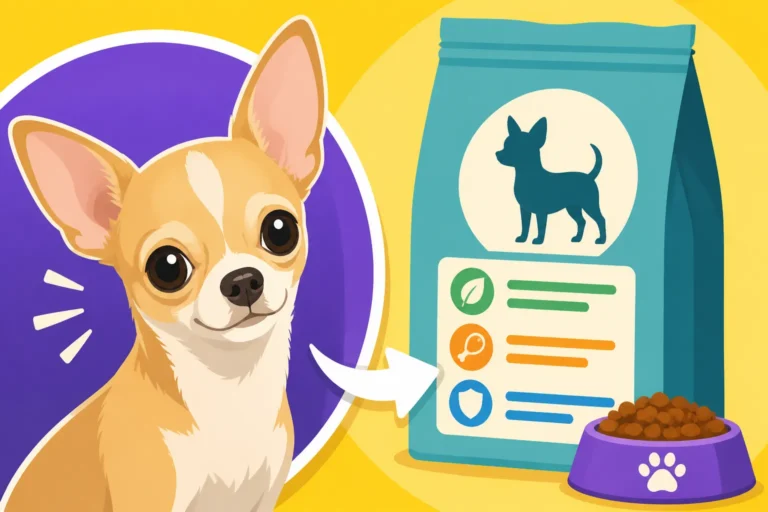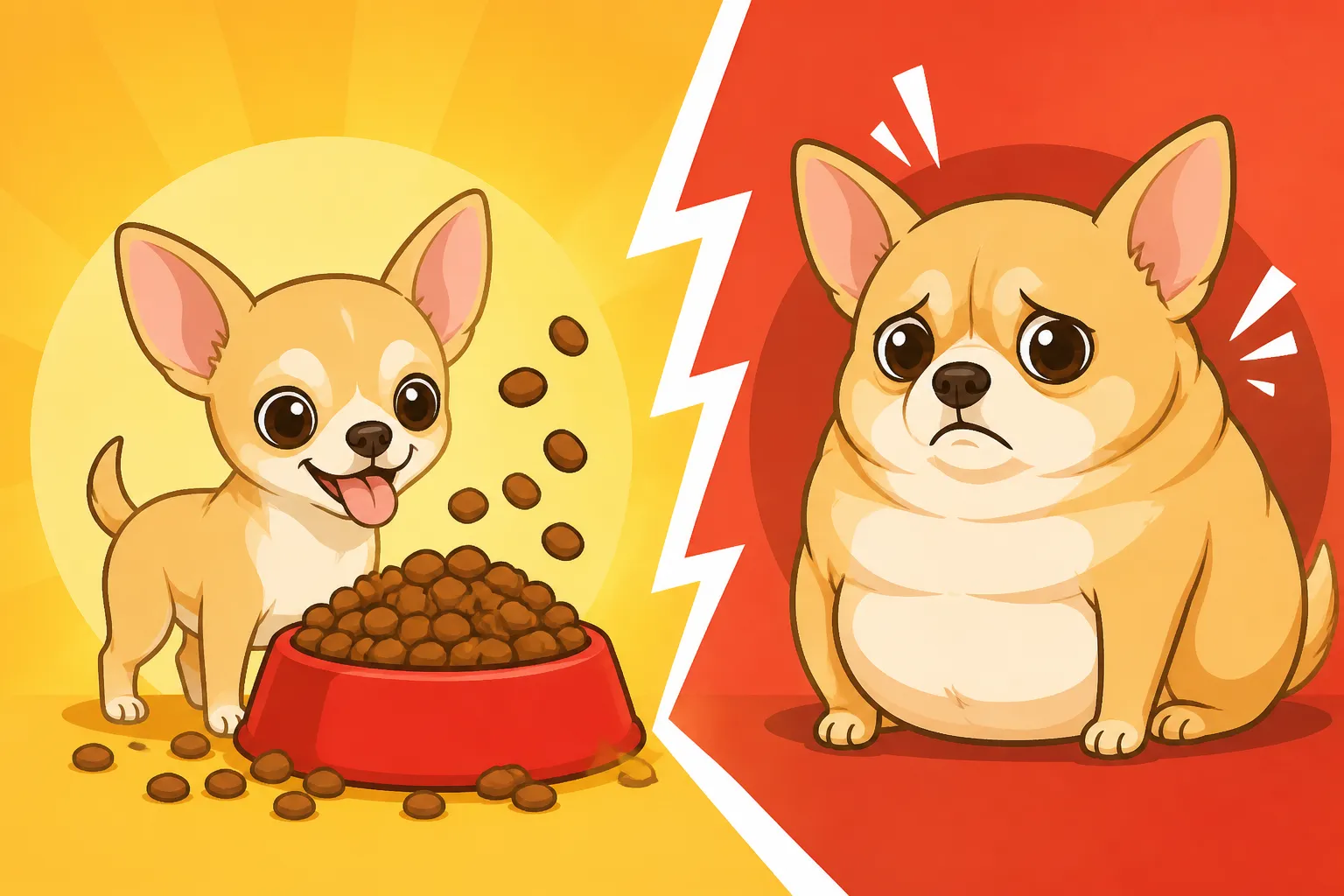
Why Free Feeding a Chihuahua Ends in Obesity
It's a common, well-intentioned mistake many of us Chihuahua parents make: leaving a bowl of kibble out all day, assuming our tiny companions will just eat what they need. We often hear about dogs self-regulating, especially smaller breeds, but for Chihuahuas, this practice almost inevitably leads to weight gain and a host of health complications. This guide will walk you through why free feeding doesn't work for our little friends and how to establish a feeding routine that promotes a long, healthy life.
The Myth of the "Self-Regulating" Chihuahua
Many dog owners believe that if food is always available, a dog will simply eat until satisfied and stop. While this might hold true for some larger, less food-motivated breeds, it's a dangerous assumption for Chihuahuas. Their small size and unique physiology make them particularly susceptible to overeating when given unlimited access to food.
Why Chihuahuas Don't Self-Regulate Food Intake
Our Chihuahuas, despite their pampered lives, still carry instincts from their ancient ancestors. In the wild, food sources were never guaranteed, leading to an evolutionary drive to eat whenever sustenance was available. This isn't about greed; it's about survival. When a Chihuahua sees a perpetually full bowl, that instinct kicks in, overriding any natural satiety signals. They don't think, "Oh, I'm full, I'll stop." They think, "Food is here, I should eat it because it might not be later."
Imagine your little Peanut, trotting past her bowl, taking a few bites, wandering off, then coming back for more a little while later. Each of those "few bites" adds up. There's no clear start or end to her meal, making it impossible for you to gauge how much she's actually consumed. This continuous grazing can lead to an accumulation of calories far beyond what her tiny body needs, without any conscious overeating on her part in a single sitting. It's a subtle but relentless increase in intake.
The Calorie Density Problem for Tiny Dogs
When we talk about weight management for Chihuahuas, every single calorie matters. A mere handful of extra kibble that might be negligible for a Labrador can represent a significant percentage of a Chihuahua's entire daily caloric requirement. For instance, an active adult Chihuahua typically needs around Daily Calories for a Three to Seven Pound Chihuahua, which is a surprisingly small amount of food.
Let's consider a scenario: your Chihuahua needs 200 calories a day. If you free feed and they consume just 50 extra calories—the equivalent of a few extra kibbles or a couple of tiny treats—that's a 25% increase in their daily intake! Over a week, that's an additional 350 calories, and over a month, 1,400 extra calories. This seemingly small surplus quickly translates into noticeable weight gain on such a diminutive frame. It's like a human eating an extra candy bar every day; it might not seem like much, but it adds up rapidly.
How Free Feeding Leads to Weight Gain and Health Issues
The impact of free feeding extends far beyond just adding a few extra pounds. For a Chihuahua, being overweight, or even slightly chubby, can exacerbate existing breed-specific health concerns and introduce new ones, significantly reducing their quality of life and potentially their lifespan.
The Sneaky Creep of Extra Calories
One of the biggest culprits in free-feeding leading to obesity is how easily those extra calories creep in unnoticed. It's not just the dog's tendency to graze. Many well-meaning owners will 'top off' the bowl when it looks a little low, without really knowing how much has been eaten. You might fill it in the morning, and by evening, it looks half-empty, so you add more. But did your Chihuahua eat it all? Or did the cat sneak a few bites? Or did your child, thinking they were being helpful, add a handful of their own?
This lack of precise measurement means you lose track of the actual intake. Furthermore, if you have other pets, they might be sneaking bites from the Chihuahua's bowl, making it seem like your Chihuahua is eating more than they are, prompting you to refill more often. Or, conversely, your Chihuahua might be eating everyone else's leftovers. This "free-for-all" approach to mealtime removes all control and accountability over your dog's diet, creating a perfect storm for gradual, unnoticed weight gain. You could easily be adding a quarter-cup more than necessary each day without realizing it, which is huge for a Chihuahua.
The Cascade of Health Problems from Chihuahua Obesity
Even a slight increase in weight for a Chihuahua can be detrimental. Think about it: a Chihuahua might weigh anywhere from three to seven pounds. What One Extra Pound Does to a Chihuahua is significant; it's like a human gaining 20-30 pounds. This extra weight puts immense strain on their tiny skeletal structure and internal organs.
One of the most common issues exacerbated by obesity in Chihuahuas is Patellar Luxation, the Chihuahua's Commonest Joint Problem. Their kneecaps are already prone to slipping out of place, and carrying extra weight intensifies the pressure on these delicate joints, leading to more frequent luxations, increased pain, and accelerating the development of arthritis. Overweight Chihuahuas are also more prone to Collapsing Trachea and the Chihuahua Honking Cough because the extra fat around their neck and chest can put additional pressure on their already fragile windpipes, making breathing difficult and coughing more frequent.
Beyond structural issues, obesity contributes to a higher risk of heart disease, like Mitral Valve Disease in an Older Chihuahua, as their hearts have to work harder to pump blood through a larger body mass. Diabetes, liver disease, and even certain types of cancer can also become more prevalent. It also makes surgery, such as a routine dental cleaning, much riskier because the anesthesia dosage becomes harder to accurately calculate, and recovery can be more complicated. Simply put, extra weight dramatically shortens a Chihuahua's healthy lifespan.
| Feature | Free Feeding Chihuahua | Scheduled Feeding Chihuahua |
|---|---|---|
| Food Availability | Food always in bowl | Food offered at specific times |
| Calorie Control | Very difficult to monitor and control calories | Easy to measure and control exact calorie intake |
| Weight Impact | High risk of obesity and associated health issues | Helps maintain healthy weight and prevents obesity |
| Digestion | Grazing can lead to inconsistent digestion | Regular meal times promote consistent digestion |
| House Training | Harder to predict potty schedule | Easier to predict potty schedule |
| Behavior | Can contribute to resource guarding, picky eating | Establishes routine, reduces guarding, promotes appetite |
| Medical Impact | Exacerbates joint, heart, and respiratory problems | Supports overall health, easier management of health issues |
The Better Way: Portion Control and Scheduled Meals
The solution to preventing obesity and promoting overall health in your Chihuahua is simple, yet requires consistency: portion control and scheduled meals. This approach allows you to precisely manage their caloric intake and establish a healthy routine.
Precision Feeding for a Tiny Metabolism
Because every calorie counts so much for a Chihuahua, guessing just won't cut it. Measuring cups, while common, are notoriously inaccurate, especially for small amounts of kibble. The difference between a slightly heaping quarter-cup and a level one can be enough to push your Chihuahua into calorie surplus.
This is where a kitchen scale becomes your best friend. Weighing your Chihuahua's food to the gram ensures absolute accuracy. You can pick up an inexpensive digital kitchen scale on Amazon or Chewy that will be a game-changer for precise feeding. Check your dog food bag for the caloric content per cup or gram, then calculate the exact weight needed for your Chihuahua's daily calorie requirement. For example, if your vet recommends 180 calories a day and your kibble has 350 calories per cup, you'll need to do the math to get the exact gram weight. Learning Weighing Chihuahua Food on a Kitchen Scale and Measuring Chihuahua Food to the Gram is one of the most impactful things you can do for their long-term health. It might seem overly meticulous at first, but it quickly becomes a habit and gives you peace of mind that you're not over or underfeeding.
Setting Up a Healthy Feeding Schedule
Chihuahuas thrive on routine, and meal times are no exception. Instead of leaving food out all day, offer two or three small, measured meals at consistent times. Three Small Meals a Day for a Chihuahua is often ideal. For instance, you could do breakfast around 7 AM, lunch around 1 PM (if you're home or have a trusted pet sitter), and dinner around 6 PM.
This structured approach offers several benefits. Firstly, it allows you to clearly monitor exactly how much your Chihuahua is eating. If they don't finish a meal within 15-20 minutes, pick up the bowl. This teaches them to eat when food is available and prevents picky eating habits. Secondly, it helps regulate their metabolism and can be crucial for preventing episodes of Chihuahua Hypoglycemia and the Puppy Emergency or even adult low blood sugar. Consistent meal timing helps maintain stable blood glucose levels throughout the day. Lastly, a predictable feeding schedule also makes house training easier, as you can anticipate when they'll need to go outside after eating. Don't underestimate the importance of Chihuahua Meal Timing Against Low Blood Sugar, especially for younger or more active Chihuahuas.
Managing Treats and Scraps Within a Calorie Budget
Even with perfectly portioned meals, treats and human food scraps can quickly derail a Chihuahua's diet. It's incredibly tempting to share a tiny piece of your snack, but those calories add up alarmingly fast for a small dog.
All treats, whether store-bought or human food, must be accounted for in their daily calorie budget. If you give a treat, you should slightly reduce their meal portion for that day. Look for low-calorie training treats, and even then, break them into tiny pieces. A single pea-sized piece of cooked chicken or a sliver of carrot can be a perfectly acceptable treat without blowing their caloric intake. When choosing treats, look for options specifically designed for small dogs, and check the calorie count on the packaging. Many excellent options are available from reputable brands on Chewy or your local pet store. Avoiding table scraps altogether is usually the safest bet, as many human foods are too rich, salty, or even toxic for Chihuahuas. Learn to identify Chihuahua Treats That Fit a Tiny Budget and keep them minimal.
Overcoming the Challenges of Transitioning Away from Free Feeding
Changing a long-standing feeding habit, both for you and your Chihuahua, can sometimes come with a few bumps. Your little one might initially protest, but with patience and consistency, you can successfully transition to a healthier mealtime routine.
The Initial Resistance and How to Handle It
If your Chihuahua has been free-fed their whole life, they might look at you with utter bewilderment (or even indignation!) when you put a bowl down and then pick it up after 15 minutes. It's a sudden change from constant access to limited opportunity. Don't be surprised if they initially refuse to eat, especially if they've learned that holding out means the food will stay. They might try to "wait you out."
The key here is consistency and not giving in. Offer the meal, leave it for 15-20 minutes, and then calmly pick it up. Do not offer more food until the next scheduled mealtime. They won't starve themselves, even if they skip a meal or two at first. This teaches them that food is available at certain times, and they need to eat it then. You can try to make the food more enticing by adding a tiny bit of warm water to kibble, or a dollop of plain canned pumpkin (if they tolerate it) to make it more appealing. During this transition, resist the urge to offer extra treats out of guilt; that just reinforces the idea that you'll bend the rules.
Monitoring Progress and Adjusting as Needed
Once you've established scheduled feeding, ongoing monitoring is crucial. Your Chihuahua's caloric needs can change based on their age, activity level, and whether they're spayed or neutered. It's important to regularly assess their body condition. You should be able to feel their ribs easily without seeing them protruding, and they should have a discernible waist when viewed from above.
A simple way to monitor is by weighing your Chihuahua regularly, perhaps once a month, at home on a baby scale or during vet visits. If they start to gain or lose weight unintentionally, you'll know it's time to adjust their food portions slightly. If you're unsure about your Chihuahua's ideal weight or how much to feed, always consult your veterinarian. They can help you determine the right calorie target and monitor your dog's health more closely. Understanding Feeling a Chihuahua's Ribs and Waist is a key skill for any Chihuahua owner. If you're working on Taking a Chihuahua From Nine Pounds to Six, this precision and consistency are absolutely vital.
Disclaimer
This article is for general informational purposes only and does not constitute professional advice. Laws, prices and regulations vary by location and change over time. Consult a qualified professional for guidance on your specific situation.