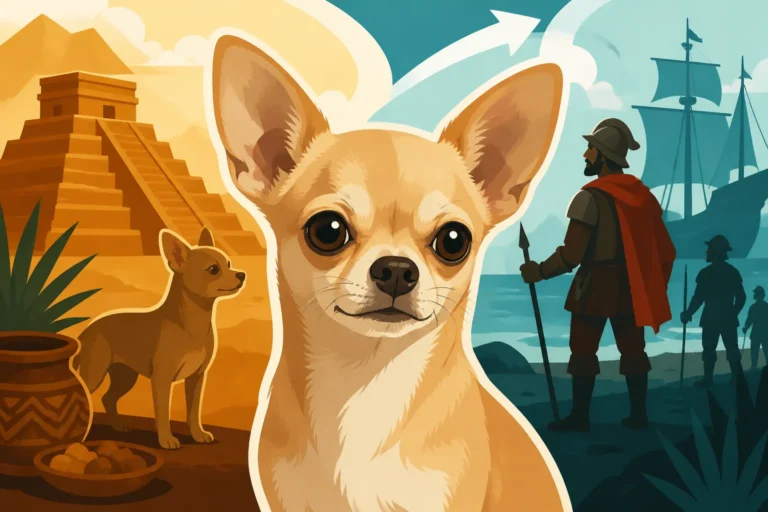
How Old the Techichi Line Actually Is
It's incredibly fascinating, and sometimes a bit frustrating, to try and trace the true origins of our beloved Chihuahuas. You hear whispers of ancient ancestors, like the Techichi, and immediately your mind jumps to thoughts of a long and storied past. But pinning down exactly how old this Techichi line truly is, separating myth from archaeological fact, can feel like piecing together a dusty, ancient puzzle. This guide is here to shed light on that very puzzle, delving into the deep history and concrete evidence to show just how far back your tiny companion's lineage stretches, giving you a clearer picture of their incredible heritage.
The Ancient Roots of the Chihuahua: Understanding the Techichi
When we talk about the Techichi, we're not just throwing out a fancy, old-sounding name. We're referring to the ancestral dog that geneticists and archaeologists largely agree is the direct predecessor to the modern Chihuahua. This wasn't some wild canine; the Techichi was a domesticated companion animal, deeply embedded in the lives and cultures of the ancient Mesoamerican civilizations that thrived in what is now Mexico. Imagine a small dog, not unlike today's Chihuahua in general size and build, living alongside the Toltec people, and later, the Aztecs. This connection is far from a guess; it’s built on a foundation of tangible evidence left behind by these long-lost cultures.
The role of the Techichi wasn't merely as a pet, though companionship was certainly a part of it. These dogs held significant spiritual and ceremonial importance. They were believed to guide souls through the underworld, often being buried with their human companions. This profound spiritual connection meant they were cared for, revered, and intentionally bred for certain traits, including their small size. This isn't just a quaint historical detail; it speaks to the intentionality behind their existence, highlighting that they were not accidental inhabitants but integral members of these ancient societies, much like our Chihuahuas are cherished family members today. It’s a remarkable parallel across millennia.
Furthermore, the Techichi wasn't just a singular, unchanging breed over hundreds of years. Like any domesticated animal, it underwent changes through natural selection, cultural preferences, and intentional breeding. The Techichi likely represented a population of small, localized dogs rather than a rigidly defined breed in the modern sense. Understanding this helps us appreciate the fluidity of its lineage and how it eventually led to the distinct dog we recognize as the Chihuahua today. It’s a story of adaptation, survival, and deep connection between humans and canines that truly began in antiquity.
Archaeological Evidence: Tracing the Techichi Through Time
The most compelling evidence for the Techichi's age and existence comes from archaeological digs across Mexico, where artifacts depicting small dogs have been unearthed, some dating back thousands of years. These aren't just vague drawings; we're talking about detailed carvings, intricate pottery, and even skeletal remains that tell a remarkably consistent story. For example, in regions like Cholula and Colima, archaeologists have discovered numerous figurines and pots that clearly depict small, big-eared dogs bearing a striking resemblance to Chihuahuas. These artifacts are not new discoveries; they have been studied for decades, providing a solid timeline for the Techichi's presence. Techichi Figures Found in Mexican Tombs are some of the most profound examples of this historical record.
Perhaps one of the most exciting pieces of evidence comes from burial sites, particularly those associated with the Toltec civilization, which flourished in Central Mexico long before the Aztecs rose to power. Researchers have found the remains of small dogs interred alongside humans, complete with grave goods, reinforcing the idea of their spiritual significance and close bond with people. These findings push the verifiable timeline for the Techichi back to at least 900 CE, and potentially even earlier. The specific locations of these finds, like Tula, the former Toltec capital, underscore the importance of these animals within their structured societies. Imagine the painstaking work of uncovering these remnants, knowing each piece helps paint a picture of a civilization that valued these small dogs so highly.
Beyond the Toltec era, the influence of these dogs continued through the Aztec civilization. While the Aztecs are often credited with further refining the Techichi, particularly towards an even smaller size, the dog's foundation was already ancient by their time. Artifacts from the Aztec period, often depicting similar small dogs, reinforce the continuity of this canine lineage. The fact that these representations appear consistently across different major Mesoamerican cultures over centuries provides powerful testimony to the enduring presence and distinct characteristics of the Techichi. This is why when you see a Chihuahua, you're not just looking at a modern pet, but a living echo of ancient history.
| Civilization | Estimated Period | Key Evidence | Significance to Techichi |
|---|---|---|---|
| Pre-Classic Mesoamerican (e.g., Colima) | 300 BCE – 300 CE | Dog figurines, pottery | Earliest depictions of small dogs, suggesting ancient roots. |
| Toltec | 900 CE – 1200 CE | Skeletal remains in burial sites, pottery, carvings | Direct archaeological link to companion dogs, spiritual role. |
| Aztec | 1300 CE – 1521 CE | Literary accounts, pottery, figurines | Continued reverence for small dogs, believed to be further shrunk. |
The Techichi's Transformation into the Modern Chihuahua
The journey from the ancient Techichi to the modern Chihuahua is a long and winding one, heavily influenced by the rise and fall of civilizations and, perhaps most dramatically, by the arrival of the Spanish conquistadors. Before the Spanish, the Techichi had already evolved significantly under the care of indigenous peoples. The Toltecs cherished them, as we’ve discussed, and the succeeding Aztecs continued to value them, possibly even breeding them to be smaller. How the Aztecs Shrank the Chihuahua's Ancestor is a fascinating part of this narrative, showcasing a deliberate cultivation of tiny canines. They weren't just shrinking dogs for fun; there was cultural and spiritual significance to their size.
However, the Spanish Conquest in the 16th century brought a seismic shift. When the Europeans arrived, their presence disrupted virtually every aspect of indigenous life, including the fate of the native dogs. Many Techichi were likely killed, died from new diseases, or interbred with European dogs brought by the invaders. For a time, it seemed the Techichi line might be lost to history. This period marks a critical, dark chapter, where much of the direct, visible lineage simply vanished from records. It’s why there’s a gap in the documented history between the height of the Aztec empire and the re-emergence of the Chihuahua in the 19th century. What the Spanish Conquest Did to the Chihuahua was undeniably a period of intense pressure and near-extinction for many indigenous practices and animals.
Yet, somehow, the Techichi bloodline persevered. It’s believed that some populations of these small dogs survived in remote villages and isolated areas, particularly in the state of Chihuahua in Mexico, where they remained largely unnoticed by the wider world for centuries. These dogs, hidden away, continued to carry the genetic legacy of their ancient ancestors. It's a testament to their resilience and the quiet dedication of the local people who undoubtedly continued to keep and breed them, even if their traditional spiritual roles had diminished. This period of clandestine survival, How the Chihuahua Survived Three Centuries Unrecorded, is often where the historical trail gets hazy, relying more on inference than direct evidence until their "rediscovery."
Pinpointing the Age: When Did the Techichi Line Truly Begin?
So, how old is the Techichi line, really? Based on the archaeological and historical evidence, we can confidently place the origins of the Techichi lineage stretching back at least to the Pre-Classic Mesoamerican period, roughly 300 BCE. This means the direct ancestors of your Chihuahua have been around for well over 2,300 years. That’s an incredible span of time, predating many of the major empires and cultural movements we learn about in history books. When you factor in the consistency of the depictions and skeletal finds, you see a continuous, albeit evolving, presence of these small dogs.
Modern advancements in genetic testing have further solidified these ancient claims. DNA Studies on Chihuahua Origins have been pivotal in confirming the deep historical roots of the breed. These studies compare the genetic markers of modern Chihuahuas to those of other ancient dog breeds and even ancient dog remains, tracing their lineage back to those Mesoamerican canids. The results consistently point to a strong genetic link, demonstrating that the Chihuahua isn't a recently developed breed but rather a living relic of indigenous dog populations, largely isolated and developing for millennia in North America. This provides scientific backing to the archaeological findings, closing any gaps in the historical narrative.
What’s truly remarkable is that despite the upheavals of conquest, the near-extinction of their human companions' cultures, and centuries of obscurity, the Techichi line endured. It speaks to the incredible hardiness and adaptability of these small dogs, and the enduring human-animal bond that allowed them to survive. While the exact moment a "Techichi" became a "Chihuahua" is fluid – a product of ongoing development and eventual Western recognition, particularly in the 19th and early 20th centuries – the underlying genetic and morphological characteristics have been present for thousands of years. From tiny figurines unearthed in ancient tombs to the vibrant dog sleeping on your sofa, the connection is undeniably ancient. It makes you look at your little buddy differently, doesn't it? Knowing you're caring for a descendant of such an incredible historical line adds another layer of appreciation for their unique place in the world.
Disclaimer
This article is for general informational purposes only and does not constitute professional advice. Laws, prices and regulations vary by location and change over time. Consult a qualified professional for guidance on your specific situation.