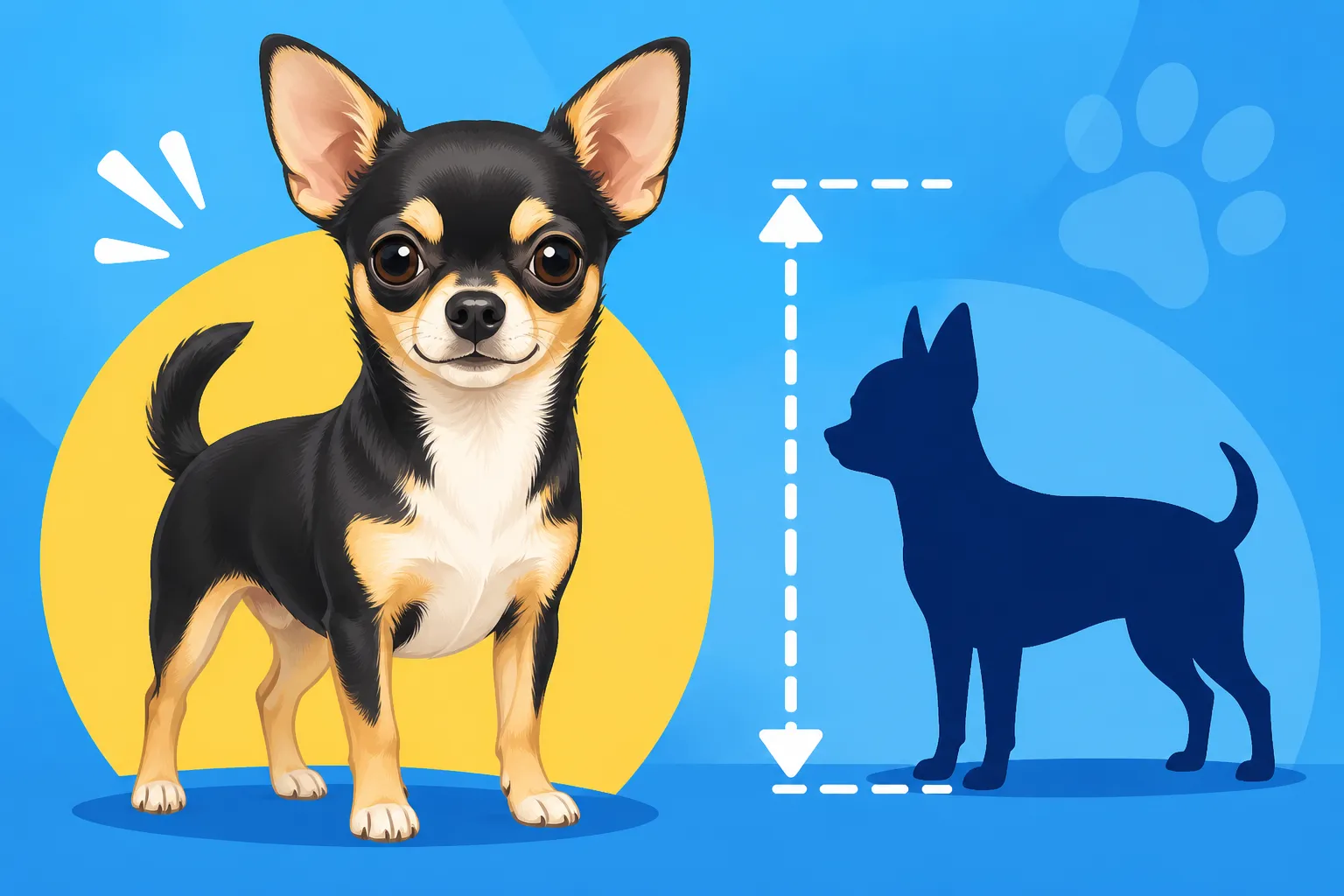
How Tall a Chihuahua Stands
Many people bring home a Chihuahua with a clear idea of how much they should weigh, often hearing about the breed's famous six-pound maximum for show dogs. But what often gets overlooked, and yet is just as important for daily life, is how tall a Chihuahua stands. This guide will walk you through understanding your pint-sized companion's vertical stature, why it varies, and how it impacts everything from choosing the right harness to keeping them safe and sound in your home.
The Chihuahua Standard and Its Focus on Proportions, Not Just Weight
When we talk about purebred dogs, we often refer to a "breed standard" – a detailed description of the ideal dog of that breed, set by organizations like the American Kennel Club (AKC). For Chihuahuas, this standard is quite specific about weight, but curiously silent on a definitive height. This might seem odd, but it actually gives us a lot of insight into what truly defines a well-proportioned Chihuahua.
Why Weight Matters More Than Height to the Standard
The breed standard explicitly states that "any dog over 6 pounds is disqualified from the show ring." This rule is a cornerstone of the Chihuahua's identity as a true toy breed, emphasizing its diminutive size. The focus on weight ensures that the breed remains small and portable, a defining characteristic that has charmed owners for generations. It's a clear, quantifiable measure that breeders can strive for, distinguishing Chihuahuas from slightly larger toy breeds.
However, while weight is paramount for showing, it doesn't mean height is irrelevant. It simply means that within that 6-pound limit, there can be a surprising amount of variation in how tall a Chihuahua stands. You might have a compact, densely built Chihuahua that weighs 5 pounds and stands 7 inches tall, and a more slender, leggy one that also weighs 5 pounds but stands 9 inches tall. Both could theoretically meet the weight standard, highlighting that the ideal isn't a one-size-fits-all mold for their vertical dimension. This inherent variability is something many new owners don't anticipate, assuming all Chihuahuas of a certain weight will look identical in height and build.
Proportions and Overall Balance
Even without a specific height range, the breed standard does talk about the importance of overall balance and proportion. A Chihuahua should be "a well-compacted little dog," which implies a certain relationship between length of body and height. An ideal Chihuahua isn't excessively long-backed or leggy; rather, it should present a harmonious picture. This means that while a 6-pound Chihuahua could theoretically be unusually tall or short for its weight, a judge in the show ring would penalize anything that looks out of proportion, even if the weight is perfect.
Consider two Chihuahuas, both weighing 5 pounds. One might be a bit more square in build, perhaps 7 inches tall at the shoulder, while another might be more rectangular, standing 8.5 inches tall. Both can be perfectly healthy and adorable pets, but the show standard would lean towards the one that appears more "compact." This focus on balance also helps prevent extremes in breeding that could lead to health issues; for example, overly long backs could predispose a tiny dog to spinal problems, while extremely short legs might hinder normal movement. It's a holistic view of size and shape that aims for both aesthetic appeal and functional soundness. You can learn more about this by reading Chihuahua Proportions Under the Standard.
Typical Height Ranges for Chihuahuas
So, if the standard doesn't give us a hard number, what can you expect for your Chihuahua's height? Generally speaking, most Chihuahuas stand somewhere between 6 to 10 inches tall at the shoulder. This is a broad range, and many factors can influence where an individual dog falls within it. Understanding this range helps set realistic expectations and explains why your Chihuahua might look quite different from your friend's, even if they're both the same breed.
The Average Chihuahua's Stature
Most Chihuahuas you encounter will likely fall in the middle of that 6-to-10-inch range, often around 7 to 9 inches tall. These are the dogs that look perfectly proportionate, neither appearing too squat nor too leggy. They fit comfortably in various carriers, can navigate typical household obstacles, and generally embody the classic Chihuahua silhouette. Their size makes them easily handled, perfect for lap-sitting, and generally quite robust for their tiny stature.
This average height range is a sweet spot, allowing Chihuahuas to be agile and active, enjoying walks and playtime, without being so small that they are constantly underfoot and at risk, nor so large that they begin to lose that quintessential "toy dog" charm. Many pet Chihuahuas are bred without strict adherence to the show ring's tight weight restrictions, leading to healthy dogs that might be on the taller or heavier side of the spectrum. In fact, it's not uncommon for a perfectly healthy pet Chihuahua to weigh 7 or 8 pounds and stand 10-11 inches tall, simply because breeders prioritize temperament and pet health over a strict show weight limit. Understanding The Six Pound Limit in the Chihuahua Standard can shed more light on these nuances.
Factors Influencing Height Beyond the Standard
While the breed standard guides breeders, many Chihuahuas are bred as companion pets, where genetic lines might not be as tightly controlled for specific traits like height within the weight limit. This means there can be significant variation. For instance, whether a Chihuahua is an "apple head" or a "deer head" can sometimes influence their perceived or actual height. Apple heads often have a more compact, cobby body with shorter legs, while deer heads tend to be more slender, with longer legs and a more elongated body, naturally making them appear taller, even if they weigh the same. You can dive deeper into these distinctions by reading Apple Head Against Deer Head Chihuahuas.
Beyond head type, individual genetics play a massive role. Just like in humans, some dogs are simply predisposed to be a bit taller or shorter than their siblings or breed average. Nutrition during puppyhood can also have an impact; while it won't turn a genetically small Chihuahua into a giant, severe malnutrition can stunt growth. However, in most well-cared-for puppies, genetics are the primary determinant. So, when you look at a litter of Chihuahua puppies, you might see a range of sizes, and their adult height will largely be a product of their parents' genes, often falling within that 6-10 inch range, give or take an inch.
Why Your Chihuahua's Height Actually Matters in Daily Life
You might think that a few inches here or there doesn't make a huge difference for such a small dog, but in the world of Chihuahuas, every inch counts! Your dog's standing height significantly impacts their daily comfort, safety, and even the choices you make for their gear and living environment. It's not just about aesthetics; it's about practical considerations that ensure your tiny companion lives a happy, healthy life.
Sizing Gear for Your Tiny Friend
One of the most immediate and frequent ways your Chihuahua's height will come into play is when you're shopping for accessories. Finding a properly fitting harness, for example, is absolutely crucial. A harness that's too loose can allow your Chihuahua to slip out, potentially into dangerous situations, while one that's too tight can chafe, restrict movement, or even put pressure on their delicate trachea. The height of your dog, along with their chest girth, determines the ideal harness size. A Chihuahua that stands taller might need a harness with a longer back strap to ensure the chest piece sits correctly without riding up into their throat. Companies like Chewy offer a wide range of harnesses specifically designed for toy breeds, and you’ll often find detailed sizing charts that include a length or back measurement in addition to girth. Always measure your specific dog, including their height from the base of their neck to the start of their tail, when choosing. This attention to detail can prevent serious issues and keep your pup comfortable during walks. For more specific guidance, check out Harnesses and Leads Sized for a Chihuahua.
Beyond harnesses, consider clothing. Chihuahuas, especially smooth coats, get cold very easily due to their lack of body fat and thin skin. Sweaters and coats are not just fashion statements; they're necessities. A taller Chihuahua might need a longer sweater to cover their entire back, while a shorter, more compact one might need a different cut to avoid tripping over excess fabric. Likewise, beds and blankets need to be appropriately sized. A bed that's too high for a very short Chihuahua might deter them from using it easily, while one that's too small might not allow them to stretch out comfortably. Even travel carriers need to be mindful of height; while airlines often have strict length and width requirements, ensuring your Chihuahua can stand up and turn around comfortably within the carrier means considering their full standing height. When looking for carriers, remember that Chewy often has customer reviews with photos of Chihuahuas inside, which can be invaluable for real-world sizing.
Safety and Mobility Considerations
Your Chihuahua's height also directly influences their safety and mobility within your home and out in the world. A taller Chihuahua might find it easier to navigate stairs, but any Chihuahua, regardless of height, is at risk of injury from jumping off high furniture like sofas or beds. Their small, delicate bones and joints are not built for repeated impacts from even a relatively short fall. A fall from a sofa can lead to serious injuries like patellar luxation or even broken bones. This is why many Chihuahua owners invest in ramps or steps for furniture, and the height of your dog will dictate the appropriate height and incline of these aids. You can learn more about preventing these types of injuries in Stairs and Jumping That Hurt a Chihuahua.
Interactions with other dogs are another significant consideration. A Chihuahua standing only 6 inches tall is much more vulnerable around a larger dog than one standing 10 inches tall. While any size difference poses a risk, the more diminutive your Chihuahua, the more careful you need to be. Their small stature makes them easily overlooked or accidentally injured during play, and they can be perceived as prey by some larger breeds. Even common household items can pose risks. A kitchen counter might be "out of reach" for a taller Chihuahua, but a shorter one might be able to jump and get into trouble. Being aware of your Chihuahua's standing height helps you "Chihuahua-proof" your home more effectively, identifying potential hazards they might be able to reach or fall from. It impacts where you place their food bowls, ensuring they don't strain their neck or put pressure on their windpipe if they have a tendency towards Collapsing Tracheea and the Chihuahua Honking Cough.
How to Accurately Measure Your Chihuahua's Height
Knowing your Chihuahua's exact height is incredibly useful for all the reasons we've discussed. But how exactly do you measure a dog that might not always stand perfectly still, especially one that fits in your hand? It's not as tricky as it sounds, but it does require a bit of patience and the right technique.
Tools You'll Need and the Setup
Before you start, gather your tools. You'll need a measuring tape (a flexible cloth or soft plastic one is best, similar to what a tailor uses), and a flat, hard surface where your Chihuahua can stand comfortably and stably. A sturdy table with a non-slip mat is ideal, or even a hard floor against a wall. If your Chihuahua is prone to fidgeting, having a second person to gently hold them still might be helpful. A handful of their favorite treats is also a must – positive reinforcement will make the experience much less stressful for your little one. You can find all these measuring tapes and an endless supply of treats on Chewy, making your preparation a breeze!
The key to an accurate measurement is ensuring your Chihuahua is standing in a natural, square stance, not leaning, sitting, or stretching. Their front legs should be straight, and their head should be held in a relaxed, neutral position, not craning up or tucked down. Imagine they are posing for a formal portrait. This might take a few tries, so be patient and keep the atmosphere calm and positive. If they seem stressed, take a break and try again later. It's more important to get an accurate reading than to rush and get a frustrated, squirming pup.
The Process of Measuring
Once your Chihuahua is standing square and calm, you'll measure their height at the withers. The withers are the highest point of their shoulder blades, located at the base of their neck, just above their front legs. This is the standard point for measuring a dog's height.
To measure:
- Position your Chihuahua: Have them stand perfectly still and square on your flat surface.
- Locate the withers: Gently feel for the bony prominence between their shoulder blades. This is your target point.
- Use the measuring tape:
- If using a flexible tape: Hold the end of the tape firmly on the floor directly beneath their front leg, perpendicular to the ground. Then, bring the tape straight up, placing your thumb or a flat ruler on top of their withers to get an accurate reading from the floor to that point. Make sure the tape is taut but not pressing down into their coat, which could give a false low reading.
- Alternatively, for a more precise measurement, you can use a carpenter's square or a large book. Place the square/book horizontally across your Chihuahua's shoulders, ensuring it's level, and then measure from the bottom of the square/book straight down to the floor using your measuring tape. This method helps to account for any fluff or differing fur lengths that might skew a direct tape measurement.
- Read the measurement: Note the number in inches. Repeat the measurement a couple of times to ensure consistency.
Here's a quick reference for typical Chihuahua heights:
| Type of Chihuahua | Typical Height (at withers) | Notes |
|---|---|---|
| Small/Compact | 6-7 inches | Often very cobby bodies, might still weigh close to 6 lbs. |
| Average | 7-9 inches | Most common range, good balance of compact and agile. |
| Taller/Leggier | 9-10+ inches | Can still be within healthy weight range, often "deer head" type. |
Remember, knowing your Chihuahua's height is a practical tool, not a judgment. Whether your little friend is 6 inches or 10 inches tall, they are perfect just the way they are! The goal is to provide them with the best care, and that often starts with understanding their unique physical dimensions. This information will empower you to make better choices for their health, comfort, and safety throughout their long and happy life. What Actually Ends a Chihuahua's Sixteen Years highlights the importance of proactive care in maximizing their lifespan.
Disclaimer
This article is for general informational purposes only and does not constitute professional advice. Laws, prices and regulations vary by location and change over time. Consult a qualified professional for guidance on your specific situation.