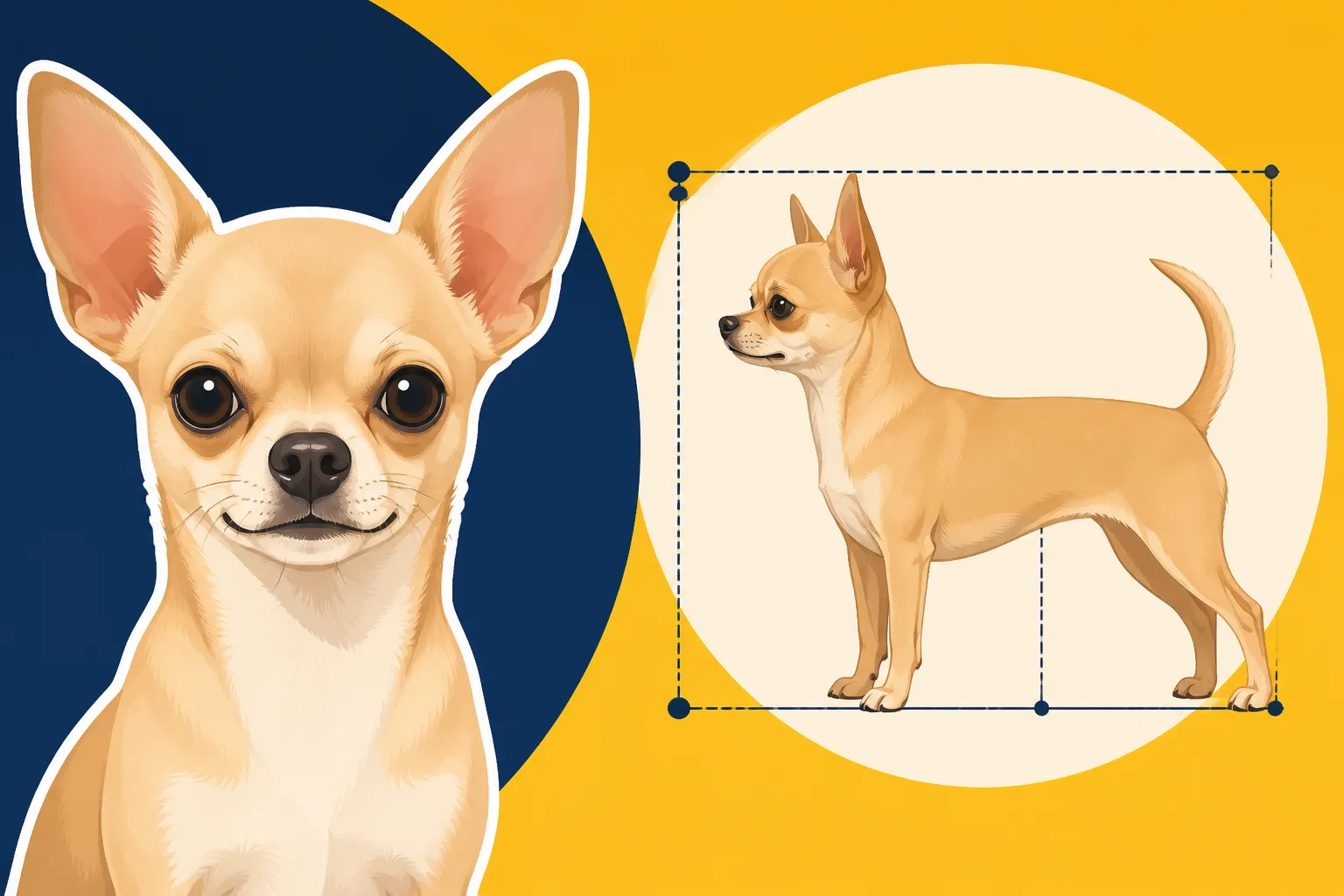
Chihuahua Proportions Under the Standard
Many new Chihuahua owners are surprised when they look at pictures of show dogs or read the breed standard, realizing that the tiny bundle of energy they adore might not quite match the ideal description. It's easy to assume that because they're small, proportions don't matter as much, but understanding the breed's intended structure is key to appreciating their history, their movement, and even some of their unique health considerations. This guide will walk you through what the breed standard means when it talks about a Chihuahua's proportions, helping you see beyond just their adorable size.
Understanding the Ideal Chihuahua Silhouette
When you picture a Chihuahua, you probably think small, perhaps with big eyes and ears, and an undeniable spunky attitude. But the breed standard goes much deeper, describing an ideal silhouette that contributes to their distinctive look and their functionality as a compact companion. It's not just about being tiny; it's about being tiny in a specific, balanced way.
The Importance of a Balanced Build
The breed standard emphasizes a "compact" and "well-balanced" little dog. This means that all the parts should fit together harmoniously, creating an agile and sturdy appearance despite their small size. Think of it like a perfectly composed miniature sculpture – every element contributes to the overall picture. A Chihuahua shouldn't look leggy and delicate, nor should it appear long and low to the ground like a Dachshund. Instead, there's a certain elegance in its compact form, suggesting both alertness and confidence. This balance is critical because it directly influences how the dog moves and carries itself. A well-balanced Chihuahua will move with a free, flowing gait, holding its head high and its tail proudly over its back. If you observe a Chihuahua that seems to struggle with certain movements or has an awkward bounce in its step, it might be an indicator that its proportions are a bit off. Chihuahua Patella Certification Before Breeding is one of the important health screenings breeders conduct to ensure good structure.
A truly balanced Chihuahua can navigate a bustling living room or a grassy park with ease, darting around obstacles with surprising speed and grace. This isn't just for aesthetics; it speaks to the breed's intended athleticism within its toy category. Imagine trying to buy a harness for a Chihuahua whose body is unusually long or short – it quickly becomes clear how practical these proportional guidelines are for everyday life. Finding properly fitting gear from places like Chewy can be a real challenge if your dog's proportions are significantly outside the norm.
"Moderately Long" – What That Really Means
One phrase that often confuses new owners is the standard's description of body length. It states that the body should be "moderately long," which might seem contradictory to "compact." However, this isn't suggesting a long, low-slung body. Instead, it means that the body is slightly longer than the dog is tall at the shoulder, but not excessively so.
To visualize this, imagine a perfect square, then stretch it just slightly into a rectangle. That slight rectangle is what "moderately long" aims for. A Chihuahua that is literally square, with its body length equal to its height, might look a bit stumpier than intended. Conversely, a Chihuahua with an overly long back can look stretched out and may even be prone to certain back issues, although these are less common than some other breed-specific ailments. This "moderately long" proportion provides enough room for proper organ placement and allows for the necessary flexibility and reach in movement without sacrificing the compact appearance. It's a subtle but important distinction that contributes to the breed's characteristic quickness and agility, letting them navigate small spaces with surprising dexterity.
Key Proportional Elements Defined by the Standard
Beyond the overall silhouette, the breed standard delves into specific proportional relationships between different parts of the Chihuahua's body. These details ensure that each feature contributes to the harmonious whole, defining what makes a Chihuahua unmistakably a Chihuahua.
Body Length Versus Leg Length
As mentioned, the body should be "moderately long," meaning slightly longer than the dog's height at the shoulder. The legs, therefore, play a crucial role in achieving this balance. They should be straight and set well under the body, neither too short to make the dog look low to the ground, nor so long that the dog appears spindly or top-heavy. The length of the leg from the elbow to the ground should be roughly proportional to the depth of the chest.
When a Chihuahua has legs that are too short, they might struggle to clear even small obstacles and can look disproportionate, almost like a miniature Basset Hound rather than a spunky little terrier-type. On the other hand, excessively long legs can make a Chihuahua look gangly and less compact, giving them an almost spider-like appearance that detracts from the sturdy, alert impression the standard calls for. Imagine a Chihuahua trying to perform a quick turn or jump onto a low chair. Legs that are too short or too long can compromise this natural agility. Proper leg length is also vital for the health of their joints. Chihuahuas are famously prone to Patellar Luxation, the Chihuahua's Commonest Joint Problem, where the kneecap slips out of place. While genetics play a huge role, a dog with severely disproportionate leg structure might experience added stress on these delicate joints.
Head and Muzzle Ratios
The head is arguably one of the most distinctive features of the Chihuahua, especially the "apple head" type described in the standard. The standard calls for a "well-rounded, apple dome skull," which is a hallmark of the breed. But it's not just the shape of the skull; it's the relationship between the skull and the muzzle that truly defines the breed's expression.
The muzzle should be short and slightly pointed, but never so short as to look pushed in or cause breathing difficulties. It should also join the skull at a distinct, well-defined stop (the indentation between the eyes). The ideal proportion is often cited as a 1:2 ratio, meaning the muzzle length is about half the length of the backskull (from the stop to the back of the head). If the muzzle is too long, the dog can start to look more like a miniature Pinscher or a terrier, losing that characteristic "Chihuahua" expression. If it's too short, it can lead to breathing issues and an overly brachycephalic (flat-faced) appearance, which isn't desirable.
The eyes should be full, round, and dark, but not protruding. Their placement is also critical to the head's overall proportion, contributing to that alert, intelligent, and often mischievous expression. You'll find many fascinating discussions around The Rounded Skull of an Apple Head Chihuahua and how it differs from other head types. Even the ears are part of this proportional symphony; they should be large, erect, and set wide apart, contributing to the breed's unique head shape and expressive face.
Tail Set and Carriage
The tail is more than just an appendage; its set and carriage are important proportional details that complete the Chihuahua's silhouette. The standard dictates that the tail should be set high and carried either up in a sickle shape or in a loop over the back, with the tip just touching the back. It should never be carried between the legs or curled so tightly as to appear docked.
A tail that is too short, too long, or carried incorrectly can disrupt the visual balance of the dog. A low-set tail can indicate nervousness or a deviation from the desired confident, alert posture. A tail that is too tightly curled or too short can make the dog look truncated, rather than completing the graceful curve over the back. The tail acts as a sort of exclamation mark on the Chihuahua's profile, reinforcing its lively and self-assured temperament. It’s a crucial component of their overall balance and expressiveness, helping them communicate their mood and contributing to their unique gait. When looking for items like a cozy bed or a new collar for your Chihuahua on Chewy, consider how their tail set might interact with features like a raised headrest or a decorative tag—every detail counts!
| Proportional Element | Ideal Standard Description | Common Deviations & Impact |
|---|---|---|
| Body Length | Moderately long (slightly longer than height) | Too short (square) -> stumpy, less agile; Too long -> stretched, potential back strain. |
| Leg Length | Straight, moderate, proportional to chest depth | Too short -> low-slung, awkward movement; Too long -> gangly, less compact. |
| Head (Skull) | Well-rounded, apple dome | Flat skull (Deer Head) -> not standard; Exaggerated dome -> hydrocephalus risk. |
| Muzzle | Short, slightly pointed, distinct stop | Too long -> loss of breed type; Too short (flat) -> breathing issues. |
| Tail | High set, carried in sickle/loop over back | Low set -> indicates nervousness; Too short/long -> visual imbalance. |
Why Proportions Matter Beyond the Show Ring
While breed standards are often associated with show dogs, understanding Chihuahua proportions isn't just for breeders and exhibitors. These guidelines are rooted in the overall health, function, and enduring character of the breed, impacting their daily lives and even their longevity.
Impact on Agility and Movement
A Chihuahua's proportions directly influence its ability to move freely and efficiently. The compact yet moderately long body, combined with well-angulated legs, allows for a surprising degree of agility and speed. These little dogs are designed to be quick on their feet, capable of sudden bursts of energy and sharp turns. Imagine a Chihuahua navigating a busy household, dodging feet and furniture – their proportions allow them to do this with grace and minimal effort.
If a Chihuahua has a body that's too short, their stride can be restricted, making them appear choppy or bouncy rather than flowing. Conversely, an overly long back can lead to a less stable core, potentially affecting their ability to jump or navigate stairs safely, possibly leading to issues over time. Proper leg angulation and placement also ensure that their joints, particularly their knees, move correctly. A Chihuahua with good proportions is less likely to exhibit the "skipping gait" sometimes associated with patellar luxation, even if they have a mild grade of the condition. The Skipping Gait That Signals a Chihuahua Knee is something every Chihuahua owner should be aware of, and good conformation can help mitigate the severity. This natural athleticism is part of their charm and why they can participate in dog sports like obedience or even miniature agility.
Health Implications of Deviant Proportions
While no breed is entirely free of potential health issues, extreme deviations from the breed standard's ideal proportions can sometimes correlate with increased health risks. For example, a muzzle that is disproportionately short or "smooshed" can predispose a Chihuahua to Collapsing Trachea and the Chihuahua Honking Cough or other respiratory problems, as there's simply less space for proper airflow. Similarly, while the "apple head" is characteristic, an excessively domed skull or a large open fontanelle (molera) can sometimes be a sign of hydrocephalus, though it's important to remember that a molera itself isn't always indicative of problems. The Chihuahua Molera and What a Soft Spot Means can help distinguish normal traits from concerning ones.
Leg and body proportions are also crucial. Legs that are too straight or poorly angulated can put undue stress on joints, potentially worsening conditions like patellar luxation or even leading to arthritis earlier in life. A disproportionately long back, while less common in Chihuahuas than in some other long-backed breeds, could theoretically put more strain on the spine. Reputable breeders strive to adhere to the standard not just for beauty, but to produce healthy, functional dogs with the best possible chances for a long, vibrant life. This is why it's so important for owners to choose a breeder who prioritizes health screenings and conformation. Many resources on Chewy speak to the importance of supportive nutrition and joint supplements for breeds prone to orthopedic issues.
The Role of a Breeder in Upholding the Standard
Ethical Chihuahua breeders dedicate themselves to producing dogs that not only meet the breed standard in appearance but also embody the desired temperament and, crucially, good health. They understand that proper proportions are a cornerstone of a healthy, functional Chihuahua. This involves careful selection of breeding stock, studying pedigrees, and performing health clearances to ensure that genetic predispositions to conformational issues are minimized. The Health Tests a Chihuahua Breeder Should Run are a testament to this commitment.
A responsible breeder won't breed a Chihuahua with extreme deviations from the standard, even if the dog is otherwise charming. They recognize that passing on poor structure could lead to a lifetime of discomfort or expensive veterinary care for the puppies. They also educate potential owners on what to look for and explain why certain proportional traits are desirable. When you see a Chihuahua that moves gracefully, breathes easily, and looks every bit the alert, confident companion, you are witnessing the direct result of a breeder's adherence to a well-thought-out breed standard. This commitment ensures that the Chihuahua continues to thrive as a beloved and healthy companion for generations to come.
Disclaimer
This article is for general informational purposes only and does not constitute professional advice. Laws, prices and regulations vary by location and change over time. Consult a qualified professional for guidance on your specific situation.