Why Collar Pressure Damages a Chihuahua Trachea
If you've ever owned a Chihuahua, you know that little cough, sometimes a startling honking sound, that seems to come out of nowhere. It’s incredibly common, and often, it’s not just a quirky habit but a sign of a delicate respiratory system under strain. One of the most overlooked culprits? The seemingly innocent collar around your tiny companion's neck. This guide will meticulously break down why collar pressure is particularly detrimental to a Chihuahua's trachea and, more importantly, how you can protect your cherished little friend.
Understanding the Chihuahua Trachea's Delicate Nature
It’s easy to forget just how tiny and fragile a Chihuahua’s internal structures are when we see their big, bold personalities. But beneath that spirited exterior lies a respiratory system that requires specific consideration, especially its windpipe.
The Anatomy of a Toy Breed Windpipe
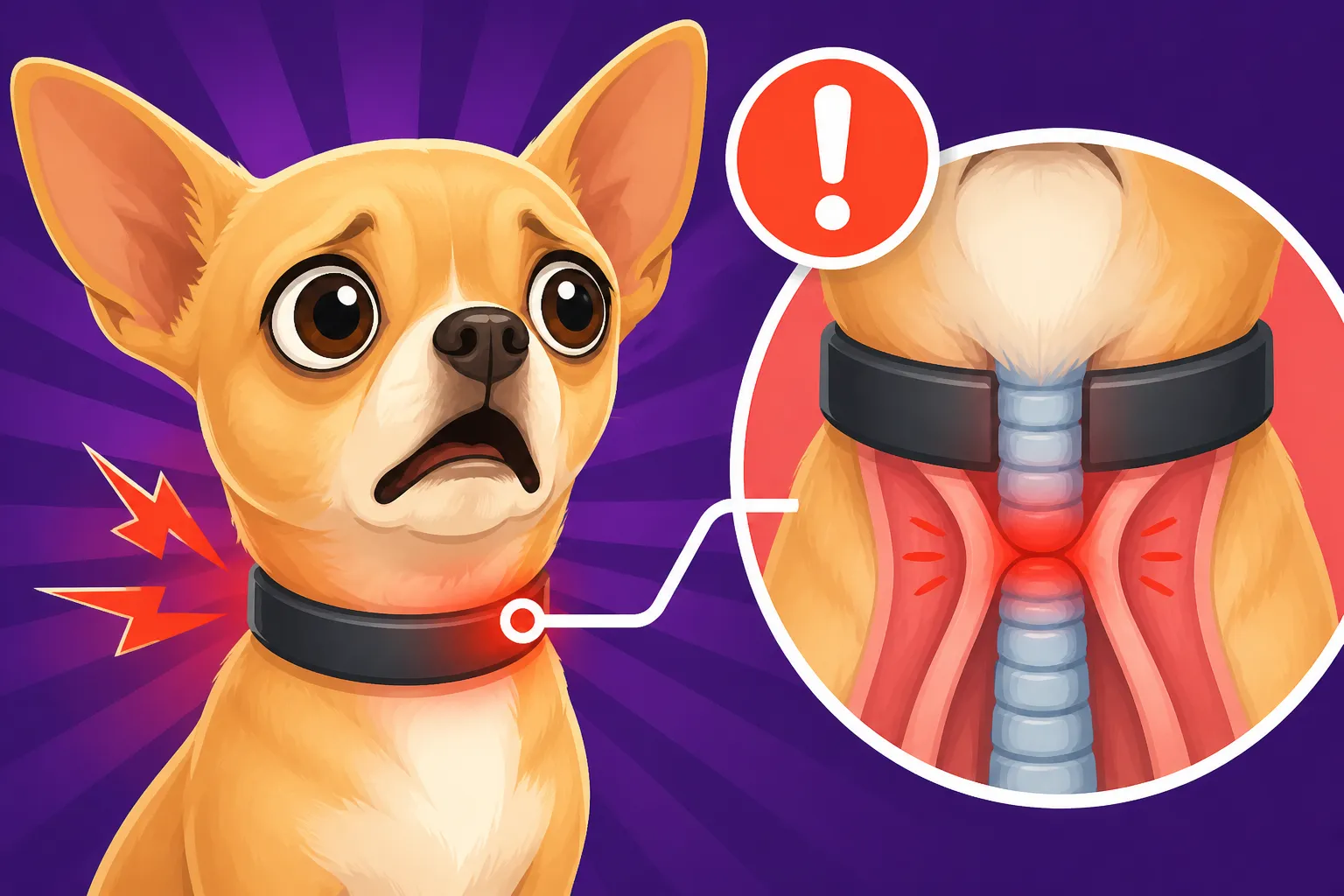
Think of your own windpipe; it’s a fairly rigid tube designed to allow air to pass freely to your lungs. In dogs, the trachea is made up of C-shaped rings of cartilage, open at the top, which are connected by a membrane. These rings act like internal springs, keeping the airway open. In larger, sturdier breeds, these rings are thick and robust, offering significant support. However, in toy breeds like Chihuahuas, everything is scaled down. The tracheal rings are much finer, thinner, and inherently weaker. The membrane connecting them can also be less taut. This anatomical difference means their windpipe is simply not built to withstand external pressure in the same way a Labrador's might be. A small amount of pressure that would be negligible to a bigger dog can cause significant stress or damage to a Chihuahua’s delicate structure.
What Makes Chihuahuas Uniquely Susceptible
Beyond just the scaled-down anatomy, Chihuahuas possess several breed-specific traits that amplify their vulnerability to tracheal issues. Their diminutive stature means their necks are often very short and their heads are proportionately large. This puts the trachea in a very exposed position, directly in the line of fire for any force applied by a collar. Furthermore, Chihuahuas are genetically predisposed to certain conditions, with tracheal collapse being a significant concern. Many Chihuahuas are born with a congenital weakness in their tracheal cartilage, meaning the rings are naturally softer or malformed. Even without a full-blown collapsing trachea, their windpipe diameter is incredibly narrow. Imagine trying to breathe through a straw – any external compression on that straw makes it much harder. For a Chihuahua, any pressure from a collar can effectively narrow that already tiny airway, making every breath a struggle and potentially leading to long-term damage or exacerbating an existing issue. This unique combination of delicate cartilage, exposed neck anatomy, and a narrow airway makes them extraordinarily susceptible to collar-induced problems.
The Mechanism of Collar-Induced Damage
It's not always about a sudden, violent pull. The damage to a Chihuahua's trachea from a collar can be insidious, building up over time with seemingly minor pressures that accumulate into serious issues.
How Direct Pressure Affects the Trachea
When a collar is worn, especially one attached to a leash, any tension on that leash translates directly into pressure on the Chihuahua’s throat. This happens with every little tug, every moment your dog pulls ahead, or even when you simply guide them. For a dog with those fine, C-shaped tracheal rings, this direct force can be incredibly harmful. Each time pressure is applied, those rings can be squashed or bent. Over time, this constant compression can deform the cartilage, causing it to flatten or even collapse inwards. Imagine pinching a plastic straw repeatedly; eventually, it loses its round shape and can’t function properly. The membrane that connects the C-rings can also stretch or tear, further destabilizing the windpipe. This isn't just about discomfort; it's about physical deformation that can restrict airflow. The more the dog pulls, or the more you inadvertently pull back, the greater the trauma. Even a slight, consistent pressure from a collar that's perhaps a bit too tight, or constantly rubbing, can cause chronic inflammation and scarring in the delicate tissues surrounding the trachea, leading to a permanent narrowing of the airway.
The Link to Collapsing Trachea
The insidious nature of collar pressure is particularly evident when we consider its link to tracheal collapse. This condition, prevalent in toy breeds, occurs when the cartilage rings weaken and flatten, causing the windpipe to narrow and making breathing difficult. While some Chihuahuas are genetically predisposed to a weaker trachea, external factors like collar pressure can be a major trigger and accelerant. Repeated trauma from a collar can weaken already delicate rings, making them more prone to collapsing. Each time the trachea is compressed, it loses a bit of its structural integrity. Over months or years, these tiny stresses accumulate, transforming a potentially mild, manageable tracheal weakness into a full-blown clinical Collapsing Trachea and the Chihuahua Honking Cough. The symptoms are unmistakable: a dry, harsh, hacking cough that often sounds like a goose honk, especially when excited or pulling on the leash. This cough is a direct result of the airway narrowing, causing air to rush through a smaller opening, leading to irritation and further inflammation. If your Chihuahua already has a mild form of the condition, collar pressure can rapidly worsen it, turning an occasional cough into a constant struggle. Understanding Collapsing Trachea in a Chihuahua and Its Triggers is crucial for protecting your pet.
Recognizing the Signs of Tracheal Distress
Your Chihuahua communicates in subtle ways, and learning to read these cues can be life-saving, especially when it comes to delicate internal structures like the trachea. Don't dismiss a cough as just "being a Chihuahua."
Identifying Symptoms of Collar-Related Injury
Observing your Chihuahua closely, especially after walks or periods of excitement, can help you catch early signs of tracheal distress. The most classic symptom is that distinctive, dry, harsh, hacking cough that often sounds like a "goose honk." This cough usually worsens when your dog is excited, pulling on the leash, drinking water too quickly, or even during changes in temperature. You might notice it more after they've been wearing a collar and leash for a walk. Beyond the cough, other signs include gagging or retching, sometimes as if they're trying to clear something from their throat, even if nothing comes up. They might also appear to have difficulty swallowing. Some Chihuahuas may become noticeably quieter or more subdued after a walk, or even reluctant to go for walks if the collar experience has become painful. You might also observe changes in their bark – it could sound hoarser or weaker. In more severe cases, you might notice labored breathing, panting excessively even at rest, or a bluish tint to their gums if they're not getting enough oxygen. Remember, these symptoms might not be constant; they often manifest or intensify during specific activities that involve neck pressure or excitement. If you hear The Honking Cough of Chihuahua Tracheal Collapse, it's a clear warning sign.
When to Seek Veterinary Attention
It's tempting to brush off a minor cough, especially in a small dog notorious for making all sorts of funny noises. However, with Chihuahuas and their delicate tracheas, ignoring even mild or intermittent symptoms is a mistake. Early diagnosis and intervention are absolutely critical to prevent the condition from progressing. The moment you notice any persistent coughing, gagging, or difficulty breathing, it's time to schedule a visit with your veterinarian. Don't wait until your dog is in severe distress. Your vet will perform a thorough physical examination, listening to your Chihuahua's lungs and heart. They may also gently palpate the trachea to see if it elicits a cough, which can be a key indicator. To confirm a diagnosis, your vet might recommend diagnostic imaging, such as X-rays of the chest and neck. These X-rays can sometimes show a flattening of the tracheal rings. In more complex cases, a specialized procedure called fluoroscopy (a real-time X-ray) might be used to observe the trachea as your dog breathes, providing a dynamic view of how the windpipe behaves during inhalation and exhalation. This can help grade the severity of the collapse. Catching it early allows for management strategies, like medication and environmental changes, to be implemented before surgical intervention becomes the only option. Investing in pet insurance, like a plan from Healthy Paws, early in your Chihuahua's life can be incredibly beneficial for covering these diagnostic tests and potential treatments, giving you peace of mind that you can afford the best care for your little one. Learning about Chihuahua Tracheal Collapse Grades on an X-Ray can also help you understand the diagnosis your vet provides.
Preventing Tracheal Damage: Harnesses as the Solution
The good news is that preventing collar-related tracheal damage is straightforward and highly effective. The single most impactful change you can make is switching from a neck collar to a well-fitted harness.
Why Harnesses Are Superior for Chihuahuas
For Chihuahuas, harnesses are not just an alternative; they are a superior, often essential, piece of equipment. The fundamental advantage of a harness is that it completely removes any direct pressure from the delicate neck and trachea. Instead, a harness is designed to distribute any pulling force across your dog's chest, shoulders, and back—areas that are much stronger and better equipped to handle pressure. This eliminates the risk of compressing the windpipe, making walks safer and more comfortable for your little companion.
There are various types of harnesses available, but for Chihuahuas, you'll generally want to look for styles that are comfortable and secure without restricting movement. "Y-front" harnesses or H-style harnesses are often recommended as they allow for full shoulder articulation. Vest-style harnesses, which cover more of the chest, can also be a good option, especially for Chihuahuas who tend to get cold easily, as they provide an extra layer of warmth. The key is proper fit: the harness should be snug enough that your dog can't slip out, but not so tight that it rubs or restricts their breathing or movement. You should be able to comfortably slide two fingers under any strap. Avoid harnesses where the front strap goes directly across the throat, as this defeats the purpose. By opting for a harness, you're not just preventing potential injury; you're also making walks a more positive and enjoyable experience for your Chihuahua, reducing the likelihood of them associating walks with discomfort or pain. This is why Harnesses That Spare a Chihuahua Windpipe are so important. Understanding Why a Harness Matters for a Chihuahua Windpipe can empower you to make the best choice for your furry friend.
Transitioning Your Chihuahua from Collar to Harness
Switching from a collar to a harness might seem like a small change to us, but for a Chihuahua, it can take a little getting used to. Many Chihuahuas aren't keen on things going over their heads or around their bodies initially, but with a gentle approach, it’s usually a smooth transition. Start by making the harness a positive experience. Let your Chihuahua sniff it, then place it on the floor with a few high-value treats around and even on it. Once they're comfortable with its presence, try simply draping it over their back without fastening it, again, rewarding with treats.
Next, try putting it on quickly, fastening it, and immediately offering a treat or engaging in a short play session. Don't leave it on for too long at first; five to ten minutes is plenty. Gradually increase the time they wear it around the house, always supervising and rewarding them for calm behavior. If they scratch or try to get it off, distract them with a toy or a training command. Once they're comfortable wearing it indoors, attach the leash and practice walking a few steps inside before venturing outdoors. Patience and positive reinforcement are your best friends here. Never force the harness on or make it a stressful event, as this can create a negative association. Remember, a properly fitted harness is crucial; an ill-fitting one can still cause discomfort. Learning about Harness Fitting on a Chihuahua Chest can help you select the perfect one. Many pet owners, especially those with small breeds, find that preventative measures like switching to a harness are key to avoiding costly vet bills down the line. It's an investment in their long-term health, and knowing that companies like Healthy Paws exist to support you should unexpected health issues arise, offers further reassurance.
Additional Tips for Protecting Your Chihuahua's Trachea
While harnesses are a game-changer, there are other aspects of Chihuahua care that can further safeguard their delicate respiratory system and improve their overall quality of life.
Managing Excitement and Environmental Triggers
Chihuahuas are known for their lively and often excitable personalities, but this zest for life can sometimes be a trigger for tracheal issues. When a Chihuahua gets overly excited—whether it's seeing you after a long day, preparing for a walk, or encountering another dog—they often pant rapidly, bark enthusiastically, or pull excitedly, all of which can put strain on their windpipe and trigger a coughing fit. This is precisely Why a Chihuahua Coughs More When Excited. Learning to manage this excitement can significantly reduce tracheal stress. For instance, when getting ready for a walk, instead of immediately grabbing the leash, ask your Chihuahua to sit calmly first. Reward them for quiet behavior before clipping on the harness. If they get overly excited when greeting people, teach them a "settle" command or redirect their energy with a favorite toy.
Environmental factors also play a crucial role. Extreme temperatures, particularly very cold or very hot and humid air, can irritate a sensitive trachea. In colder weather, consider dressing your Chihuahua in a sweater or coat to help keep their airways warm, and keep outdoor walks shorter. In hot, humid conditions, limit exercise to cooler parts of the day. Exposure to irritants like cigarette smoke, strong air fresheners, or even heavy dust can also trigger coughing and should be minimized in your Chihuahua’s environment. A humidifier in dry indoor environments can sometimes offer relief.
Weight Management and Overall Health
Maintaining a healthy weight is paramount for protecting your Chihuahua’s trachea and their overall health. It might seem like a few extra ounces wouldn't make a difference on such a tiny frame, but those few ounces translate to a significant percentage of their body weight, akin to a human gaining many pounds. Chihuahua Obesity on a Six Pound Frame can place extra pressure on their chest cavity and respiratory system, making it harder for them to breathe and exacerbating any existing tracheal weakness. Excess fat around the neck and chest can physically compress the trachea from the outside, worsening the symptoms of a collapsing trachea and increasing the likelihood of developing respiratory distress.
Regular, gentle exercise is key to weight management. While Chihuahuas don't need marathon runs, daily short walks on a harness, indoor playtime, and engaging with puzzle toys will help them burn calories and maintain muscle tone. Remember, What One Extra Pound Does to a Chihuahua is substantial; even half a pound can make a big difference. Work with your vet to determine the ideal weight for your individual Chihuahua and establish a feeding plan that controls calories without sacrificing nutrition. Beyond weight, ensure your Chihuahua receives regular veterinary check-ups to address any other health concerns that might impact their respiratory system. Your vet can advise on appropriate diets and exercise routines. Pet insurance plans, such as those offered by Healthy Paws, can be invaluable for covering the costs associated with managing chronic conditions like tracheal collapse or weight-related health issues, ensuring your Chihuahua gets comprehensive care throughout their long life. For Chihuahuas diagnosed with tracheal issues, your vet might also discuss options like Chihuahua Cough Medication and Long-Term Care or even Weight Loss as Chihuahua Trachea Treatment if obesity is a factor.
Collar vs. Harness: A Quick Comparison for Chihuahuas
| Feature | Traditional Collar | Chest Harness |
|---|---|---|
| Pressure Point | Directly on neck/trachea | Distributed across chest, shoulders, back |
| Risk of Tracheal Damage | High, especially with pulling or lunging | Very low, negligible |
| Comfort for Dog | Can cause discomfort, choking, coughing | Generally more comfortable, allows free breathing |
| Control During Walks | Control from neck, potential for injury | Better control, safer for dog's neck |
| Suitability for Chihuahuas | Generally discouraged due to delicate trachea | Highly recommended, especially for long-term health |
| Visibility/ID | Can hold ID tags, but a harness can too | Can also hold ID tags, often more secure |
Disclaimer
The information provided in this guide is for general informational purposes only and is not a substitute for professional veterinary advice. Always consult with a qualified veterinarian regarding any medical concerns or before making any decisions about your Chihuahua's health and care.