Puzzle Toys Sized for a Chihuahua
It's a familiar scene, isn't it? You've just finished a lovely walk with your tiny Chihuahua, but as soon as you settle down, they're bouncing off the walls, barking at every leaf that blows past the window, or perhaps gnawing on a shoe they know isn't theirs. This isn't always about a lack of physical exercise; often, it's a profound case of mental boredom. This guide is here to help you navigate the world of puzzle toys, specifically tailored for your intelligent, pint-sized companion, ensuring they get the mental workout they truly need.
Why Mental Stimulation Matters So Much for Your Tiny Chihuahua
We often think of exercise solely in terms of physical activity – walks, runs, games of fetch. But for a highly intelligent breed like the Chihuahua, mental stimulation is just as, if not more, crucial for their overall well-being. Their small size doesn't mean they have small brains; in fact, Chihuahuas are known for their sharp minds and often a surprisingly strong will.
Beyond Just Physical Exercise: The Mental Workout
Imagine being stuck in a tiny house with nothing to do all day. That's how many Chihuahuas feel when their brilliant minds aren't given a job. They might have tiny legs, but their brains are working overtime, and if they're not directed towards something productive, they'll find their own "work"—which often isn't what we want. This can manifest as relentless barking at passersby, excessive demand for attention, or even destructive chewing. Your little friend might look like a lapdog, but deep down, they're problem-solvers. Engaging their minds with puzzles can be just as tiring, if not more so, than a brisk walk around the block. A session with a good puzzle toy can leave them happily snoozing, their brains satisfied from the "hunt." For instance, a twenty-minute puzzle toy session can often provide a comparable mental workout to a much longer physical outing, especially if your Chihuahua isn't keen on long walks in cold weather. You'll find that a mentally stimulated Chihuahua is a calmer, happier household member.
Preventing Behavior Issues with Engagement
A bored Chihuahua is often a "naughty" Chihuahua, simply because they're looking for ways to entertain themselves. That incessant barking at every little sound, the desperate plea for attention, or even the tendency to nip or growl when startled, can often be traced back to an unmet need for mental engagement. Chihuahua Barking and What Sets a Six Pound Dog Off explains just how easily they can get vocal. Providing regular mental challenges through puzzle toys can redirect this energy into positive outlets. When your Chihuahua is focused on deciphering how to get a treat out of a toy, they're not focused on the delivery driver, the squirrel outside the window, or the boredom that drives them to chew on your furniture. It helps build their confidence, too. The satisfaction of figuring out a puzzle, even a simple one, empowers them and strengthens their problem-solving skills, making them generally more resilient and less prone to anxiety-driven behaviors like fear reactivity. This proactive approach can make a world of difference in preventing the development of undesirable habits.
What Makes a Puzzle Toy "Chihuahua Sized"?
When you're shopping for puzzle toys for a Chihuahua, it's not simply a matter of picking the cutest or most colorful one. Their tiny stature and delicate features require specific considerations to ensure the toy is safe, effective, and truly enjoyable for them.
Safety First: Avoiding Choking Hazards and Frustration
This is paramount. A toy that's perfectly safe for a Labrador can be a deadly choking hazard for a Chihuahua. You need to be incredibly vigilant about the size of the toy itself and any components that might break off. Small pieces, especially those made of hard plastic, can easily be swallowed and cause blockages. Even if a toy is generally well-sized, check for small, easily detachable parts like decorative bits, tiny rubber nubs, or plastic caps. Furthermore, a toy that's too large or too heavy might not be a choking hazard, but it can be frustrating and difficult for your Chihuahua to manipulate. Imagine trying to solve a puzzle that's three times bigger than you and too heavy to move! Their tiny paws and delicate muzzles need toys they can comfortably nudge, paw at, or hold in their mouths without strain or injury. Look for toys specifically marketed for "toy breeds" or "extra small dogs" when browsing on sites like Chewy or Amazon, but always double-check the dimensions against your dog's size.
Durability and Materials: Built for Tiny Teeth
Chihuahuas might be small, but they often have surprisingly strong jaws, especially when they're determined to get to a treat. And let's not forget those "needle teeth" puppies have! The material of the puzzle toy needs to be durable enough to withstand some enthusiastic chewing without breaking apart into dangerous fragments. Hard, brittle plastics can crack and leave sharp edges. Soft, flimsy plastics might be easily chewed through, leading to ingestion of plastic pieces.
Consider toys made from:
- Durable rubber: Many excellent treat-dispensing toys are made from thick, non-toxic rubber that can withstand chewing while remaining flexible enough for your Chihuahua to interact with. These are often easy to clean too.
- Solid, high-quality plastic: If opting for plastic, ensure it's a robust, pet-safe type that won't easily splinter. Check that all edges are smooth and rounded.
- Thick, reinforced fabric: For snuffle mats or fabric-based puzzles, look for tightly woven, durable materials that aren't easily torn or shredded. Always supervise, as even durable fabric can eventually give way to persistent chewing.
Always prioritize non-toxic materials. You want to make sure that as your Chihuahua licks, chews, and gnaws on the toy, they aren't ingesting harmful chemicals. Brands like those featured by Ollie often emphasize safe, high-quality materials in their product lines, which is a good standard to look for in other toys as well.
Adjustable Difficulty for Smart Little Minds
Chihuahuas are smart, but like us, they need challenges appropriate to their current skill level. A toy that's too easy will be solved in seconds and quickly become boring. A toy that's too difficult will lead to frustration and your dog giving up. The best puzzle toys offer adjustable difficulty settings or come in a range of complexities.
- Start simple: Begin with toys where the treat is easily accessible with a nudge or a roll. This builds confidence and teaches them the concept of a puzzle toy. For instance, a basic treat ball where kibble tumbles out with a simple push is a great starting point.
- Gradually increase complexity: Once your Chihuahua masters the easy toys, you can move up to ones that require more intricate actions – sliding panels, lifting lids, or multiple steps to get the reward. Some puzzle toys have removable pieces or configurable layouts that allow you to make them harder or easier.
- Mix it up: Even with adjustable toys, your Chihuahua will eventually learn the "trick." Keep things fresh by rotating toys, or by changing the type of treat used. Some Chihuahuas prefer kibble, while others are motivated by small, high-value training treats small enough for Treats Small Enough for Chihuahua Training.
This progressive approach keeps them engaged and ensures they continue to get the mental exercise they need without becoming overwhelmed or bored.
Types of Puzzle Toys Your Chihuahua Will Love
Now that we understand what makes a puzzle toy suitable for a Chihuahua, let's dive into the different categories you might encounter. Each type offers a unique way to engage your dog's brain and natural instincts.
Treat-Dispensing Toys: Classic and Engaging
These are perhaps the most common and widely recognized puzzle toys, and for good reason—they're incredibly effective at keeping dogs engaged. The basic premise is simple: food (kibble or small treats) is hidden inside, and your Chihuahua has to figure out how to get it out.
- Rollable Balls/Wobblers: These are typically spherical or uniquely shaped toys with one or more holes. Your Chihuahua nudges, bats, or rolls them, causing treats to fall out. They're fantastic for independent play and encourage movement. For a Chihuahua, look for smaller, lighter versions that they can easily push around without getting discouraged. Some popular brands offer small-sized rubber or plastic versions. You can find many options on Chewy that are perfectly scaled for toy breeds.
- Stuffable Toys: These toys, often made of durable rubber, have a hollow center that you can fill with treats, kibble, or even a smear of peanut butter or plain yogurt. The challenge comes from licking and working the food out. Freezing a stuffed toy can make the challenge last much longer, which is great for a Chihuahua who needs extended mental engagement, perhaps when you need to step out for a bit. Just be mindful of What Six Pounds Means for Chihuahua Food Safety and don't overfill with high-calorie treats. These are excellent for dogs who enjoy licking and can be great for calming them down.
- Interactive Feeders: While not strictly "puzzle toys" in the traditional sense, slow feeder bowls and some specialized kibble dispensers can offer a mild mental challenge by making eating a bit more work. They prevent your Chihuahua from gobbling down their meals too quickly, which can be beneficial for digestion and helps to extend mealtime, making it more engaging.
When choosing treat-dispensing toys, ensure the opening size is appropriate for your Chihuahua's kibble or chosen treats—not so large that everything falls out too easily, but not so small that it's impossible for them to extract. Many pet retailers like Amazon have a wide variety of these toys available in extra-small sizes.
Snuffle Mats and Digging Toys: Engaging Natural Instincts
These toys tap into your Chihuahua's natural foraging and sniffing instincts, providing a wonderfully calming and mentally exhausting activity. Dogs are natural scent hounds, and using their nose is incredibly stimulating.
- Snuffle Mats: A snuffle mat is typically a fabric mat with numerous strips, pockets, or folds where you can hide kibble or small treats. Your Chihuahua then uses their nose and paws to "snuffle" through the fabric, searching for the hidden treasures. This activity is incredibly enriching and can be very relaxing for dogs. It encourages slow eating, reduces anxiety, and satisfies their innate desire to forage. For Chihuahuas, ensure the fabric strips are securely sewn and not easily ingested if they try to chew on them. These are great for dogs who might be too delicate for harder puzzles or those who need a calmer, self-directed activity.
- Digging/Foraging Boxes: Similar in concept, these are usually boxes or containers filled with shredded paper, fabric scraps, or even clean packing peanuts, with treats hidden within. Your Chihuahua then "digs" through the material to find the rewards. This is a fantastic way to fulfill a digging instinct in a safe, indoor environment. You can even make a DIY version with an old shoebox and some crumpled paper. Just make sure the materials are safe and non-toxic, and supervise to ensure your Chihuahua isn't trying to eat the paper or fabric.
Both snuffle mats and digging toys are excellent for providing a sensory experience that goes beyond just taste, engaging their powerful sense of smell. They can be particularly good for Chihuahua Separation Anxiety and Time Alone if introduced properly.
Slider and Flipper Puzzles: For Brainy Challenges
These are the more traditional "board game" style puzzles for dogs, requiring a higher degree of cognitive effort. They involve moving, lifting, or sliding pieces to uncover hidden compartments containing treats.
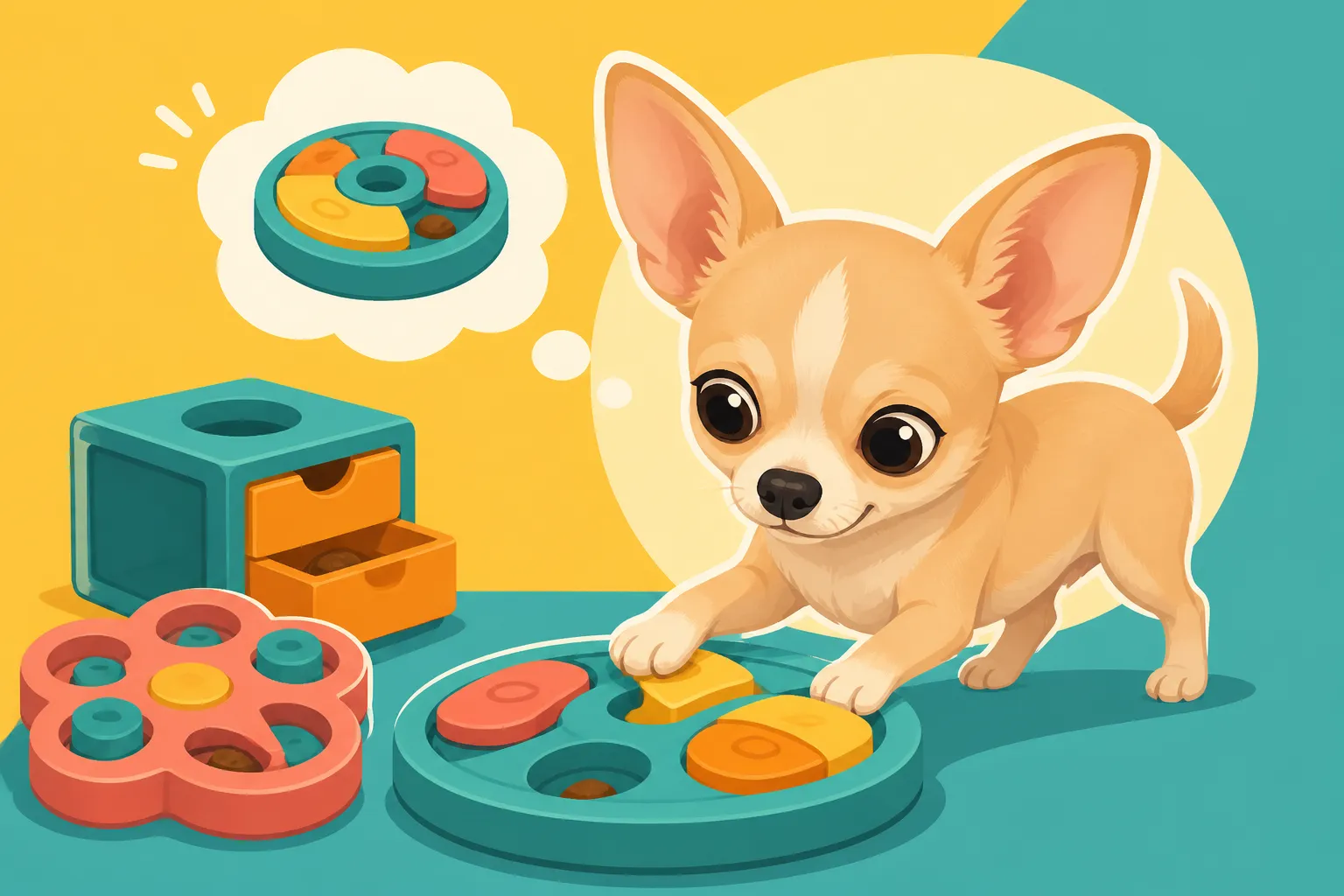
- Slider Puzzles: These typically feature movable panels that slide across a base to reveal treat compartments underneath. Your Chihuahua has to learn to push the sliders in the correct direction to access the reward. They come in various configurations, from simple one-move puzzles to complex multi-step sequences.
- Flipper/Lifter Puzzles: These require your Chihuahua to lift a cap, flip a lid, or remove a small block to get to the treat. They often involve a combination of nose nudging and paw dexterity. Some designs combine sliders and flippers, adding layers of challenge.
For Chihuahuas, the key is to choose puzzles with pieces that are easy for their small noses and paws to manipulate. Avoid puzzles with stiff or heavy moving parts. Also, look for puzzles made of sturdy, non-slip material for the base, so they don't slide all over the floor as your Chihuahua tries to solve them. While these toys are fantastic for mental stimulation, they almost always require supervision, especially when new, to ensure your Chihuahua doesn't try to chew or dismantle the pieces rather than solve the puzzle. Some brands, widely available on Amazon and other pet supply sites, specialize in these types of brain games for small breeds.
Integrating Puzzle Toys into Your Chihuahua's Daily Routine
Puzzle toys aren't just for rainy days or when you're feeling guilty about not having time for a long walk. They can become a vital part of your Chihuahua's daily enrichment, but like any tool, they're most effective when used thoughtfully and safely.
When and How Often to Use Them
The beauty of puzzle toys is their versatility. You can incorporate them into your Chihuahua's day in many beneficial ways:
- Morning Wake-Up Call: Instead of just putting down a bowl of food, start their day with a puzzle feeder filled with a portion of their breakfast. This immediately engages their brain and can prevent that early morning "zoomies" energy from turning into nuisance barking.
- Afternoon Slump Buster: When you're busy with work or chores and your Chihuahua is looking bored, a quick puzzle session can provide a much-needed mental break for them and some quiet time for you.
- Pre-Departure Entertainment: If your Chihuahua struggles with being alone, offering a long-lasting puzzle toy (like a frozen, stuffed toy) just before you leave can help create a positive association with your departure and keep them occupied during those initial, potentially anxious, moments. This can be a helpful step in managing Chihuahua Separation Anxiety and Time Alone.
- Dinner Time Engagement: Dividing their dinner into a few small puzzle toys throughout the evening can extend their meal, provide sustained mental activity, and prevent scarfing down food too quickly, which is especially important for tiny tummies.
- Enrichment on Short Walks: If your Chihuahua can't manage long walks due to age or health concerns like Chihuahua Arthritis in the Teenage Years or Collapsing Trachea and the Chihuahua Honking Cough, mental games become even more important. A short outdoor "sniffari" using a snuffle mat in a safe, enclosed space can be a wonderful alternative.
Aim for one or two short puzzle sessions a day, perhaps 10-20 minutes each, depending on the toy and your Chihuahua's attention span. The goal isn't constant engagement, but consistent, quality mental work. Rotate toys to keep them novel and exciting.
Keeping Them Clean and Safe
Because puzzle toys often involve food, hygiene is crucial. Leftover food can attract pests, grow mold, or become a breeding ground for bacteria, which is especially concerning for a small dog with a delicate digestive system.
- Regular Cleaning: After each use, especially for treat-dispensing and stuffable toys, give them a good wash. Most rubber and plastic puzzle toys can be hand-washed with warm, soapy water and thoroughly rinsed. Some are even dishwasher safe – always check manufacturer instructions. Fabric items like snuffle mats will need regular washing as well, often machine washable on a gentle cycle.
- Inspect for Wear and Tear: Chihuahuas, despite their size, can be persistent chewers. Regularly inspect all puzzle toys for damage. Look for cracks, splinters, loose pieces, or areas that have been chewed through. If a toy is damaged, it's safer to discard it than risk your Chihuahua ingesting small fragments or cutting themselves on sharp edges. This is particularly important for plastic slider puzzles, where moving parts can become brittle.
- Store Properly: When not in use, keep puzzle toys clean and out of reach. This prevents your Chihuahua from accessing them unsupervised or treating them as regular chew toys, which could shorten their lifespan and make them less effective as a "puzzle" if they can just chew through it.
Supervision and Observation
Even with the safest, best-sized puzzle toys, supervision is always a good idea, especially when introducing a new toy or a more challenging puzzle.
- Initial Guidance: When first presenting a new puzzle, you might need to show your Chihuahua how it works a few times. Guide their nose, demonstrate sliding a panel, or let them see how a treat falls out. This prevents frustration and helps them understand the goal.
- Read Their Cues: Observe your Chihuahua's body language. Are they engaged, focused, and happily working the puzzle? Or are they frustrated, barking, trying to chew the toy instead of solve it, or simply walking away? If they're frustrated, the toy might be too difficult, or they might need a break. Sometimes, a gentle nudge or a little encouragement from you is all they need. If they're trying to destroy the toy, it's time to put it away and try a simpler one, or one made of a more durable material, to avoid accidental ingestion.
- Prevent Over-Excitement: Some Chihuahuas can get overly excited by food puzzles. If yours is becoming frantic or aggressive, intervene, calm them down, and reintroduce the toy in a more controlled manner, perhaps with less enticing treats or for shorter periods.
By thoughtfully integrating puzzle toys into your Chihuahua's routine and supervising their play, you're not just providing entertainment; you're fostering their cognitive abilities, preventing boredom-related issues, and strengthening the bond you share through positive, enriching interactions.
| Puzzle Toy Type | Key Benefit | Chihuahua Suitability | Supervision Needs | Cleaning Notes |
|---|---|---|---|---|
| Treat-Dispensing | Mental focus, independent play, slow feeding | Good for all, choose small | Low to Medium | Washable (rubber/plastic), can get sticky |
| Snuffle Mat | Foraging instinct, calming, nose work | Excellent for all Chihuahuas | Medium | Machine washable, check for torn fabric |
| Slider/Flipper | Problem-solving, cognitive challenge | Best for curious, persistent | High | Wipe clean (plastic/wood), check for loose parts |
| Stuffable Chews | Licking, prolonged engagement, calming | Good for moderate chewers | Low to Medium | Wash thoroughly, especially if frozen |
Disclaimer
This article is for general informational purposes only and does not constitute professional advice. Laws, prices and regulations vary by location and change over time. Consult a qualified professional for guidance on your specific situation.