Rules a Chihuahua Should Follow Like Any Dog
It's an unfortunate truth that many of us, myself included at times, tend to treat our Chihuahuas less like actual dogs and more like precious, fragile accessories. We pick them up at the first sign of trouble, let them get away with behaviors we'd never tolerate in a larger breed, and sometimes even carry them around so much they barely touch the ground. This often leads to frustration when they act out, bark incessantly, or guard us fiercely, leaving us wondering why our little companions are so "difficult." This guide is here to shed light on why a Chihuahua absolutely needs to follow the same basic rules as any dog, big or small, to live a happy, well-adjusted life, and how we can empower them through consistent training.
Why Chihuahuas Often Get Different Treatment
Let's be honest, it's hard to look at those big eyes and tiny trembling bodies and not want to coddle them. Their diminutive size makes us feel naturally protective, and it's easy to assume they can't handle the same kind of discipline or expectations as a larger dog. We might laugh when a Chihuahua barks ferociously at a much bigger dog, or find it endearing when they demand to be held rather than walk. But these seemingly harmless allowances can actually create significant behavioral problems down the line, ultimately making both the dog and the owner less happy.
The "Small Dog Syndrome" Myth
"Small dog syndrome" isn't some inherent genetic trait; it's a collection of behaviors often inadvertently encouraged by owners who treat their tiny dogs differently. Imagine a Labrador that jumps on guests, snarls at other dogs, or pees on the rug – those behaviors would be addressed immediately, right? Yet, when a Chihuahua does it, it's often excused as "just being a Chihuahua." This disparity in treatment teaches our little ones that the rules don't apply to them, or that they can get away with more. They learn that being loud or aggressive gets them what they want, or that you'll step in to protect them from every perceived threat, preventing them from developing confidence and coping skills.
The real problem isn't the dog's size; it's the lack of consistent expectations. A Chihuahua is fully capable of learning manners, self-control, and appropriate social interactions. When we deny them this training, we deny them the chance to be a truly integrated, confident family member. They become insecure because they don't understand the world around them, often leading to increased anxiety, fear, and reactivity. To learn more about this concept, check out What Small Dog Syndrome Means for a Chihuahua.
The Dangers of Inconsistent Rules
Inconsistency is confusing for any dog, but it can be particularly detrimental for a small breed like a Chihuahua. If they're allowed on the sofa sometimes but not others, or can bark at the mailman on Monday but are scolded on Tuesday, they have no idea what's expected. This constant uncertainty can breed anxiety and stress, making them more prone to misbehavior. For instance, if you constantly pick up your Chihuahua when another dog approaches, your Chihuahua learns that other dogs are dangerous and something to be feared. This can escalate into fear-based reactivity, where they lunge and bark because they genuinely believe they need to defend themselves.
Moreover, inconsistent rules can undermine your authority and bond. Dogs thrive on clear communication and predictable boundaries. When you provide these, your Chihuahua learns to trust your guidance and feels secure in their place within the family. Without them, they might try to take on the "leader" role themselves, which is a huge burden for a tiny dog and often results in them feeling overwhelmed and stressed. It's about setting clear, kind, and consistent expectations, not about being harsh.
Foundation Obedience: The Non-Negotiables for Every Chihuahua
Just like a large dog, a Chihuahua benefits immensely from basic obedience training. These fundamental commands aren't just for tricks; they're vital communication tools that build confidence, ensure safety, and foster a strong, respectful relationship between you and your tiny companion. Think of it as teaching them the language of your household.
Essential Commands for Safety and Control
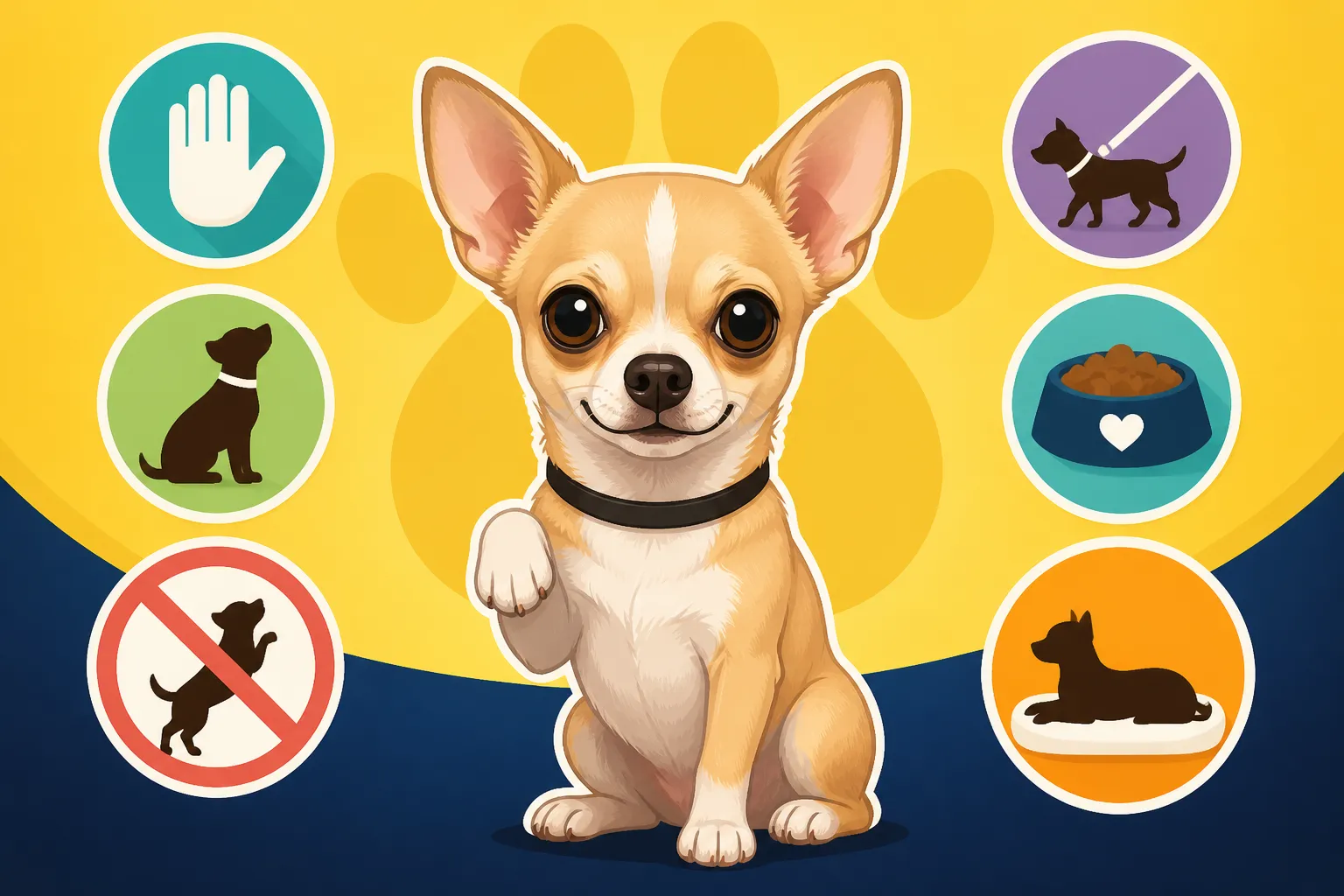
Every Chihuahua, regardless of size or perceived fragility, should master a few core commands. "Sit," "stay," "come," and "leave it" are not just polite manners; they are critical for their safety. Imagine your Chihuahua slipping out the door, or spotting a dropped pill on the floor. A solid "come" could literally save their life, and "leave it" could prevent a trip to the emergency vet. These commands provide you with control in potentially dangerous situations and empower your Chihuahua to make good choices.
Consider "stay" in a busy park or when you need a moment to gather yourself. A small dog can get underfoot or get lost in a crowd so easily. Knowing they can hold a "stay" for even a short period gives you precious seconds to react. Teaching these commands should start early, in short, positive sessions using high-value treats. You can find many excellent resources online, including programs like BAXTER & Bella, which offer comprehensive puppy training modules that can be adapted for any size dog. For a deeper dive into what they should know, see The Commands Every Chihuahua Should Know.
Teaching Leash Manners and Boundary Respect
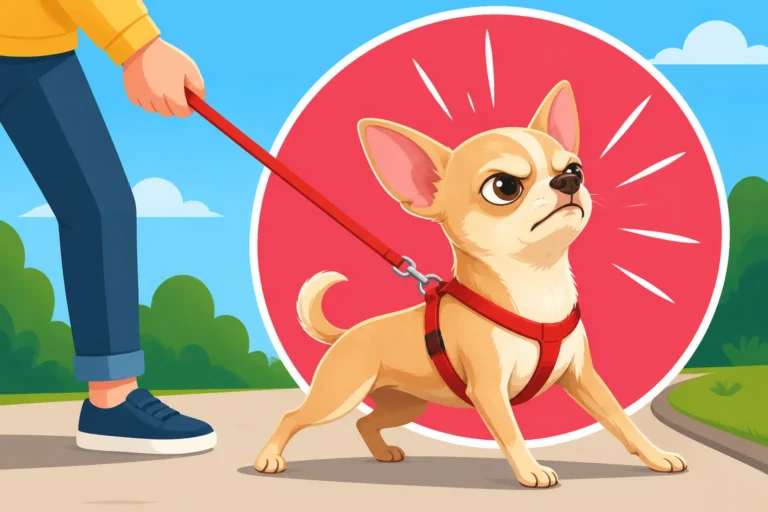
Walking nicely on a leash is paramount, even for a dog as small as a Chihuahua. Many owners resort to carrying their Chihuahuas, either because they pull or because they're afraid of bigger dogs. While carrying can be necessary at times, it shouldn't be the default. A Chihuahua needs to experience the world on their own four paws, exploring scents and exercising. Leash training should always be done with a comfortable, secure harness, never a collar, to protect their delicate necks and tracheas. You can find a wide variety of well-fitting harnesses on Amazon, ensuring you get one specifically designed for tiny breeds.
Beyond walks, boundary training is crucial. This means teaching them not to jump on guests, not to rush the door, and to respect "off-limits" areas. If you don't want your Chihuahua on the dining table or counter, then never allow it. This consistency is what defines a good rule. A simple "off" command, reinforced with positive praise when they comply, goes a long way. These rules create a predictable and safe environment, reducing stress for everyone involved. Setting Furniture Rules for a Chihuahua is a great resource if you're struggling with this.
Addressing Fear and Reactivity: Beyond "Small Dog Syndrome"
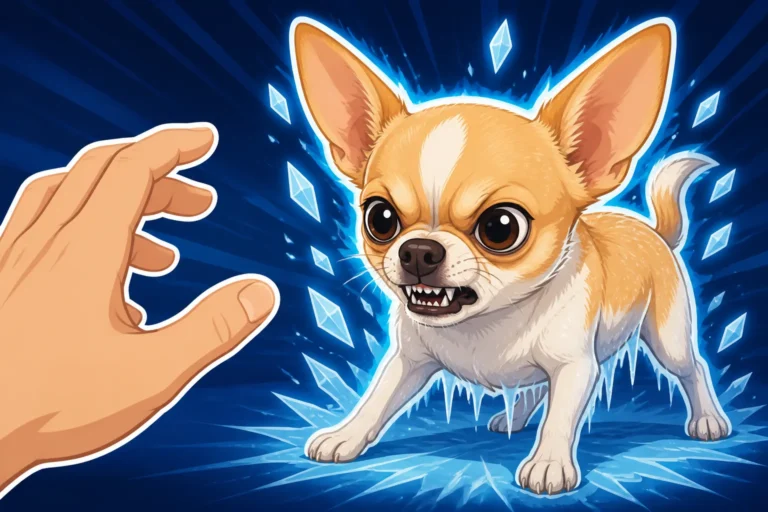
Chihuahuas often get a reputation for being yappy, nippy, or aggressive. While these behaviors are certainly possible, they are almost always rooted in fear, not malice. Because they are so small and the world can seem like a giant, overwhelming place, Chihuahuas can easily become anxious. When this fear isn't managed or understood, it can manifest as reactivity – barking, lunging, or even nipping – as a desperate attempt to create space or ward off perceived threats.
Understanding Fear-Based Reactivity
Imagine being constantly surrounded by giants, any one of whom could accidentally step on you. That's often how a Chihuahua perceives the world. Their fear isn't always irrational; it's a survival mechanism. When a Chihuahua barks and lunges at a passing dog, it's usually not because they're being "mean," but because they are terrified and trying to make the "threat" go away. They've learned that being loud and assertive sometimes works. This is often the core of what people call "small dog syndrome" – but it's really Fear Reactivity as the Top Chihuahua Complaint.
Instead of punishing the barking or growling, we need to address the underlying emotion: fear. This means becoming their advocate and teaching them that the world isn't so scary, and that you are there to protect them, not by picking them up, but by guiding them safely through situations. This might involve creating more distance from triggers, rewarding calm behavior, and gradually introducing them to new experiences in a controlled, positive way. For example, if they bark at the doorbell, instead of yelling, teach them that the doorbell means they go to their mat for a treat, changing their emotional association.
Counter-Conditioning and Desensitization
The most effective way to help a fearful Chihuahua is through counter-conditioning and desensitization. This means changing their emotional response to a trigger (counter-conditioning) and gradually exposing them to that trigger at a low intensity (desensitization). For instance, if your Chihuahua is terrified of strangers, start by having a stranger stand far away, just within your dog's comfort zone, and give your Chihuahua a super high-value treat every time the stranger appears. The goal is for your dog to associate "stranger" with "delicious treat," not "danger."
As your Chihuahua becomes more comfortable, the stranger can slowly move closer, always pairing their presence with treats, and always allowing your dog to "opt out" if they become overwhelmed. This process takes patience and consistency. It's not about forcing them to "get over it," but about building positive associations and trust. Programs like BAXTER & Bella can offer structured approaches to these techniques, helping you understand how to implement them safely and effectively. Never punish fear, as this will only intensify it and damage your bond. A great resource for understanding the nuances of this is Why a Frightened Chihuahua Gets Loud First.
House Training and Potty Habits: Consistency is Key
House training a Chihuahua can feel like an uphill battle. Their tiny bladders mean they need to go often, and cold weather or simply preferring the comfort of indoors can make them resistant to outdoor potty breaks. This is where consistency, patience, and realistic expectations become your best friends. It’s not that they’re difficult to train; it’s that their physical needs are different, and we need to adapt our approach.
Navigating the Tiny Bladder Challenge
A Chihuahua puppy, especially in its first few months, simply cannot hold its bladder for very long. This isn't defiance; it's pure physiology. Expecting them to hold it for hours is unfair and will inevitably lead to accidents. Frequent, scheduled potty breaks are absolutely essential. This means taking them out every 1-2 hours for young puppies, immediately after waking up, after playing, and after eating or drinking. As they get older, they'll gain more control, but early diligence is key. For more on this, consider How Long a Chihuahua Can Hold Its Bladder.
Indoor potty solutions, like puppy pads or even a designated indoor grass patch, can be a godsend, especially for Chihuahuas who hate rain or cold. However, be mindful that using indoor options can sometimes make the transition to outdoor-only potty training more challenging later on. If you do use indoor pads, place them consistently in the same spot, and gradually move them closer to the door, and eventually, outside. Always lavish praise and give a small, high-value treat immediately when they successfully go in the right spot, whether inside or out.
Dealing with Marking and Accidents
Chihuahuas, particularly intact males, can be prone to marking behavior, both indoors and out. Marking is often a territorial instinct, but it can also be a sign of anxiety or a response to smells left by previous accidents. The first step in addressing marking is thorough cleaning of any accident spots with an enzymatic cleaner (available on Amazon or at most pet stores). Regular household cleaners might remove the smell for humans, but dogs can still detect it, which encourages them to mark again in the same spot.
If marking persists, especially after your Chihuahua is spayed or neutered (which can often reduce the behavior), it might be a sign of deeper anxiety or a need for more consistent outdoor breaks. Belly bands for males can be a temporary solution to prevent marking on furniture, but they don't solve the underlying problem. For persistent issues, or if house training seems to regress, always consult your veterinarian to rule out any medical issues like a urinary tract infection, which can cause increased urination and accidents. A Chihuahua Marking the Same Corner delves deeper into these challenges.
Socialization Done Right: Protecting Without Coddling
Socialization for a Chihuahua isn't about throwing them into a dog park with a pack of Great Danes and hoping for the best. It's about careful, controlled, and positive exposure to a variety of sights, sounds, people, and other appropriate dogs. The goal is to build a confident, resilient Chihuahua, not an anxious, overprotected one.
Controlled Exposure to the World
The critical socialization window for puppies closes around 16 weeks, but socialization is an ongoing process throughout a dog's life. For Chihuahuas, it means introducing them to new experiences in a way that is safe and positive. This could be simply sitting on a bench at a distance from a bustling street, rewarding them for calmly observing people and cars. It's about gentle introductions to calm, vaccinated adult dogs of a similar size, rather than free-for-all play with roughhousing giants. Puppy classes that specifically cater to toy breeds can be invaluable, as they ensure a safe environment for your tiny pup to interact with peers.
When encountering new people, let your Chihuahua approach on their own terms. Never force interactions. Teach people to offer a hand for sniffing at your dog's height, rather than swooping down from above. Carrying your Chihuahua constantly can prevent them from learning to navigate the world on their own, making them more fearful of the ground and other animals. For more insight on this delicate balance, read Socialization That Does Not Flood a Chihuahua.
Safe Interactions with Other Dogs and Children
Interactions with other dogs must be carefully managed. A Chihuahua can easily be injured by an accidental bump from a larger, playful dog, or feel threatened by an exuberant approach. Always advocate for your Chihuahua. If a larger dog approaches off-leash, pick up your dog or step between them. Seek out play dates with known, gentle dogs of a similar size. Supervised interactions in a secure, enclosed area are always best.
Similarly, introducing Chihuahuas to children requires careful planning and constant supervision. Children, especially young ones, may not understand a Chihuahua's fragility or subtle body language. Teach children how to gently interact, and never leave them unsupervised. Establish a "safe space" for your Chihuahua where they can retreat from attention when they need a break. Remember, a Chihuahua that is uncomfortable or afraid might snap, not because they are "mean," but because they feel they have no other option. Chihuahuas Around Toddlers and Rough Hands offers valuable advice here.
Respectful Handling: Building Trust, Not Dependence
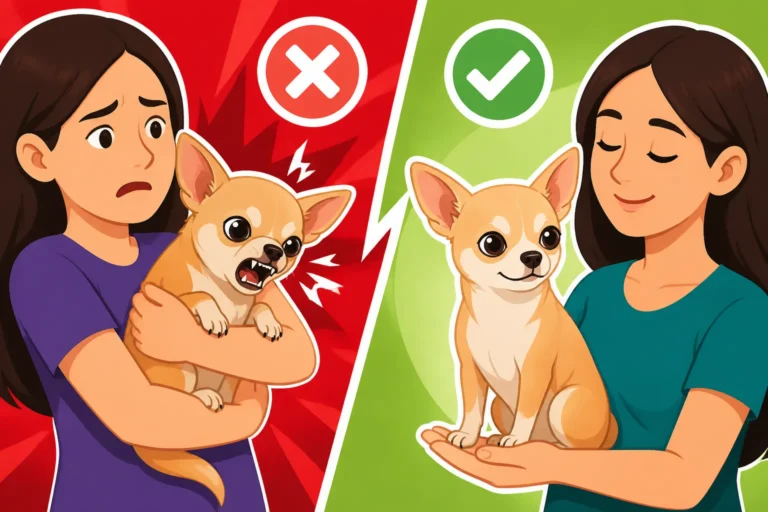
It's tempting to scoop up your Chihuahua whenever you want to move them, or when you perceive danger. While there are certainly times when carrying them is appropriate and necessary for their safety, making it a habit can inadvertently create a dog that is insecure, overly dependent, and even prone to fear-based aggression because they haven't learned to cope on their own.
Teaching Consent in Handling
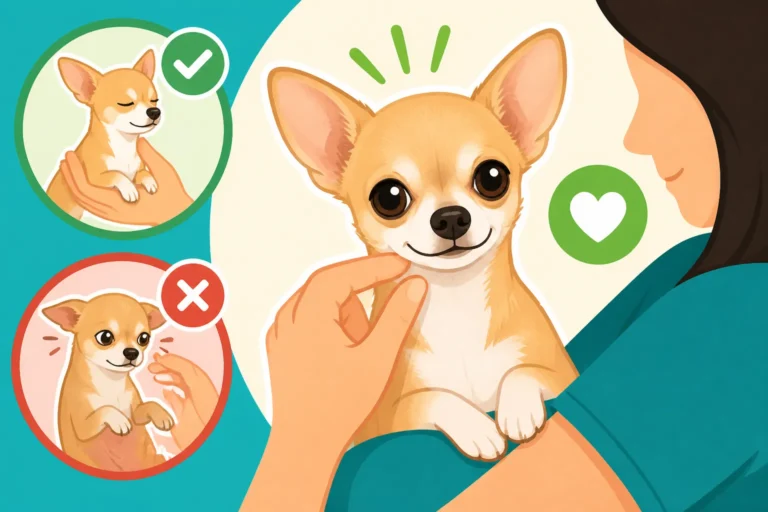
Just like any dog, Chihuahuas should be taught to tolerate, and ideally enjoy, being handled. This includes being picked up, having their paws touched, their ears examined, and their teeth brushed. Start early and make it a positive experience with treats and praise. The key is to teach them that handling is a good thing, not something to be endured or feared.
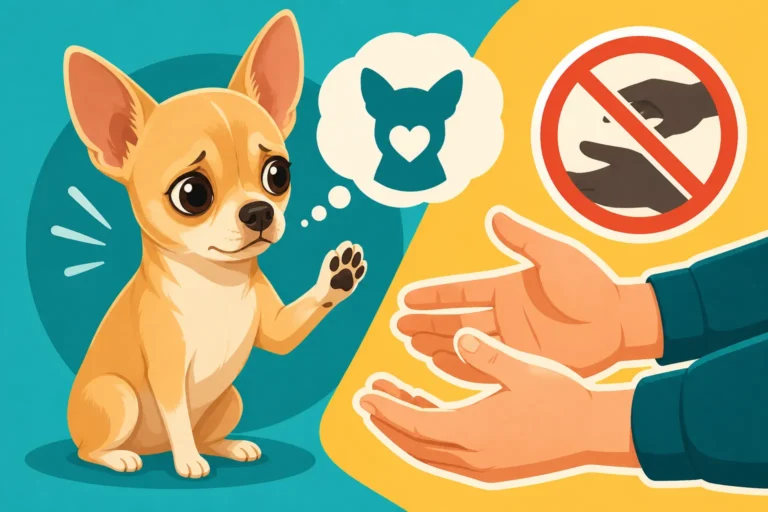
A crucial aspect of respectful handling is teaching them to "consent" to being picked up. Instead of just grabbing them, offer your hands and use a verbal cue like "up." Reward them when they step into your hands or show willingness. This gives them a sense of control and reduces anxiety. A dog that is constantly snatched up can become hand-shy or even reactive to touch. To understand more about the importance of this, check out Asking Before You Lift a Chihuahua.
The Importance of Walking on Their Own Four Paws
While it's adorable to carry a Chihuahua in a bag or your arms, doing so exclusively robs them of essential experiences. Walking on a leash allows them to exercise, explore scents, and gain confidence in navigating different environments. It's vital for their physical health to move their joints, and for their mental well-being to engage with the world at ground level. A Chihuahua who never walks independently misses out on developing crucial coordination and environmental resilience.
When they walk, they learn about textures, sounds, and other creatures from their own perspective, rather than from a high-up, protected vantage point. This exposure helps them develop into more confident and well-adjusted dogs. If your Chihuahua resists walking, it might be due to fear, a poorly fitting harness, or simply a lack of positive reinforcement for walking. Patience and positive training can overcome this. Start with short, positive walks in quiet areas, gradually increasing the duration and exposure. For more on the benefits of walking, look at What a Chihuahua Loses by Never Touching the Ground.
Setting Expectations: The Same Rules for All Sizes
Ultimately, the most loving thing you can do for your Chihuahua is to treat them with the same respect and set the same expectations you would for any other dog. Their size doesn't exempt them from needing structure, boundaries, and consistent training. In fact, because they are so small and often more vulnerable, these rules become even more critical for their safety and well-being.
Why Small Dog Rules Should Match Big Dog Rules
Think about the consequences of not training a large dog: property destruction, aggression, accidents. While the scale of destruction might be smaller with a Chihuahua, the underlying behavioral problems are just as real and just as distressing for both dog and owner. A Chihuahua that consistently barks at every noise, nips at visitors, or marks in the house is a stressed Chihuahua, and a stressed owner. Applying consistent rules across the board helps them understand their place, builds confidence, and reduces anxiety. It also helps prevent unwanted behaviors from escalating into serious issues.
| Behavior / Rule | Chihuahua Owner Often Allows/Excuses | Ideal "Big Dog" Rule Application |
|---|---|---|
| Barking at Doorbell | "Oh, he's just being an alarm!" (no intervention) | Teach "quiet" command, go to mat for treat. |
| Jumping on Guests | "He's so tiny, it's cute!" (picks up dog) | Teach "four on the floor" or "place" command. |
| Begging for Food | "Just a tiny bite won't hurt." (shares food) | No human food from the table; dog eats from bowl. |
| Pulling on Leash | "He's too small to walk, I'll carry him." | Train loose-leash walking with a harness. |
| Resource Guarding | "Let him keep his bone, don't bother him." | Teach "trade" command; ensure safe access to resources. |
| House Training Accidents | "It's just a little pee, happens." (cleans without consistent training) | Consistent potty schedule, praise, enzymatic cleaning, vet check. |
| Snapping/Growling | "He's just protecting me, don't touch him!" | Address underlying fear with counter-conditioning; seek professional help. |
As you can see from the table, the excuses we make for Chihuahuas simply aren't given to larger breeds. Changing this mindset is the first step toward a well-behaved and happier Chihuahua.
The Rewards of Consistent Training
When you commit to training your Chihuahua with the same dedication you would a German Shepherd or a Golden Retriever, the rewards are immense. You'll have a confident, well-adjusted companion who trusts your guidance. They'll be safer in new environments, calmer around strangers, and a joy to take places. They will understand what is expected of them, which alleviates anxiety and helps them relax. A trained Chihuahua isn't just a "good" dog; it's a dog that understands its world and feels secure within it.
Don't underestimate your Chihuahua's capacity to learn. They are intelligent, eager to please, and deeply bond with their humans. Investing in their training, whether through a local trainer or online programs like BAXTER & Bella's virtual puppy school, is one of the best investments you can make for their long, happy life by your side. Remember, a well-behaved Chihuahua gets to go more places, meet more people, and live a richer, more fulfilling life than one relegated to a purse or constantly picked up due to behavioral issues. For more details on this, explore Why a Chihuahua Deserves Real Obedience Training.
Disclaimer
This article is for general informational purposes only and does not constitute professional advice. Laws, prices and regulations vary by location and change over time. Consult a qualified professional for guidance on your specific situation.