Sun Exposure on a Thin Chihuahua Coat
It's easy to assume your tiny Chihuahua, with their love for burrowing and snuggling, might be immune to something like sun exposure. But the truth is, their delicate skin and often sparse coats make them surprisingly vulnerable to the sun's harsh rays, just like us. This guide will walk you through why your pint-sized pal needs sun protection and practical ways to keep them safe from sunburn and long-term skin damage.
Why a Chihuahua's Coat Isn't Enough Protection
When you picture a Chihuahua, you probably think of their sleek, often thin coat, or perhaps the slightly longer, feathery variety. What many owners don't realize is that neither of these coat types provides robust protection against the sun, unlike the thick double coats of breeds built for colder climates. This makes your Chihuahua's skin much more susceptible to the damaging effects of UV radiation.
The Nature of Their Fur
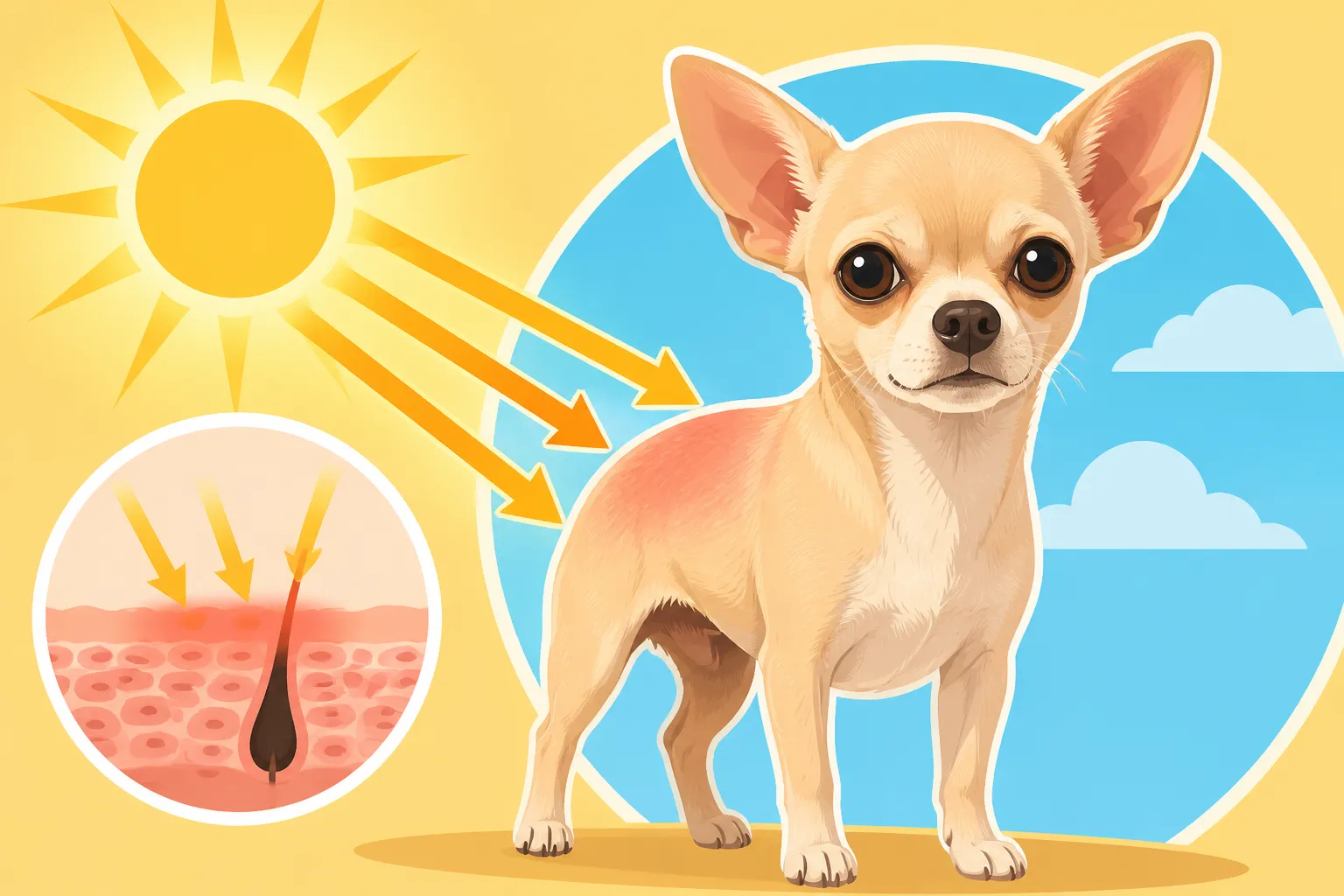
Chihuahuas come in two main coat types: smooth coat and long coat. The smooth coat is short, lies close to the body, and offers very little barrier between the sun and their skin. Think of it like a very thin layer of fabric – it might feel nice, but it's not going to stop a sunburn on a bright day. Even the long coat, while appearing more substantial, typically lacks a dense undercoat that would provide more significant insulation and UV blockage. Their hair is fine, often silky, and parts easily, exposing the skin beneath, particularly along their back, sides, and the top of their head.
Imagine trying to rely on a single layer of thin silk to protect your own skin from intense sun; it simply wouldn't be enough. The same principle applies to your Chihuahua. Furthermore, many Chihuahuas have lighter colored coats, which can sometimes mean lighter, more sensitive skin underneath that is even more prone to burning. Areas like the belly, inner thighs, and ears often have very little hair, making them prime targets for sun damage.
Delicate Skin and Minimal Body Fat
Beyond the thinness of their coats, Chihuahuas naturally have delicate skin. This isn't surprising given their tiny frames and minimal body fat, which also means they struggle to regulate their body temperature in cold weather. Why a Chihuahua Shivers Indoors is a common concern for owners, highlighting their general sensitivity. This same delicate nature extends to their skin's vulnerability to external elements like the sun.
Their skin is simply not designed to withstand prolonged direct sunlight without consequences. Without a thick layer of fur to act as a natural shield, UV rays penetrate easily, leading to not just immediate sunburn but also cumulative damage over time. This cumulative damage is the real long-term worry, increasing the risk of serious skin conditions down the road. Owners often focus on visible issues, but sometimes the silent damage is the most dangerous.
Identifying Sunburn and Sun Damage on Your Chihuahua
It might seem hard to imagine your tiny dog getting sunburned, but it happens more often than you think. Recognizing the signs of sunburn or chronic sun damage early can make a big difference in your Chihuahua's comfort and long-term health. It's not always as obvious as a bright red human burn.
Acute Sunburn Symptoms
When a Chihuahua gets an acute sunburn, the signs are much like what you'd see on yourself, just on a smaller, furrier canvas. The most commonly affected areas are those with the thinnest hair or no hair at all: the tips and edges of the ears, the bridge of the nose, the eyelids, the belly, and the inner thighs. You might notice:
- Redness: The skin in affected areas will appear pink or red, often feeling warm to the touch. This can be subtle at first, especially if your Chihuahua has naturally pinkish skin.
- Tenderness or Pain: Your Chihuahua might pull away or yelp when you try to touch the affected areas. They may be unusually restless or unwilling to lie down comfortably.
- Flaking or Peeling: A day or two after exposure, the skin might start to peel, similar to how human skin peels after a bad sunburn.
- Blistering (Severe Cases): In very severe cases, blisters can form, which are painful and prone to infection. This is an emergency and requires immediate veterinary attention.
- Excessive Licking or Scratching: Your dog might repeatedly lick, scratch, or rub at the irritated areas, trying to alleviate the discomfort.
It's crucial to check these vulnerable spots, especially after a long walk on a sunny day or if they've been lounging in a sunny window for an extended period. Just because they're enjoying the warmth doesn't mean they're safe from its downsides.
Long-Term Risks of Sun Damage
Beyond the immediate discomfort of a sunburn, repeated or prolonged sun exposure carries significant long-term health risks for Chihuahuas. Just like in humans, UV radiation can cause cellular damage that accumulates over the years, leading to more serious conditions.
One of the biggest concerns is an increased risk of skin cancers. Squamous cell carcinoma and hemangiosarcoma are two types of skin cancer that can be exacerbated by chronic sun exposure, particularly on areas like the nose, ears, and thinly haired bellies. These cancers can be aggressive and difficult to treat, especially if not caught early. Senior Chihuahua Care Past the Age of Twelve often involves more frequent vet checks, which is a good time to ask about skin lesions or changes. Early detection is absolutely vital for any skin abnormality you notice.
Additionally, chronic sun exposure can lead to general skin hardening, thickening, and a loss of elasticity, sometimes referred to as solar dermatitis. This can make their skin more brittle and prone to injury. It can also worsen existing skin conditions or make them more susceptible to new ones. Maintaining overall skin health through proper nutrition and care is important, and sun protection is a huge part of that.
Practical Strategies for Protecting Your Chihuahua from the Sun
Protecting your Chihuahua from the sun doesn't mean keeping them cooped up indoors all summer. It's about being smart and proactive, just like you would for a child. There are several effective strategies you can employ to minimize their sun exposure while still letting them enjoy the great outdoors.
Timing Walks and Seeking Shade
The simplest and often most effective strategy is to adjust your daily routine to avoid the most intense sun. During the peak hours of 10 AM to 4 PM, UV radiation is strongest. This is particularly true in summer, but even on bright, clear days in spring and fall, the sun can be surprisingly powerful.
- Early Morning or Late Evening Walks: Plan your walks for the early morning, right after the sun rises, or later in the evening as the sun begins to set. Not only is the sun less intense, but the ground temperature will also be much cooler, protecting their delicate paw pads from hot pavement. Hot Pavement and a Chihuahua's Small Feet is another critical consideration, as their small size means they are closer to the hot ground.
- Seek Natural Shade: When you are outside, always gravitate towards shaded areas. Parks with plenty of trees, covered patios, or even the shadow cast by a building can provide a safe haven. If you're out and about, be mindful of where the sun is and try to keep your Chihuahua in the shade as much as possible. Even a small patch of shade can make a big difference.
Protective Clothing and Accessories
Yes, Chihuahuas are known for their adorable outfits, but sometimes those clothes serve a very important purpose beyond fashion. Investing in appropriate sun-protective clothing can be a game-changer for Chihuahuas with thin coats.
- Lightweight UV Shirts: Look for lightweight, breathable fabrics designed to block UV rays. Many pet clothing brands offer specialized sun shirts made from materials with UPF (Ultraviolet Protection Factor) ratings, similar to human athletic wear. These shirts cover the back and sides, protecting large areas of their vulnerable skin. You can find a good selection of these on sites like Chewy or Amazon, often labeled as "rash guards" for dogs.
- Hats and Visors: While perhaps not for every Chihuahua, some dogs tolerate small hats or visors that can help shade their nose and eyes. This is particularly useful for Chihuahuas with lighter-colored noses that are more prone to sunburn. However, ensure it fits comfortably and doesn't obstruct their vision or hearing. Chihuahua Eye Injuries and Prominent Eyes can also be a concern, making eye protection an added benefit.
- Portable Shade Solutions: If you spend a lot of time outdoors in one spot (like at a picnic or a park), consider a small, portable umbrella or a pop-up pet tent. These can provide a personal shaded retreat for your Chihuahua, allowing them to relax comfortably without direct sun exposure.
Pet-Safe Sunscreen Application
For those areas that just can't be covered by clothing—think nose, ear tips, and sometimes their belly—pet-safe sunscreen is a must. This is not the same as human sunscreen, which often contains ingredients toxic to dogs if licked.
- Use Vet-Approved Products Only: Always, always use a sunscreen specifically formulated for dogs. These products are made with non-toxic ingredients. Your veterinarian can recommend a good brand, or you can find them at reputable pet supply stores or online retailers like Chewy.
- Application Technique: Apply a thin layer to exposed areas. A little goes a long way for their tiny bodies. Pay close attention to the bridge of the nose, the ear tips, and any sparsely haired areas on the belly or inner thighs. Reapply as directed on the product, usually every few hours, especially if they've been swimming or rubbing.
- Distraction is Key: Many Chihuahuas aren't thrilled about having things rubbed on them. Try to make it a positive experience by offering treats or praise during application. You can use their favorite small training Treats Small Enough for Chihuahua Training to keep them focused while you apply the sunscreen.
Aftercare for Sun-Exposed or Sunburned Chihuahuas
Even with the best precautions, sometimes accidents happen, or your Chihuahua might get more sun than intended. If you suspect your Chihuahua has been sunburned, prompt and gentle aftercare is essential.
Immediate Comfort and Monitoring
If you notice redness or tenderness, the first step is to get your Chihuahua out of the sun immediately and into a cool, shaded environment.
- Cool Compresses: Gently apply cool (not ice-cold) compresses to the affected areas. A cloth dampened with cool water can help soothe the skin and reduce inflammation. Do this for 5-10 minutes at a time, several times a day.
- Avoid Further Irritation: Prevent your Chihuahua from licking or scratching the burned areas, as this can worsen the irritation and lead to infection. If necessary, you might need to use an Elizabethan collar (e-collar) temporarily, though most Chihuahuas are not fans of them.
- Observe for Worsening Signs: Keep a close eye on the burn. Look for any blistering, oozing, increased pain, or signs of infection (pus, foul odor). Also, monitor for general signs of heat stress, such as excessive panting, lethargy, or vomiting, especially if the sun exposure was prolonged.
When to Consult Your Veterinarian
While minor sunburns can often be managed at home, certain situations warrant an immediate trip to the vet. It's always better to be safe than sorry, especially with such a small, delicate dog.
- Blistering or Open Sores: Any sign of blistering, open wounds, or broken skin means a vet visit is imperative. These are prone to serious infection and require professional medical attention, which might include antibiotics or specialized wound care.
- Severe Pain or Discomfort: If your Chihuahua is clearly in significant pain, yelping, refusing to be touched, or showing signs of distress, they need veterinary care. Your vet can prescribe pain relief suitable for their small size.
- Signs of Infection: If you see any discharge, increasing redness spreading beyond the initial burn, swelling, or if the area feels hot and is very painful, these are all red flags for infection.
- Lethargy or Other Systemic Symptoms: If your Chihuahua seems unusually tired, withdrawn, isn't eating or drinking, or exhibits any other concerning symptoms, it could indicate a more widespread problem or a severe reaction to the sun exposure.
Your vet can assess the severity of the burn, rule out secondary infections, and provide appropriate treatment, which might include medicated creams, oral medications, or even fluid therapy if they are dehydrated. They can also discuss long-term monitoring for any areas that have been repeatedly sun-damaged, helping you stay vigilant against future issues. Ultimately, protecting your Chihuahua from the sun is an ongoing act of love, ensuring their comfort and well-being for all their Chihuahua Lifespan and Why the Breed Reaches Sixteen years.
| Sun Protection Method | Pros | Cons | Best Use Case |
|---|---|---|---|
| Timing Walks | Free, no equipment needed, also avoids hot pavement. | Limits outdoor time to specific hours. | Daily walks, regular outdoor exercise. |
| Seeking Natural Shade | Free, readily available in many outdoor areas. | Not always an option, requires constant vigilance. | Anytime outdoors, especially during short potty breaks or playtime. |
| UV Protective Clothing | Covers large body areas, provides consistent protection. | May not be tolerated by all Chihuahuas, requires purchasing and washing. | Prolonged outdoor exposure, dogs with very thin or light coats. |
| Pet-Safe Sunscreen | Targets exposed areas not covered by clothing (nose, ears). | Must be reapplied, some Chihuahuas dislike application, can be licked off. | Specific vulnerable spots like ears and nose. |
| Portable Shade Solutions | Creates a dedicated safe zone, offers full coverage. | Requires carrying equipment, stationary use only. | Beaches, picnics, outdoor events where you'll be in one spot for hours. |
Disclaimer
This article is for general informational purposes only and does not constitute professional advice. Laws, prices and regulations vary by location and change over time. Consult a qualified professional for guidance on your specific situation.