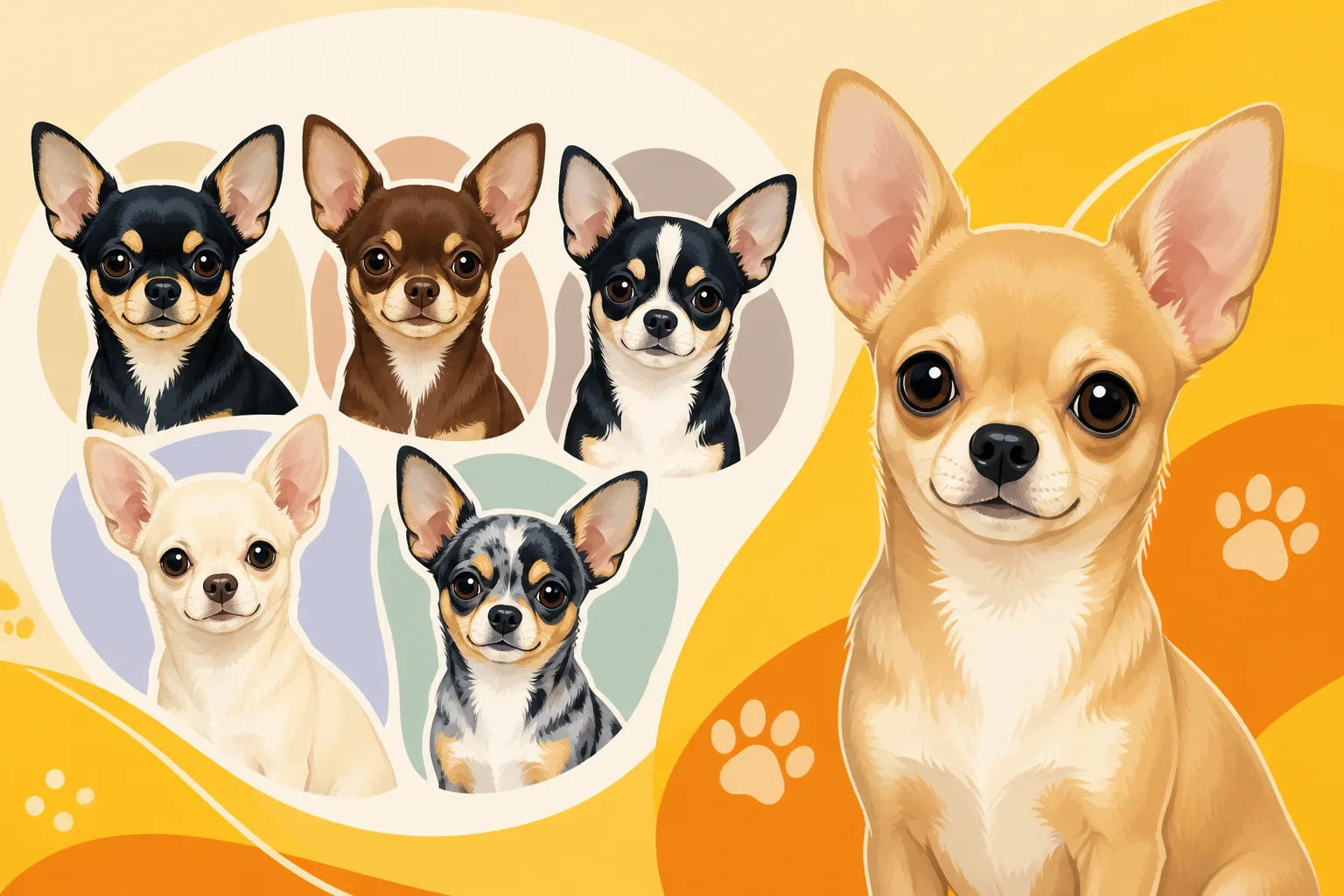
Chihuahua Colors and Markings
It can be incredibly exciting, and sometimes a little overwhelming, to dive into the world of Chihuahua colors and markings. When you start looking at puppies, you might hear all sorts of terms thrown around – "fawn," "sable," "merle," "blue" – and it's easy to get confused or even feel pressured by breeders who market certain shades as "rare" or "designer." This guide is here to walk you through the astonishing variety of Chihuahua coats, explain what the official breed standard says, and help you understand the difference between a simply beautiful color and one that might come with potential health considerations.
The Rainbow of Chihuahua Colors: Understanding the AKC Standard
One of the most charming things about Chihuahuas is the sheer diversity you find in their coats. Unlike some breeds where only a handful of colors are accepted, the Chihuahua breed standard is incredibly open-minded, allowing for a spectacular range of shades and patterns. This means whether you're drawn to a solid classic or a uniquely patterned pup, there’s likely a Chihuahua out there to capture your heart.
How the AKC Categorizes Chihuahua Colors
The American Kennel Club (AKC), which sets the breed standard for Chihuahuas in the United States, uses very inclusive language when it comes to color. Their standard states, quite simply, that "Any color, solid, marked or splashed is permissible." This broad acceptance is fantastic because it celebrates the natural genetic diversity within the breed. It means that almost any color you can imagine a dog being, a Chihuahua can be.
While the standard is welcoming to all colors, it's worth noting that some shades are seen more frequently than others. Breeders, over generations, have sometimes focused on particular color lines, leading to certain hues being more common in a specific region or kennel. However, even with these preferences, the inherent genetic possibilities ensure that the breed remains a vibrant palette. We'll delve deeper into the specifics of Chihuahua Colors the AKC Accepts shortly, but for now, understand that the door is wide open, which is part of what makes them so unique.
Common and Traditional Chihuahua Colors
When you start looking at Chihuahuas, you'll quickly notice some colors that appear with regularity. These traditional shades are beloved for a reason, often showcasing the breed's delicate features beautifully.
Fawn: This is arguably one of the most recognizable and beloved Chihuahua colors. Fawn isn't just one shade; it's a spectrum that can range from a very pale, almost creamy fawn to a rich, deep red-fawn that looks like burnished copper. Many fawn Chihuahuas will have a slightly darker mask or shading on their ears, adding depth to their appearance. A fawn Chihuahua can truly be a stunning sight, embodying that classic "tiny dog" look.
Black and Tan: Another classic, the black and tan Chihuahua is strikingly elegant. These dogs have a solid black body with distinct tan markings on specific areas: above the eyes (like eyebrows), on the sides of the muzzle, on the chest, and on the legs. Sometimes, these tan markings will also appear under the tail. The contrast between the deep black and the warm tan is beautiful, and it's a color pattern you see in many other breeds, giving it a very distinguished feel.
Cream: Soft, gentle, and often appearing almost ethereal, cream Chihuahuas are lovely. Their coats can be a very pale, almost off-white cream to a slightly richer, warmer cream. These dogs often have lighter pigmentation on their noses and eye rims, giving them a delicate look. Sometimes, a very light fawn might be mistaken for cream, but true cream has a distinct, buttery hue.
Chocolate/Brown: For those who adore warm tones, chocolate Chihuahuas are a treat. This color can vary from a light, milky chocolate to a deep, dark, almost black-brown. Typically, chocolate Chihuahuas will have brown noses and paw pads, rather than black, which complements their rich coat color. They have a cozy, inviting look, often described as a truly decadent shade.
Red: Like fawn, red Chihuahuas can present a range of intensity, from a vibrant, fiery orange-red to a deeper, more sedate mahogany. Red coats often have a wonderful sheen, especially in sunlight. They possess a lively appearance, embodying warmth and energy.
Black: A solid black Chihuahua is a vision of sleek sophistication. Their coats are a deep, uniform black without any tan or other colored markings. Sometimes, in direct sunlight, you might see a slight reddish cast, but primarily, they are pure black. These dogs have a powerful, striking presence, despite their small size.
Exploring the Variety of Markings and Patterns
Beyond the base color, Chihuahuas can sport an incredible array of markings and patterns that make each dog truly unique. These aren't just random splotches; they're genetic expressions that add character and depth to their appearance. Understanding these markings can help you appreciate the complexity of their coats.
Common Markings: Sables, Brindles, and Splotches
When you look at a litter of Chihuahua puppies, you'll often see more than just solid colors. These markings are what truly distinguish one pup from another and are often a big part of their individual charm.
Sable: Sable is a fascinating pattern where individual hairs are tipped with black pigment. This creates a shaded, smoky effect over a base color, most commonly fawn or red. Imagine a fawn Chihuahua, but with darker, almost black, tips on much of its fur. The overall impression is a deeper, richer color than a pure fawn. What's truly interesting about sable is that it can change quite a bit as a puppy matures. A heavily sabled puppy might lighten up significantly, or the black tipping might become more concentrated in certain areas like the back or ears. This makes Whether a Chihuahua Puppy Keeps Its Birth Color a common question among new owners, as their sable pup might look quite different in adulthood!
Brindle: If you've ever seen a "tiger-striped" dog, you've seen brindle. On a Chihuahua, this pattern consists of streaks or stripes of a darker color (usually black) over a lighter base color (like fawn, red, or cream). The stripes can be subtle or quite pronounced, giving the coat a beautiful, almost wood-grain texture. Brindle Chihuahuas are less common than solid or sable varieties but are fully accepted by the AKC. It's a unique pattern that truly stands out.
Irish Markings and White Markings: Many Chihuahuas display some degree of white. "Irish markings" typically refer to a white chest, white feet, and sometimes a white blaze up the face or a white tip on the tail. These white areas are usually symmetrical and distinct. Minimal white markings are very common and add a lovely accent to any base color. The contrast is often striking, highlighting the dog's expressive face or dainty paws.
Piebald/Parti-color: When the white markings become more extensive, covering large, irregular patches, the dog is often described as piebald or parti-color. These Chihuahuas have large areas of white interspersed with patches of solid color (like black, fawn, or chocolate). Imagine a canvas that is mostly white, splashed with significant, colorful brushstrokes. Piebald Chihuahuas are incredibly eye-catching, with each one having a unique "map" of colors. The AKC standard fully embraces these patterns, considering them part of the breed's natural diversity.
Masking and Pigmentation Details
Beyond the main coat and markings, the devil is in the details when it comes to Chihuahua aesthetics. Things like the color of their nose, the rims of their eyes, and specific masks add another layer of character.
Black Mask: A black mask is a common feature, particularly on fawn, red, or cream Chihuahuas. This is where the pigment around the muzzle, and sometimes extending to the eyes and ears, is darker, often black. It gives the dog a distinct, expressive face, almost like they're wearing a little bandit mask. Some Chihuahuas will have a very pronounced mask, while others might have only faint shading.
Nose and Eye Rim Pigmentation: The color of a Chihuahua's nose, paw pads, and the rims around their eyes (often called "points") typically correlates with their coat color. For instance, black Chihuahuas, black and tan Chihuahuas, and many fawn Chihuahuas will have black noses and dark eye rims. Chocolate Chihuahuas, however, will usually have brown or liver-colored noses and paw pads, and sometimes lighter eye rims. Blue Chihuahuas (which we'll discuss next) might have slate-gray noses. Occasionally, a Chihuahua might have a "butterfly nose," which is a nose that is partially unpigmented (pink and black), but this is less common and can be a minor fault in the show ring. These details are important for a complete picture of a Chihuahua's appearance.
The Truth About "Rare" and Controversial Chihuahua Colors
While the AKC standard embraces "any color," there are certain colors that are less common or, more significantly, carry genetic implications that potential owners need to be aware of. These colors are often marketed as "rare" or "designer," sometimes leading to inflated prices, but it's crucial to understand the full picture before being swayed by novelty.
Blue Chihuahuas and Associated Health Concerns
The term "blue Chihuahua" refers to a dog with a striking, steel-gray coat. This isn't actually blue in the traditional sense, but a dilute form of black. Genetically, a "dilute" gene has acted on the black pigment, turning it from black to gray. These Chihuahuas often have blue or gray noses and light-colored eyes, which can be quite captivating.
While a blue Chihuahua can be perfectly healthy and beautiful, there is a specific health concern associated with the dilute gene that all owners should be aware of: Color Dilution Alopecia in a Blue Chihuahua. This condition, often referred to as CDA, is a genetic skin disorder primarily seen in dilute-colored dogs. It can cause patchy hair loss, a dry and brittle coat, and recurrent skin infections. Not every blue Chihuahua will develop CDA, but the risk is present. Responsible breeders who produce blue Chihuahuas will be transparent about this potential risk and should ensure that neither parent carries a double dilute gene, as this can increase the likelihood of problems. It’s essential to choose a breeder who prioritizes health over merely producing a "rare" color.
Merle Chihuahuas and Ethical Breeding Debates
Merle is perhaps the most controversial coat pattern in the Chihuahua world, and for very good reason. A merle Chihuahua has a coat with mottled, patchy areas of lighter and darker pigment, often giving a marbled appearance. It's a striking pattern, and merle Chihuahuas often have captivating blue eyes or even "odd eyes" (one blue, one brown).
However, merle is not a color itself; it's a gene that affects how pigment is expressed. The problem arises when two merle dogs are bred together, resulting in what's known as a "double merle" offspring. Double merles are at a significantly higher risk for severe health problems, including:
- Ocular Defects: Blindness, microphthalmia (abnormally small eyes), colobomas (missing eye tissue), and other severe eye abnormalities.
- Auditory Defects: Partial or complete deafness.
- Neurological Issues: In some cases, neurological problems.
Because of these grave health risks, many reputable breed clubs and registries, including some that recognize the Chihuahua, have taken a strong stance against merle breeding. Some refuse to register merle Chihuahuas altogether, while others have strict guidelines about how they can be bred. This is why you'll often hear about Merle Chihuahuas and the Registry Argument.
A single merle Chihuahua (produced by breeding one merle parent to one non-merle parent) can be perfectly healthy, but the ethical concern lies with breeders who prioritize producing "rare" merle puppies without fully understanding or disclosing the genetic risks, or worse, breeding two merle dogs together. Potential owners should be extremely cautious of anyone selling merle Chihuahuas as merely "rare" or "designer" without providing full transparency about the lineage and health guarantees. Always prioritize a healthy puppy from a responsible breeder who is willing to talk about all aspects of the dog's health and genetics, rather than getting swept up by a unique pattern.
How Chihuahua Coat Color Changes Over Time
If you've ever owned a puppy of any breed, you'll know that their baby coat isn't always what they'll look like as an adult. Chihuahuas are no exception! Their coats can undergo some fascinating transformations from the time they're tiny pups to when they reach their senior years. Understanding these changes can help manage expectations and simply be another delightful aspect of watching your Chihuahua grow.
Puppy Coat Fading and Darkening
Many Chihuahua puppies are born with a coat that serves as a preliminary draft of their adult appearance. It’s common for puppies to be born with a certain color or pattern that shifts as their adult coat comes in.
For example, a fawn puppy might be born a very pale cream, only to deepen into a rich caramel or reddish-fawn over the first few months. Conversely, some darker fawn or red puppies might have heavy black tipping (sable) that recedes as they mature, leading to a lighter adult coat. Black puppies can sometimes lighten slightly to a softer, smoky black or even a dark charcoal. Chocolate puppies might also deepen their shade or develop more distinct markings as their adult fur grows in. These changes are a normal part of their development and are influenced by genetics and the gradual replacement of their softer puppy fur with the denser, often more pigmented, adult coat. It’s a bit like watching a tiny artist’s canvas slowly reveal its final masterpiece!
The Impact of Age and Environment on Pigmentation
Beyond the puppy stage, a Chihuahua's coat can continue to evolve, with age and even environmental factors playing a subtle role.
Just like humans, senior Chihuahuas will often develop gray or white hairs, particularly around their muzzle and sometimes their eyebrows. This is a normal sign of aging and adds a distinguished, wise look to our long-lived companions. A Chihuahua hitting The Age a Chihuahua Counts as Senior might start showing these subtle signs around their face, adding to their charm.
Environmental factors can also play a role. Prolonged exposure to sunlight, for instance, can sometimes lighten a dark coat or give a reddish tint to black fur. It's a similar effect to how human hair can get sun-bleached. Diet and overall health, while not dramatically changing color, can impact the luster and health of the coat. A dog on a high-quality diet with good skin and coat supplements (like omega fatty acids) might have a more vibrant, shinier coat, regardless of its underlying color, compared to a dog with nutritional deficiencies. So, while you won't see a black Chihuahua turn entirely white from sun, subtle shifts in tone and vibrancy are absolutely possible throughout their life.
Understanding "Non-Standard" Colors and What They Mean
When discussing Chihuahua colors, it's easy to fall into the trap of thinking that anything not explicitly listed as "common" must be "bad." This isn't the case! The term "non-standard" in the dog world primarily relates to show ring preferences, not necessarily to a dog's health or suitability as a pet. It's crucial for owners to differentiate between these concepts.
Why Some Colors Are Not Favored in the Show Ring
As we mentioned earlier, the AKC standard for Chihuahuas is incredibly inclusive regarding color: "Any color, solid, marked or splashed is permissible." This means there are very few "disqualifying" colors. However, within the showing community, certain colors or patterns might be less favored or simply not typically seen in the most competitive show lines, even if technically permissible.
For instance, while extreme white markings are allowed, a show judge might have a personal preference for a dog with more solid color. Or perhaps a very unusually mottled pattern, even if genetically sound, might not be what the judge considers "classic" for the breed's overall presentation. This is subjective and often comes down to current trends or individual judge preference within the very specific context of conformation showing. It absolutely does not mean there is anything inherently "wrong" with a Chihuahua of that color for pet ownership. The difference between a show dog and a beloved family companion is vast, and for the latter, color preferences should be purely personal.
Health Over Aesthetics: Prioritizing a Healthy Chihuahua
This is perhaps the most critical takeaway when considering Chihuahua colors. It's incredibly easy to be captivated by a unique or "rare" color, especially when a breeder uses persuasive language to emphasize its exclusivity. However, as we discussed with merle and blue Chihuahuas, certain color genes can be linked to health issues, particularly when bred irresponsibly. This is why prioritizing a puppy's health and temperament above all else is paramount.
When looking for a Chihuahua puppy, focus on the breeder's practices. Do they conduct appropriate health testing on their breeding stock for common Chihuahua ailments like Patellar Luxation, the Chihuahua's Commonest Joint Problem or Chihuahua Heart Disease as the Breed Ages? Do they openly discuss potential health concerns related to certain colors (like CDA in blues or the risks of double merle)? Are they willing to show you the puppy's parents and answer all your questions about their care and socialization?
Beware of breeders who only highlight a puppy's "rare" color and charge exorbitant prices based solely on that. This is a common warning sign, as detailed in Blue and Merle Chihuahua Pricing Warnings. A truly responsible breeder will focus on the overall health, temperament, and adherence to the breed standard, with color being an interesting but secondary characteristic. Your Chihuahua's color will bring you joy, but its health will determine the quality and length of your sixteen years together.
The Chihuahua Standard on Colors and Markings
To really understand Chihuahua colors, it’s helpful to look at the official breed standard. This document, put forth by organizations like the AKC, describes the ideal characteristics of the breed. While it’s primarily for show judges and breeders, it offers valuable insight into what is considered acceptable and desirable.
The "Any Color or Markings" Clause
As we’ve established, the Chihuahua breed standard, under the "Color" section, is wonderfully succinct and inclusive. It states: "Any color, solid, marked or splashed is permissible."
This single sentence grants a huge amount of freedom and means that you won't find specific colors listed as disqualifications based solely on their hue or pattern. It embraces the entire spectrum of canine colors and combinations. This broad acceptance is part of what makes Chihuahuas so visually diverse and appealing. It confirms that whether your Chihuahua is a solid black, a fawn with a white chest, a piebald masterpiece, or even a brindle beauty, it fits within the recognized definition of the breed in terms of color. This freedom allows for breeders to focus on other crucial aspects, like temperament and health, without being overly restricted by a narrow color palette.
Pigmentation and Faults in the Show Ring
While the base color and markings are incredibly diverse, the AKC standard does touch upon pigmentation, particularly for the nose, eye rims, and paw pads. These finer details can sometimes be considered "faults" in the show ring, though they rarely affect a dog's health or quality of life as a pet.
Generally, the standard calls for pigmentation to match the coat color, meaning a black nose for black, fawn, or white Chihuahuas, and a self-colored (brown/liver) nose for chocolate Chihuahuas. A "butterfly nose" – one that is partially unpigmented or flesh-colored – might be considered a minor fault in the show ring. Similarly, eye rims and paw pads are generally expected to be pigmented.
It's important to remember that these are very specific nuances for the show ring, where every detail is assessed against an ideal. For the average pet owner, a non-standard nose color or slight variation in pigmentation is purely cosmetic and should not be a cause for concern. These points highlight the attention to detail in conformation judging, but they don't diminish the charm or value of a Chihuahua as a cherished family member. Knowing these distinctions can help you appreciate the depth of the breed standard, but remember that for a companion dog, health and happiness always take precedence over a perfectly pigmented nose.
| Color/Pattern Category | Description | AKC Acceptance | Potential Health Notes |
|---|---|---|---|
| Common Solids | Fawn, Black, Cream, Red, Chocolate, White | Fully accepted | Generally healthy |
| Common Markings | Black & Tan, Sable, Brindle, White Markings | Fully accepted | Generally healthy |
| Parti-color | Large patches of color on a white background | Fully accepted | Generally healthy |
| Blue | Dilute black, steel-gray coat | Fully accepted | Risk of Color Dilution Alopecia in a Blue Chihuahua (CDA) |
| Merle | Mottled, patchy pattern, often with blue eyes | Accepted, but breeding two merles is not | High risk of severe eye/ear defects if bred double merle. Ethical concerns are significant. |
| Lavender/Isabella | Dilute chocolate, grayish-purple tint | Fully accepted | Potential for CDA, similar to blue dilution |
Disclaimer
This article is for general informational purposes only and does not constitute professional advice. Laws, prices and regulations vary by location and change over time. Consult a qualified professional for guidance on your specific situation.