Toxic Garden Plants at Chihuahua Nose Height
It’s a beautiful day, the sun is shining, and you want nothing more than to let your tiny Chihuahua explore the backyard. But as soon as their little nose hits the ground, a familiar worry creeps in: what are they sniffing? What are they trying to eat? This guide is here to help you navigate the surprisingly treacherous world of garden plants and equip you with the knowledge to protect your pint-sized explorer from common outdoor toxins.
Why Garden Safety is a Unique Challenge for Chihuahuas
When you have a dog as small as a Chihuahua, every little thing becomes a bigger deal. A handful of leaves that might give a Labrador a mild tummy ache could be a full-blown emergency for your four-pound companion. Their compact size makes them uniquely vulnerable to things in the environment that larger breeds barely notice.
Their Curious Nature and Low Stature
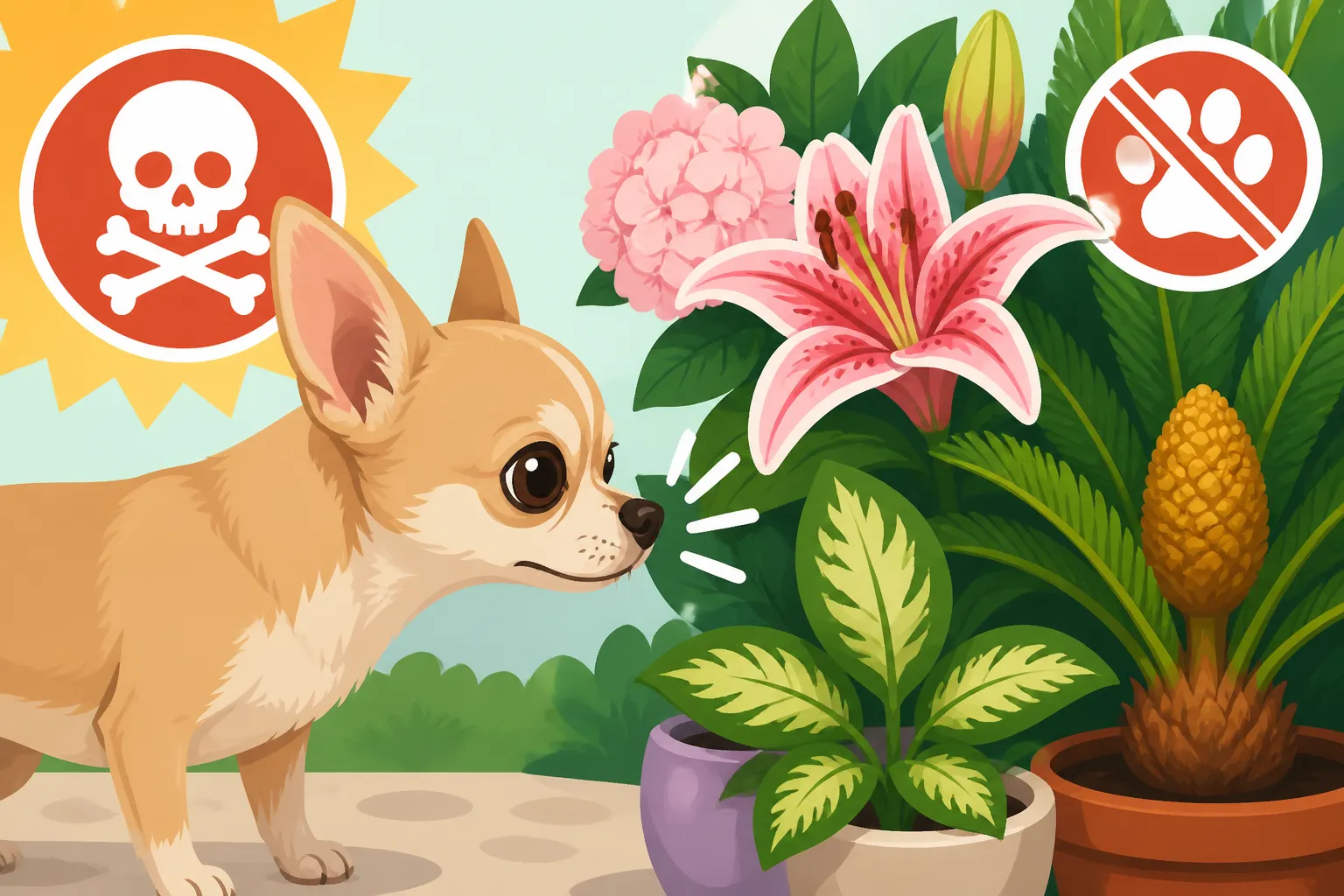
Chihuahuas are natural explorers, driven by an insatiable curiosity that often leads their tiny noses directly into trouble. Because they’re so low to the ground, they’re practically swimming through ground cover, making direct contact with every leaf, twig, and dropped seed. Imagine walking through a forest where all the undergrowth is at your eye level – that’s pretty much a Chihuahua’s daily garden experience. They sniff, they lick, and sometimes, they chew. A curious nibble on a plant that a larger dog would likely ignore, or just spit out, can introduce a significant dose of toxins into your Chihuahua’s system. It's not just about what they try to eat; it's about what they inevitably come into contact with simply by existing at "nose height" in your garden. This constant exposure, combined with their propensity to investigate everything, means owners must be extra vigilant.
Moreover, their small size means they can easily squeeze under fences, through dense bushes, or into planters that might seem inaccessible to other dogs. This access broadens the range of potentially toxic plants they can encounter. It's like having a tiny, furry Houdini who sees every barrier as an invitation. We often think of training as the solution to all behavior, and while a solid "leave it" command is invaluable, it’s not a foolproof shield against every unexpected garden temptation. Understanding Why a Chihuahua Deserves Real Obedience Training can help, but prevention is key in the garden.
The Speed of Toxin Absorption in a Small Dog
One of the most critical differences for Chihuahuas is how quickly their small bodies process and react to ingested toxins. A large dog has a greater body mass to dilute the poison, and often a slower metabolism relative to their size, meaning symptoms might develop over a longer period. For a Chihuahua, however, even a small amount of a toxic substance can lead to rapid absorption and severe symptoms. Their tiny livers and kidneys are simply not equipped to handle large loads of toxins. The dosage that might just cause mild discomfort in a Golden Retriever could be lethal for a Chihuahua.
This rapid onset of symptoms means you have a very narrow window to act. What appears to be a minor nibble can quickly escalate into a serious medical emergency, demanding immediate veterinary attention. This is why being aware of potential dangers and knowing what to do is not just helpful, it’s absolutely vital. For example, if you suspect your Chihuahua has ingested something dangerous, you need to know The First Call After a Chihuahua Swallows Something without delay. Their small size makes every second count.
Difficulty in Spotting Ingestions
It can be incredibly hard to catch a Chihuahua in the act of eating something they shouldn't. They're quick, stealthy, and a tiny bite from a leaf is easily missed, especially if they’re exploring dense foliage. You might only notice a problem hours later when symptoms begin to manifest, by which time the toxin has already had time to spread through their system. This is a common frustration for Chihuahua owners – you turn your back for a second, and suddenly your little one is exhibiting concerning behaviors, and you're left guessing what happened.
Furthermore, some symptoms can be vague or mimic other conditions. Is that trembling due to cold, fear, or a toxic reaction? Is that lethargy just typical nap time, or something more serious? This ambiguity often delays seeking help, which, as we just discussed, is precious time lost for a Chihuahua. Unlike a big dog where you might see them chomp on something obvious, a Chihuahua can nibble on a root or lick a dewdrop off a toxic leaf, and you’d never know. This is why proactive measures, like pet-proofing your garden, are essential.
Common Garden Plants That Pose a Threat
Your beautiful garden, full of vibrant colors and lush greenery, can unfortunately harbor several common plants that are highly toxic to your Chihuahua. Many of these are plants we’ve grown up with and never considered dangerous, which is precisely why they're so insidious.
Beautiful but Dangerous Flowers
Many of the most popular and aesthetically pleasing flowers in our gardens are surprisingly toxic to dogs. While you might admire their blooms, your Chihuahua sees them as intriguing new textures or smells to investigate. Here are some of the prime offenders:
- Lilies (True Lilies and Daylilies): While often associated with cats, many varieties of lilies (including Easter, Tiger, Asiatic, Japanese Show, and Daylilies) are highly toxic to dogs, causing kidney failure. Even a small ingestion, like chewing on leaves or petals, can be dangerous.
- Tulips and Hyacinths: The bulbs of these spring beauties are particularly toxic, containing compounds that can cause intense gastrointestinal irritation, excessive drooling, loss of appetite, convulsions, and cardiac abnormalities. If you've been digging in the garden, those bulbs might become a fun new toy for your curious pup.
- Autumn Crocus: This plant is extremely dangerous. It contains colchicine, a highly toxic compound that can lead to severe gastrointestinal bleeding, liver and kidney damage, respiratory failure, and even death. It’s distinct from the spring crocus, which is only mildly toxic.
- Azaleas and Rhododendrons: These popular flowering shrubs contain grayanotoxins. Ingesting even a few leaves can cause vomiting, diarrhea, drooling, weakness, central nervous system depression, and even cardiovascular collapse. Their vivid blooms make them very tempting to explore.
- Oleander: Every part of the oleander plant is highly toxic, from the flowers to the leaves, stems, and even the water in which they've been sitting. Ingestion can cause severe heart problems, leading to tremors, seizures, and death. It's a gorgeous plant, but a serious hazard.
- Foxglove: Containing cardiac glycosides, foxglove can interfere with your Chihuahua's heart function, leading to cardiac arrhythmias, vomiting, diarrhea, and weakness. It's a beautiful, tall flower but keep it far from reach.
Everyday Shrubs and Trees
It's not just the pretty flowers you need to worry about. Many common shrubs and even some trees can pose a significant risk to your small dog. These larger plants shed leaves, berries, or seeds that can fall directly into your Chihuahua's path.
- Yew: All parts of the yew plant (except the flesh of the berry, which is often consumed with the toxic seed) are extremely poisonous. The taxine alkaloids found in yew can cause sudden death due to cardiac failure, as well as tremors, difficulty breathing, and gastrointestinal upset. It's a common hedging plant, so many gardens have it.
- Sago Palm: This tropical-looking plant is incredibly toxic, especially the seeds or "nuts." Ingestion can cause severe liver damage, vomiting, diarrhea, depression, seizures, and eventually death. If you live in a warmer climate, sago palms are a serious threat.
- Castor Bean: Containing ricin, one of the most potent toxins known, even a small amount of castor bean seeds can be fatal. Symptoms can include abdominal pain, diarrhea (often bloody), weakness, trembling, and seizures.
- Cherry (Wild and Ornamental): The leaves, stems, and seeds (pits) of cherry trees contain cyanide, which is released when chewed. While the fruit itself is generally safe in moderation, the rest of the plant is highly toxic if ingested in sufficient quantities, causing brick-red mucous membranes, dilated pupils, difficulty breathing, and shock.
- Oak: The leaves, buds, and acorns of oak trees contain tannins, which can cause kidney damage, gastrointestinal upset, and liver failure, especially in large quantities. A Chihuahua might be tempted to chew on a fallen acorn, making this a subtle but serious threat.
Hidden Dangers in the Vegetable Patch and Herbs
Even your seemingly innocent vegetable garden can hide dangers. While many herbs and vegetables are fine, some common ones, especially certain parts of the plant, can be toxic to Chihuahuas.
- Tomatoes and Potatoes (Green Parts): The green parts of tomato plants (leaves, stems, unripe fruit) and potato plants (leaves, stems, green potatoes) contain solanine, a glycoalkaloid that can cause gastrointestinal upset, lethargy, weakness, and central nervous system depression. Ripe tomatoes and cooked potatoes are generally fine, but the raw plant itself is a no-go.
- Onions, Garlic, Chives, and Leeks: These common alliums can cause red blood cell damage, leading to anemia. While a tiny amount might not harm a large dog, for a Chihuahua, even a small exposure, perhaps from a dropped piece in the garden or a herb they nibble, can be problematic. This ties into understanding Foods That Are Fatal at Chihuahua Body Weight.
- Rhubarb: The leaves of the rhubarb plant contain oxalic acid, which can cause kidney damage, tremors, and drooling. The stalks are edible for humans, but your Chihuahua shouldn't be munching on any part of this plant.
- Mushrooms: While many wild mushrooms are harmless, identifying toxic varieties is incredibly difficult, even for experts. It’s safest to assume all wild mushrooms are dangerous and remove them from your yard immediately. Some can cause liver failure, neurological issues, or severe gastrointestinal distress.
- Aloe Vera: Surprisingly, this common medicinal plant for humans is toxic to dogs if ingested. It contains saponins, which can cause vomiting, diarrhea, lethargy, and tremors. Your Chihuahua might find its fleshy leaves appealing to chew on.
Here's a quick reference table for some common toxic plants:
| Plant Name | Toxic Parts | Common Symptoms | Severity |
|---|---|---|---|
| Lilies (True/Day) | All parts | Kidney failure, vomiting, lethargy, loss of appetite | Severe |
| Tulips/Hyacinths | Bulbs (primarily) | Gastrointestinal irritation, drooling, convulsions, cardiac issues | Moderate |
| Azaleas/Rhododendrons | All parts | Vomiting, diarrhea, weakness, CNS depression, cardiovascular collapse | Severe |
| Oleander | All parts | Cardiac arrhythmias, tremors, seizures, death | Severe |
| Yew | All parts (except berry flesh) | Sudden death (cardiac), tremors, difficulty breathing, GI upset | Severe |
| Sago Palm | Seeds/nuts (especially) | Liver damage, vomiting, diarrhea, seizures, death | Severe |
| Tomatoes/Potatoes | Green parts (leaves, stems, unripe) | GI upset, lethargy, weakness, CNS depression | Moderate |
| Rhubarb | Leaves | Kidney damage, tremors, drooling | Moderate |
| Onions/Garlic | All parts | Red blood cell damage, anemia, weakness, dark urine | Moderate |
Always remember: This list is not exhaustive. If you are unsure about any plant, it's always best to assume it's toxic or consult your veterinarian.
Creating a Safe Outdoor Space and Emergency Preparedness
Protecting your Chihuahua from toxic plants goes beyond just knowing what's dangerous. It involves proactive garden management and being fully prepared for an emergency. Given their tiny size, being prepared isn't just a good idea, it's absolutely essential for a Chihuahua owner.
Proactive Garden Management
The best defense is a good offense when it comes to garden safety for your Chihuahua. Start by doing a thorough inventory of your garden, identifying any potentially toxic plants. If you find them, you have a few options: remove them entirely, fence them off securely, or use barriers that your little one can't squeeze through or jump over. Remember, a determined Chihuahua can get into surprisingly small spaces. Consider raised garden beds or sturdy planters for your herbs and vegetables, keeping them out of nose-level reach.
When planting new additions, always check their toxicity to pets beforehand. Resources like the ASPCA's plant list or veterinary websites are excellent tools for this. Many nurseries and garden centers are also becoming more pet-aware, though it's always wise to double-check. Opt for pet-safe alternatives wherever possible. For instance, instead of lilies, consider pet-friendly alternatives like African Violets or certain types of orchids for indoor pots, or snapdragons and petunias for outdoor color. For those unavoidable plants, consider physical barriers. A small, decorative fence around a specific plant or a planter filled with gravel might deter a curious pup. Even just ensuring your Chihuahua has plenty of interesting, safe things to explore, like designated sniffing areas with non-toxic herbs or a puzzle toy from Chewy filled with their favorite treats, can reduce the appeal of dangerous plants. You can also look into pet-safe pest control methods, as chemical pesticides and fertilizers are another hidden danger to consider.
Immediate Steps if You Suspect Ingestion
Despite your best efforts, accidents can happen. If you suspect your Chihuahua has ingested a toxic plant, time is of the essence. First, try to remain calm. Panic makes it harder to think clearly and remember vital information. Immediately contact your veterinarian or an animal poison control center. Have as much information ready as possible:
- What plant was ingested? If you don't know the name, take a photo or collect a sample (wearing gloves) to show the vet.
- How much was ingested? Even if it's just a guess, any estimate helps.
- When did it happen? The time frame is crucial for treatment.
- What symptoms is your Chihuahua showing? Be specific – vomiting, diarrhea, lethargy, tremors, drooling, etc.
- Your Chihuahua's weight: This is vital for dosage calculations if they need medication. Understanding What Six Pounds Means for Chihuahua Food Safety applies equally to toxins.
Do NOT try to induce vomiting unless specifically instructed by a veterinary professional. Some toxins can cause more harm coming back up, and for tiny Chihuahuas, inducing vomiting incorrectly can lead to aspiration pneumonia, which is a very serious complication. Always follow professional advice. If you're advised to head to the vet, bring any plant samples with you.
Essential Emergency Contacts and Supplies
Being prepared means having key information and supplies readily available before an emergency strikes. Don't wait until your Chihuahua is sick to start looking up phone numbers.
Keep a list of emergency contacts prominently displayed, perhaps on your refrigerator or saved in your phone’s favorites. This list should include:
- Your regular veterinarian's phone number.
- The number for your nearest emergency veterinary clinic. This is critical for after-hours incidents.
- The Animal Poison Control Center (APCC) or Pet Poison Helpline numbers. These helplines are staffed 24/7 by veterinary toxicologists. Be aware that these services usually involve a fee, but it's a small price to pay for expert advice in a critical situation.
Beyond contacts, having a basic pet first-aid kit can be invaluable. While it won't fix plant poisoning, some items can help with immediate care until you reach the vet. Consider including:
- Syringe (without needle): For administering activated charcoal (if directed by vet) or oral fluids.
- Hydrogen peroxide (3%): Only for inducing vomiting under explicit veterinary instruction. Do not guess the dose.
- Activated charcoal: Again, only use if advised by a vet to absorb certain toxins. Dosing is critical for small dogs.
- Glucose syrup or honey: For immediate sugar boosts if your Chihuahua becomes hypoglycemic, which can sometimes be triggered by severe stress or illness. This is relevant if you’re concerned about Chihuahua Hypoglycemia and the Puppy Emergency. Having some on hand, like a small bottle of Karo syrup or even glucose gel designed for humans, can be a lifesaver, and you can often find these easily on Amazon or at your local pharmacy.
- Veterinary wrap/bandages: For minor cuts or scrapes that might happen during outdoor play. This is where a well-stocked pet first aid kit from Chewy can come in handy.
- Antihistamine (like Benadryl): Only to be given if instructed by a vet for allergic reactions, as dosage is body-weight dependent.
Make sure everyone in the household knows where this information and kit are located. Regular check-ups with your vet also contribute to overall health, ensuring your Chihuahua is in the best possible condition to withstand any unexpected health challenges. A healthy, well-cared-for dog, even one as small as a Chihuahua, generally has a better prognosis in an emergency situation.
Disclaimer
This article is for general informational purposes only and does not constitute professional advice. Laws, prices and regulations vary by location and change over time. Consult a qualified professional for guidance on your specific situation.