Small Frequent Meals Against Chihuahua Hypoglycemia
One of the most terrifying things a Chihuahua owner can experience is seeing their tiny companion suddenly become weak, disoriented, or even collapse. This often comes down to hypoglycemia, a dangerous drop in blood sugar that these little dogs are particularly prone to. This guide will walk you through why small, frequent meals are not just a good idea, but an absolute necessity for preventing these scary episodes and keeping your Chihuahua vibrant and healthy.
Understanding Hypoglycemia in Chihuahuas
Hypoglycemia, or low blood sugar, is a condition where the body's primary fuel source, glucose, falls to dangerously low levels. For Chihuahuas, with their diminutive size and unique metabolism, this isn't just a minor issue; it can be a life-threatening emergency. The good news is that with proper care and attention to their feeding routine, many cases are entirely preventable.
What Happens During a Blood Sugar Crash
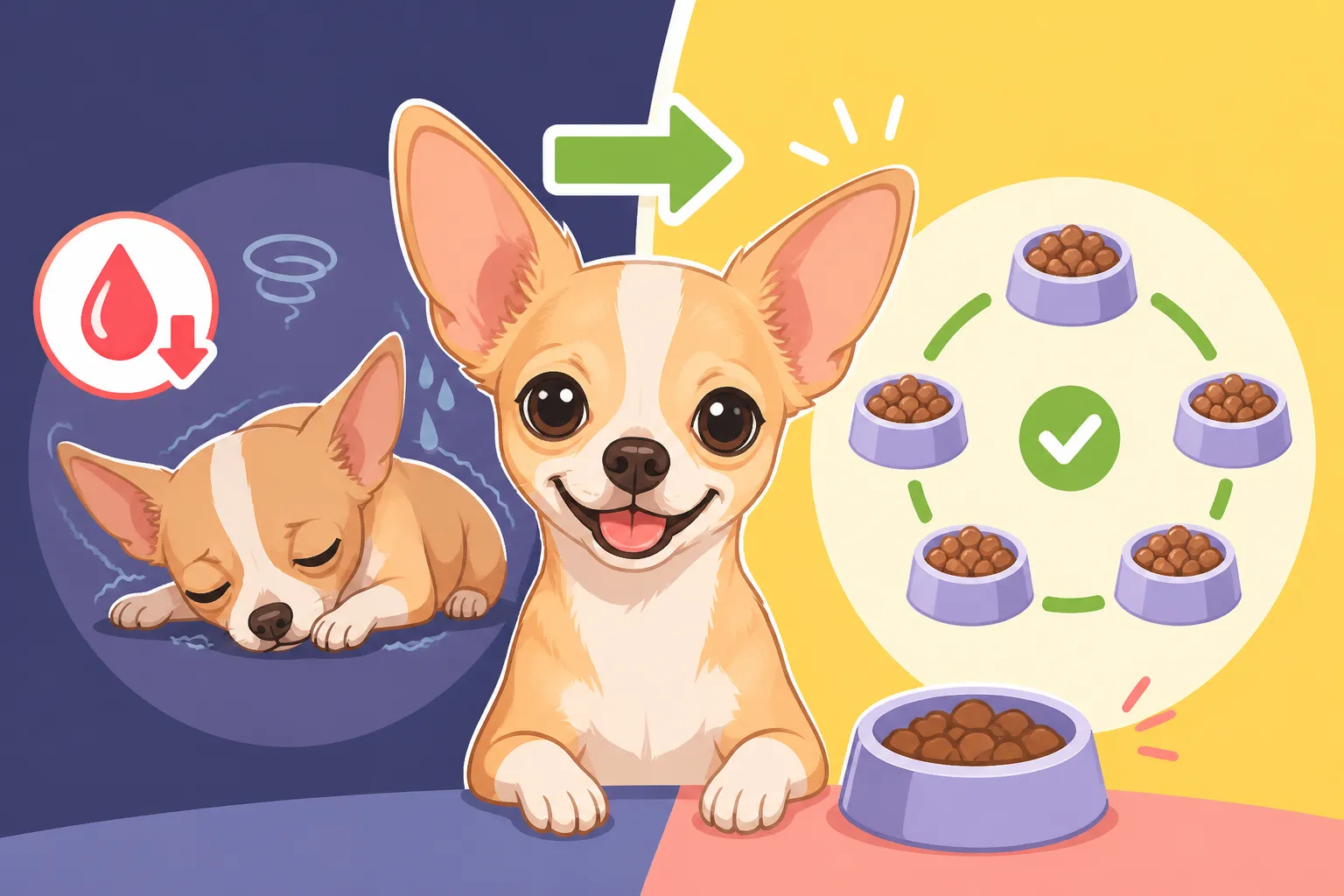
Imagine your own energy levels plummeting when you've gone too long without food – now amplify that feeling for a dog that weighs less than a bag of sugar. When a Chihuahua's blood glucose levels drop, their brain and muscles don't get the energy they need to function. You might first notice them seeming a little "off" – perhaps sluggish or unusually quiet. As the crash progresses, they can become wobbly, disoriented, or even start trembling uncontrollably. In severe cases, they might lose coordination, develop muscle twitching, or even experience seizures and collapse. It’s a rapid decline that is heartbreaking to witness and demands immediate attention. It really emphasizes why understanding Chihuahua Hypoglycemia and the Puppy Emergency is so crucial, especially for new owners.
Why Chihuahuas Are Prone to Low Blood Sugar
Chihuahuas are uniquely predisposed to hypoglycemia for a few key reasons, all stemming from their tiny stature. First, they have a very high metabolism relative to their body mass. This means they burn through calories and glucose at a much faster rate than larger breeds. Their small livers also have limited glycogen stores, which is the body's readily available glucose reserve. Unlike a big dog that can tap into significant reserves for hours, a Chihuahua's tank empties much more quickly. Add to this their small stomach capacity, which limits how much food they can consume at once, and you have a perfect storm for potential blood sugar dips if not managed correctly. This is precisely Why a Chihuahua Runs Out of Blood Sugar So Fast.
Recognizing the Early Warning Signs
Catching hypoglycemia early can make all the difference. As a pet parent, you become incredibly attuned to your dog's normal behavior, and any subtle change should raise a red flag. Look for signs like lethargy or unusual sleepiness; your normally peppy Chihuahua might seem unusually still. Trembling or shivering can also be an early indicator, even if the room isn't cold. They might appear confused or disoriented, perhaps staring blankly or bumping into things. Drooling excessively or seeming generally weak are also signs to watch for. If you notice any of these, especially in a young puppy or a Chihuahua that hasn't eaten recently, it's time to act swiftly. Knowing Chihuahua Hypoglycemia Signs in a Young Puppy can truly save a life.
The Logic Behind Small, Frequent Meals
The strategy of feeding small, frequent meals is the cornerstone of hypoglycemia prevention in Chihuahuas. It's not just a suggestion; it's a critical component of their daily care that directly addresses their unique metabolic challenges. By understanding the "why" behind this feeding method, you'll be better equipped to implement it consistently and effectively.
Stabilizing Blood Sugar Levels
Think of your Chihuahua's blood sugar like a gentle wave on the ocean rather than a rollercoaster. Large meals cause a sudden spike in glucose, followed by a dramatic drop as the body processes it. For a tiny Chihuahua, these drastic swings can be dangerous. Small, frequent meals, however, provide a steady, continuous trickle of glucose into their system. This helps to maintain a much more stable blood sugar level throughout the day, preventing those sharp, perilous drops that define a hypoglycemic crisis. It's about consistency and preventing extremes, ensuring their tiny bodies always have the fuel they need. This consistent intake is vital for avoiding the sudden crashes that can be so frightening.
Preventing Overeating and Digestive Upset
While the goal is to keep blood sugar up, simply giving more food at once isn't the answer. Chihuahuas have incredibly small stomachs, and overfeeding in one sitting can lead to its own set of problems. Too much food can cause digestive upset, including vomiting or diarrhea, which can actually exacerbate hypoglycemia by preventing nutrient absorption and causing dehydration. Small, frequent meals allow their delicate digestive systems to process food efficiently without being overwhelmed. It's about providing just enough nutrition at regular intervals, aligning with their natural capacity. Plus, when you're measuring carefully, it also helps you manage their weight, preventing obesity, which can lead to other health issues.
Supporting a Chihuahua's Fast Metabolism
As we discussed, Chihuahuas burn through calories at an astonishing rate. Their tiny engines are always running, and they need a constant supply of high-octane fuel. Unlike larger dogs that can go for longer stretches between meals, a Chihuahua's metabolic rate demands more frequent refueling. Small, frequent meals ensure that their fast metabolism is adequately supported, preventing their glucose reserves from becoming depleted. This is particularly important during periods of high activity, stress, or even just during their normal waking hours. It’s a proactive approach to ensure their bodies are always topped up, reflecting their unique needs.
Crafting the Ideal Feeding Schedule
Developing a consistent and appropriate feeding schedule is paramount for your Chihuahua's health, especially when it comes to managing blood sugar. The frequency and timing of meals will vary depending on their age, activity level, and any specific health considerations. There isn't a one-size-fits-all answer, but understanding the general guidelines will help you tailor a routine that works best for your pint-sized pal.
Puppy Feeding: A Critical Foundation
Chihuahua puppies are especially vulnerable to hypoglycemia due to their immature systems and even higher metabolic rate. For puppies under six months, frequent feeding is absolutely non-negotiable. Many breeders will send puppies home on a schedule of four to six small meals a day. This might sound like a lot, but it's essential for providing continuous energy and preventing crashes. You might be feeding them at 7 AM, 11 AM, 3 PM, 7 PM, and even a small snack right before bed. As they grow, you can gradually reduce the frequency. This early foundation is critical, as puppies simply don't have the internal reserves to go long periods without food. This strict routine helps prevent Chihuahua Hypoglycemia in the First Twelve Weeks.
Adult Chihuahua Meal Frequency
Once your Chihuahua reaches adulthood, typically around 9-12 months, you can usually transition to a slightly less frequent schedule, though still more frequent than a larger dog. Most adult Chihuahuas thrive on three small meals a day. For example, a morning meal, a midday meal, and an evening meal. This spacing continues to provide that steady supply of glucose without overwhelming their small digestive system. Even two meals a day can be too long of a stretch for some Chihuahuas, particularly if they are very active or prone to anxiety, which can also burn through energy stores. It's about finding that sweet spot that keeps their energy stable and their tummy happy. Many owners find success feeding their adult Chihuahuas like this:
| Meal Timing | Example Schedule | Benefit |
|---|---|---|
| Morning | 7:00 AM | Kickstarts metabolism, prevents morning crash |
| Midday | 1:00 PM | Sustains energy through the afternoon |
| Evening | 7:00 PM | Carries blood sugar through the night |
| Before Bed Snack | 10:00 PM (optional for some) | Extra buffer against overnight drops |
Remember, this is a general guide; your individual Chihuahua might need slight adjustments. A really important factor is to give a small meal or snack right before bed to help them maintain blood sugar levels overnight. This tip, covered in Feeding a Chihuahua Before Bed to Hold Blood Sugar, can be a game changer for overnight stability.
Adjusting for Senior Chihuahuas and Health Conditions
As Chihuahuas age, their needs can shift. Senior Chihuahuas might become less active, but they can also be more prone to other health issues that impact metabolism or appetite. It's not uncommon for older Chihuahuas to revert to needing more frequent, smaller meals, similar to their puppy days, especially if their appetite declines or they have conditions like Chihuahua Heart Disease as the Breed Ages or kidney problems. Illness, stress, or even cold weather can increase their calorie burn and risk of hypoglycemia, making consistent feeding even more critical. If your Chihuahua is under the weather, stressed, or exposed to cold, remember that Why Cold and Stress Drop Chihuahua Blood Sugar can kick in, making extra vigilance necessary. Always work closely with your veterinarian to adjust their feeding schedule based on their individual health status and lifestyle changes. They can help you determine the best approach for Senior Chihuahua Care Past the Age of Twelve.
Choosing the Right Food and Portions
Beyond the frequency of meals, the quality and quantity of the food you provide are equally vital in preventing hypoglycemia and promoting overall health in your Chihuahua. It's not just about filling their bowl; it's about providing nutrient-dense, easily digestible fuel that supports their tiny bodies.
High-Quality, Nutrient-Dense Options
When it comes to feeding a Chihuahua, quality absolutely trumps quantity. Look for a high-quality dog food that lists a meat source (like chicken, beef, or lamb) as the first ingredient. Avoid foods with excessive fillers, artificial colors, or by-products, as these offer little nutritional value and can be harder for their small systems to digest. Many Chihuahuas also benefit from kibble specifically designed for small breeds, as the smaller size is easier for them to chew and swallow. Brands like Chewy often carry a wide selection of these specialized small breed formulas. Some owners also opt for fresh food options, which can be highly digestible and nutrient-dense, though these require careful portioning. Companies like Ollie, for instance, offer pre-portioned fresh meals that can simplify this for busy owners.
Accurate Measurement is Non-Negotiable
This is where many well-intentioned owners can go wrong. A mere few extra kibbles might seem insignificant, but for a Chihuahua that might only need Daily Calories for a Three to Seven Pound Chihuahua, even a small inaccuracy can mean the difference between healthy weight and obesity, or adequate blood sugar and hypoglycemia. Using a kitchen scale to measure your Chihuahua's food in grams is the most accurate method. Eyeballing with a scoop or a measuring cup designed for human cooking is simply too imprecise for such a tiny dog. For example, if your Chihuahua needs 150 calories a day, and their food has 350 calories per cup, you're looking at less than half a cup, which is a tiny amount that's easily mismeasured. Weighing Chihuahua Food on a Kitchen Scale becomes a daily ritual that ensures consistency and accuracy.
The Role of Timed Meals vs. Free-Feeding
For Chihuahuas, free-feeding (leaving food out all day) is almost universally discouraged, especially if you're trying to prevent hypoglycemia. While it might seem convenient, it makes it impossible to monitor how much your dog is eating, when they are eating it, and if they are consuming enough to keep their blood sugar stable. Free-feeding can also contribute to obesity, as many Chihuahuas will graze out of boredom or habit rather than true hunger. Timed meals, on the other hand, allow you to control portions precisely and ensure your Chihuahua is getting their critical glucose intake at regular intervals. This disciplined approach is fundamental to managing their unique metabolic needs and preventing dangerous blood sugar fluctuations. Setting distinct meal times, perhaps three times a day, as discussed in Three Small Meals a Day for a Chihuahua, is a far safer strategy.
Emergency Preparedness and Ongoing Care
Even with the best feeding schedule and highest quality food, life happens. Stress, an unexpected missed meal, or a sudden illness can still trigger a hypoglycemic episode. Being prepared and knowing how to react immediately is crucial. Beyond emergency response, integrating ongoing care strategies into your daily routine will further strengthen your Chihuahua's defenses against low blood sugar.
What to Do in a Hypoglycemic Emergency
If you suspect your Chihuahua is experiencing a blood sugar crash – they're trembling, weak, disoriented, or collapsing – you need to act fast. The immediate goal is to get sugar into their system. Rub a small amount of a sugary substance, like Karo syrup, honey, or even maple syrup, onto their gums. You don't need them to swallow it; it will absorb through the mucous membranes. Just a pea-sized amount is usually enough for a tiny Chihuahua. This should provide a rapid, albeit temporary, boost to their blood sugar. While this is a critical first aid step, it is not a cure. Once you've administered sugar, contact your veterinarian immediately, even if your dog seems to perk up. They will need to be seen to determine the underlying cause and ensure their blood sugar stabilizes properly. This swift action can be the difference between a scary moment and a tragedy, and more details can be found in Emergency Sugar for a Collapsing Chihuahua Puppy.
Working with Your Vet on a Hypoglycemia Plan
Your veterinarian is your best partner in managing your Chihuahua's health. Discuss your dog's feeding schedule, any observed symptoms, and your concerns about hypoglycemia with them. They can help you fine-tune their diet, suggest specific foods or supplements, and develop a personalized plan. If your Chihuahua has experienced hypoglycemia before, your vet might recommend keeping glucose gel on hand, which is often easier to administer than sticky syrup. Keeping Glucose Gel for a Chihuahua at Home is a smart move for any Chihuahua owner. They can also rule out other health conditions that might mimic or contribute to low blood sugar, such as liver shunts or other metabolic disorders. Regular check-ups are especially important for monitoring their overall health and catching any potential issues early.
Lifestyle Factors That Support Stable Blood Sugar
Beyond food, several lifestyle factors contribute to stable blood sugar in Chihuahuas. Minimizing stress is a big one; stress can burn through glucose rapidly. Create a calm, predictable environment for your Chihuahua. Ensure they stay warm, particularly in colder weather, as shivering uses a lot of energy. Why Cold and Stress Drop Chihuahua Blood Sugar highlights this critical connection. Provide consistent, moderate exercise, but avoid overly strenuous activities that could deplete their energy stores too quickly. Puzzle toys can be great for mental stimulation without excessive physical exertion. Always ensure they have access to fresh water, as dehydration can affect overall health. Being mindful of these daily habits creates a holistic approach to preventing hypoglycemia and promoting a happy, healthy life for your long-lived Chihuahua. Even if your Chihuahua has never had an issue, knowing about Hypoglycemia in an Adult Chihuahua helps you stay vigilant.
Disclaimer
This article is for general informational purposes only and does not constitute professional advice. Laws, prices and regulations vary by location and change over time. Consult a qualified professional for guidance on your specific situation.