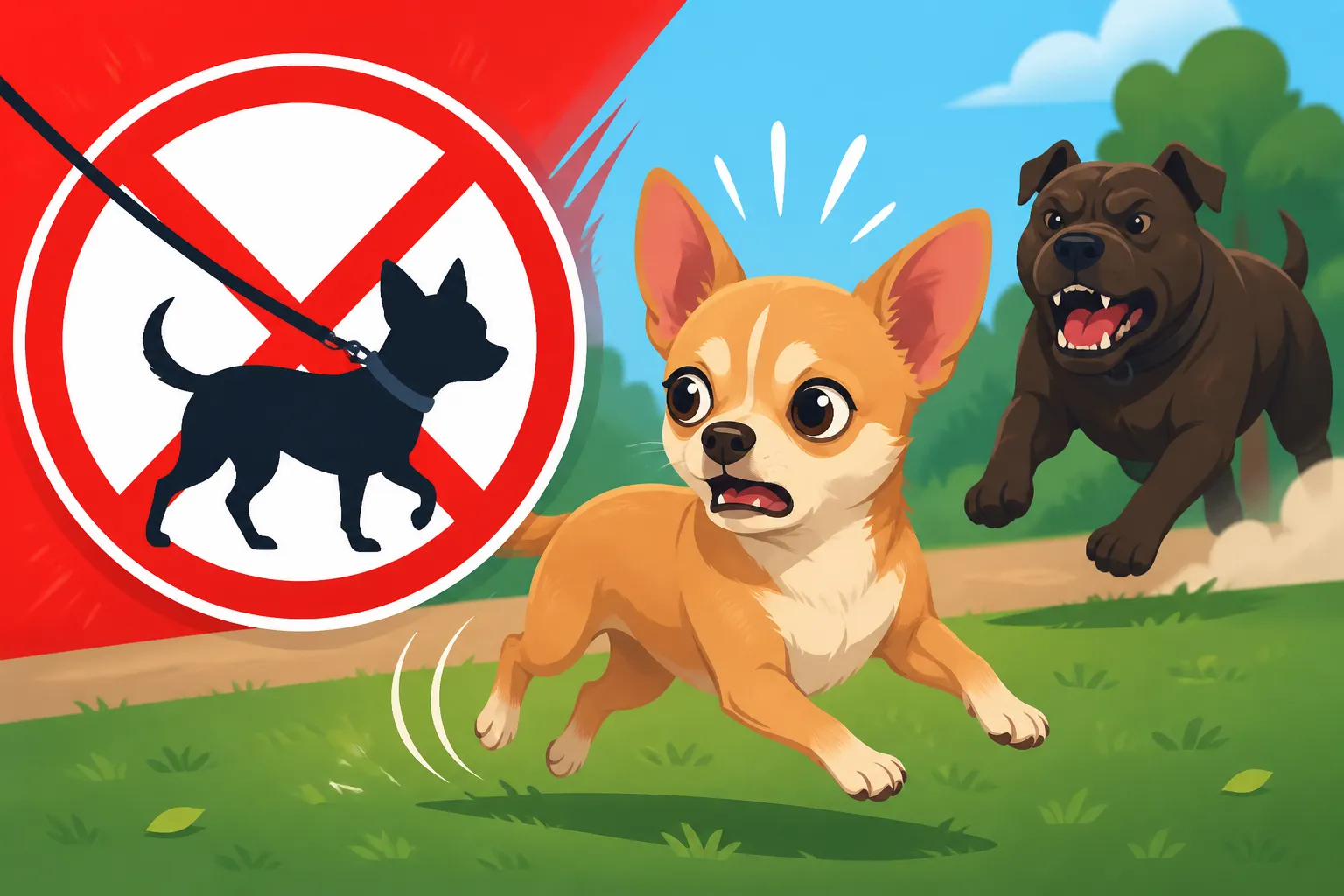
Why a Chihuahua Should Not Be Off Leash Outdoors
It’s a beautiful thought, isn’t it? Watching your tiny Chihuahua romp freely through a field, tail wagging, completely unburdened by a leash. Many of us dream of giving our little companions that kind of boundless freedom, imagining them exploring safely and happily. But for Chihuahuas, due to their unique size, fragility, and innate instincts, going off-leash outdoors presents a myriad of dangers that far outweigh the fleeting joy of uncontrolled exploration. This guide will delve deep into why this seemingly innocent act can be incredibly risky for your pint-sized pal and offer practical advice for ensuring their safety while still allowing them to experience the great outdoors.
The Unseen Dangers: Predators and Accidents Lurk Everywhere
It's easy to forget how vulnerable a Chihuahua is in the big wide world. What might seem like an ordinary park or a quiet walking trail holds numerous threats that our larger canine friends rarely have to contend with. Their diminutive size, a feature we adore, becomes their greatest liability when they are off-leash and out of arm's reach.
Airborne and Ground Predators
This is perhaps the most visceral fear for any Chihuahua owner considering off-leash adventures, and for good reason. Your little companion, who might feel like a fierce protector on your lap, is unfortunately viewed as prey by a surprisingly wide array of wildlife.
Picture this: you're at a seemingly peaceful park, and your Chihuahua, excited by a scent, darts a few yards away. In a flash, a hawk or an owl, circling high above, spots an easy meal. These birds of prey are incredibly swift and efficient hunters. What seems like open space to us is a wide-open buffet to them. It's not just birds, either. Hawks, Coyotes and the Off Leash Chihuahua highlights the omnipresent threat. Depending on your location, coyotes, foxes, and even large stray cats can pose a significant danger. These animals are often opportunistic hunters, and a small, fast-moving target like a Chihuahua can trigger their prey drive instantly. Even in urban areas, raccoons or opossums, while not typically predatory towards dogs, can act aggressively if cornered or if they perceive a threat, and a Chihuahua is simply too small to defend itself effectively. The sheer speed with which these encounters can happen means that even if you're watching closely, reacting in time to prevent a tragedy is often impossible.
Larger Dogs and Unforeseen Encounters
Beyond wildlife, other dogs present a huge, often underestimated, risk. While many dogs are well-behaved, you can never guarantee the temperament or training of every dog you encounter. An off-leash Chihuahua is an irresistible target for dogs with a strong prey drive, or even a larger, playful dog that simply doesn't understand its own strength.
Imagine a boisterous Labrador, off-leash itself, bounding over, intent on a friendly greeting. What's a playful nudge to the Labrador could be a serious injury or worse to a Chihuahua. Their delicate bones are not built to withstand such impacts. Even a minor scuffle can lead to broken legs, internal injuries, or puncture wounds. Furthermore, dogs with poor impulse control or those that are leash-reactive might react aggressively to a tiny dog darting around. If your Chihuahua is off-leash, you have no way to quickly scoop them up or pull them away from a rapidly approaching, potentially aggressive or overly exuberant dog. This lack of immediate control puts your Chihuahua in immense peril. This is why places like dog parks, while seemingly for canine freedom, are actually quite dangerous for such small breeds, as discussed in Why Dog Parks Are Dangerous for a Chihuahua. It's not just about aggression; it's about the sheer size difference and the potential for accidental harm.
Environmental Hazards
It's not always about living creatures. The very environment itself holds dangers for a tiny off-leash dog. What appears as a benign landscape to us can be a minefield for a Chihuahua.
Think about busy streets. An off-leash Chihuahua, darting after a scent or a butterfly, can run into traffic in a split second. Their small size makes them incredibly hard for drivers to see, especially if they are close to the ground. Even a quiet residential street can become perilous if a car is backing out of a driveway. Beyond traffic, there are environmental toxins. Pesticides on lawns, antifreeze puddles, discarded food scraps that could be toxic (like chocolate or xylitol), or even sharp objects like broken glass or discarded fishing hooks can be found in seemingly innocent public spaces. A Chihuahua, with its nose to the ground and its curiosity piqued, is far more likely to ingest something dangerous or step on something harmful when unsupervised. Fences, if present, are often too tall for a Chihuahua to be seen over, making it easy for them to slip under or through gaps. Moreover, if your Chihuahua gets lost while off-leash, their small size and vulnerability make it incredibly difficult for them to survive outdoors for long, especially if the weather turns.
The Tiny Bladder, The Big Chase: Why Recall is Different
Owners often think that a well-trained recall command makes off-leash adventures safe. While a strong recall is invaluable for any dog, for a Chihuahua, it faces unique challenges that make it an unreliable sole protector in an uncontrolled outdoor environment.
The Instinctive Prey Drive
Chihuahuas, despite their pampered appearance, retain a strong prey drive. This isn't necessarily a bad thing; it's part of what makes them so alert and engaging. However, when unleashed outdoors, this instinct can override even the most perfectly practiced recall.
Imagine your Chihuahua, happily trotting along, when suddenly a rabbit bolts across their path, or a squirrel scurries up a tree. That ancestral hunting instinct kicks in. The adrenaline rush, the pure exhilaration of the chase, can be so overwhelming that your Chihuahua simply tunes you out. Their ears might be perfectly perked at home when you call, but in that moment of high-intensity pursuit, your voice becomes background noise. Their focus is singular: the moving target. Once they're locked onto that prey, their small size allows them to be incredibly fast and agile, disappearing into bushes or across open ground quicker than you can react. This isn't a failure of your training; it's a testament to the power of instinct, and for a tiny dog, a chase gone wrong can mean running into traffic, getting lost, or encountering one of the predators we discussed earlier.
Small Bladders and Marking Tendencies
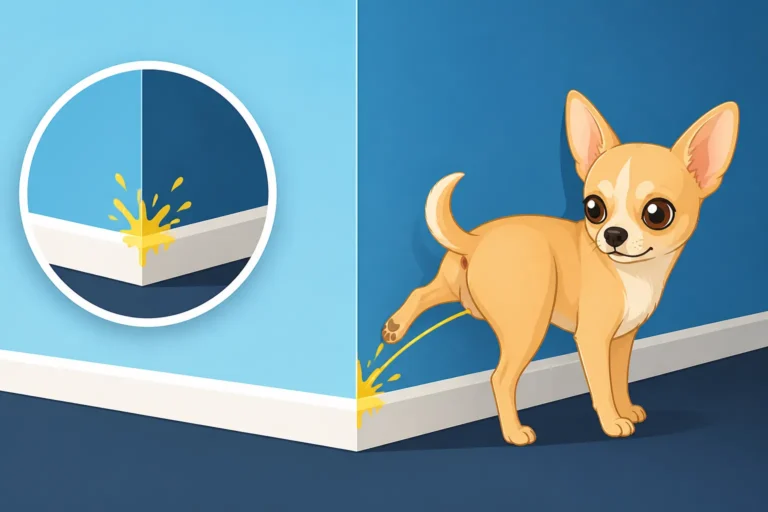
Another often-overlooked aspect is their physiology. Chihuahuas have tiny bladders, and many have a strong instinct to mark territory. This combination can lead to them wandering off for reasons unrelated to chase.
A Chihuahua might be perfectly happy walking on a leash, but once off-leash, every tree, bush, and interesting spot becomes a potential marking post or sniffing opportunity. They might wander further than intended, driven by the urge to leave their scent or investigate a fascinating smell. This isn't like a large dog taking a quick pee and coming back; a Chihuahua might spend considerable time exploring a small patch of grass, completely oblivious to how far they've strayed. Their low vantage point also means they might not see you, or other approaching dangers, until it's too late. The cumulative effect of these small detours can lead to them getting disoriented or lost, especially in areas with tall grass or varied terrain. When considering How Long a Chihuahua Can Hold Its Bladder, it's clear they need frequent opportunities, but these shouldn't come at the cost of their safety off-leash.
The Limitations of Training and Size
While consistent training is vital, there are inherent limitations when it comes to off-leash safety for such a small breed. A Chihuahua’s physical presence simply doesn't command the same space or respect as a larger dog.
No matter how well you train your Chihuahua, you cannot train away their physical vulnerability. A perfect recall might prevent them from running into traffic most of the time, but all it takes is one moment of distraction, one loud noise, one unexpected stimulus, and they could be gone. Their small size means they can squeeze through tiny gaps in fences, slip under bushes, or even be inadvertently stepped on by passersby who don't see them. Furthermore, while training methods like those offered by BAXTER & Bella can be incredibly effective for building a strong foundation, they can't change the fundamental physics of a small dog in a large, unpredictable world. Why a Chihuahua Deserves Real Obedience Training emphasizes the importance of training, but it's always within the context of their safety. It's about giving them the tools to navigate the world, not to conquer it unassisted.
Protecting Your Precious Pal: Safe Outdoor Practices
So, if off-leash is generally out, how can you ensure your Chihuahua still gets to enjoy the fresh air and stimulating environment they need? The key is structured, secure, and supervised outdoor experiences.
The Indispensable Harness and Leash
For Chihuahuas, a well-fitting harness is not just a recommendation; it's a critical safety device. Collars can put dangerous pressure on their delicate tracheas, leading to conditions like collapsing trachea, discussed in Why Collar Pressure Damages a Chihuahua Trachea.
A comfortable, secure harness distributes pressure across their chest and shoulders, protecting their neck and windpipe. When choosing a harness, ensure it fits snugly but doesn't chafe, allowing full range of motion. Brands available on Amazon offer a wide variety of styles and sizes, so you can find one specifically designed for toy breeds that won't allow them to slip out. Always double-check sizing guides and read reviews from other Chihuahua owners. Once you have the right harness, a sturdy, lightweight leash is your constant connection to your dog. It allows you to guide them away from hazards, scoop them up if necessary, and ensure they remain by your side. Harnesses That Spare a Chihuahua Windpipe offers more specific guidance on selecting the right gear. Even in a fenced yard, a long line attached to their harness can give them a feeling of freedom while still allowing you to intervene quickly if they try to dig out or attempt to jump a low fence.
Secure Fenced Areas and Long Lines
While an open park is risky, a truly secure, fenced-in area can provide a safer space for supervised 'off-leash' time. However, "secure" is the operative word, and supervision is non-negotiable.
Before allowing any off-leash time in a yard, meticulously inspect the perimeter. Look for any gaps under gates, loose fence boards, or areas where your Chihuahua could potentially dig their way out. Remember, a Chihuahua can fit through surprisingly small spaces! Even a tall fence might have a weak spot at ground level. If you have any doubts, consider using a long line. A 10-20 foot lightweight line, attached to their harness, allows them to explore a wider area while still giving you control. This way, if they bolt for a squirrel or try to squeeze under a fence, you can gently but firmly bring them back. This setup provides a safe compromise, giving them more room to roam than a standard leash without the inherent risks of truly off-leash outdoor spaces. Remember that even in a secure yard, constant supervision is crucial to protect against the accidental ingestion of toxic plants or interaction with other hazards.
Designated Play and Training Areas
To satisfy their need for exploration and mental stimulation, seek out dedicated, safe spaces designed for small dogs or controlled training environments.
Many communities now offer dog parks with separate areas specifically for small breeds. While still requiring caution and careful observation of other dogs, these spaces often have double-gated entries and appropriate fencing to minimize escape risks. Enroll in a positive reinforcement puppy class or obedience class (many are available through online platforms like BAXTER & Bella or local trainers). These classes often provide a safe, controlled indoor or securely fenced outdoor area where your Chihuahua can learn and socialize off-leash with other small, vetted dogs under professional supervision. This allows them to build confidence and practice their recall and other commands in a much safer environment than a general public park. Even at home, dedicating a specific, safe area of your yard or an indoor space for structured play and training sessions, where they can run and explore under your watchful eye, is vital. Chihuahua Play With Dogs Its Own Size emphasizes the importance of safe, size-appropriate interactions.
Here’s a quick overview of why off-leash outdoor time is so risky for your Chihuahua:
| Risk Category | Specific Dangers for Chihuahuas | Why It's Worse for Chihuahuas |
|---|---|---|
| Predators | Hawks, owls, coyotes, foxes, large stray cats, even aggressive raccoons. | Their small size makes them prey. |
| Other Dogs | Aggression, accidental injury from rough play, being stepped on. | Fragile bones, inability to defend themselves. |
| Traffic | Cars, bikes, skateboards, unseen hazards in driveways. | Difficult to see, quick to dart, easily injured. |
| Environmental | Toxic plants, pesticides, sharp objects, ingesting harmful substances. | Low to the ground, highly curious, vulnerable digestive system. |
| Lost/Disoriented | Easily gets lost due to small size, poor visibility, overwhelming scents. | Can disappear quickly, hard to track, little stamina for survival. |
| Recall Failure | Strong prey drive overrides commands, easily distracted by smells/sights. | Instinct takes over, can outrun human reaction time. |
The desire to see your Chihuahua run free is completely understandable. We all want our beloved pets to experience joy and freedom. However, for a breed as small and delicate as the Chihuahua, this freedom comes with an unacceptably high level of risk. By understanding these dangers and implementing safe, supervised outdoor practices—like using a secure harness and leash, carefully vetting fenced areas, and engaging in structured play—you can provide your Chihuahua with a rich, stimulating, and most importantly, safe life. Their trust in you means you are their protector, and sometimes, that means making choices that prioritize their safety above all else, even if it means foregoing the dream of off-leash romping in an open field.
Disclaimer
This article is for general informational purposes only and does not constitute professional advice. Laws, prices and regulations vary by location and change over time. Consult a qualified professional for guidance on your specific situation.