Setting Furniture Rules for a Chihuahua
It's so easy to let our Chihuahuas take over the house, especially the comfy spots like the sofa and bed. Their tiny size makes us feel like they belong everywhere, but this can actually create behavior issues and even pose physical risks for them. This guide will walk you through how to set clear, loving boundaries around furniture, ensuring both your Chihuahua's well-being and your household's harmony.
Why Letting a Chihuahua Rule the Roost on Furniture Can Backfire
We all love to snuggle our little Chihuahuas, don't we? It’s practically irresistible to scoop them up and let them join us on the couch or in bed. But while those moments feel sweet and innocent, consistently giving them free rein over all your furniture can, surprisingly, lead to both behavioral challenges and genuine physical dangers for your tiny companion. It’s a classic case of loving them so much that we sometimes forget what’s truly best for them in the long run.
The "Small Dog Syndrome" Myth vs. Reality
Let's be honest, it's incredibly common for Chihuahua owners to treat their tiny dogs differently than someone might treat a German Shepherd or a Labrador. We often excuse behaviors in a six-pound dog that we would never tolerate in a sixty-pound one. This isn't because Chihuahuas are inherently difficult; it's because our perception of their size often leads us to let things slide. This phenomenon is often mistakenly called "small dog syndrome," but it's not a genetic trait; it's a learned behavior fostered by inconsistent human rules.
When a Chihuahua is allowed to constantly dictate where it sits, sleeps, and even who it growls at from the safety of your lap or the sofa, it can start to believe it's the boss of the house. This isn't necessarily about dominance in the old-school sense, but more about a lack of clear leadership and boundaries from you. Without clear rules, your Chihuahua might become more insecure, leading to reactive behaviors like barking at guests from the couch or snapping if someone tries to move them. They haven't learned appropriate social manners because they haven't been given the chance to. When you realize The Behaviors Owners Excuse in a Chihuahua, you can start to address them.
The reality is, Chihuahuas are dogs, and they thrive on structure and understanding their place in the family unit, just like any other breed. They need to know what's expected of them. If the sofa is a free-for-all, and they’re never asked to settle elsewhere, they might struggle with concepts like "stay" or "leave it" when they really need them. It's about empowering them with knowledge, not restricting their joy.
Safety Concerns for Tiny Joints and Bodies
Beyond the behavioral aspects, there's a very practical and critical reason to consider furniture rules: your Chihuahua's delicate physical health. Chihuahuas, with their tiny frames and often slender bones, are surprisingly prone to certain orthopedic issues, and repetitive jumping on and off high furniture can significantly exacerbate these problems or even create new ones. Think about it: a jump from a standard sofa to the floor is like a human jumping from a second-story window!
One of the most common orthopedic conditions in Chihuahuas is patellar luxation, or a "slipping kneecap." Even if your Chihuahua doesn't currently have this issue, repeated impact and twisting motions from jumping can put immense strain on their knee joints, potentially causing the kneecap to dislocate. Once it starts, it can become a chronic problem, leading to pain and potentially requiring costly surgery down the line. We want to be proactive in Keeping a Chihuahua Off Furniture to Protect Knees, not reactive after an injury.
Furthermore, Chihuahuas can be susceptible to back and neck issues, including intervertebral disc disease (IVDD), especially if they have a slightly longer back. The jarring impact of landing incorrectly or twisting during a jump can put undue stress on their spine. Even seemingly harmless leaps can accumulate over time, leading to significant discomfort and potentially requiring extensive veterinary intervention. Prioritizing their long-term physical well-being by managing furniture access is a loving act, not a punitive one.
Establishing Clear Boundaries and Training Alternatives
So, you’ve decided it’s time to rethink your Chihuahua’s relationship with your furniture. That’s a fantastic step! The key here isn't to banish them from your presence, but to create clear, consistent boundaries that teach them where they are allowed to be and, just as importantly, where they aren't. This approach fosters a more secure, well-behaved Chihuahua and protects their little bodies.
The Importance of a "Place" Command
One of the most powerful tools in your training arsenal for furniture rules, and frankly, for general good manners, is the "place" command. This command teaches your Chihuahua to go to a specific, designated spot – a mat, a dog bed, or even a towel – and to stay there until released. It's not just about getting them off the couch; it's about giving them a clear alternative and a job to do.
To teach "place," start by making the designated spot super inviting. Toss a treat onto the bed, and as your Chihuahua steps onto it, say "Place!" and reward them enthusiastically with another high-value treat and praise. Repeat this many times. Once they readily go to the mat, start adding a duration. Ask them to "Place!" and then take a step back. If they stay, reward them. Gradually increase the distance and the time they stay on their mat before releasing them with a cheerful "Free!" or "Okay!". Consistency is key here.
A strong "place" command is foundational because it gives you control over your Chihuahua's location in a positive way. Instead of constantly telling them "no" for jumping on the sofa, you can redirect them to their "place" with a command they understand and enjoy. This builds their confidence and gives them a sense of purpose. It’s one of those essential The Commands Every Chihuahua Should Know that will make your life together much smoother.
Consistent Application Across All Furniture
Here's the hard truth: for furniture rules to stick, they must be consistently applied across all furniture. If your Chihuahua isn't allowed on the sofa, they also can't be allowed on the armchair, the dining chairs, or your bed. If you make exceptions, your Chihuahua won't understand the rule. They'll just see it as "sometimes allowed on furniture, sometimes not," which is incredibly confusing for them. Imagine trying to follow a rule that changes all the time – it's frustrating!
The biggest challenge with consistency often comes down to every member of the household being on the same page. It’s easy for one person to be strict, only for another family member (or even a visiting friend!) to cave and let the tiny, adorable Chihuahua jump up. Before you start, have a family meeting. Discuss the new rules, why they’re important for your Chihuahua's health and behavior, and agree on how everyone will enforce them. This might mean having a special signal or phrase you all use when the Chihuahua is attempting to get on forbidden furniture, or a unified method for redirecting them.
Consistency also means not giving in, even when your Chihuahua gives you those big, sad eyes or starts to whine. They are clever little creatures and will quickly learn which person or which moment is their best chance to break the rules. Every time you enforce the rule, you reinforce the boundary. Every time you make an exception, you weaken it. It takes patience and a united front, but the payoff is a well-behaved, secure Chihuahua and a less chaotic home environment.
Providing Comfortable Alternatives
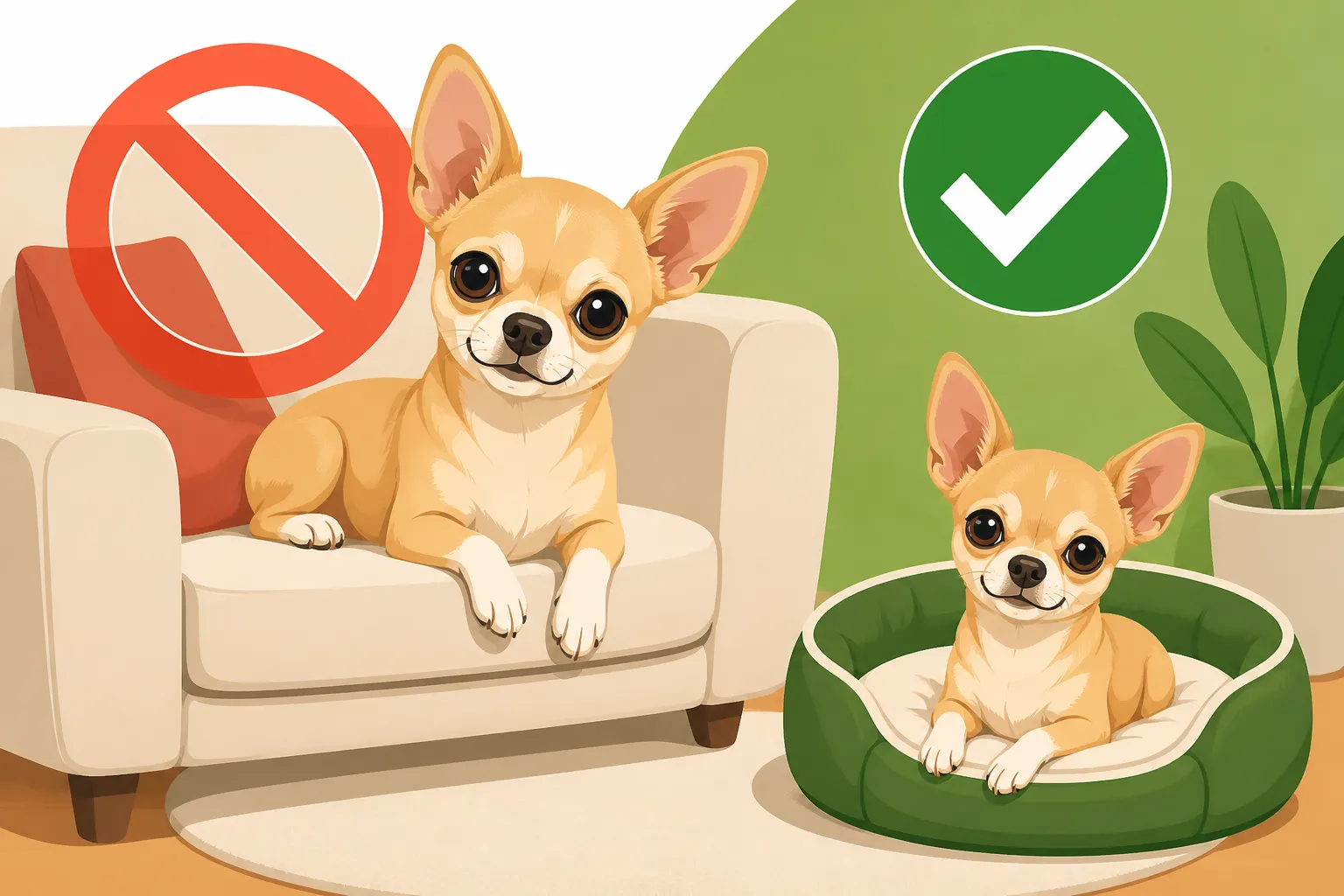
If you're asking your Chihuahua to stay off the furniture, you absolutely must provide them with equally appealing and super comfortable alternatives. You can't just tell them "no" without giving them a "yes!" somewhere else. Chihuahuas love comfort and warmth, so their designated spots need to be just as inviting, if not more so, than your favorite armchair.
Think about plush, cozy beds that they can burrow into. Many Chihuahuas adore beds with high sides or a cover, like a "cave bed," which mimics their natural desire to nest and feel secure. Consider having several options in different rooms – perhaps a soft bed in the living room, a crate with a fluffy blanket in the bedroom, and a small mat in the kitchen. This way, they always have an appropriate, comfortable place to settle, no matter where you are in the house. You can find a huge variety of options on Amazon, from orthopedic beds to self-warming mats, ensuring there's something perfect for your little one's preferences and your budget.
Making these alternatives desirable also involves positive association. Whenever your Chihuahua uses their designated bed or mat, offer them praise, a gentle pet, or even a small treat. This helps them understand that these spots are their special places, filled with good things. The goal isn't to isolate them, but to empower them with their own personal, comfortable space that you both respect.
Practical Tools and Strategies for Furniture Management
Even with the best intentions, managing a Chihuahua's access to furniture can sometimes feel like a full-time job. Thankfully, there are several practical tools and strategies that can make this process easier, safer, and more consistent for both you and your tiny dog. These solutions offer compromises or create clear boundaries without resorting to constant policing.
Ramps and Steps as a Compromise
For many Chihuahua owners, the idea of completely banning their beloved companion from the sofa or bed is a tough pill to swallow. After all, those cuddles are a big part of why we love them! This is where ramps and steps can become your best friend. They offer a wonderful compromise, allowing your Chihuahua to safely access your furniture without the dangerous impact of jumping.
Ramps are often a better choice than steps for Chihuahuas, particularly if they have existing joint issues like patellar luxation or back problems. A ramp provides a smooth, gradual incline that puts less strain on their joints compared to navigating individual steps. Look for ramps with a non-slip surface to prevent accidental slips and falls. Training your Chihuahua to use the ramp or steps might take a little patience, often involving luring them up and down with treats until they feel confident. Investing in quality ramps can literally save your Chihuahua's knees and back in the long run. There's a lot of useful information available about Ramps and Steps for a Chihuahua Sofa if you want to explore this option further.
While these tools require a bit of space and an initial investment, the peace of mind they offer is invaluable. Knowing your Chihuahua can join you for snuggle time without risking a serious injury is a huge relief. It’s about creating an accessible environment that works for both of you, promoting their health while still allowing for those cherished moments of closeness.
Crates and Pens for Controlled Access
Beyond teaching a "place" command, crates and playpens are invaluable tools for managing your Chihuahua's access to furniture, especially when you can't actively supervise them. They aren't meant as punishment, but as safe, comfortable havens where your Chihuahua can relax without the temptation (or danger) of jumping on forbidden surfaces.
A properly introduced and comfortable crate can be a secure den for your Chihuahua. When you're busy, leaving the house, or simply need a break from constant supervision, crating your Chihuahua means you don't have to worry about them sneaking onto the sofa or attempting a risky jump from the bed. Ensure the crate is appropriately sized – snug enough to feel secure, but large enough for them to stand, turn around, and lie down comfortably. It should contain a soft bed and perhaps a safe chew toy. You can read more about selecting the right size in Chihuahua Crate Size and Setup.
Playpens offer a larger, contained area, perfect for situations where your Chihuahua needs more space than a crate but still needs to be kept off furniture. This is great for puppies who are still learning house rules, or for adult Chihuahuas who need a safe zone while you're entertaining guests or cooking dinner. Many owners use a playpen in the living room or kitchen, providing a cozy bed, toys, and water, ensuring their Chihuahua is safe, contained, and not practicing unwanted behaviors on the sofa. Both crates and pens, when used positively, can reduce stress for you and your Chihuahua by eliminating uncertainty about boundaries.
Managing Expectations and Dealing with Resistance
Let's be real: changing rules, especially for a creature of habit, is never an overnight success, and your Chihuahua might not exactly roll out the red carpet for your new furniture policies. They might whine, bark, try to sneak onto the sofa the second your back is turned, or even give you the cold shoulder. It's crucial to manage your own expectations and be prepared for some pushback.
Resistance is a normal part of the learning process. When your Chihuahua whines or barks because they can't get on the couch, they're essentially testing the boundary. Your job is to calmly and consistently reinforce the rule without getting angry or frustrated. Ignoring the whining (once you've made sure all their needs are met, of course) and immediately redirecting them to their designated comfortable spot is key. If they try to sneak up, gently guide them off with a firm "Off!" or "No jump!" and then direct them to their bed.
Patience and persistence are your two best friends during this training period. It could take weeks, or even months, for your Chihuahua to fully embrace the new routine. Celebrate small victories – a moment they chose their bed over the sofa, or when they went to their "place" without a prompt. Remember, even an Whether an Older Chihuahua Can Still Be Trained can learn new behaviors; it just might take a little longer and require more consistent reinforcement. Your calm, steady leadership will ultimately create a more respectful and harmonious relationship with your furry family member.
Adapting Rules for Specific Situations and Personalities
Not all Chihuahuas are the same, and not all households operate identically. While consistency is paramount, sometimes you need to tailor your approach to furniture rules based on your individual Chihuahua's personality or specific challenges they might present. It’s about being firm but flexible, understanding that genuine love often involves thoughtful adaptation.
Chihuahuas Who Guard Furniture or People
One of the more challenging situations arises when a Chihuahua exhibits resource guarding behavior related to furniture, or even guards a person they are sitting with on the furniture. This might manifest as growling, snapping, or biting if someone approaches the couch they're on, tries to move them, or even just sits down too close to their cherished human. This isn't cute; it's a serious behavioral issue that needs to be addressed for everyone's safety.
If your Chihuahua is guarding the sofa or your lap, completely restricting their access to that specific piece of furniture becomes even more important. This removes the resource they are guarding. You'll need to work on building positive associations with being moved or having things taken away from them, but doing so off the furniture is safer and clearer. This involves trade-offs: approaching them when they're on their own bed, offering a high-value treat, gently nudging them, and then rewarding them for moving without incident. Understanding A Chihuahua That Guards a Lap is vital for addressing this behavior safely and effectively.
For these cases, it's highly recommended to work with a professional positive reinforcement dog trainer or a veterinary behaviorist. Resource guarding can escalate, and expert guidance ensures you're implementing strategies that are safe and effective, rather than inadvertently making the problem worse. Their expertise can provide a clear plan to help your Chihuahua feel more secure and less compelled to guard their perceived "resources."
Balancing Cuddling with Boundaries
Many of us get Chihuahuas specifically for their cuddly nature, and setting furniture rules can feel like you’re robbing yourself of those precious moments. But setting boundaries doesn't mean an end to cuddling; it just means those cuddles happen on your terms, not your Chihuahua's. This distinction is crucial for maintaining a healthy dynamic.
Instead of letting your Chihuahua jump on the sofa whenever they please, invite them up. Pat the cushion next to you and say, "Up!" or "Cuddle time!" Once they're up, shower them with affection. When you're ready for them to get down, gently guide them off or use a "Off!" command, then immediately redirect them to their designated dog bed with a treat. This teaches them that the sofa is a privilege, a place they get to be by invitation, not by right. It creates a clear start and end to furniture time.
This approach ensures that your Chihuahua understands you are the one controlling access to valuable resources – in this case, the comfy furniture and your lap. It reinforces your leadership in a gentle, loving way. It means you can still enjoy those heartwarming snuggles without worrying about behavioral issues or physical injuries caused by uncontrolled furniture access.
Leveraging Professional Guidance
Sometimes, despite your best efforts, establishing furniture rules, especially if there are existing behavioral challenges, can feel overwhelming. This is where professional guidance can make all the difference. You don't have to navigate these waters alone! Trainers specializing in positive reinforcement can provide tailored advice and support.
Online training platforms can be an excellent resource, offering structured programs that you can follow at your own pace from the comfort of your home. For example, BAXTER & Bella offers comprehensive online puppy and dog training programs that cover everything from basic manners to more complex behavioral challenges. Their approach focuses on positive reinforcement and building a strong, clear relationship, which is exactly what you need when tackling furniture rules or any other training goal. While they are a national resource, they apply principles that benefit any dog, including tiny Chihuahuas, ensuring you get professional support.
Whether you opt for an online program or a local trainer, seeking expert help ensures you're using methods that are effective and safe for your Chihuahua. They can help you troubleshoot specific issues, refine your timing, and provide strategies for consistency across your household. Remember, investing in training is an investment in a happier, healthier, and more harmonious life with your Chihuahua. Sometimes, understanding Chihuahua Training and Behavior Help Costs might make you hesitate, but the long-term benefits are truly priceless.
Here’s a quick overview of different approaches to managing furniture access:
| Approach | Description | Pros | Cons | Best For |
|---|---|---|---|---|
| No Furniture Access | Chihuahua is never allowed on any human furniture. | Clearest boundary, eliminates injury risk from jumping, prevents guarding. | Requires strict consistency, can feel restrictive for cuddle-loving owners. | Owners prioritizing safety and clear boundaries above all else. |
| Ramps/Steps for Access | Chihuahua uses ramps or steps to get onto permitted furniture. | Reduces injury risk from jumping, allows for cuddles, offers compromise. | Requires space for ramps/steps, initial training, some ongoing supervision. | Owners who want their Chihuahua on furniture but with enhanced safety. |
| Designated Spot Only | Chihuahua is only allowed on specific furniture by invitation, then must go to their own bed/mat. | Combines human-dog interaction with clear rules, builds "place" command. | Requires active management, excellent "place" command, and consistency from all household members. | Owners who want to invite cuddles but maintain control. |
| Crate/Pen Management | Chihuahua is confined to a crate or playpen when not actively supervised. | Prevents all unsupervised furniture access, creates safe den, aids potty training. | Requires consistent crate training, may limit free-roaming time. | Puppies, Chihuahuas prone to accidents, or owners with busy schedules. |
Ultimately, setting clear rules around furniture for your Chihuahua is a loving act that benefits both of you. It protects their tiny, delicate bodies from injury, fosters good behavior, and creates a more respectful, harmonious home environment. Whether you choose ramps, a "place" command, or controlled access, consistency, patience, and positive reinforcement are your greatest tools. Embrace these boundaries, and you’ll find yourself with a more confident, well-adjusted Chihuahua who knows exactly where they belong – right by your side, safely and happily.
Disclaimer
This article is for general informational purposes only and does not constitute professional advice. Laws, prices and regulations vary by location and change over time. Consult a qualified professional for guidance on your specific situation.